Fort Niedergrünewald: An Outer Work of Luxembourg Fortress
Site at a Glance
- Popularity
- Very Low
- Country
- Luxembourg
- Primary era
- Early Modern
- Eras represented
- Early Modern
- Civilizations
- French, Habsburg, Holy Roman Empire
- Site type
- Military
- Remains
- Fort
On this page12 sections
History
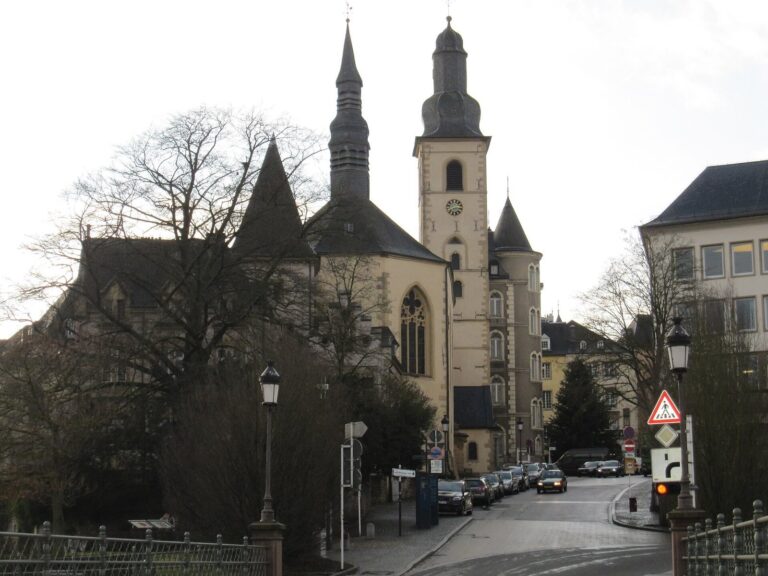
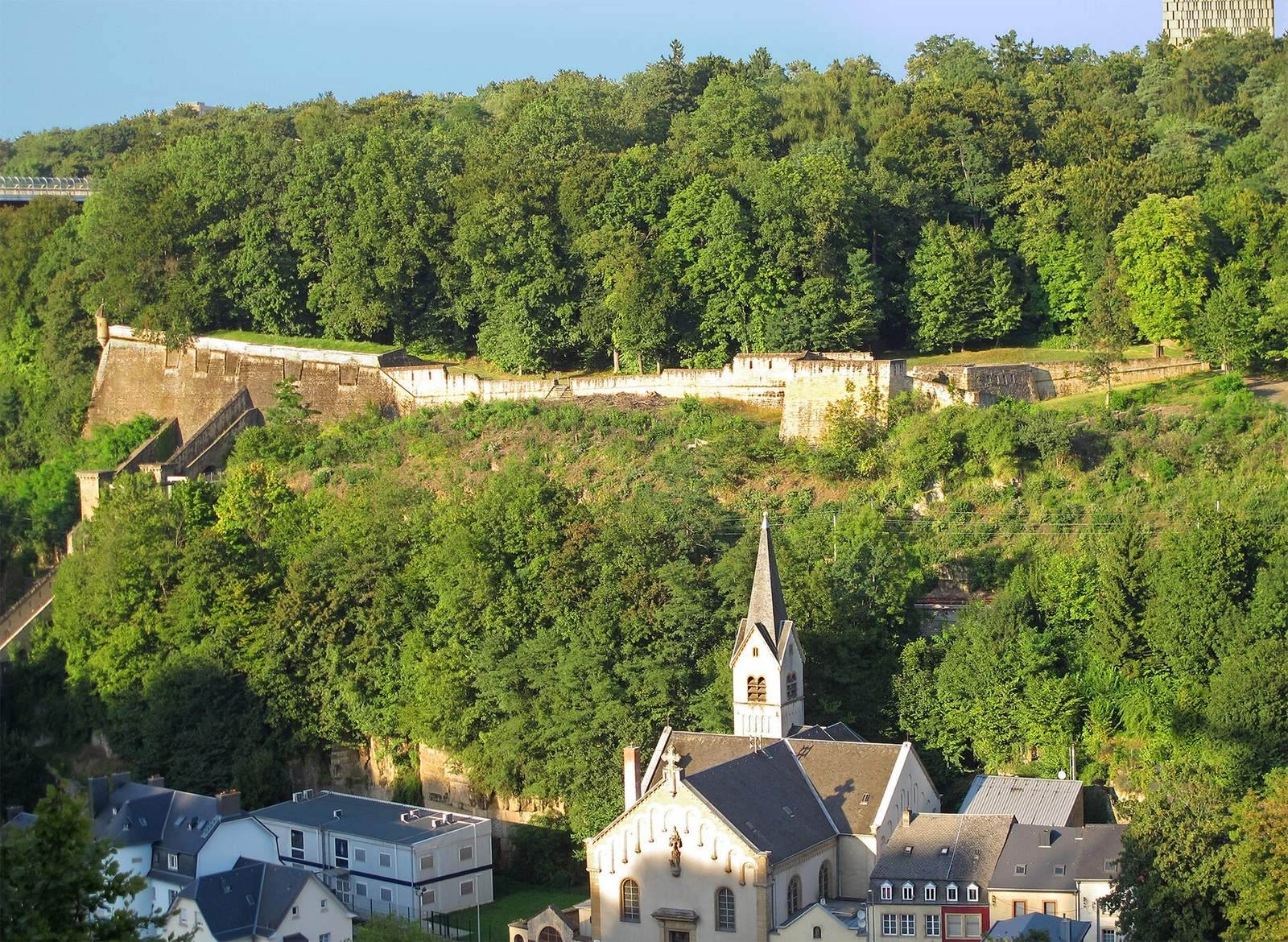
Fort Niedergrünewald is a French-built outer work of Luxembourg Fortress on the Kirchberg Plateau above Pfaffenthal in Luxembourg. After French forces captured the fortress in 1684, military engineer Sébastien Le Prestre de Vauban ordered the fort’s construction in 1684–85 at a position used to bombard the fortress, including during the attack on the New Gate. Along with other defenses on the Grünewald front, it brought Pfaffenthal within the fortress perimeter for the first time. The fort controlled the plateau and the approach from Pfaffenthal, helping block access through the valley from Weimerskirch or across Kirchberg.
Alterations and added defenses
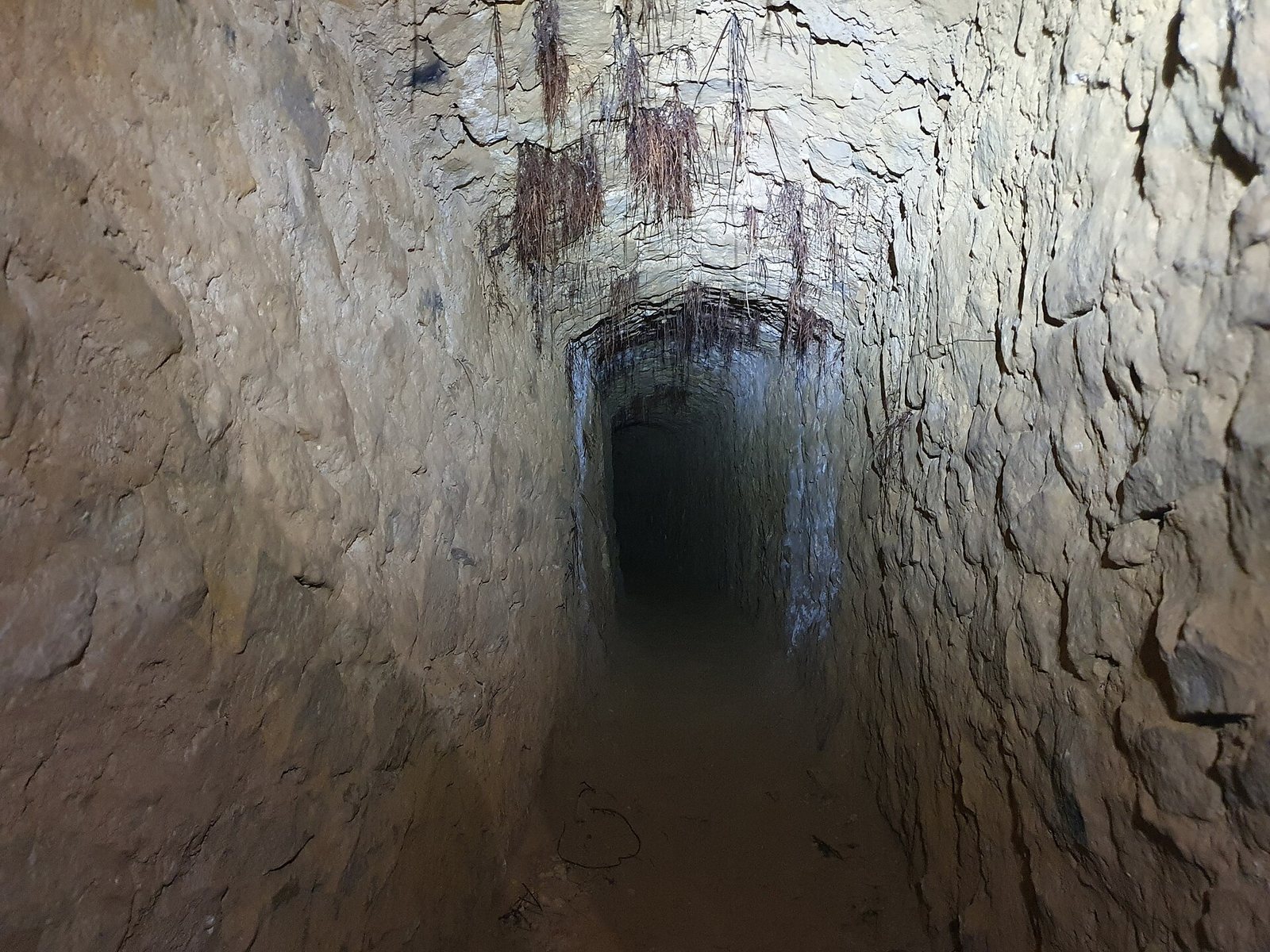
The fort’s commanding position meant that few changes followed its construction. In 1733, Fort Olizy was built a short distance in front of it and linked by an underground passage. Later, a wall with rifle loopholes closed the city-facing side. A gunpowder store was added behind the left curtain wall in 1860–61, while the main defenses otherwise remained unchanged until dismantling.
Transfer and dismantling
On 21 August 1867, the fort passed to the civil authorities, and dismantling began in 1870. The gunpowder store was demolished in 1872. Between 1874 and 1876, bastions, curtain walls, ravelins and the inner stronghold were partly destroyed, including by blasting.
Remains
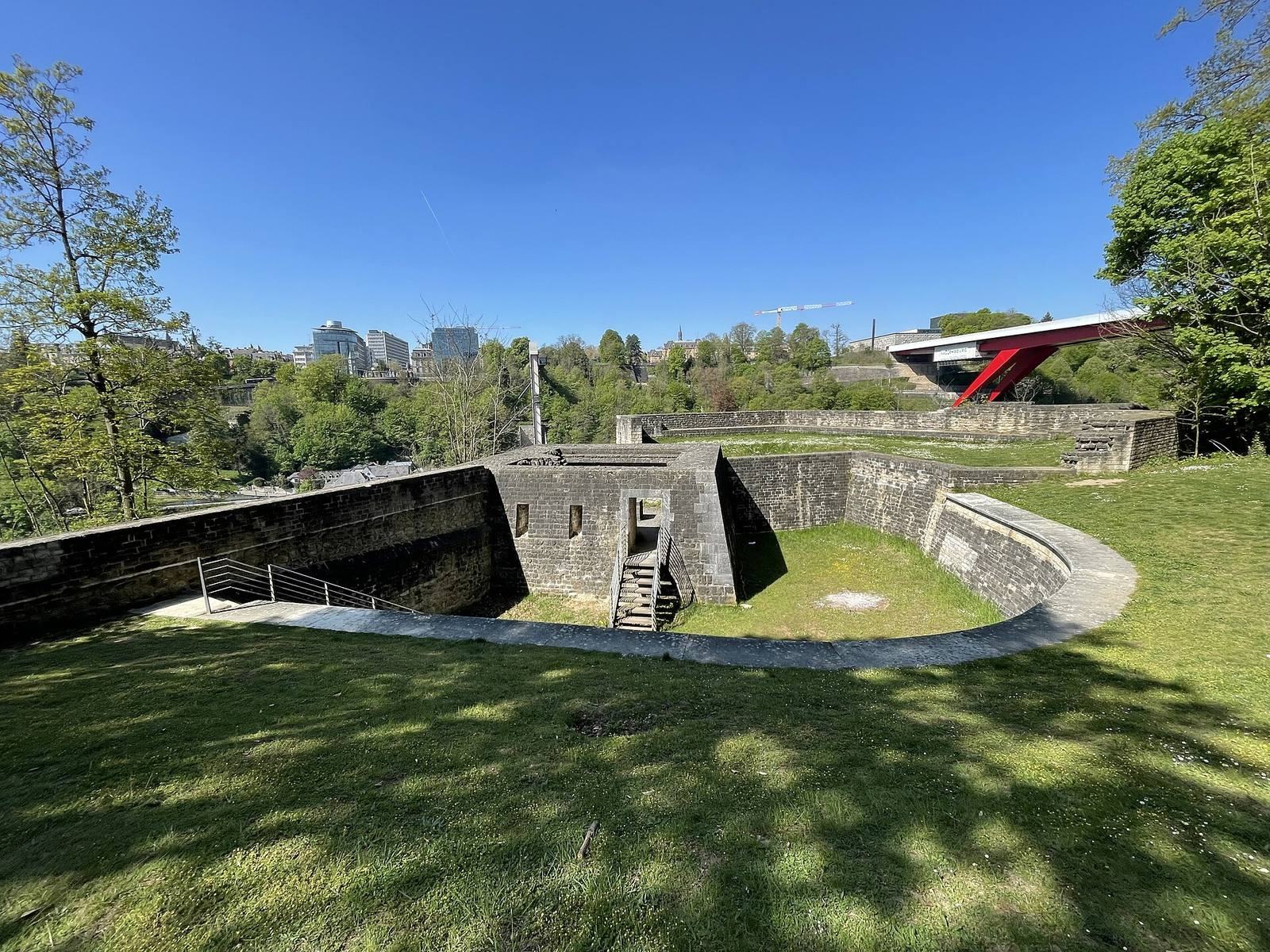
The fort occupied the slope above Pfaffenthal, with its inner stronghold near the valley and a broader system of walls and outworks extending across the plateau. Public parks now occupy the grounds. Earthworks formed part of the defenses, including an open area behind the outer works where defenders could continue to hold the position if those works were taken.
Defensive plan
Inner stronghold and crownwork
A ditch surrounded the small inner stronghold, which stood directly on the slope toward the valley. In front of it, a crownwork, an outwork made up of a central bastion and two adjoining half-bastions, formed a major part of the fort’s defenses. A bastion projects outward from a defensive line; a half-bastion has one face and one flank.
Curtain walls and forward works
North of the inner stronghold, a two-level half-bastion stood on the slope and connected by a curtain wall, a wall joining defensive positions, to a northeastern bastion. That bastion extended to a point to command the hill toward the city. The left half-bastion lay partway down the slope, while another curtain wall joined the central bastion to the right half-bastion. A lunette or ravelin, types of outworks placed before a defensive line, protected each curtain wall; a caponier, a protected passage between positions, linked the right-hand outwork to its curtain.
Approaches and connected works
Walls descended southwest toward Pfaffenthal’s Siechen and Eich gates, and another ran southeast toward the Hiel Gate. A casemate, a protected chamber, connected the fort with the Vauban barracks in Pfaffenthal; a second linked it to Fort Olizy. A steep path reached the fort from Pfaffenthal, and a separate covered route connected it to Fort Olizy above ground. Fort Obergrünewald and Fort Thüngen stood on the hill to the south. Across from them, on the city plateau, were Forts Berlaimont and Charles and Battery Chanclos.
Surviving structures
Left half-bastion
The exposed left flank of the left half-bastion still supports the slope. A small projecting watch turret survives on the flank.
Inner stronghold and curtain wall
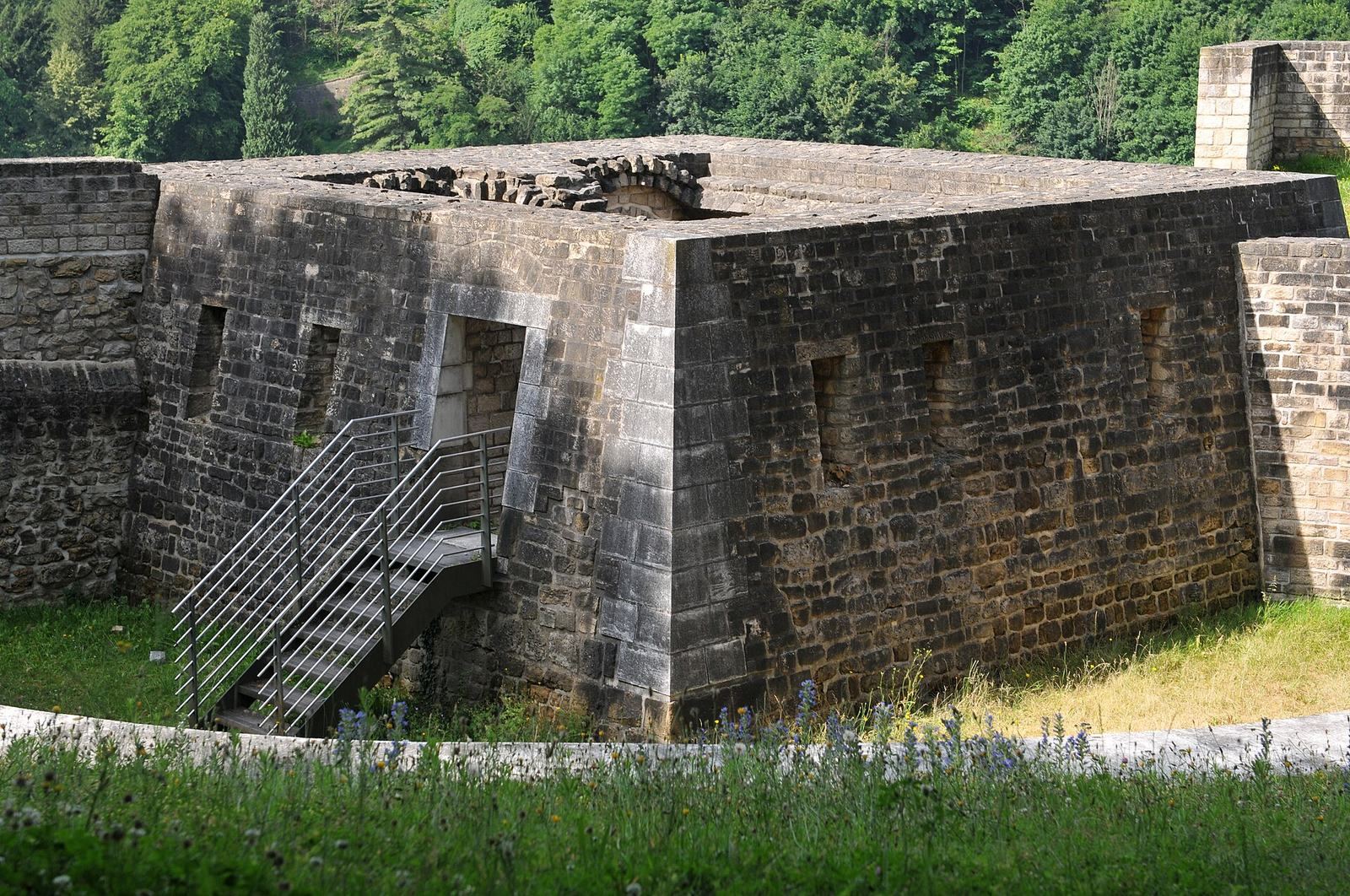
The inner stronghold, long buried, has been cleared and partly rebuilt. Its surrounding ditch survives, as does a casemate at the ditch’s tip. The city-facing curtain wall has been renovated and rebuilt to the level of the inner stronghold.
Buried defenses and chambers
The central bastion and right half-bastion remain buried. Casemates also lie beneath the inner stronghold.