Victoria Memorial: A Monument to Queen Victoria in London
Site at a Glance
- Popularity
- Very High
- Country
- United Kingdom
- Primary era
- Modern
- Eras represented
- Modern
- Civilizations
- British
- Site type
- Civic
- Remains
- Monument
On this page9 sections
History
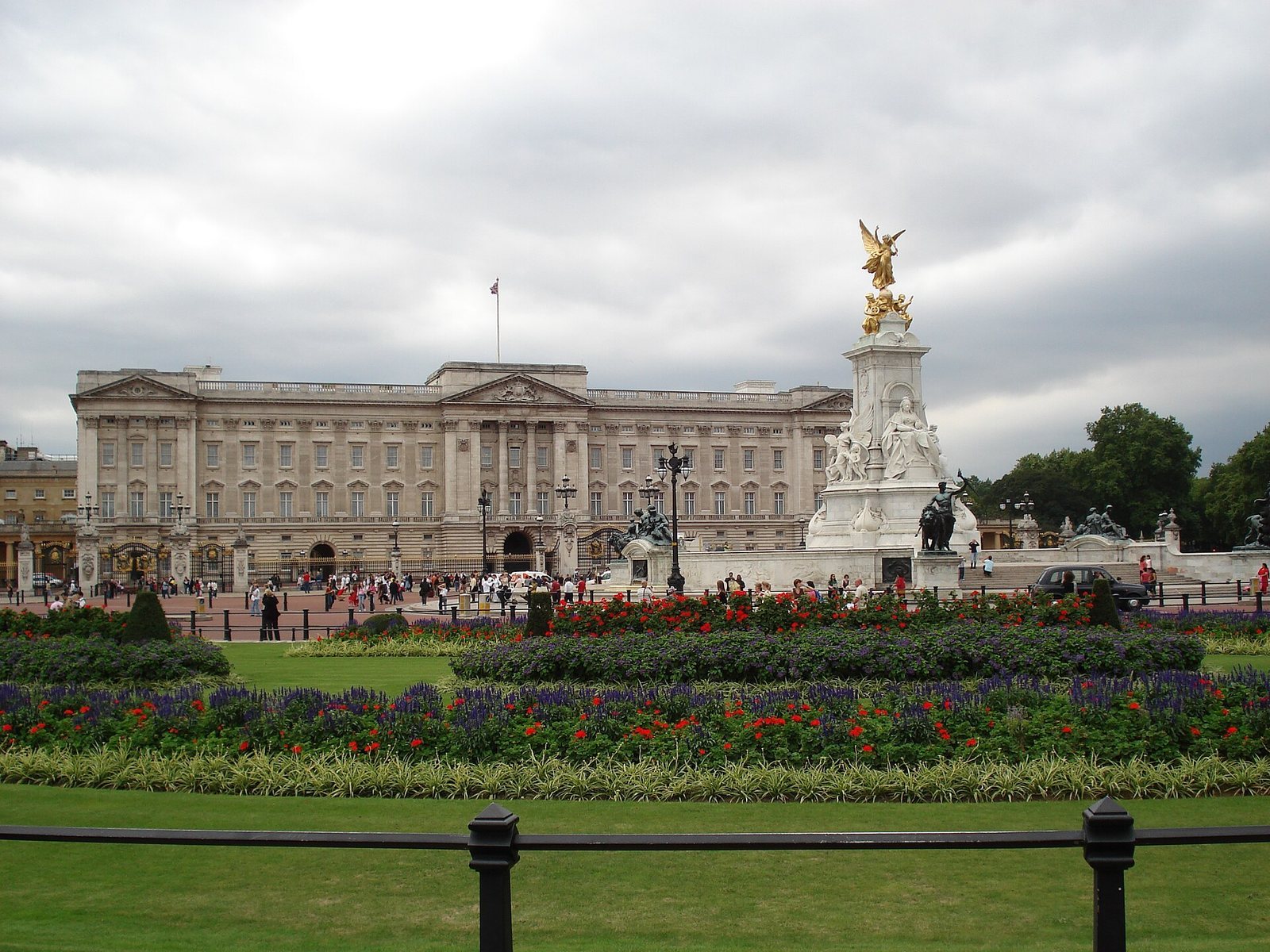
The Victoria Memorial is a monument to Queen Victoria at the end of The Mall, in front of Buckingham Palace in London, United Kingdom. Conceived after her death in 1901, it was built from 1906 to 1924 in the Beaux-Arts and Edwardian Baroque styles, associated with monumental design and elaborate classical forms. Victoria had reigned from 1837 to 1901.
Planning and construction
Victoria’s son and successor, Edward VII, proposed a joint parliamentary committee to plan a memorial. The committee first met at the Foreign Office, the government department responsible for foreign affairs, on 19 February 1901. It agreed that the monument should be monumental in scale, a decision announced publicly by the Lord Mayor of London.
The committee considered several locations, including Westminster Abbey, the park near the Palace of Westminster, a square on The Mall near the Duke of York’s Column, and Green Park. On 26 March 1901, it selected the site outside Buckingham Palace at the end of The Mall and agreed to shorten the avenue slightly. A competition involving five architects continued until early July. The selected proposal was submitted to Edward VII for approval, and sculptor Thomas Brock was announced as the designer on 21 October 1902.
The projected cost was first estimated at £250,000, with no government grant; after Brock’s selection, the expected cost fell to £200,000. Funding came from public donations in Britain and across the British Empire, the territories ruled or administered by Britain. About £154,000 had been raised by October 1901. In 1902, communities on Africa’s west coast contributed goods for sale, with shipowner Alfred Lewis Jones arranging free transport to Liverpool. Australia’s House of Representatives, the lower house of its federal Parliament, granted £25,000 on 17 October 1905, and New Zealand’s government contributed £15,000.
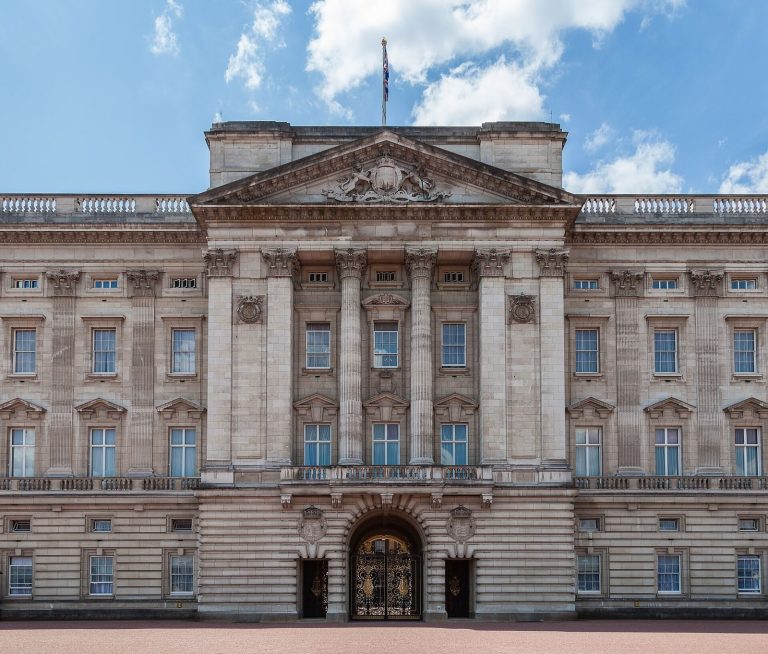
Donations ultimately exceeded the memorial’s needs. The surplus helped pay for Admiralty Arch, a direct route from The Mall to Trafalgar Square, and work on Buckingham Palace’s façade. Architect Aston Webb oversaw the wider scheme. Savings on Admiralty Arch left funds for the palace project, which was completed in 13 weeks using prefabricated stonework. Preparations for the memorial included rerouting the road and altering The Mall. Although Brock had hoped work would begin in 1905, construction took place from 1906 to 1924. The lower half was revealed to the public in late May 1909.
Dedication and later history
A practice ceremony was held on 11 March 1911 in the presence of Prince Arthur, Duke of Connaught and Strathearn, one of Victoria’s sons. George V presided over the dedication on 16 May. Those attending included Wilhelm II of Germany, Victoria’s grandson, and two of her eldest grandsons, who arrived with their families in a royal procession. Members of Parliament and representatives of the armed forces were also present. Home Secretary Winston Churchill, the cabinet minister responsible for domestic affairs, carried the speech texts, and Lord Esher spoke about the memorial’s history. George V described his involvement in the project and Victoria’s influence and popularity. The ceremony lasted about 30 minutes, after which the King’s decision to knight Brock was announced.
The memorial received Grade I listing on 5 February 1970. Grade I is England’s highest category of statutory protection for buildings and structures; the formal-garden setting and gates have a separate Grade I listing. The bronze sculptures were restored in April 2011. On 5 November 2013, the memorial was damaged during the anti-austerity Million Mask March. During state funerals, the coffins of Edward VII, George V, George VI and Elizabeth II were carried past it.
Remains
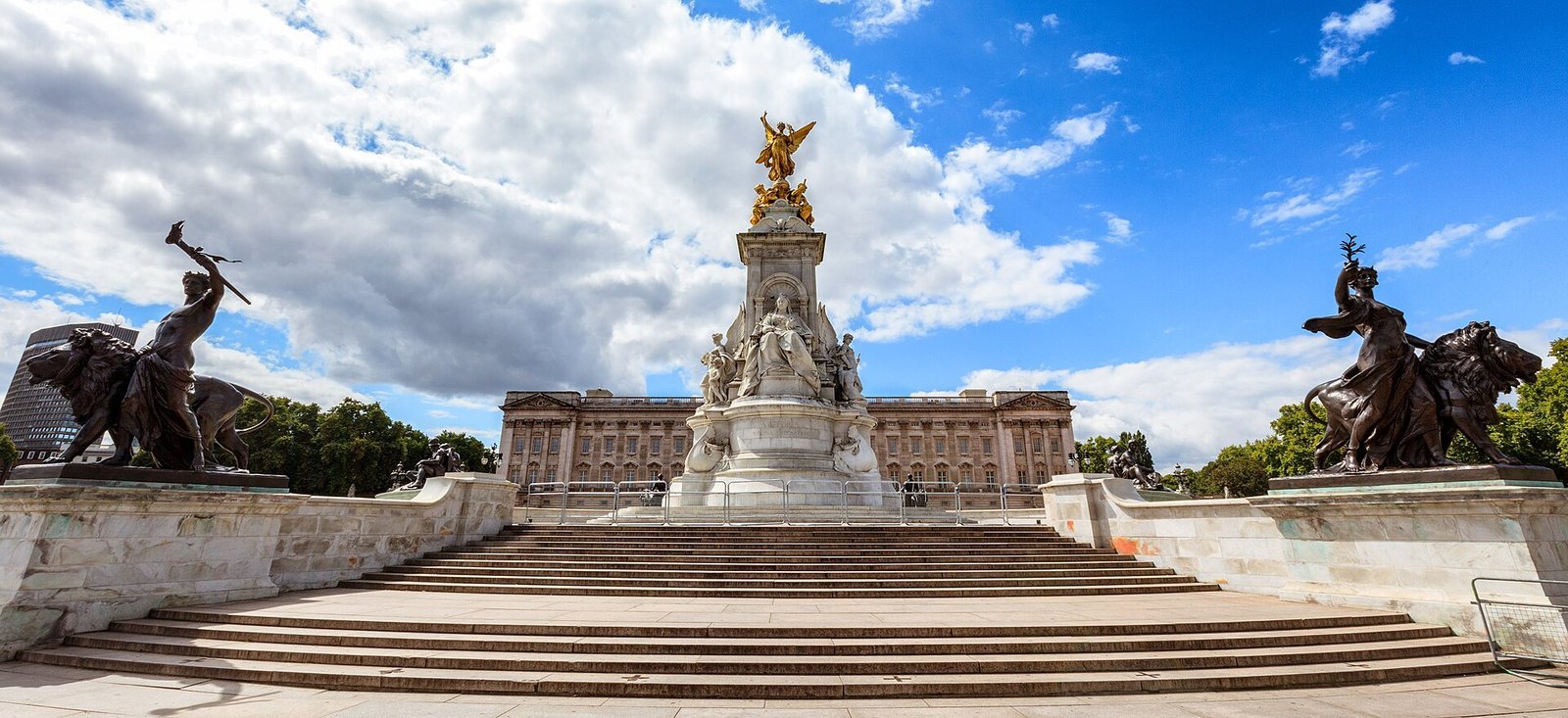
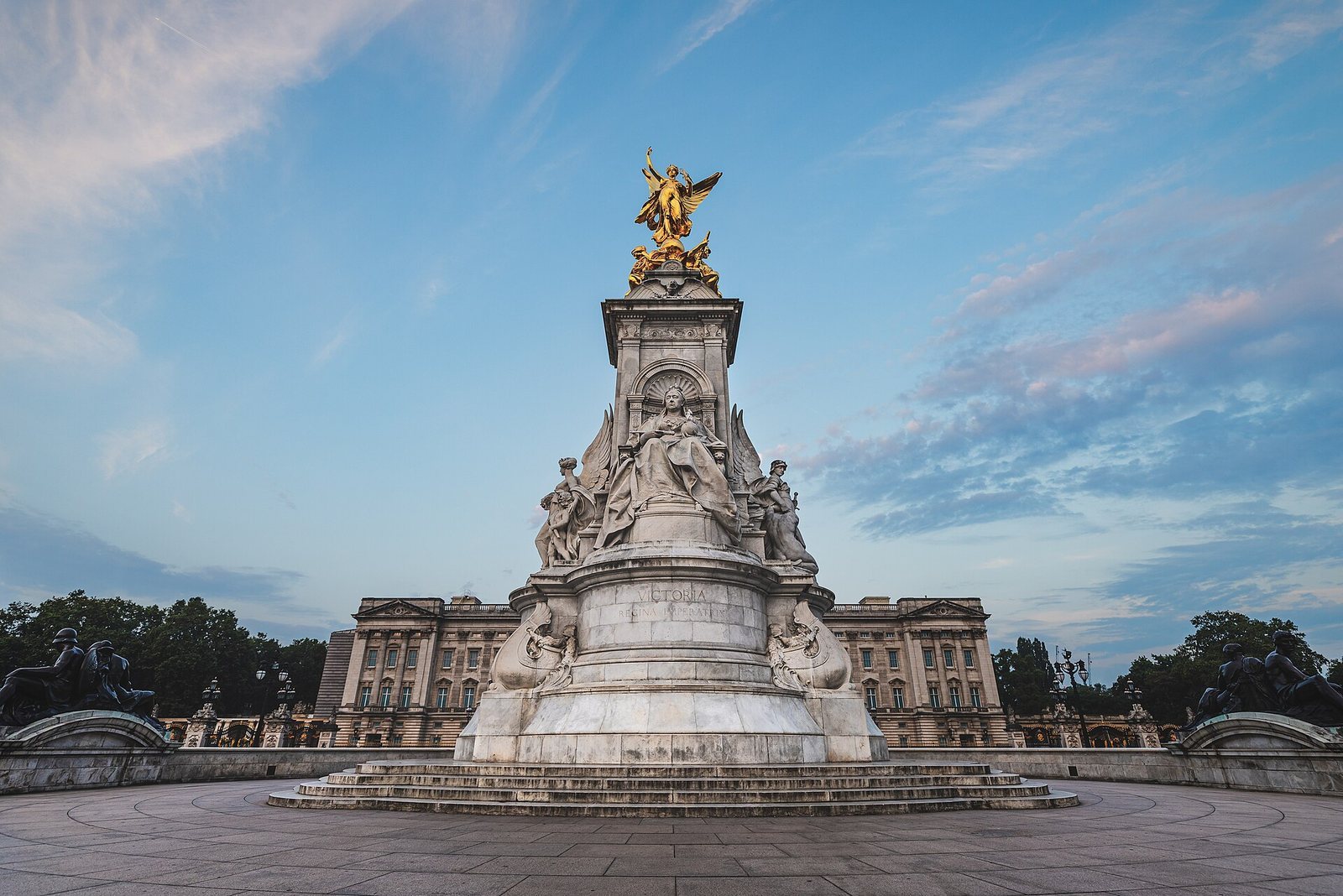
The monument is a circular, multi-tiered composition at the end of The Mall, with Buckingham Palace behind it and Green Park to the north-west. It stands about 25 metres high, measures approximately 32 metres across and weighs around 2,300 tonnes. It is England’s tallest monument to a king or queen. Its elaborate form and statues at the summit have led Londoners to nickname it the “Wedding Cake.”
Central sculpture
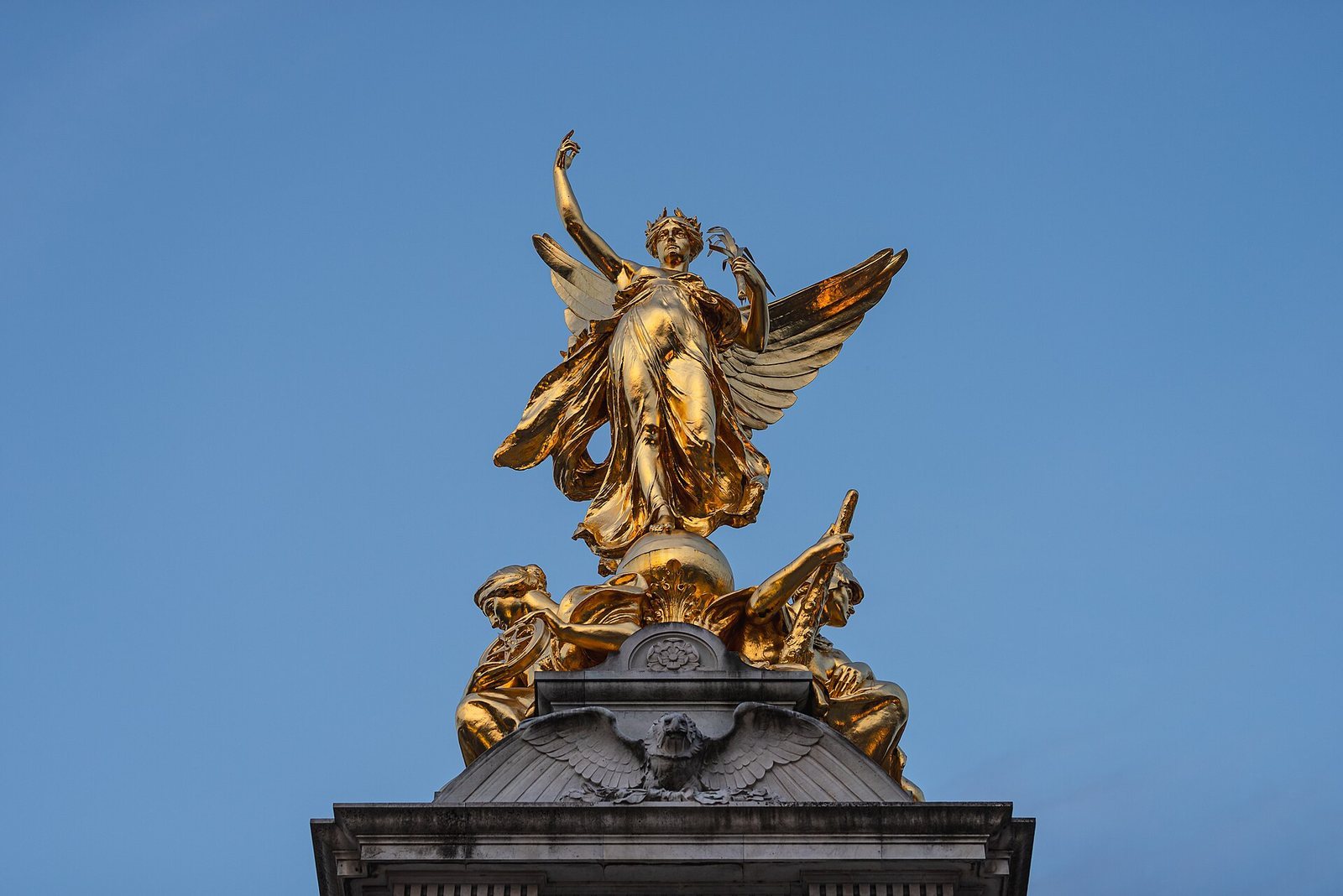
A central pillar of Pentelic marble, from Mount Pentelicus in Greece, incorporates Carrara marble. The sculptures use Lasa marble from South Tyrol and gilded bronze. At the summit, Winged Victory stands on a globe holding a victor’s palm. Beneath her, Constancy holds a compass whose needle points to true north, while Courage carries a club. Spread-winged eagles on the east and west sides represent Empire. Below them, seated Queen Victoria faces The Mall and Motherhood faces Buckingham Palace. Justice looks north-west toward Green Park, while Truth faces south-east. Truth was carved from a single block of marble weighing 40 tonnes. Brock explained that Victoria faces the city between Justice and Truth, while Motherhood represents her love for her people.
Additional sculptural groups
Corner figures
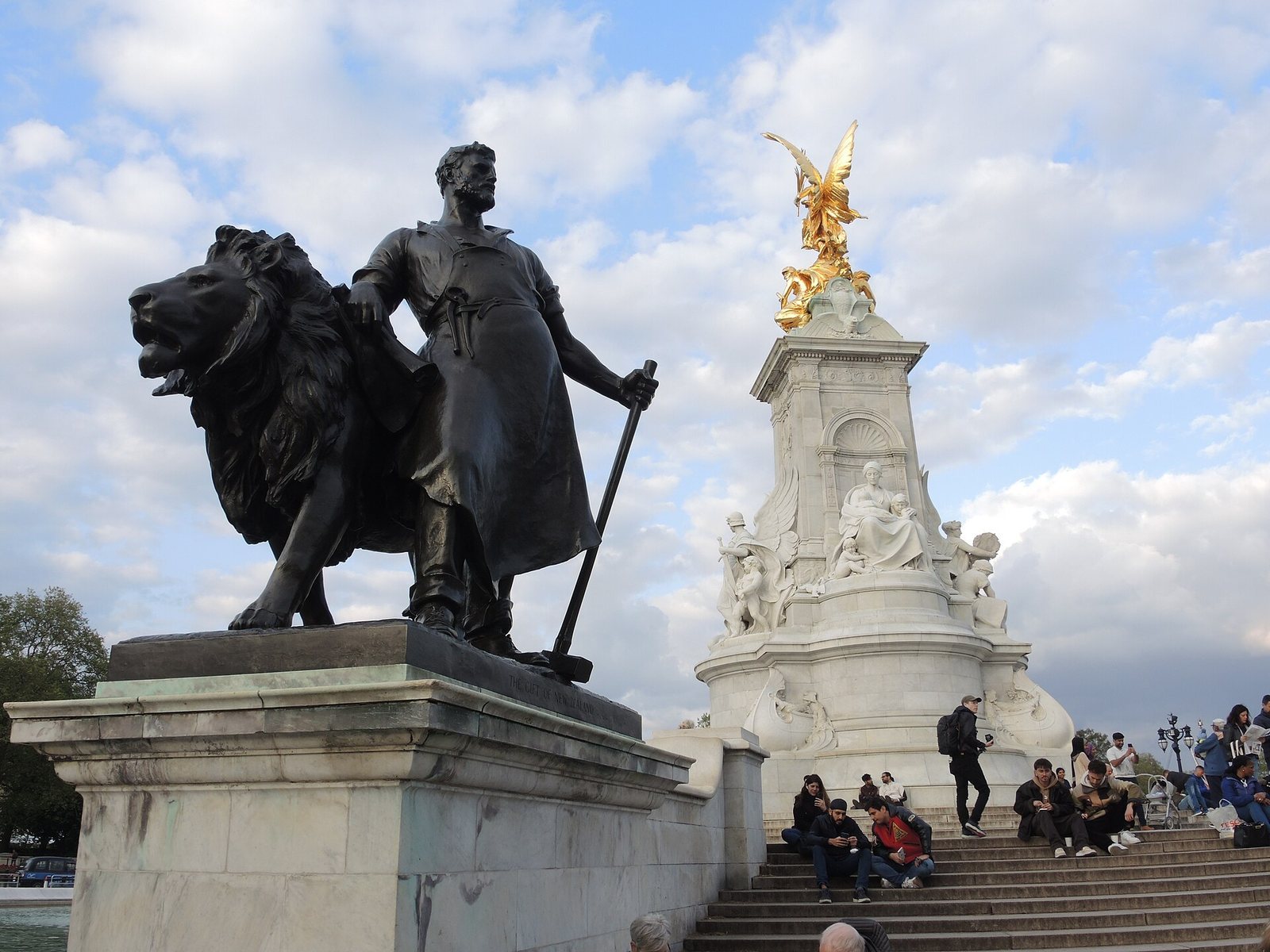
Large bronze figures accompanied by lions occupy the monument’s four corners. Peace appears as a woman carrying an olive branch; Progress is a nude youth with a flaming torch; Agriculture is a woman in peasant dress holding a sickle and a sheaf of corn; and Manufacture is a blacksmith in modern dress with a hammer and scroll. The bases of the Agriculture and Manufacture groups carry the inscription “THE GIFT OF NEW ZEALAND.”
Nautical figures
Mermaids, mermen and a hippogriff, a mythical creature combining features of a horse and a griffin, contribute to the monument’s nautical theme. The imagery evokes British naval power and also appears elsewhere along The Mall.
Gardens and setting
Formal gardens and gates form part of the memorial’s architectural setting. Webb designed them as well as the Queen’s Gardens. Fountains are incorporated into the monument.