Palazzo Comunale in Spoleto: The City’s Historic Town Hall
Site at a Glance
- Popularity
- Low
- Country
- Italy
- Primary era
- Early Modern
- Eras represented
- Medieval, Early Modern, Modern
- Civilizations
- Italian, Papal States
- Site type
- Civic
- Remains
- Town Hall
On this page16 sections
History
The Palazzo Comunale in Spoleto is the city’s town hall in Piazza del Comune, Italy. Its foundations partly cover a Roman house, and it became the center of municipal government after 1296. The building’s present form largely reflects an eighteenth-century rebuilding.
From Roman setting to civic seat
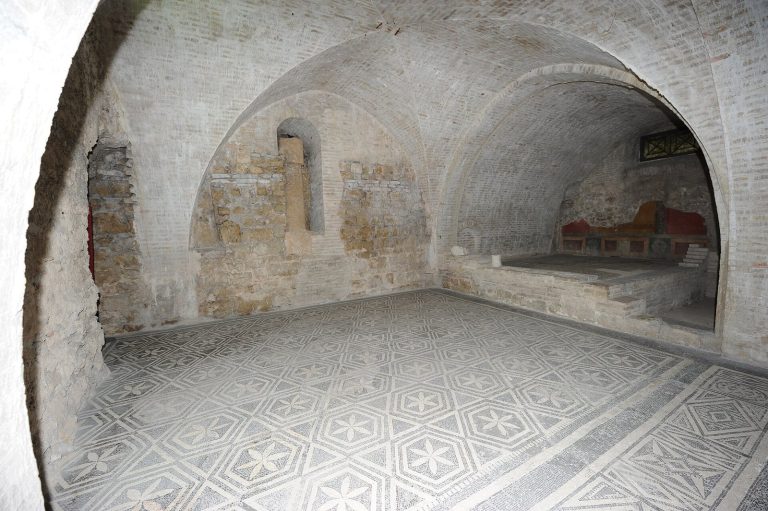
The Palazzo stands in the medieval quarter of Vaita Palazzo, between Spoleto’s ancient forum, now Piazza del Mercato, and Piazza del Duomo. Aristocratic homes and private or representative residences occupied this area from antiquity. In 1885, the archaeologist Giuseppe Sordini discovered a Roman house partly beneath the town hall’s foundations.
Before 1296, the city conducted its government elsewhere. After that year, municipal administration was concentrated in the Palazzo. Its cloister porticoes served the podestà, the commune’s chief civic magistrate, and the captain of the people, a separate civic officer, as they carried out some of their duties.
Pope Nicholas V supported enlargement and improvements in the fifteenth century. In 1449, he came to Spoleto to join his family and escape the plague in Rome, remaining in the city for several months. By about 1455, a chapel in the Palazzo held religious images of Spoleto’s patron saints.
Charitable lending and the Mount of Piety
The Mount of Piety was a charitable lending institution intended to offer an alternative to usury. Proposed by the friar Fortunato da Perugia, it began operating in Spoleto in 1469, providing free loans to citizens in difficulty. In 1490, the friar Andrea da Faenza and Bishop Costantino Eroli established a new Mount with two services: cash loans and a grain bank that lent seed to farmers for repayment at harvest. The grain-lending initiative was the first of its kind in Italy, and similar banks later opened in other cities to support agriculture. Their running costs could make the free service hard to maintain.
A Mount authorized in 1575 could charge three percent annual interest, marking a move from charitable lending toward credit. In 1661, this change was formalized when the institution became a public deposit bank. The grain bank continued separately as a charitable service, supported by Spoleto’s noble families, particularly the Ràcani family, and sometimes called the Ràcani grain fund. After the 1861 Pepoli decree, the Mount joined Spoleto’s Congregation of Charity, which administered local charitable institutions. It continued through later changes until the Spoleto Savings Bank absorbed it in 1961.
Earthquake damage and rebuilding
The earthquake of 1703 seriously damaged the Palazzo, and the city council had to meet elsewhere. Three years later, the council authorized a full restoration, but scarce municipal funds and further earthquakes slowed the work. The project developed into a major rebuilding and enlargement that incorporated neighboring private houses.
Local architect Pietro Ferrari submitted designs in 1782, but they were not carried out. In 1784, the city resolved to complete the work despite objections from residents who thought the proposed town hall too large and grand. Francesco Angelo Amadio, also known as Scheggino, and architect Andrea Vici directed the construction. In 1913, the adjoining Palazzo Brancaleoni was incorporated into the town hall to provide additional working space.
The civic collection and modern use
The Palazzo’s civic art collection took shape over several centuries. In the late sixteenth century, Bishop Paolo Sanvitale gathered ancient inscriptions there. Pietro Fontana helped form a collection of art spanning the twelfth to eighteenth centuries, while other collectors and scholars contributed artworks and furnishings. A royal decree in 1863 transferred art from suppressed religious congregations to municipalities, further expanding Spoleto’s holdings. Lorenzo Sinibaldi arranged the collected material in 1871; Giuseppe Sordini reorganized it in 1893 and 1904. The gallery included works from the Abbey of San Paolo, the Abbey of Sant’Eutizio at Preci, the Church of San Crisanto at Patrico, and the Monastery of the Stella within the monumental amphitheatre complex.
Toward the end of the nineteenth century, inscriptions and sculpture moved to the Civic Museum, then housed in the foundations of Palazzo della Signoria. In the late 1980s, the gallery’s works left the town hall for Palazzo Rosari-Spada. After the 2007 renovation, some returned to the Palazzo’s formal rooms, while others went to the principal floor of the Carandente Museum at Palazzo Collicola and to the National Museum of the Duchy. The textile collection remained at Palazzo Rosari-Spada, in the Museum of Textiles and Costume.
Until the early 1980s, the Palazzo housed municipal offices, the civil registry, other public services, and the civic art gallery on its principal floor. A structural renovation completed in 2007 safeguarded and enhanced its historic features, reorganized its spaces, and removed architectural barriers. The building now houses the city’s institutional and political bodies.
Remains
The Palazzo has 4,000 square metres of usable floor area. Its surviving features include a medieval tower, two principal façades, decorated interior rooms, and a sculpture outside the south façade.
Exterior
The tower
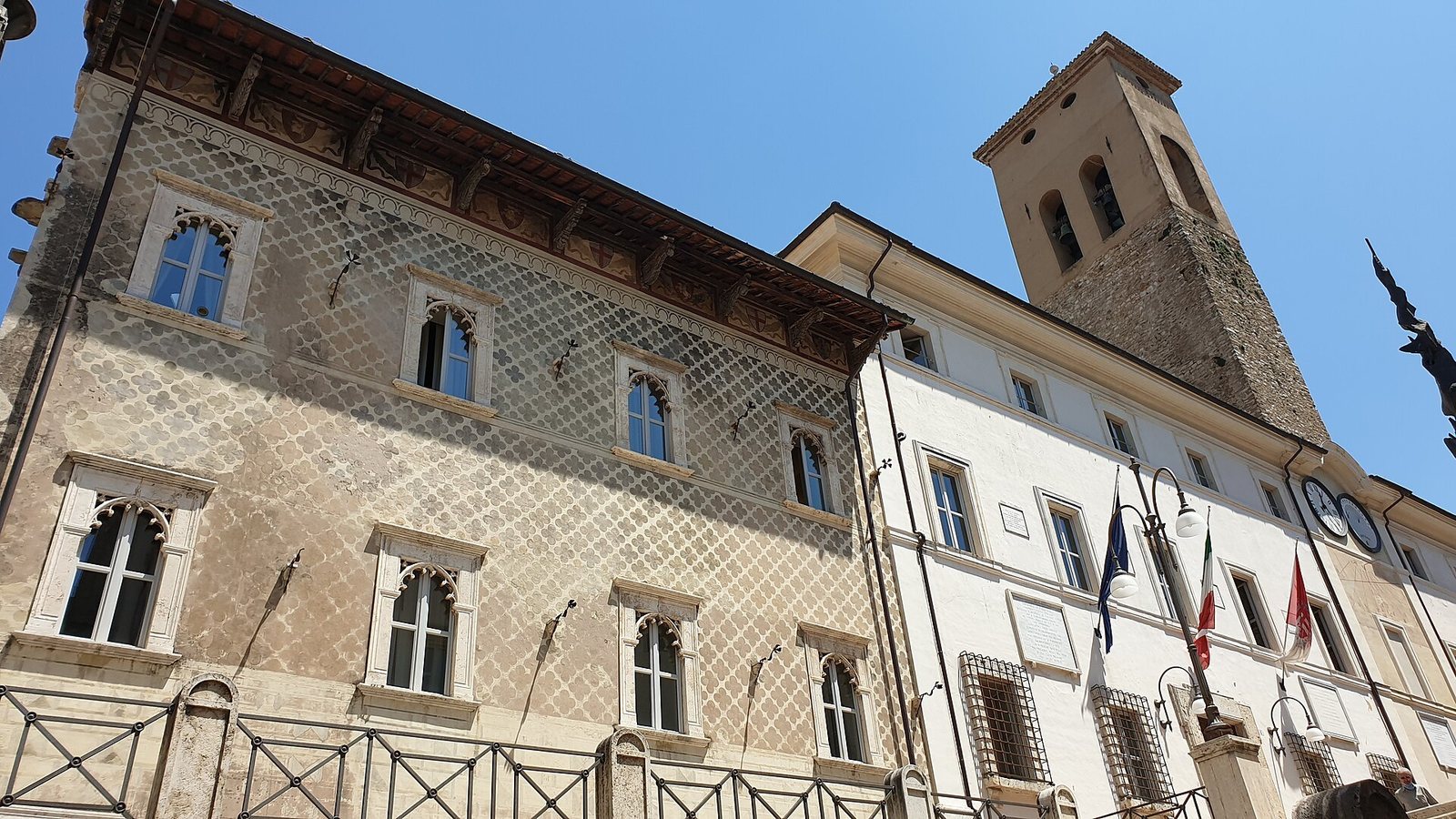
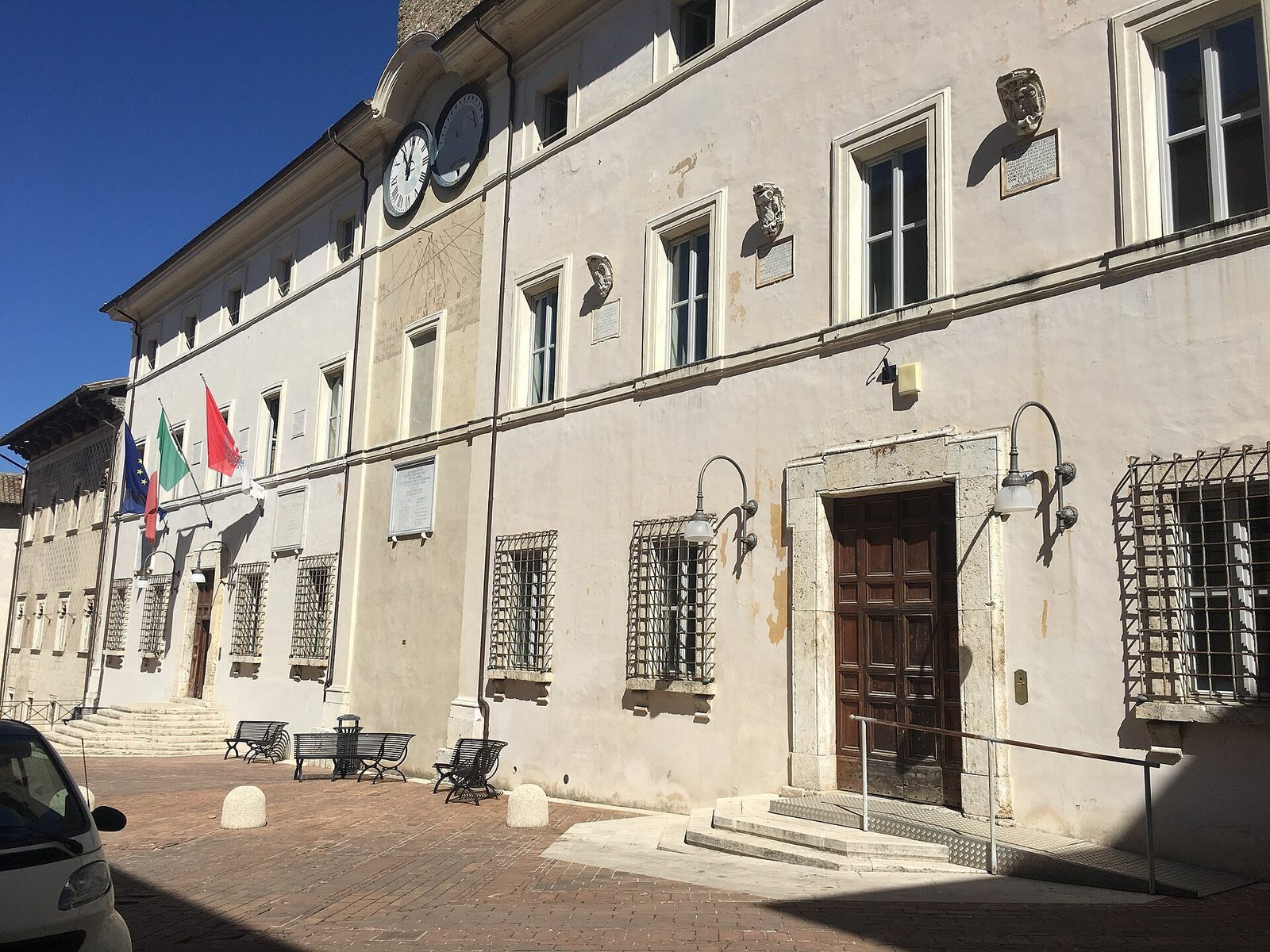
The rectangular tower on the south façade is the oldest surviving part of the Palazzo and its only remaining thirteenth-century element. Built of flint masonry like Spoleto’s medieval walls, it has a sixteenth-century bell chamber and an upper section dating to the eighteenth century. Four bells hang in the tower. The oldest is from the fourteenth century; the largest was cast in 1639 by the French bell founder Jacques Doisemont. It bears two low-relief carvings, Barberini family bees, lily emblems, and an inscription meaning “Spoleto, capital of Umbria.” The two smaller bells date to 1559 and 1711. A sundial with two dials is set below the bell chamber.
The north façade
Designed by Pietro Ferrari, the north façade faces the staircase of Piazza del Duomo. Coats of arms and inscriptions on its principal floor refer to important city rulers of the seventeenth and eighteenth centuries.
The south façade and Palazzo Brancaleoni
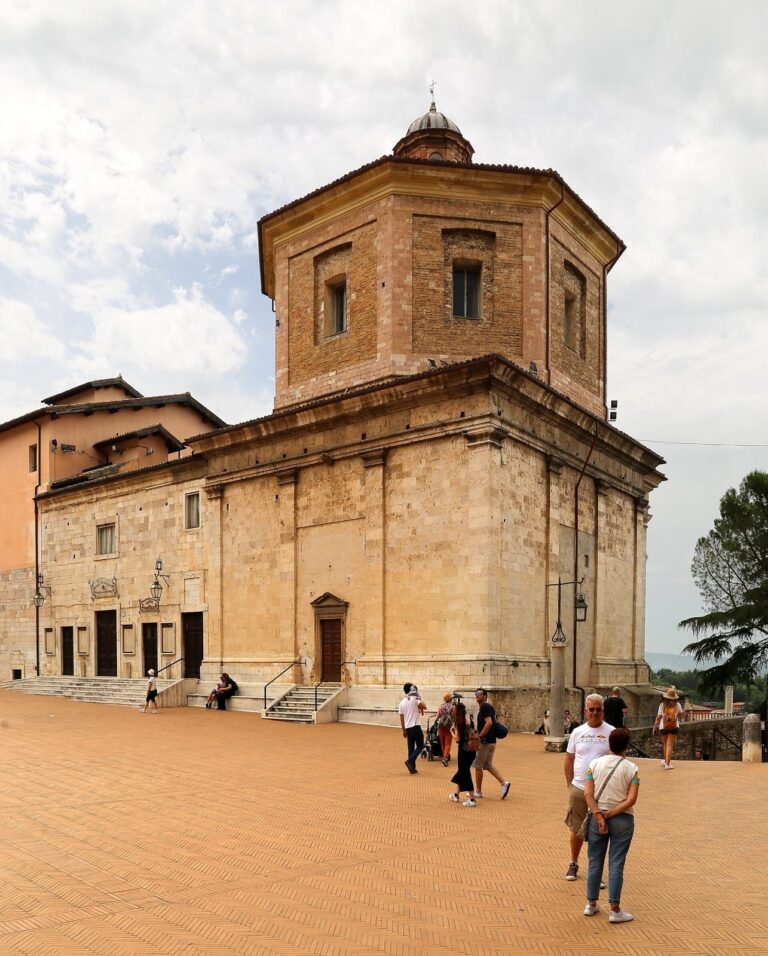
Francesco Angelo Amadio designed the south façade, which stands above a broad staircase. Palazzo Brancaleoni extends to its left. Spoleto artists Giuseppe Moscatelli and Benigno Peruzzi gave the adjoining palace decoration inspired by medieval Gothic forms and are also credited with much of the decoration inside the town hall.
Spoleto ’62
In front of the south façade stands Spoleto ’62, a slender sculpture in iron and steel by Nino Franchina. Created for the 1962 exhibition Sculptures in the City, it was donated to Spoleto.
Interior rooms
The Chapel of San Ponziano
The deconsecrated Chapel of San Ponziano, a chapel associated with a palace, was built in 1711. Its molded plaster decoration depicts figures and episodes from Spoleto’s civic and religious history. After a long period as a storeroom, it was made available for civil wedding ceremonies following the 2007 restoration.
The painted and portrait rooms
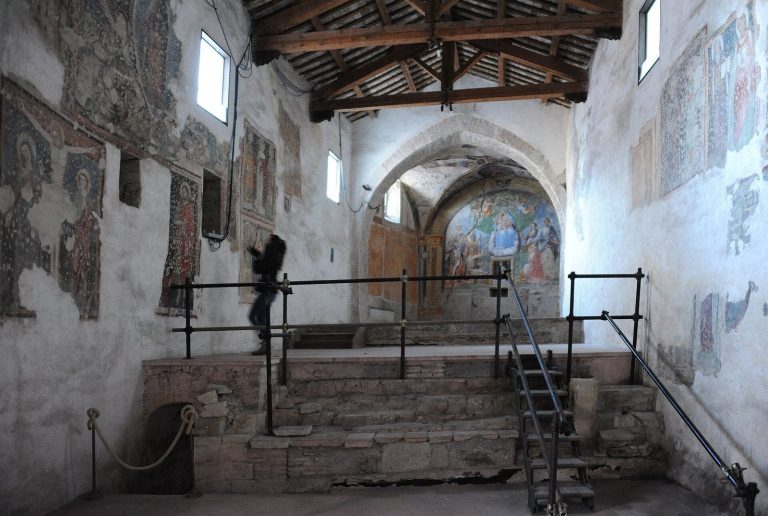
The Hall of Lo Spagna contains wall paintings removed from Rocca Albornoziana. One group, brought to the Palazzo around 1824, represents Charity, Clemency, and Justice. Another painting, a Madonna and Child with Saints Jerome, Nicholas of Tolentino, Catherine, and Brizio, was removed in 1800. Pietro Ridolfi, governor of the city from 1514 to 1516, commissioned it. The hall also preserves surviving fragments of chapel paintings made by Bernardino Campilio da Spoleto in 1498 and Antonio Brunotti in 1510. Around 1455, Arcangelo di Giovanni had decorated a chapel in the Palazzo with images of the city’s patron saints.
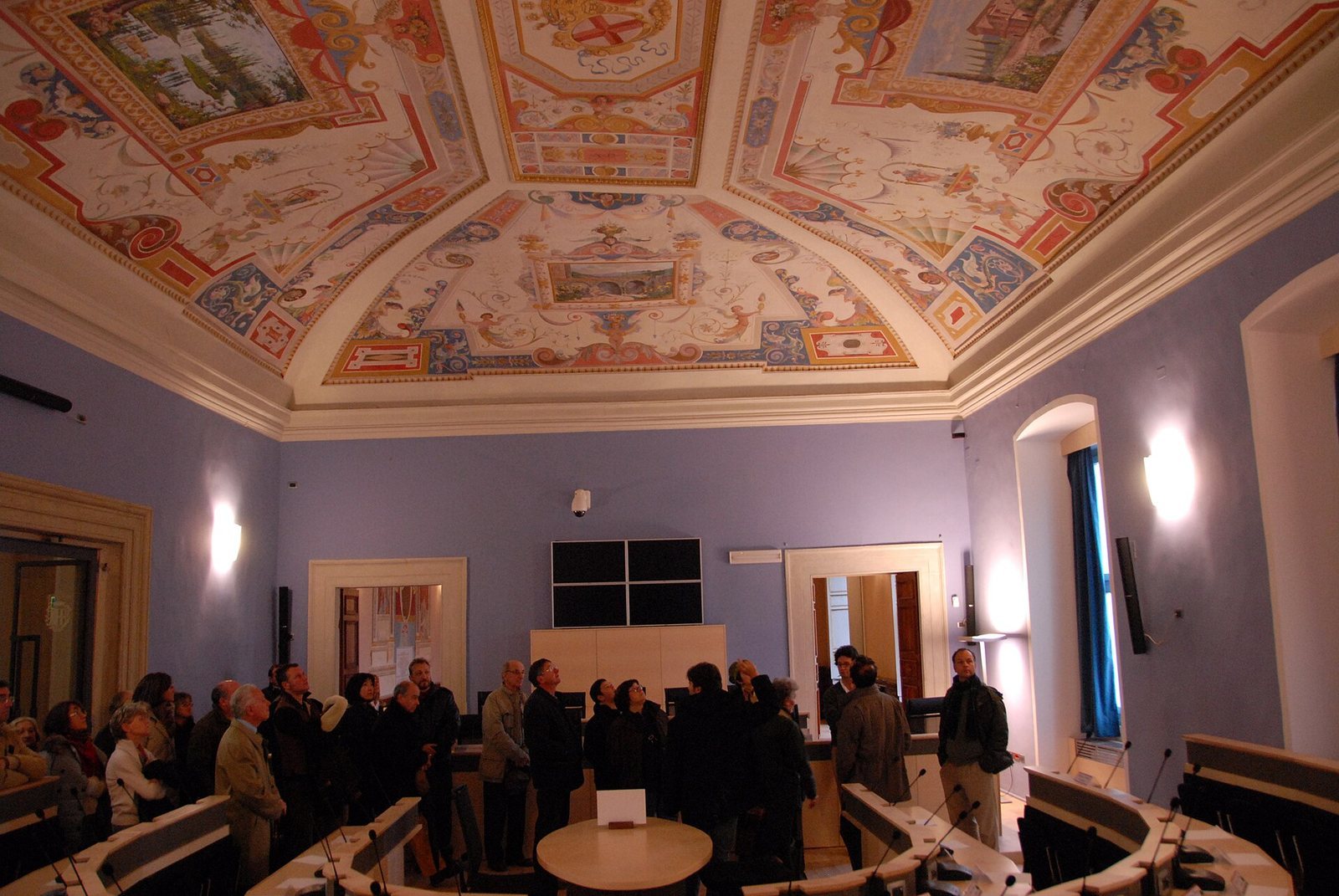
The Hall of Illustrious Men, also called the Hall of Caput Umbriae, meaning “Capital of Umbria,” displays portraits of notable people from Spoleto. Ceiling portraits of prominent Lombard dukes, rulers of Lombard territories, appear in the Hall of the Dukes.
The Hall of the Stars
The Hall of the Stars served for council meetings before the restoration and is now used mainly as office space.
The former Mount of Piety room
A room within the Palazzo housed the Mount of Piety after the eighteenth-century enlargement brought it into the complex. It could be reached from the north façade.