St Mary’s Church, Handsworth, Sheffield: A Norman Parish Church
Site at a Glance
- Popularity
- Low
- Country
- United Kingdom
- Primary era
- Medieval
- Eras represented
- Medieval, Modern
- Civilizations
- British, English, Norman
- Site type
- Religious
- Remains
- Church
On this page11 sections
History
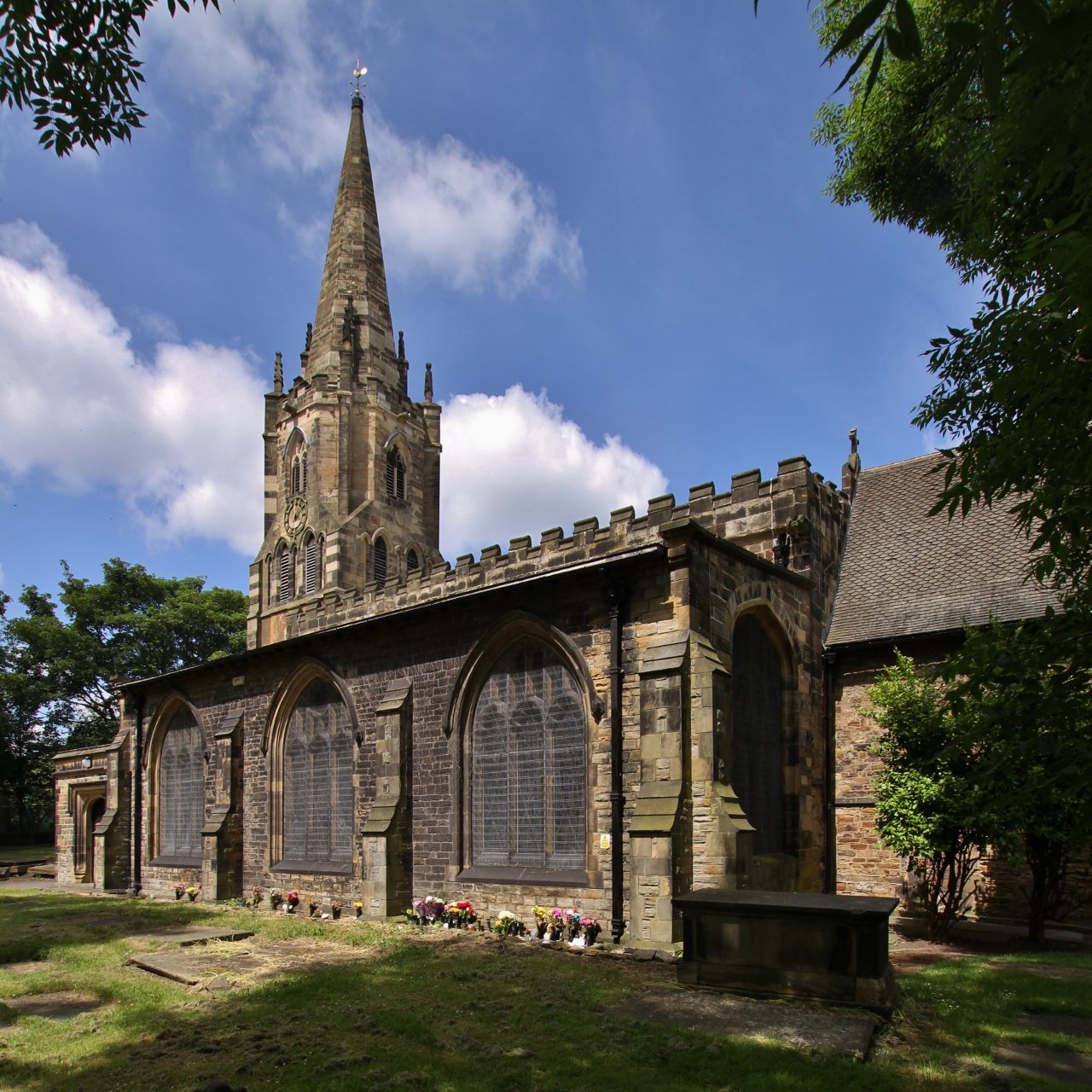
St Mary’s Church, Handsworth, is an active Church of England parish church in Sheffield, England, founded around 1170 as a Norman church, built in the Romanesque tradition associated with Norman rule. It is dedicated to St Mary the Virgin and follows the Anglo-Catholic tradition, which emphasizes Catholic liturgy and sacramental practice within Anglicanism.
Foundation and medieval rebuilding
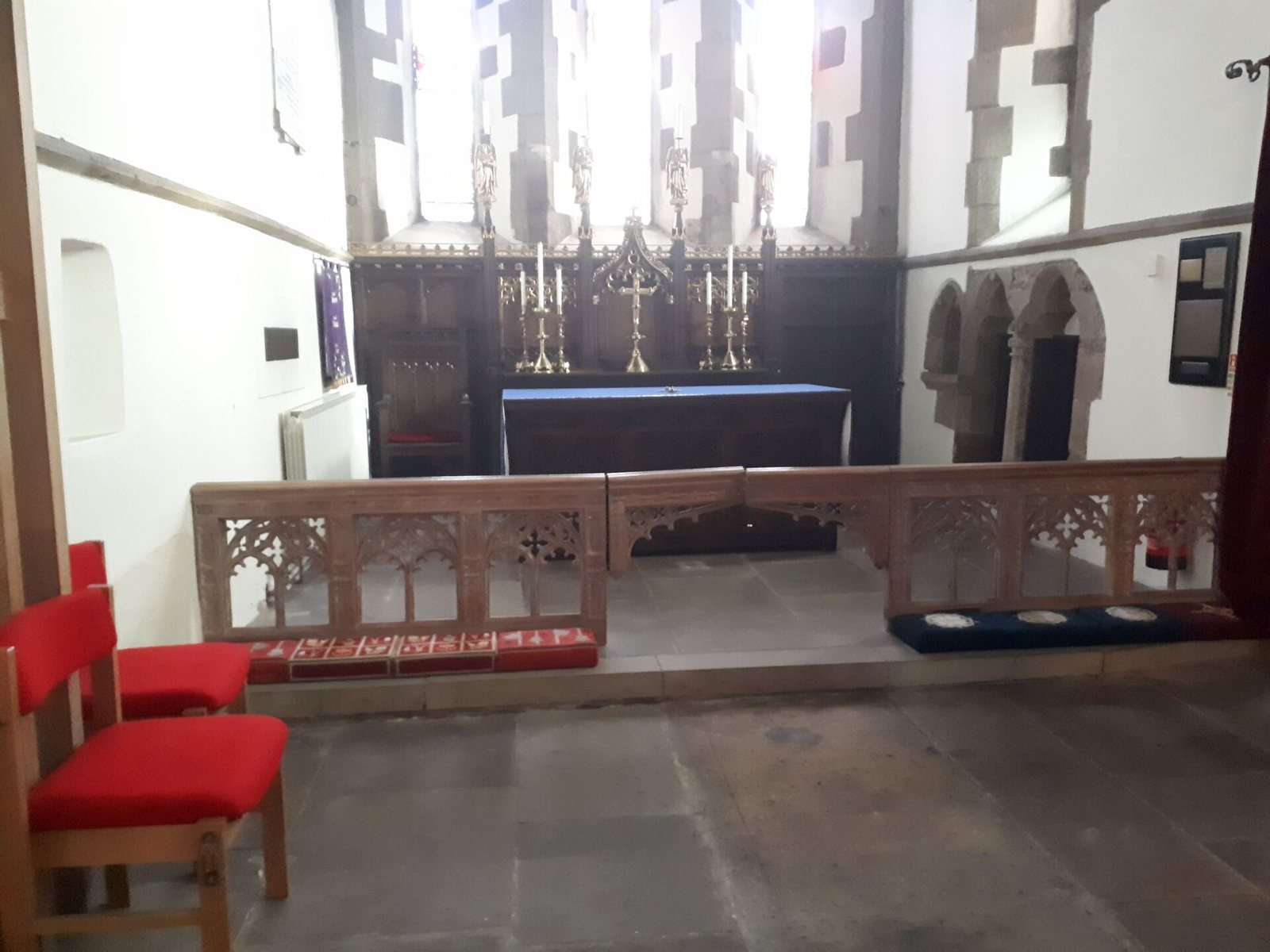
The church’s foundation is attributed either to the Norman lord William de Lovetot or to his father, Richard, while William Paynel planned its foundations. In the 1220s, St Katherine’s Chapel was added, probably for Maud de Lovetot. She intended it for prayers and Mass for the soul of her husband, Gerard de Furnival, and perhaps also their son Thomas, who died on a crusade, a religiously sanctioned military expedition, to Jerusalem and the Holy Land.
By 1472 the church was described as ruinous and rebuilding was under way. Successive Earls of Shrewsbury arranged repairs to much of the damage during the Tudor period.
Parish life and changing institutions
Simon Foliot, the first rector, or priest responsible for the parish, had two assistants; by 1535 their number had risen to five. The assistants lost their livings during the English Reformation, the 16th-century break with the Roman Catholic Church and transformation of religious institutions in England. Parish registers preserve records of baptisms, marriages and funerals in a continuous sequence from 1558 through 1836, when a new registration system was introduced.
A Tudor rectory stood on the site now occupied by the Parish Centre. A larger house was built near the church chancel in the late 17th or early 18th century, followed soon afterward by a wing complementing the east wing.
Later rebuilding and repairs
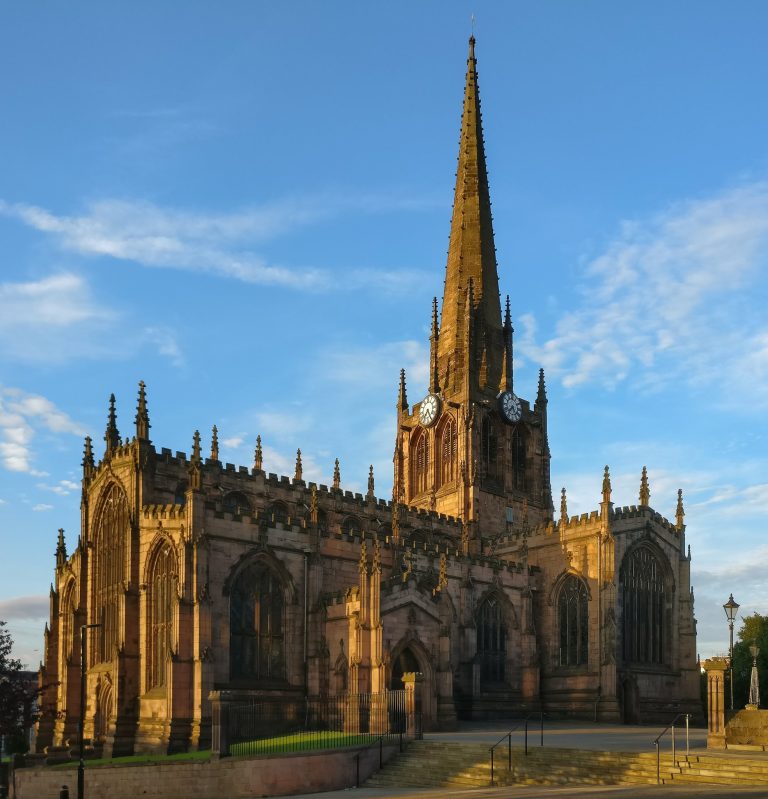
Lightning damaged the spire in 1698. A much smaller replacement steeple, known as the ‘Handsworth stump’, was demolished in the 1820s, when a new tower was erected. Lightning struck the tower again in January 1978, causing less damage. The spire and the clock and bell tower were extensively repaired in 2002.
Remains
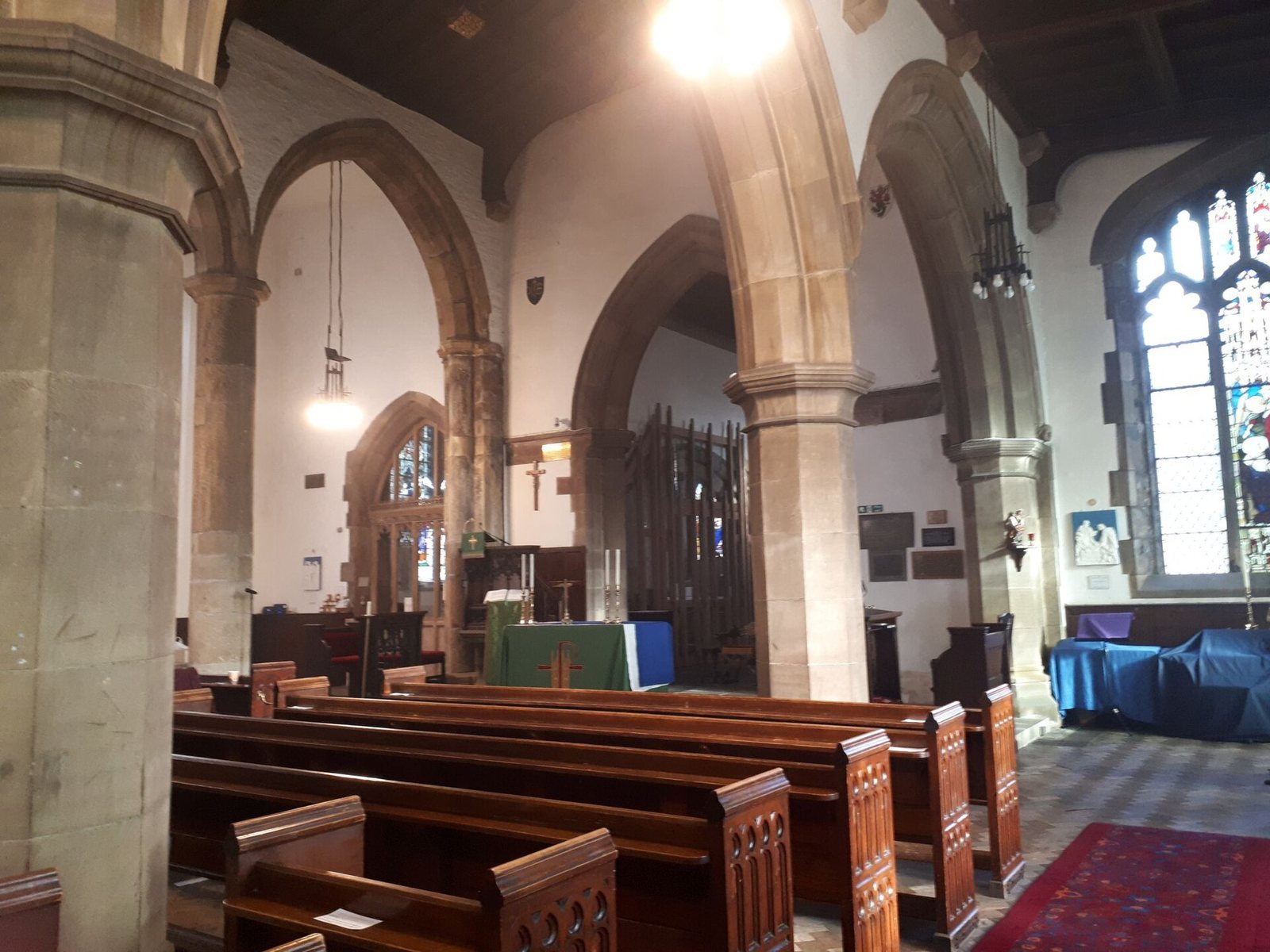
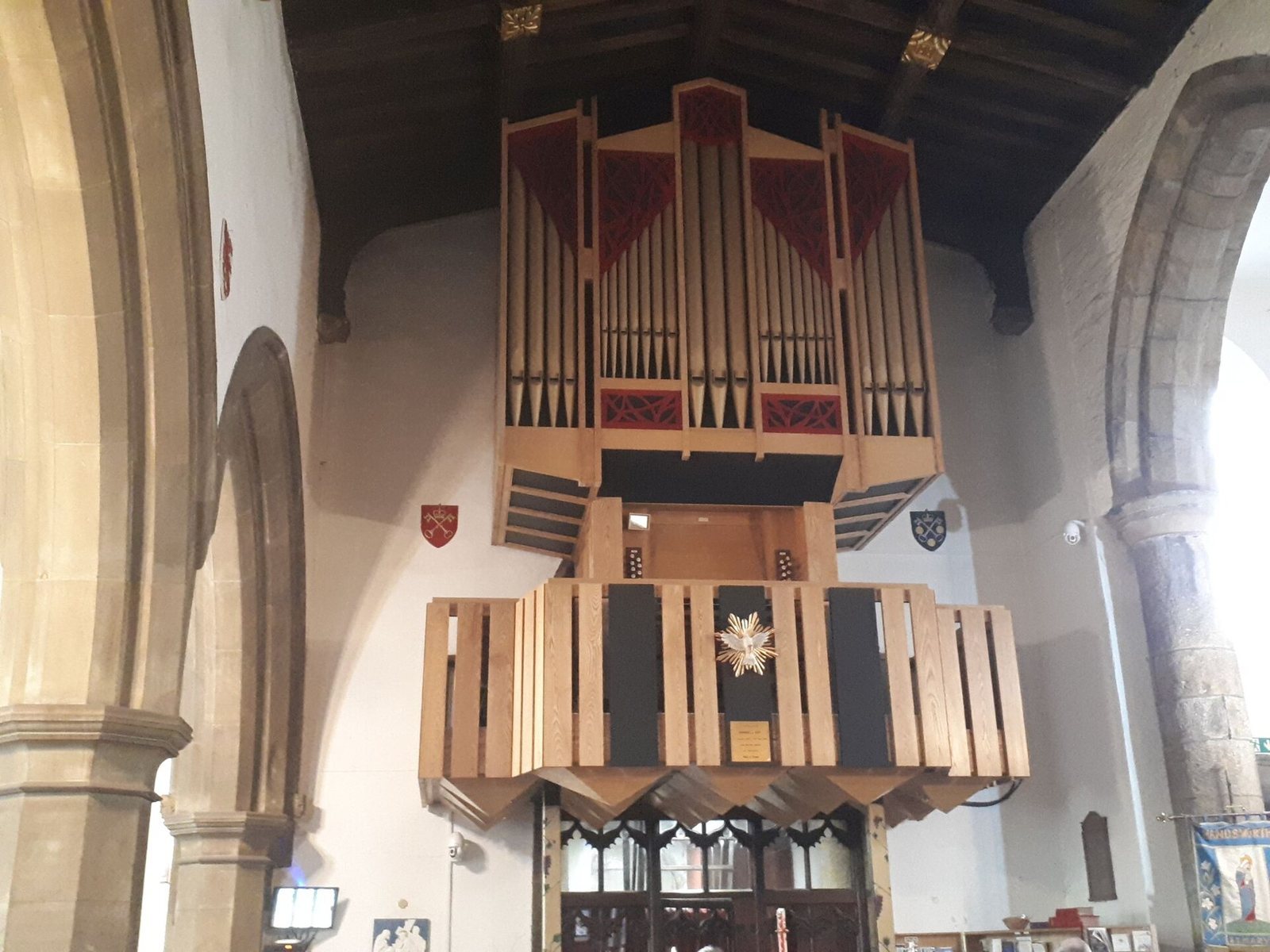
The church is built of stone, with work spanning the 12th to 19th centuries. Its fabric includes Gothic, a medieval architectural style, and Gothic Revival work, a later return to Gothic forms. St Katherine’s Chapel and a west tower are among its identified components.
Church fabric and fittings
Church and chapel
The stone church incorporates both medieval Gothic work and later Gothic Revival features. St Katherine’s Chapel forms part of the building.
West tower and bells
The west tower contains a ring of eight bells. John Taylor & Co of Loughborough recast and rehung all eight in 1920. A separate service bell was cast in 1590 by Henry II Oldfield of Nottingham.
Associated parish buildings
Rectory remains
The Tudor rectory was timber-framed, and parts of it were incorporated into a later building. A section of straw-and-daub wall survives in the present museum, and an oak post remains in the reception hall. The coach house and stable block are the surviving pre-Georgian outbuildings; both were modernized during the Victorian period.
Chantry Inn
Immediately north of the church, the Chantry Inn occupies a building erected in the mid-13th century as a church house for the chaplains and lay clerks attached to St Mary’s. After the Reformation it became a school, and around 1804 it was licensed as a public house.