Bierstedt Megalithic Tombs: A Neolithic Burial Group in Saxony-Anhalt
Site at a Glance
- Popularity
- Very Low
- Country
- Germany
- Primary era
- Stone Age
- Eras represented
- Stone Age
- Civilizations
- Unclassified
- Site type
- Burial
- Remains
- Necropolis
On this page10 sections
History
The Bierstedt megalithic tomb group is a Neolithic burial site near Groß Bierstedt and Klein Bierstedt in Saxony-Anhalt, Germany. It dates to about 3700–3350 BC and is associated with the Deep-Incised Pottery culture, a Neolithic archaeological culture named for its deeply cut pottery decoration. The group originally comprised 13 tombs; one survives.
Early investigations and nineteenth-century records
A local pastor reported that the Altmark’s chief administrative official carried out an initial excavation in 1728. Pottery fragments and human bones were recovered. Johann Friedrich Danneil counted 13 tombs in the Bierstedt area in 1843. By 1893, Eduard Krause and Otto Schoetensack found only one tomb, as the others had been destroyed during the mid-19th century.
Different numbering systems have been used for the tombs. The KS numbers used below follow the system of Krause and Schoetensack.
Regional legend and modern care
A regional legend identifies the surviving tomb as the grave of Ilse, a maid who became pregnant after being seduced by a farmer’s eldest son. The tale says the farmer drove her away, and she hanged herself. She was buried beside a spring, with three stones placed on her grave; her ghost was said to haunt the spring for a long time.
Since 1972, members of the Young Archaeologists of the Altmark association have cleared vegetation from the surviving tomb each year. In 2003–04, the association worked with the Saxony-Anhalt State Office for Heritage Management and Archaeology and the Johann Friedrich Danneil Museum in Salzwedel to document and measure the megalithic tombs still existing in the Altmark.
Remains
The Bierstedt group included stone chambers set within oval mounds or elongated, stone-bordered barrows. The surviving tomb, KS 121, lies about 750 m northwest of Groß Bierstedt. Other megalithic groups in the surrounding area include Leetze, about 3.1 km northeast-northeast of KS 121, Mehmke to the west, and Stöckheim to the south.
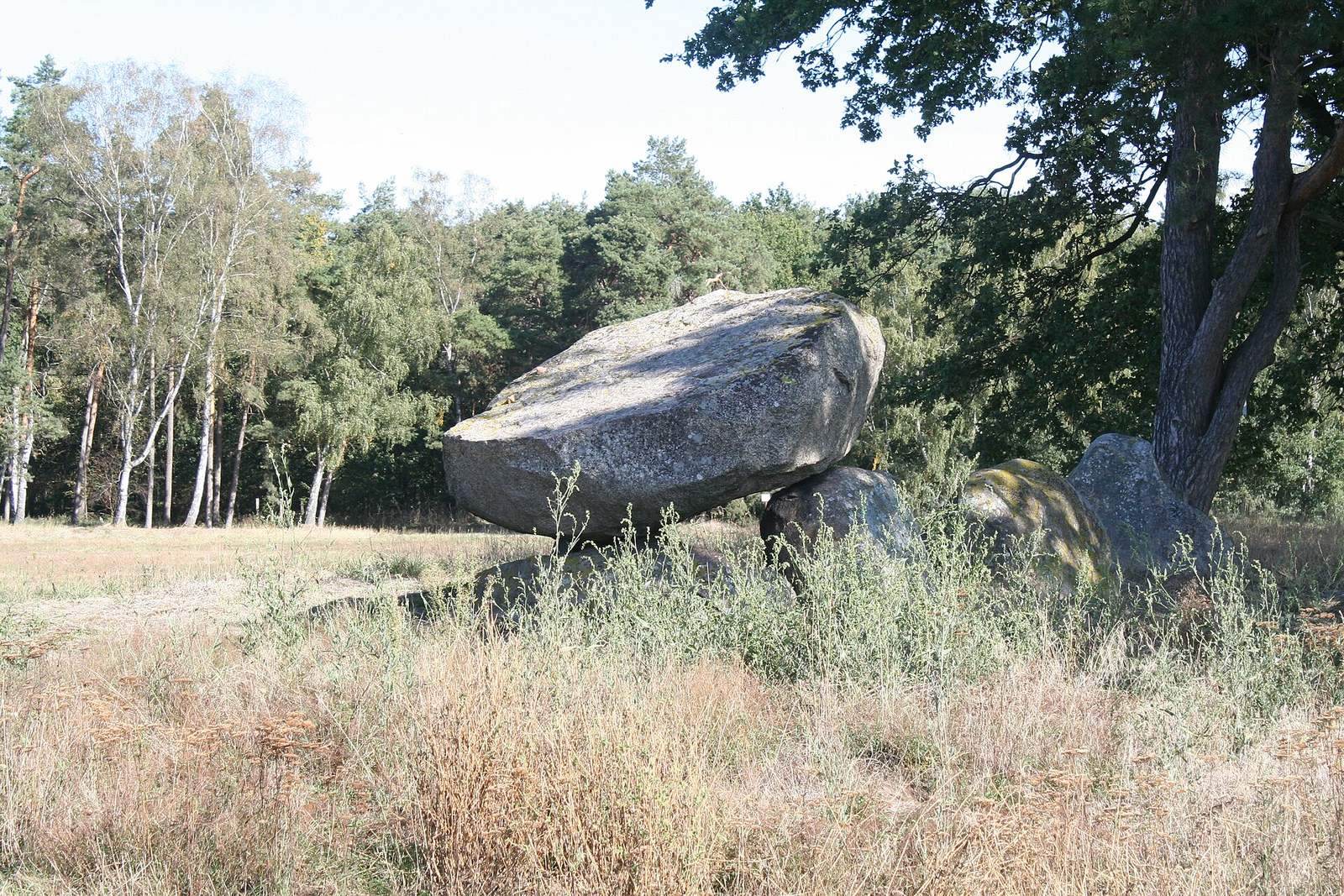
The surviving tomb, KS 121
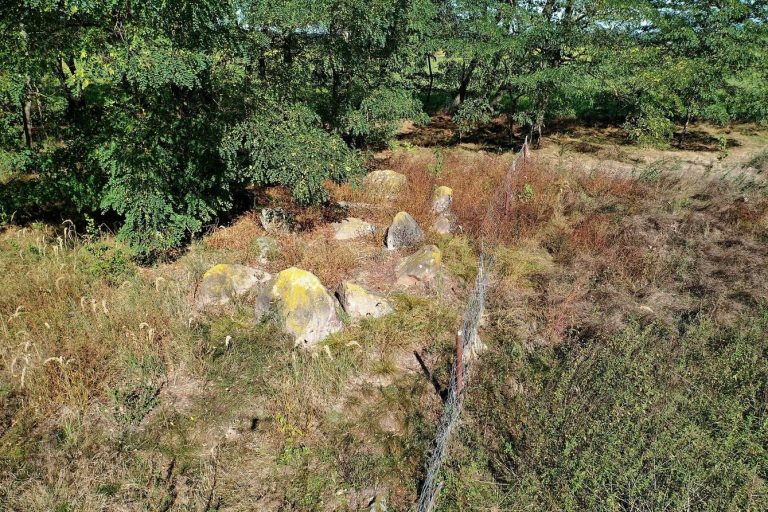
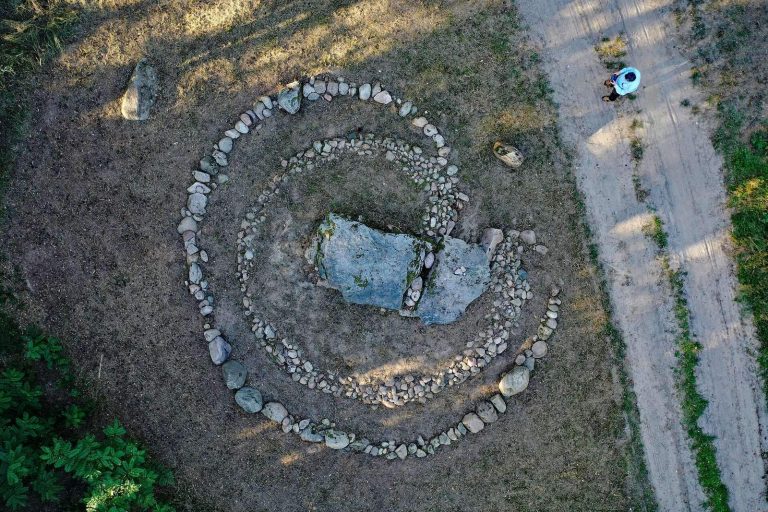
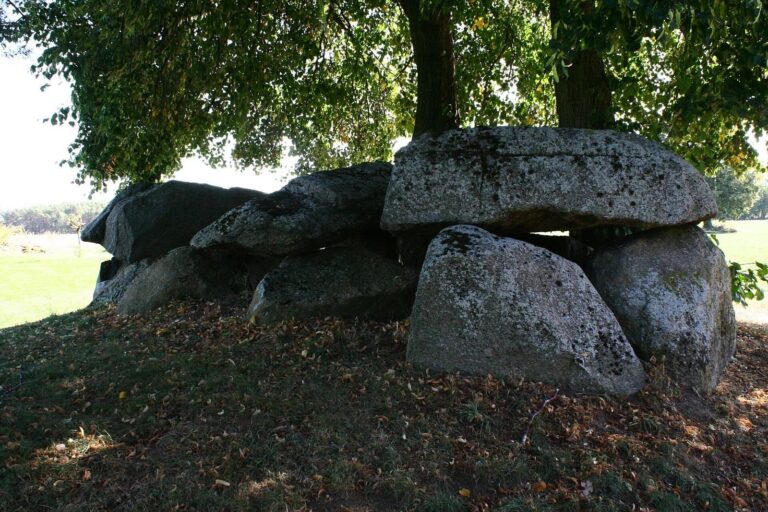
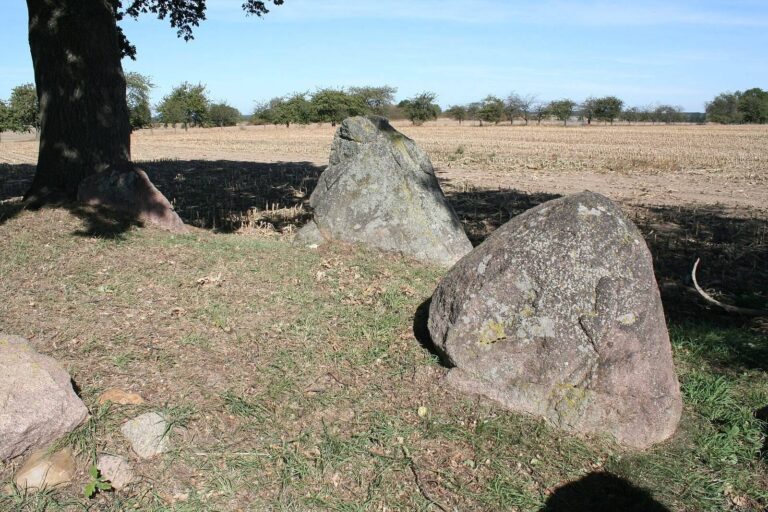
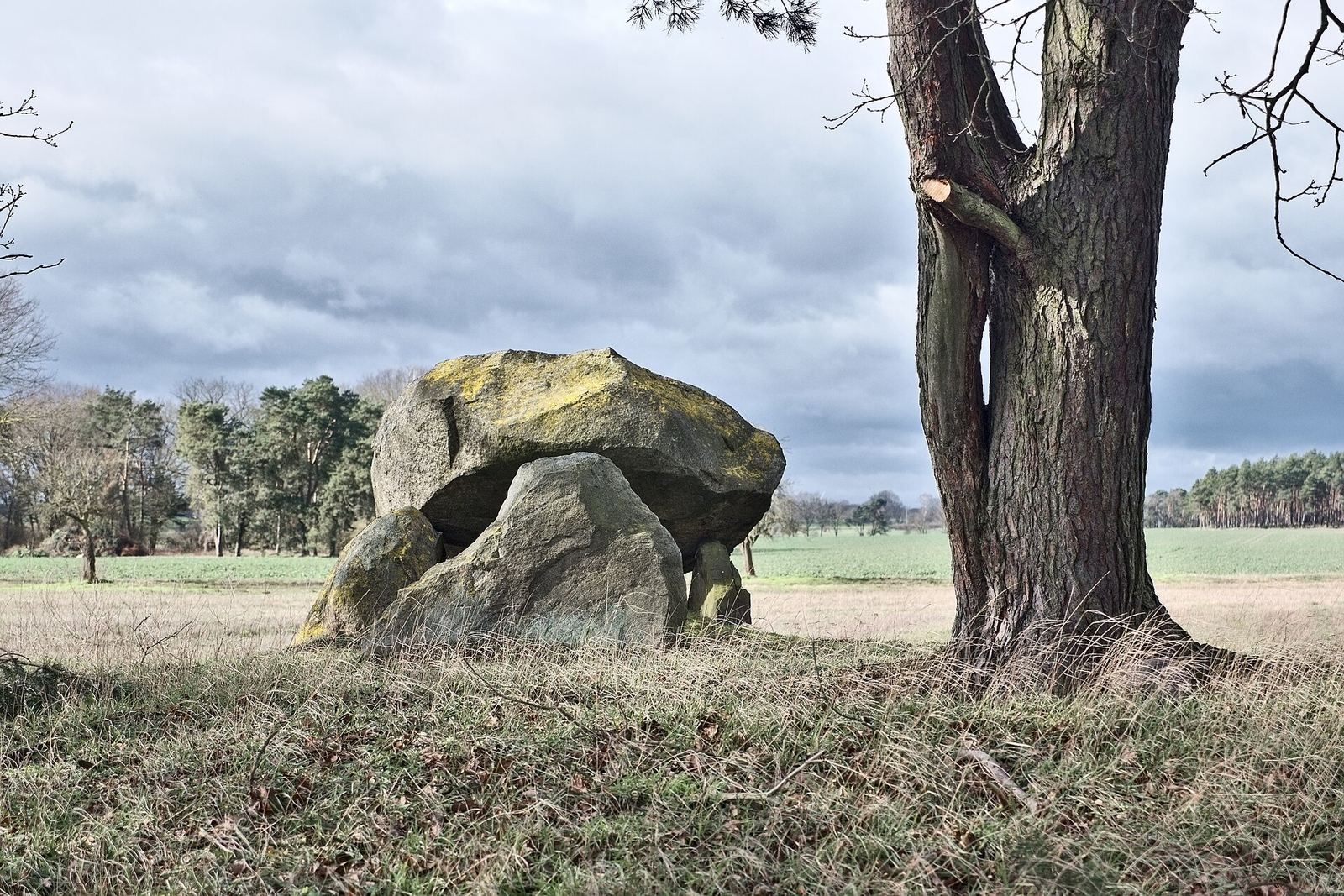
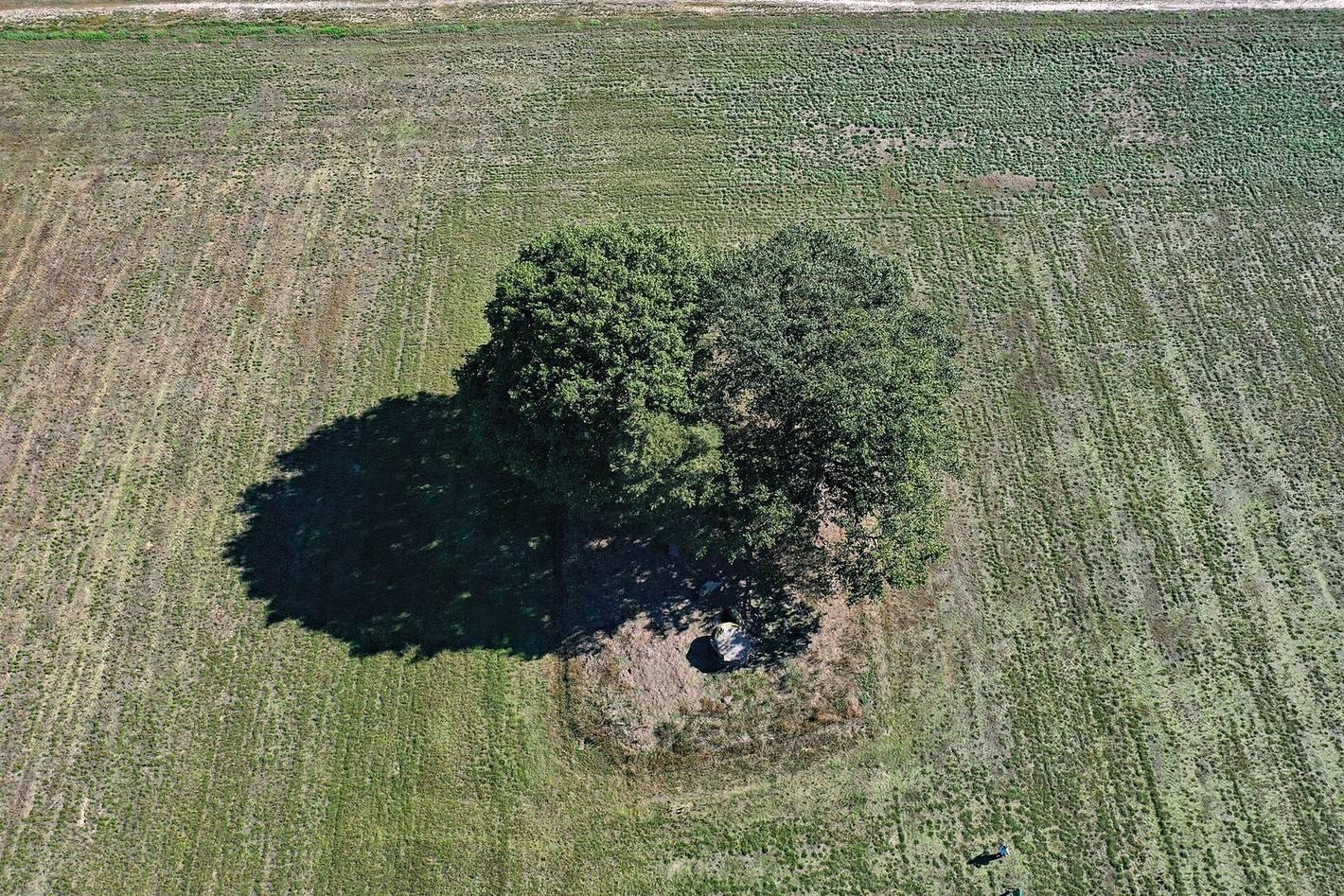
KS 121 has an oval mound aligned west to east, measuring 19.0 by 18.3 m and standing 0.5 m high. The mound is now heavily spread. Its rectangular chamber shares the west–east alignment and measures 4.6 by 1.6 m internally, with a height of 0.8 m. Eight wall stones formed the chamber; six survive. Of the three capstones, one remains on its supports. That stone measures 2.4 by 2.3 by 0.9 m.
Danneil described a stone-bordered burial enclosure measuring 23.0 by 6.9 m in 1843. Hartmut Bock, Barbara Fritsch, and Lothar Mittag classify KS 121 as a large dolmen, a type of megalithic tomb. Hans-Jürgen Beier instead places it among the extended dolmens, another tomb type.
Earlier tomb layouts recorded by Danneil
Northwest of Groß Bierstedt
KS 117 lay in the field parcel Auf dem Sande, near the boundary of the deserted settlement of Uebbesitz. Its chamber measured 7.2 by 3.5 m and had three capstones when Danneil examined it. Its size suggests a large dolmen or a passage grave, a tomb whose chamber is reached through a passage. KS 118 stood about 45 m away, east of the road to Groß Bierstedt. Its incomplete chamber measured 5 by 3.1 m and retained one capstone; it was probably a large or extended dolmen.
Several hundred metres west of KS 118, in the field parcel Kuhtrift, KS 119 had a chamber measuring 6.9 by 2.8 m and five capstones. Beier considered it probably a passage grave. KS 120 lay about 225 m southwest of KS 119. Danneil noted five stones there, a description that does not establish the tomb’s original form.
West of KS 121
KS 122 lay about 45 m west of KS 121. Its west–east-aligned long barrow measured 25.1 by 8.3 m. The boundary stones were 2.2–2.8 m long and projected 0.6 m above ground; sand extraction had exposed several by Danneil’s examination. The chamber stood at the eastern end and had several capstones, with one remaining at that time. About 38 m northeast of KS 122, KS 123 had a long barrow measuring 13.2 by 6.7 m. Danneil found its stone boundary almost entirely intact.
South of Klein Bierstedt
KS 124 and KS 125 stood immediately south of Klein Bierstedt beside the road to Stöckheim. The chamber of KS 124 measured 6.3 by 2.5 m, a size consistent with a large dolmen or passage grave. KS 125 had a long barrow measuring 25.4 by 6.9 m and an intact chamber with five capstones when Danneil examined it. Beier considered it probably a passage grave. KS 126 lay about 38 m south of the pair. Its chamber measured 13.2 by 2.8 m and retained six capstones, while sand extraction had toppled wall stones on one side. Beier also classified it as probably a passage grave.
Southwestern tombs
KS 127 lay about 150 m southwest of KS 126; Danneil described its chamber wall stones. About 75 m farther southwest, KS 128 had a chamber measuring 10 by 4.1 m, which Danneil found in good condition, with a notably large capstone. Beier considered it probably a passage grave. KS 129 stood close to KS 128. Its chamber measured 5.3 by 1.9 m and retained two capstones when Danneil examined it. One measured 2 by 1.6 by 0.95 m. Beier classified KS 129 as probably an extended or large dolmen.