Gjerde Church: A Historic Parish Church in Etne, Norway
Site at a Glance
- Popularity
- Very Low
- Country
- Norway
- Primary era
- Early Modern
- Eras represented
- Early Modern, Modern
- Civilizations
- Denmark–Norway, Norwegian
- Site type
- Religious
- Remains
- Church
On this page9 sections
History
Gjerde Church is a parish church in Etnesjøen, Etne Municipality, Norway. Its history reaches back to the Middle Ages, and it later served in the electoral process that led to Norway’s 1814 constitution.
Medieval Parish and Rebuilding
A church stood at Gjerde by the Middle Ages. Its earliest surviving historical record dates to 1288, and the first church was probably built in the 13th century.
By 1673, the first church had been in poor condition for some time. A severe storm caused further damage, and the parish decided to demolish it. Instead, the parish bought a church from Lille Sandviken in Bergen and moved it to Gjerde. That building dated from the 16th century, although its exact age is uncertain. The year 1599 is said to appear inside it, and it may have been older.
The relocated church was reconstructed at Gjerde and consecrated in 1676. Ola Bysheim and Ola Nedre Eikanger led the building work.
Election and Later Changes
In 1814, Gjerde Church was an election church, a polling place in Norway’s first national elections. Parish voters chose electors, who then selected representatives for the assembly that drafted the Constitution of Norway.
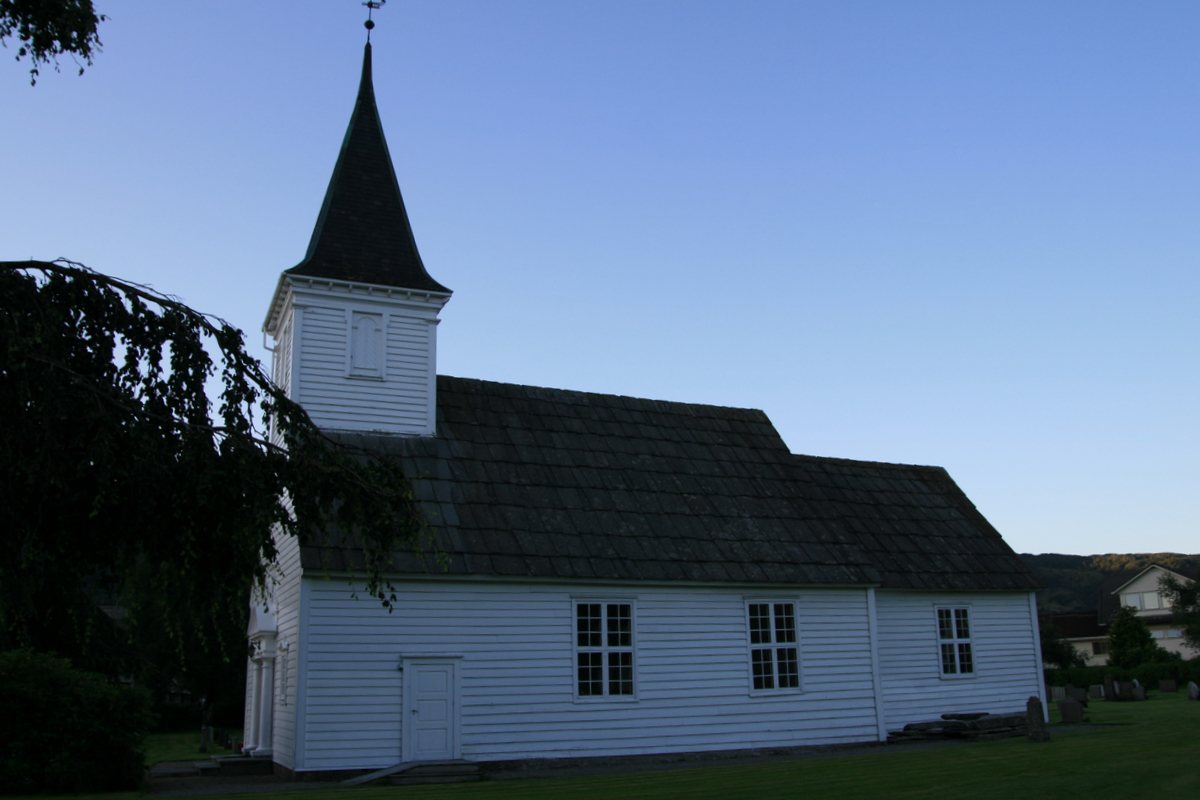
In 1930, the old tower was taken down and a new porch and tower were built in its place. Architect K. Bjerknes directed an extensive restoration in 1956. The church remains an active Evangelical Lutheran parish of the Church of Norway, a national Lutheran church and part of Protestant Christianity. It belongs to Etne parish, Sunnhordland deanery, and the Diocese of Bjørgvin. The church has automatically protected status as a Norwegian cultural heritage site.
Remains
Present Building
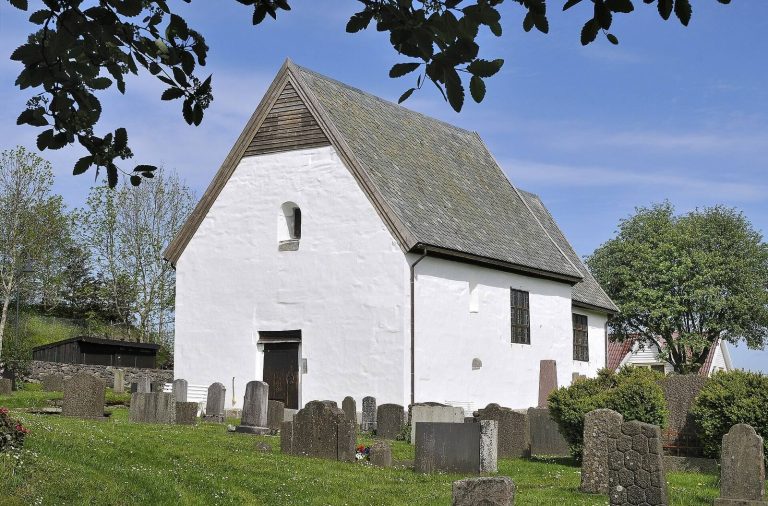
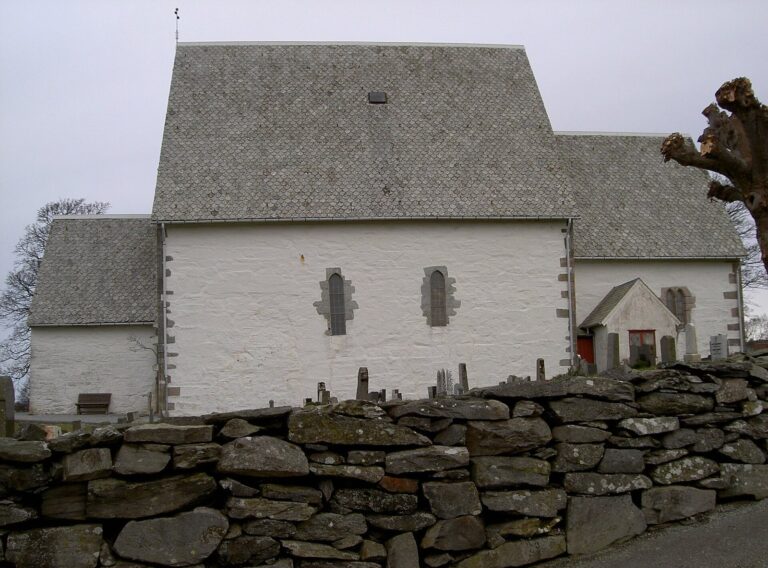
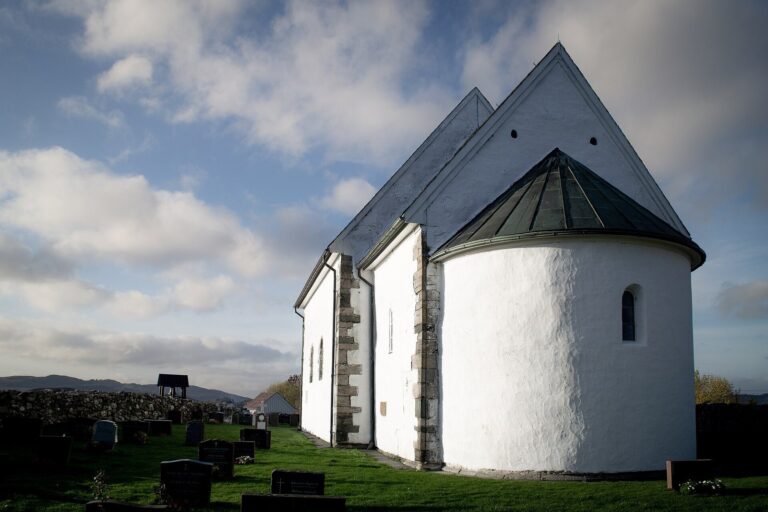
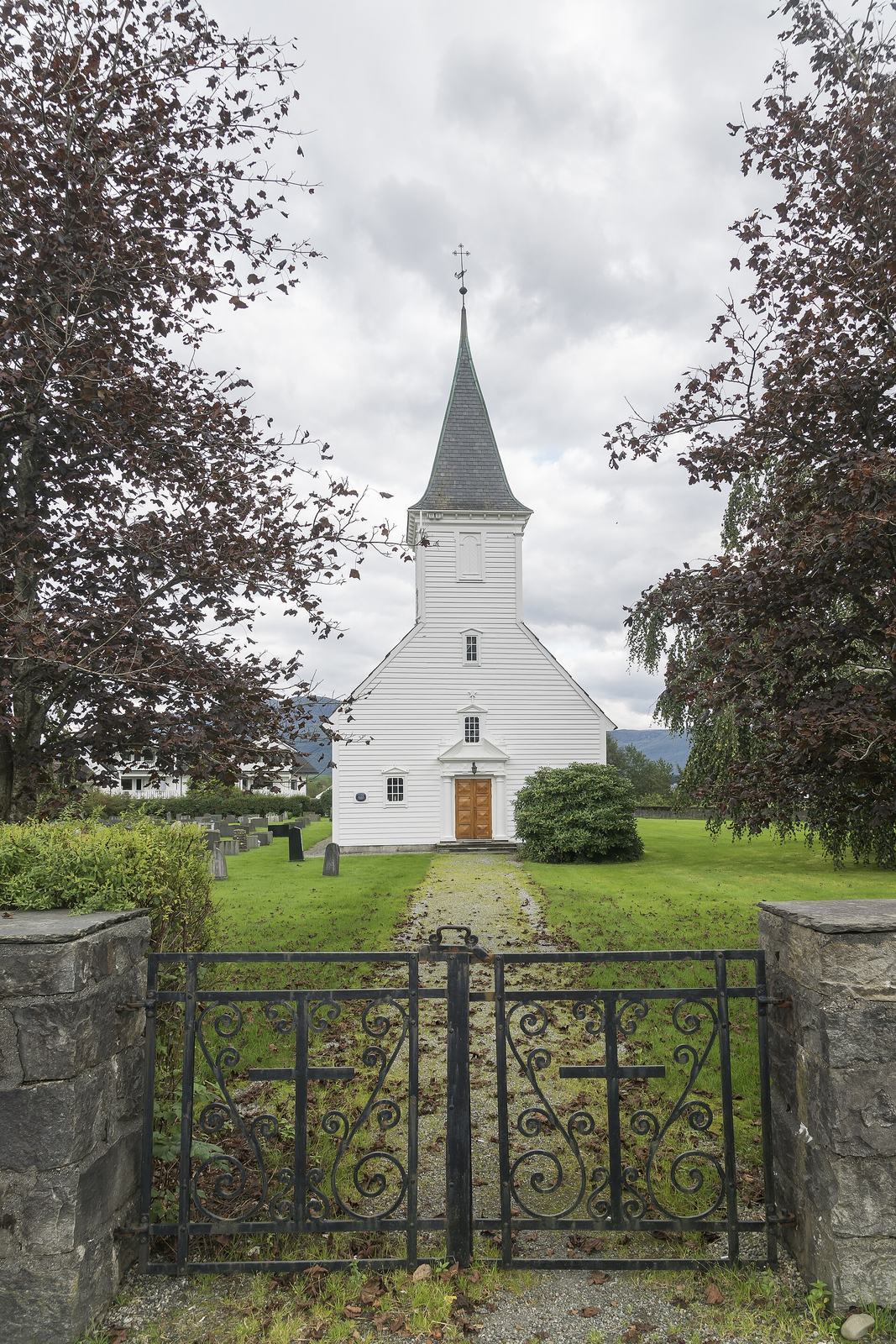
The present church is a white wooden long church, with the nave and chancel arranged end to end. It seats about 250 people. Its plans were drawn by an architect whose name is unknown, and a porch and tower form part of the building’s present shape.
Earlier Church
The first church was probably a wooden stave church, a medieval building framed by upright posts. Its choir stood at the east end of the nave, and its tower was at the west end.
Interior
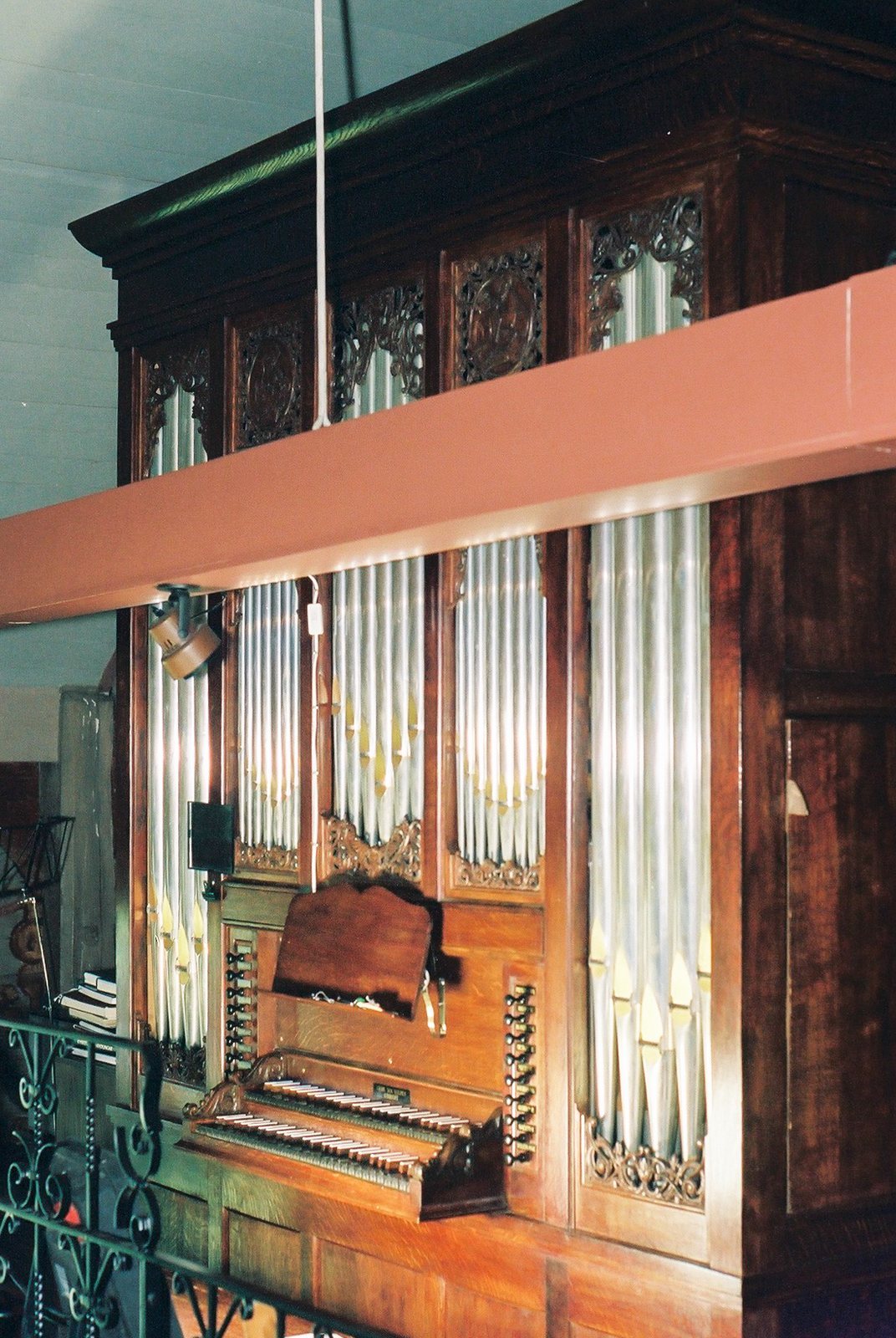
The church contains wall paintings and surviving portions of a 17th-century altarpiece. Its 17th-century pulpit bears images of the four Evangelists, traditionally associated with the authors of the four canonical Gospels. An organ made by van Wulpen dates to 1978.
Bells
Two medieval bells are associated with the church. One bears the date 1315 and an inscription reading, “Jakob made me 1315. Parish priest Erling had me made.”
Churchyard
Two runestones stand in the churchyard. A runestone is a stone bearing a runic inscription.