Dolmen D1: A Neolithic Portal Tomb in Drenthe, Netherlands
Site at a Glance
- Popularity
- Low
- Country
- Netherlands
- Primary era
- Stone Age
- Eras represented
- Stone Age
- Civilizations
- Unclassified
- Site type
- Burial
- Remains
- Tomb
On this page7 sections
History
Neolithic origins and local name
Dolmen D1 is a Neolithic portal tomb north of Steenbergen, in the Netherlands. A portal tomb is a megalithic burial chamber entered through an opening framed by upright stones and a capstone. D1 was built between 3470 and 2760 BC and is associated with the western group of the Funnel Beaker culture, a Neolithic archaeological culture named for its funnel-shaped pottery. It is the northernmost megalithic tomb in Drenthe. The settlement of Steenbergen is said to take its name from the megalithic tombs in the area.
Early descriptions and surveys
The earliest known written description of D1 appeared in 1815, in a publication by Dutch antiquarian and clergyman Nicolaas Westendorp. In 1874, Willem Pleyte and photographer Jan Goedeljee made the first systematic photographic survey of Drenthe’s megalithic tombs. Pleyte then created lithographs from the photographs. Conrad Leemans, director of the Rijksmuseum, made an independent visit in 1877, with Jan Ernst Henric Hooft van Iddekinge preparing plans of the tombs for his report.
From 1904 to 1906, physician and amateur archaeologist Willem Johannes de Wilde recorded the megalithic tombs surviving in the Netherlands through plans, photographs, and detailed descriptions. Archaeologist Albert Egges van Giffen included D1 in his atlas in 1918. His system numbered Drenthe’s tombs from north to south, giving this one its designation, D1.
Restoration and later recording
Van Giffen restored the tomb in 1953–54, and further restoration took place in 1965 and 1993. On several occasions, visitors threw the capstone above the entrance passage down from its supports. A fire severely damaged D1 in 1997, and repairs restored it as far as possible. The tomb has been a Dutch national monument since 1993.
In 2017, D1 was recorded for a three-dimensional atlas project involving the Province of Drenthe and the University of Groningen. The Gratama Foundation carried out the photogrammetry, a process that uses photographs to measure physical forms and create three-dimensional models.
Remains
Setting and layout
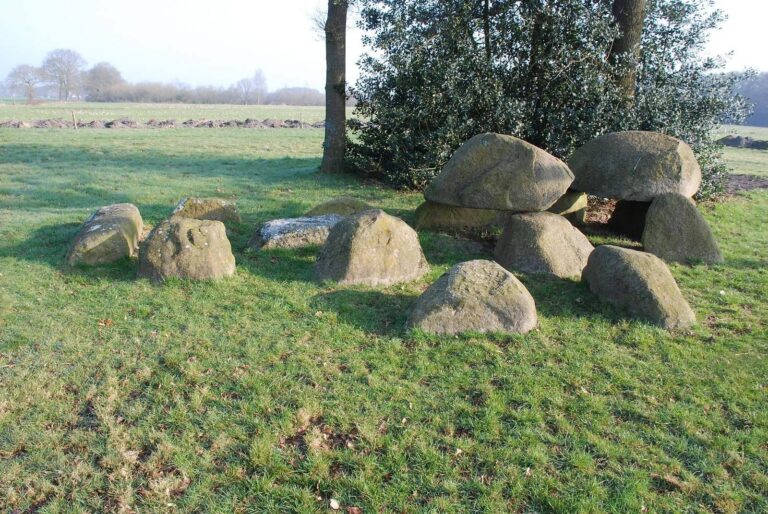
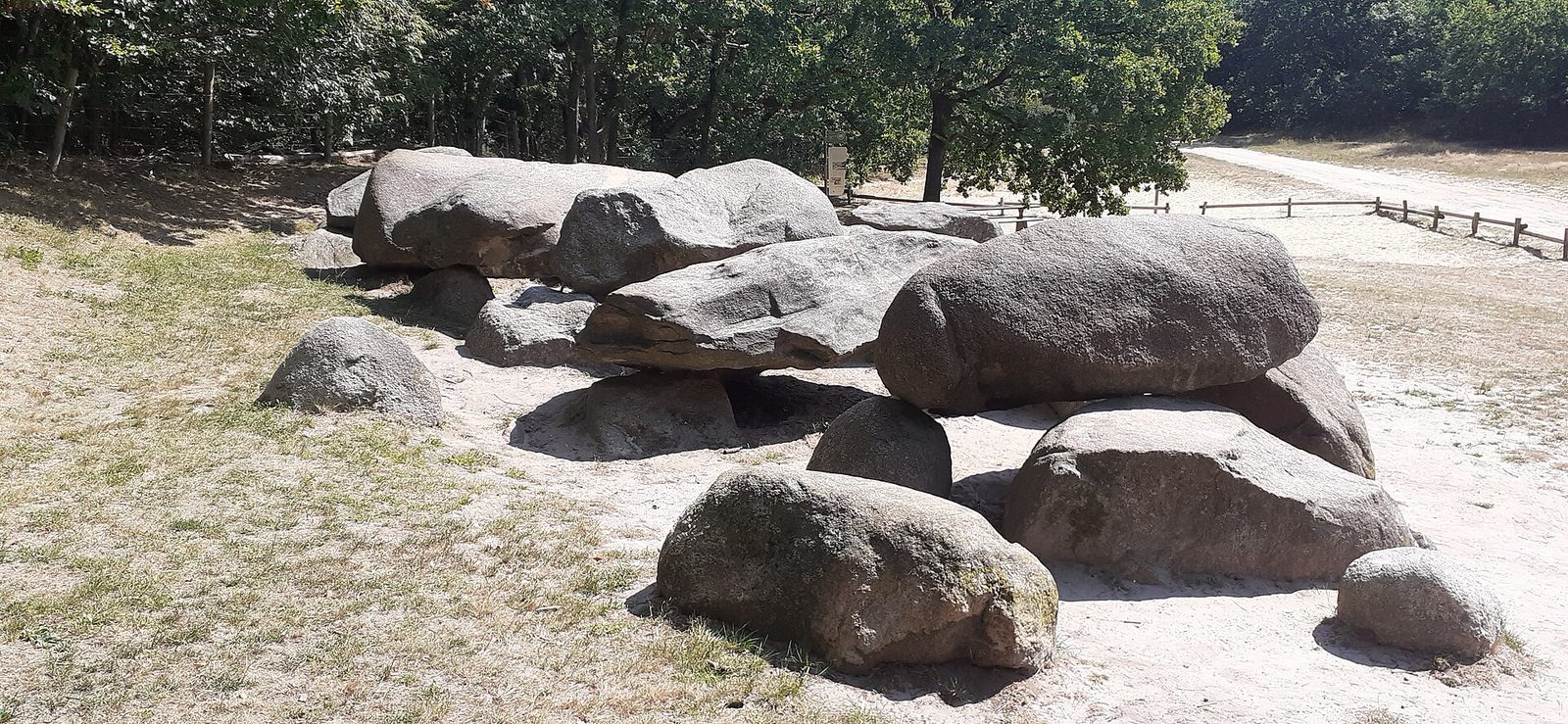
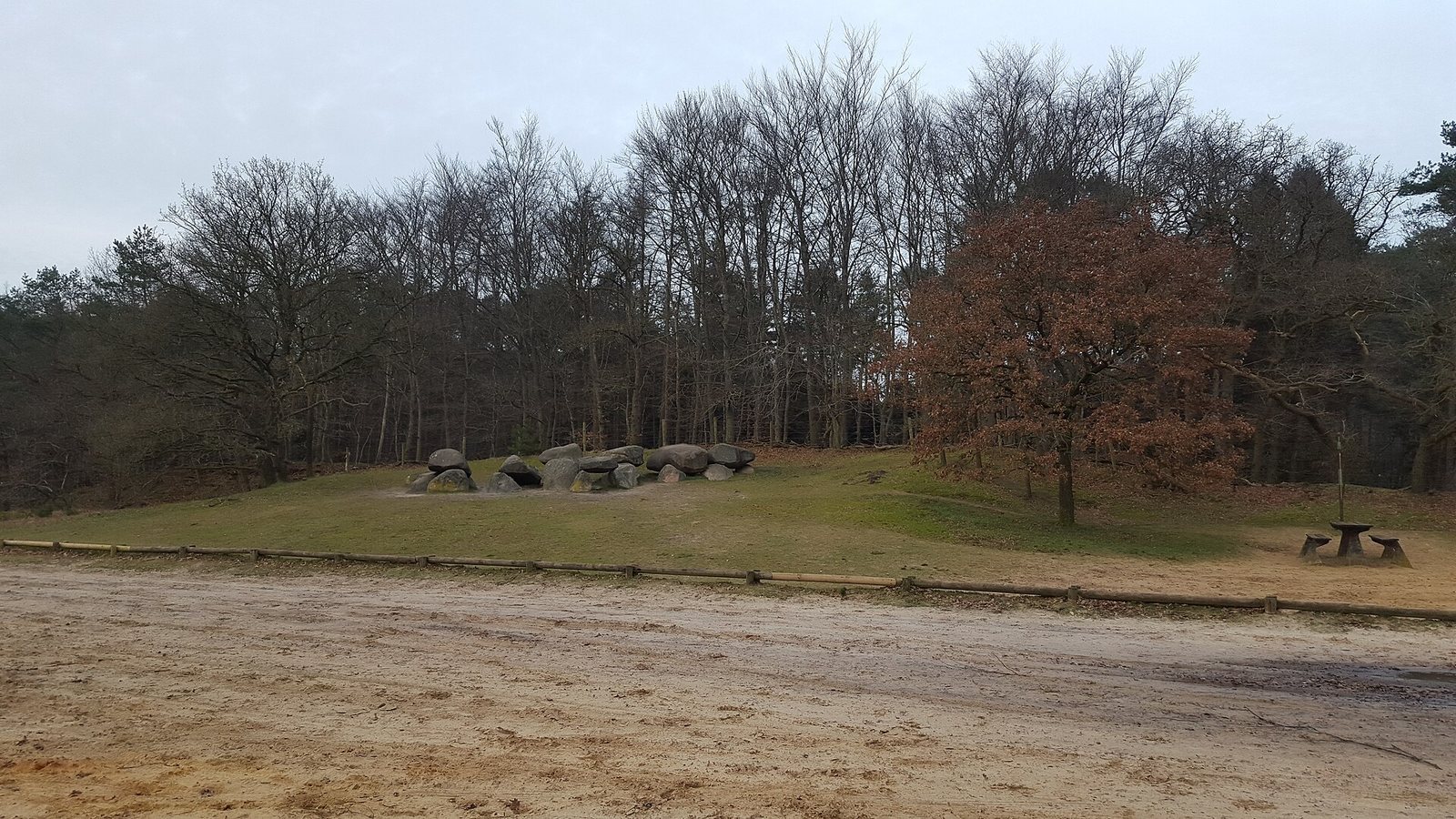
D1 lies north of Steenbergen, at the boundary with Roderesch, beside a field track and near a paved road. It rests against a sandy slope and is oriented approximately east–west. Its stone burial chamber measures 11.6 metres long and 3.6 metres wide.
Chamber and entrance
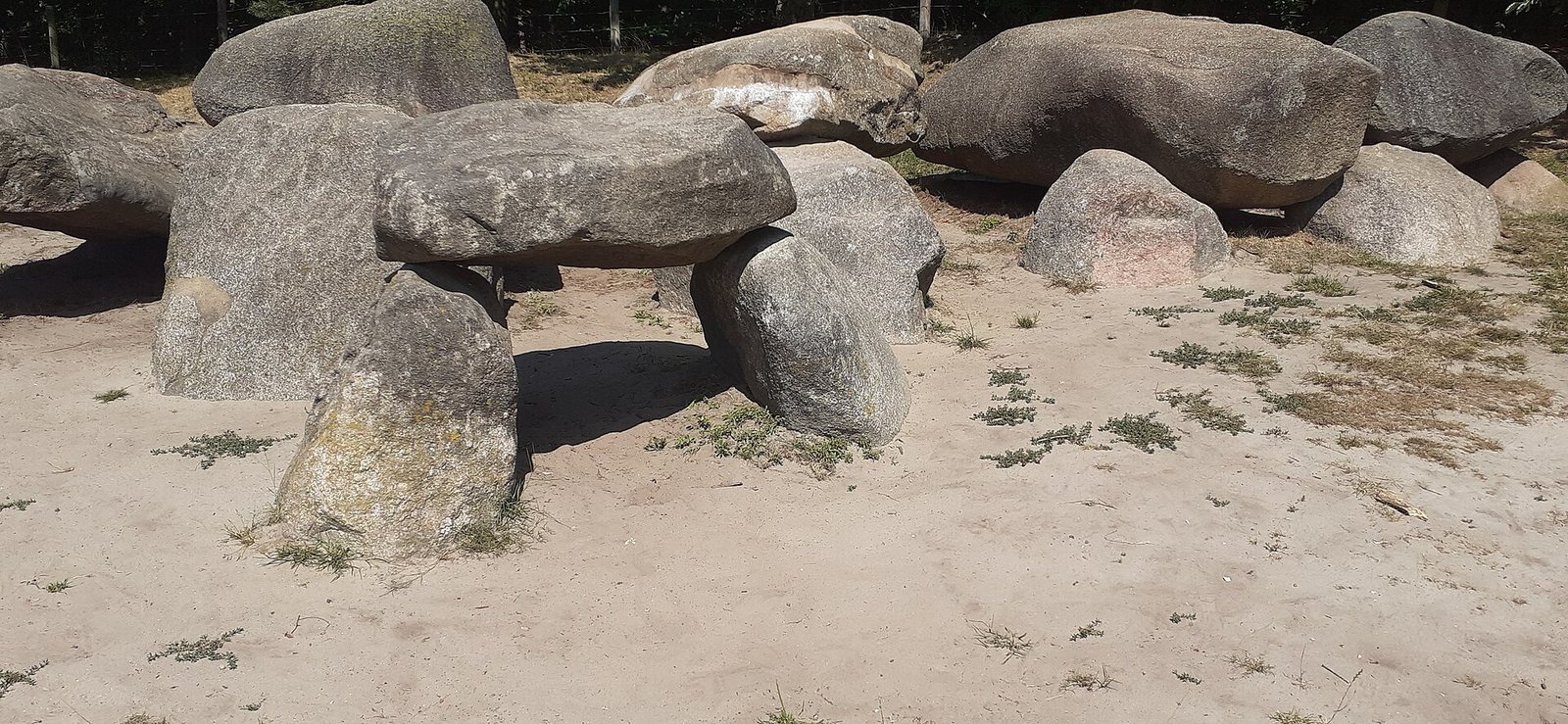
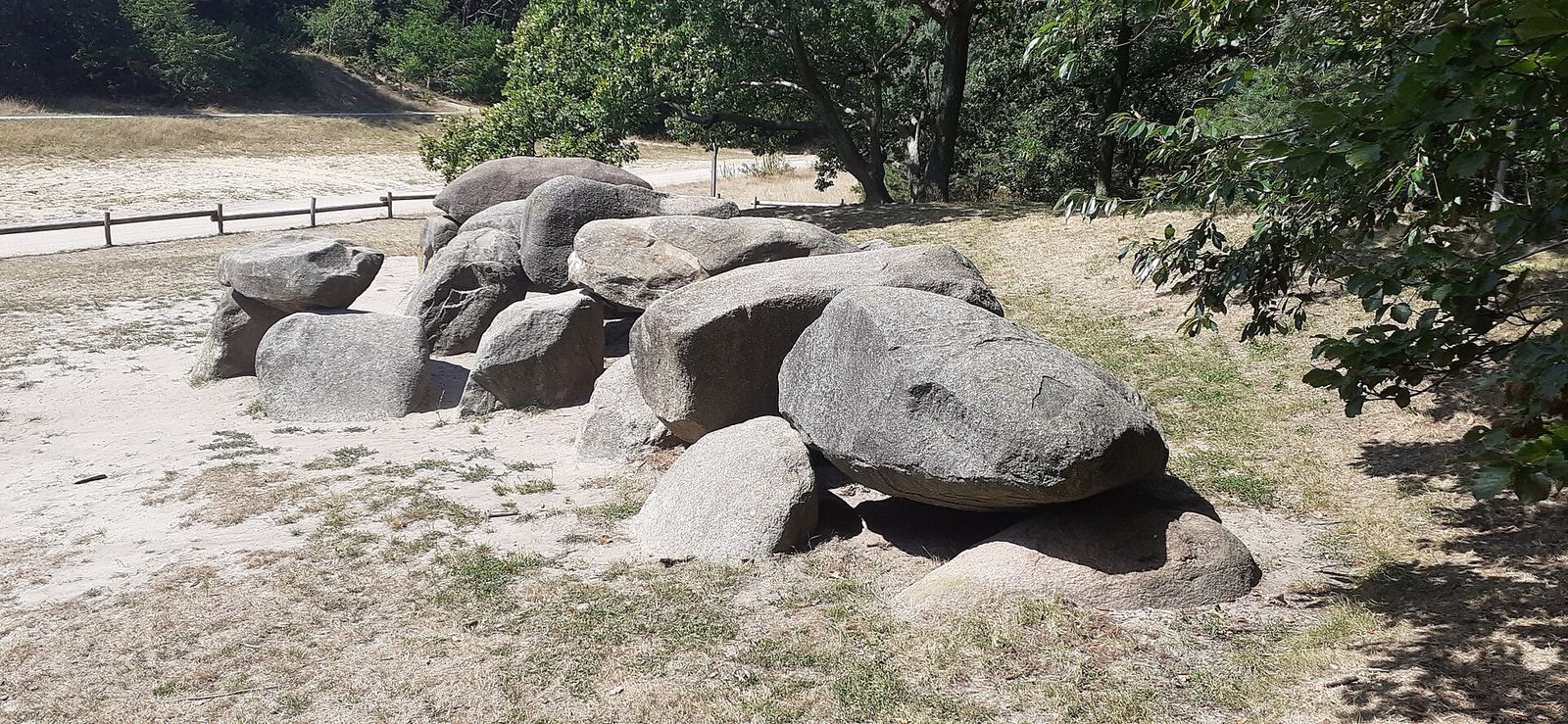
Six pairs of upright side stones form the chamber’s long walls, with a closing stone at each end and six capstones above. A short entrance passage projects from the middle of the southern long side; it consists of two side stones and a capstone. In Van Giffen’s early records, all six chamber capstones had fallen inside, and two were broken. During the 1953–54 restoration, the capstones were set back on the side stones, and a stone broken into five pieces was reassembled with cement. Repairs after the 1997 fire used steel pins and epoxy resin. Traces of the adhesive remain visible, and the tomb is described as well preserved.