Nottingham Castle’s Ducal Mansion: A Palace and Museum
Site at a Glance
- Popularity
- Very Low
- Country
- United Kingdom
- Primary era
- Early Modern
- Eras represented
- Medieval, Early Modern, Modern
- Civilizations
- British, English
- Site type
- Domestic
- Remains
- Elite Residence
On this page17 sections
History
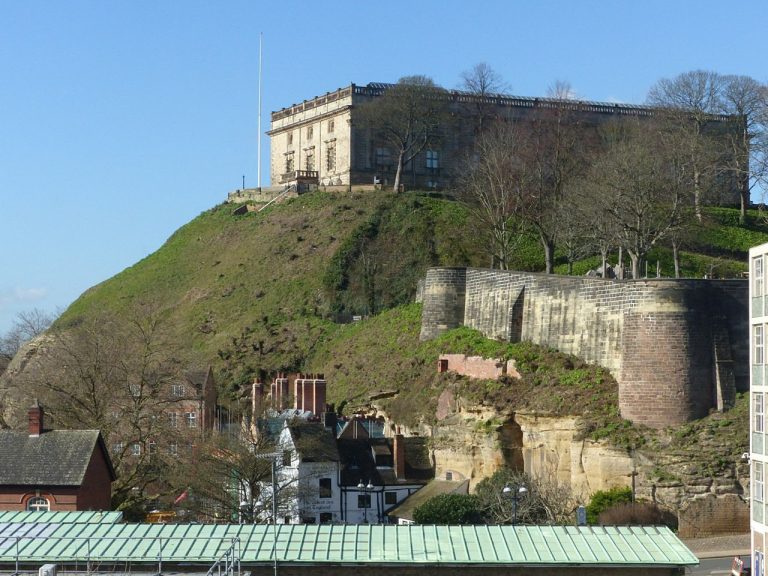
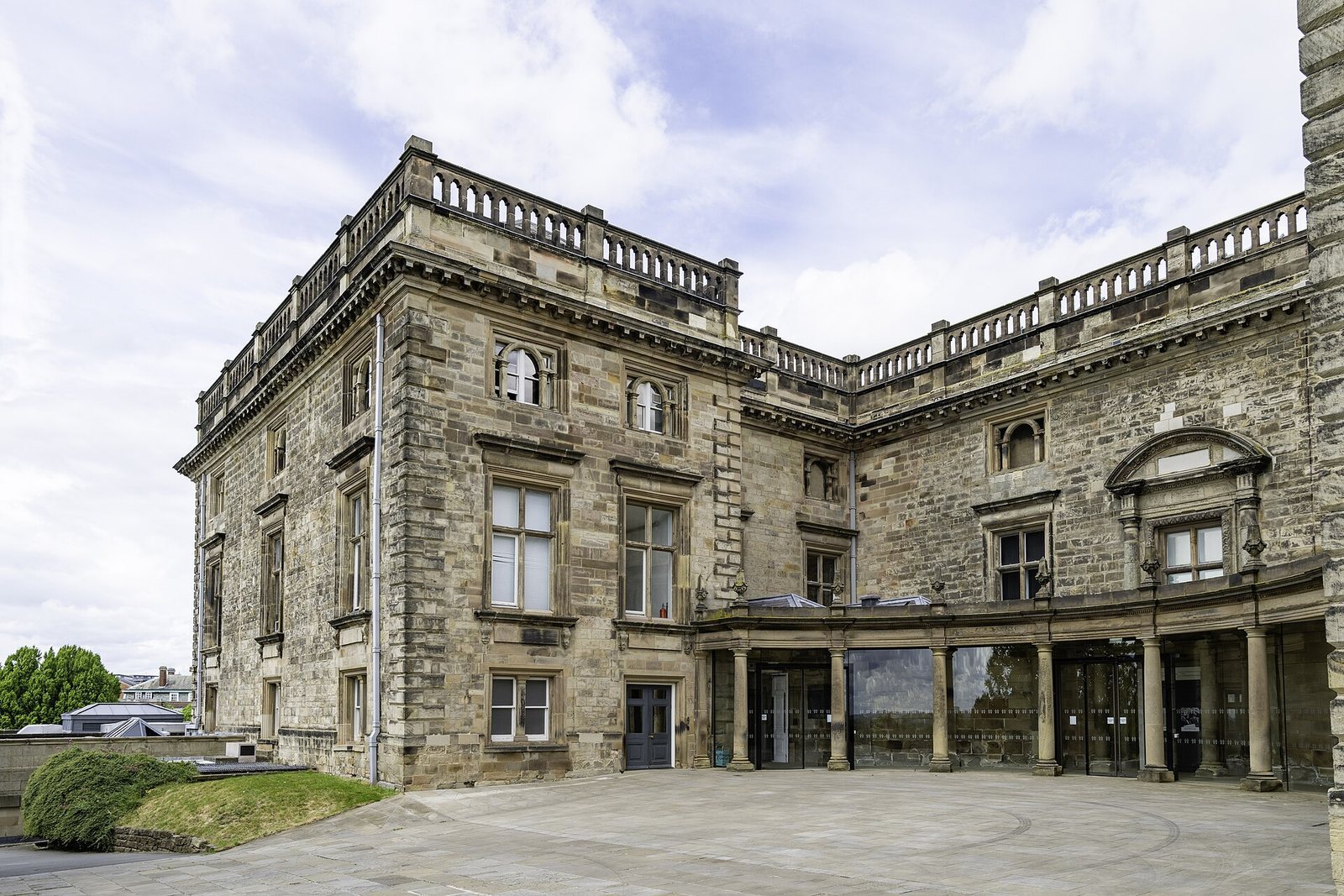
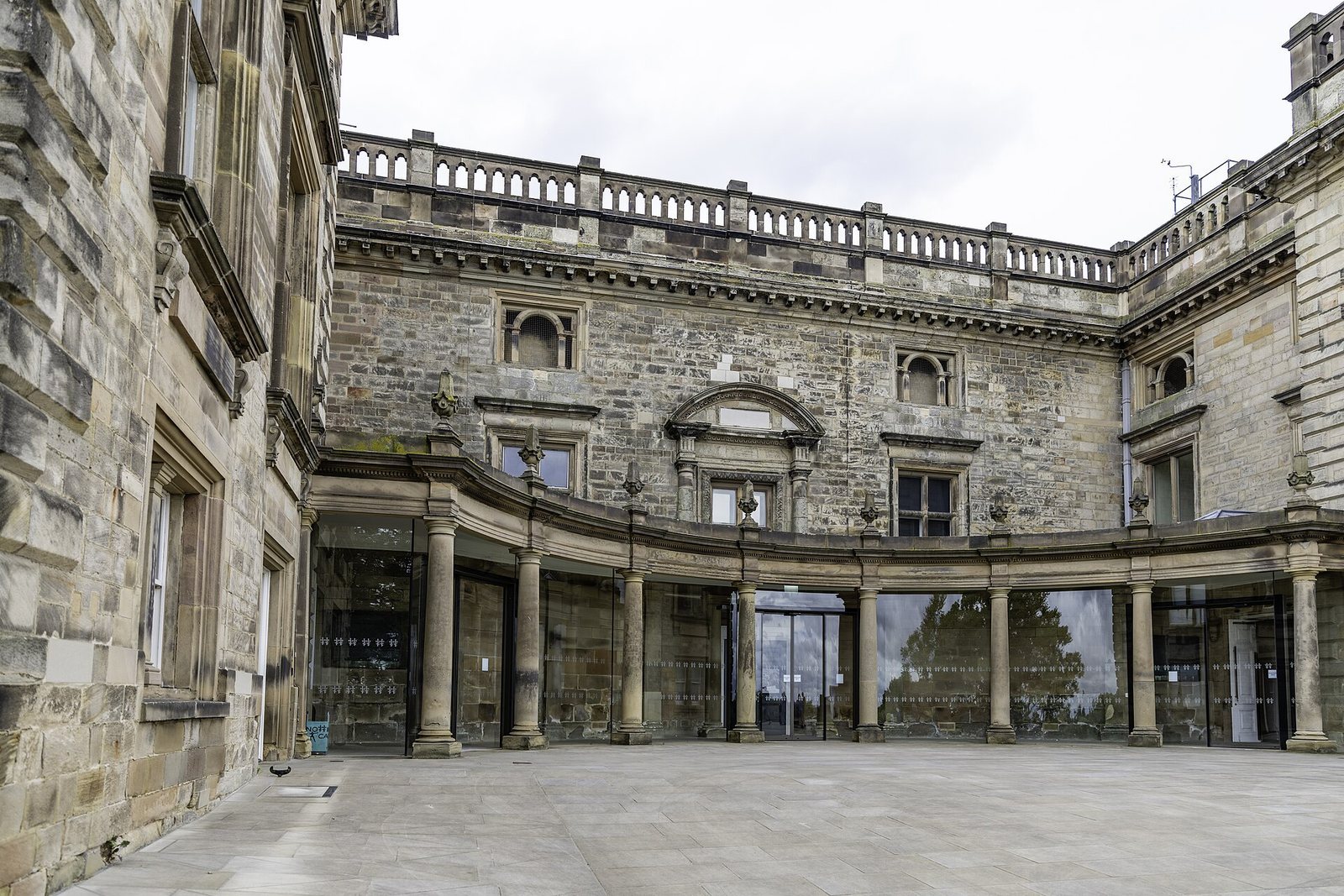
Nottingham Castle’s Ducal Mansion is a seventeenth-century palace on Castle Rock in the United Kingdom. Begun in the 1670s, it was designed as an Italianate palace in the tradition of Artisan Mannerism, a European style known for elaborate, stylized forms. It stands on the site of a fortress that had served English kings as a stronghold and occasional residence.
Norman foundation and medieval fortress
In 1068, William the Conqueror ordered a wooden motte-and-bailey fortress at Castle Rock. This type of castle paired a raised mound with an enclosed courtyard. During Henry II’s reign, the wooden fortress was replaced by a defensible stone castle, which grew over the medieval period. Its position near a crossing of the River Trent gave it strategic value. The castle was also close to royal hunting lands, including Tideswell, known as the King’s Larder within the Royal Forest of the Peak, and the royal forests of Barnsdale and Sherwood. A royal forest was land governed by special laws and often reserved for the monarch’s hunting.
During Richard I’s absence on the Third Crusade, a European campaign to recover Jerusalem, supporters of his brother Prince John occupied the castle. Richard returned in 1194 and besieged it during his campaign against John’s rebellion. With support from Ranulph de Blondeville, Earl of Chester, and David of Scotland, Earl of Huntingdon, Richard secured its surrender after a few days. Robin Hood legends later placed the outlaw’s final confrontation with the Sheriff of Nottingham at the castle.
Royal government and medieval episodes
On 19 October 1330, Edward III used the castle to seize power from the regents Isabella of France, his mother, and Roger Mortimer. Sir William Montagu and his companions entered by a concealed passage whose route was known to William Eland, the castle’s keeper. They overcame Mortimer’s guards and arrested him and Isabella. Mortimer was later hanged, Isabella was compelled to retire, and Edward began ruling in his own right. A passage added to a verse chronicle around 1331 claimed that Lancelot had made caves beneath the castle to hide Guinevere from King Arthur. These legendary figures appear in Arthurian stories, and the passage is the earliest known reference to the affair between Lancelot and Guinevere.
Edward III used the castle as a residence and held parliaments there. David II, king of Scotland, was imprisoned at Nottingham in 1346, and the Speaker of the House of Commons was confined there in 1376. During Richard II’s reign, a state council met at the castle in 1387. In 1392 Richard held London’s mayor, aldermen and sheriffs there while a council sought to humble the city; another council met at Nottingham in 1397.
Late medieval and Tudor castle
From 1403 to 1437, the castle was the principal home of Joan of Navarre, queen to Henry IV. After she left, upkeep declined, and the fortress returned to military use during the Wars of the Roses, the dynastic struggle between the houses of Lancaster and York. Edward IV proclaimed himself king at Nottingham. Henry VII retained the castle as a royal fortress, and before a visit in August 1511, Henry VIII ordered new tapestries for it from Cornelius van der Strete.
A survey in 1525 described serious decay, including part of the Great Hall roof having fallen in. In 1536, during the Pilgrimage of Grace, an uprising against Henry VIII’s religious changes and government policies, the Earl of Rutland strengthened the castle with a new drawbridge and increased its garrison from a few dozen men to several hundred. The castle’s constable, the officer responsible for its administration and defence, reported in 1538 that further maintenance was needed. A proposed 1562 meeting between Elizabeth I and Mary, Queen of Scots, was to include entertainments in the Great Hall, but it was cancelled. By 1600 the castle was no longer a royal residence, and artillery had made it largely obsolete as a fortress by the seventeenth century.
Civil War and destruction
At the outbreak of the English Civil War in August 1642, a conflict between Royalists supporting the king and Parliamentarians, Charles I chose Nottingham as a rallying point for his forces. After he left, Parliamentarians fortified Castle Rock. Under John Hutchinson they resisted several Royalist attacks and became the last force to hold the castle. In 1648, Marmaduke Langdale, a Royalist commander captured after the Battle of Preston, was held there. He escaped and reached Europe. In 1651, two years after Charles I’s execution, the castle was razed to prevent its military use again.
The Ducal Mansion and museum
After the monarchy was restored in 1660, William Cavendish, 1st Duke of Newcastle, began building the Ducal Mansion in the 1670s. His son, the 2nd Duke, completed it after his father’s death. Samuel Marsh of Lincoln worked as the mason, and the design is generally considered to have been strongly influenced by engravings in Peter Paul Rubens’s Palazzi di Genova.
Rioting in 1831, prompted by the 4th Duke of Newcastle’s opposition to the Reform Bill, a proposed change to parliamentary representation, led to the mansion being burned. Thomas Chambers Hine restored the ruin in 1875. In 1878 the Prince of Wales opened it as Nottingham Castle Museum, the first municipal art gallery in the United Kingdom outside London.
The British Army took possession of the castle and grounds in 1939, and the Air Ministry assumed control in 1941. Large quantities of stores were kept there during the Second World War; the site was returned to the city in 1946. The museum and grounds closed for redevelopment in 2018. The council transferred management to the independent Nottingham Castle Trust in June 2021. The Trust entered liquidation and the site closed in November 2022, with the pandemic, the later financial crisis and sharply rising energy costs cited among the causes. The site returned to the council in 2023. The castle is a scheduled monument, and Nottingham Castle Museum was listed at Grade I in 1952. Nottingham City Council owns the castle.
Remains
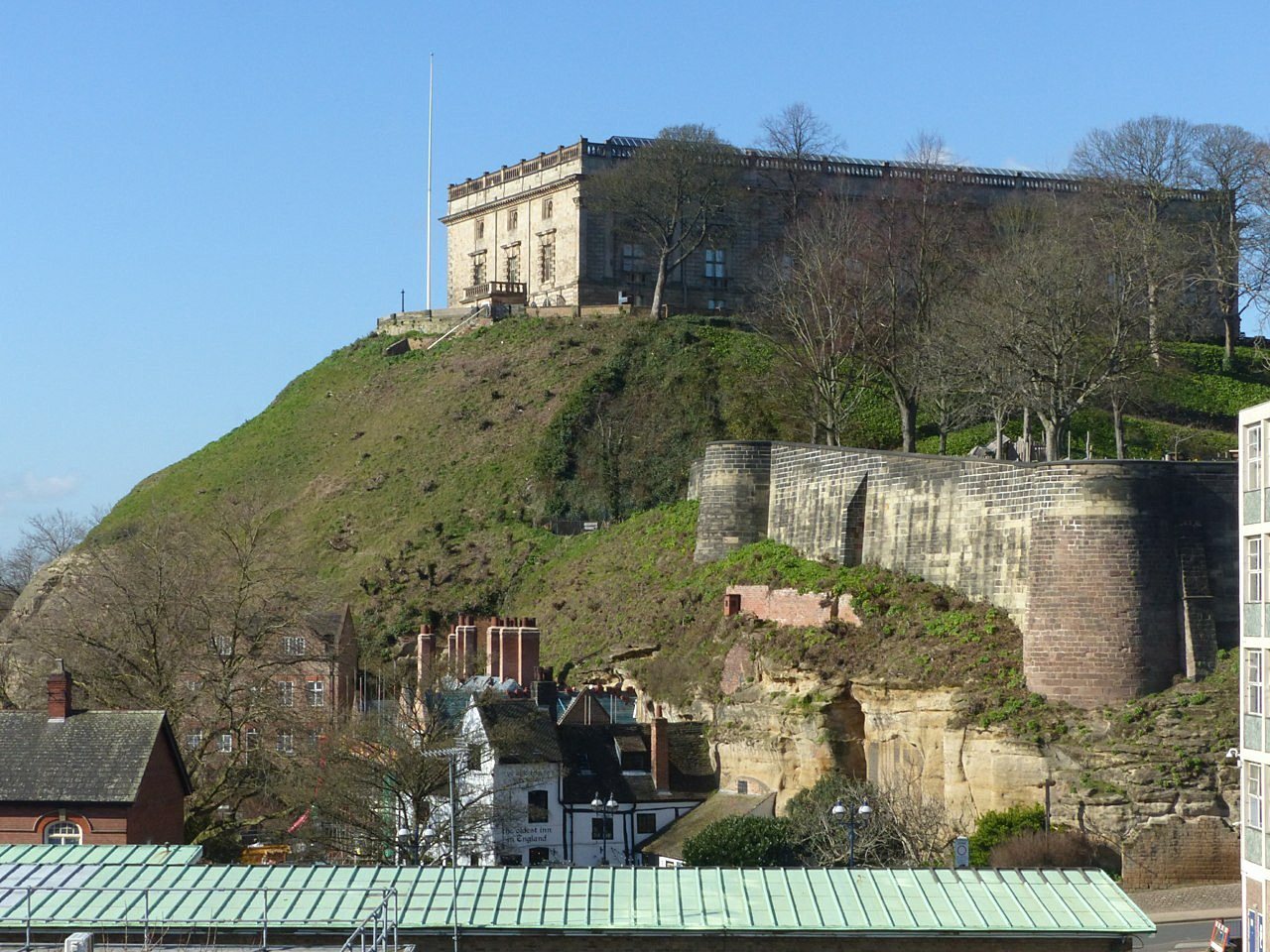
The surviving site combines the footprint of a medieval multi-bailey fortress with the later palace. Castle Rock is a natural promontory overlooking the city, with cliffs about 130 feet (40 metres) high on its south and west sides. The upper bailey occupied the rock’s highest ground, the middle bailey lay to the north and held the principal royal apartments, and the large outer bailey extended east.
Medieval fabric
Gatehouse and defensive walls
The gatehouse and sections of the medieval defensive walls survive. The gatehouse bridge and lower towers retain medieval work, while its upper towers and other parts of the gatehouse were renovated in the Victorian period. The gatehouse and much of the outer bailey walling were incorporated into a garden wall for the mansion.
Towers and royal buildings
A tower added in 1365 stood on the west side of the middle bailey, and a prison was placed beneath the High Tower. Edward IV’s building work in 1476 included another tower and royal apartments. The Great Hall, part of the medieval complex, had a roof section that had collapsed by the 1525 survey.
The Ducal Mansion and its collections
Palace and gallery interiors
The mansion is an Italianate palace and an English example of Artisan Mannerism. Its interiors were later rearranged to form a picture gallery lit from above, modelled on the Louvre’s Grand Gallery in Paris. The gallery arrangement disregarded the mansion’s original floor levels and the placement of its windows. The building now houses most of Nottingham’s fine and decorative art collections, along with galleries about local history and archaeology.
Art and decorative collections
The collections include fifteenth-century Nottingham alabaster carvings, some found in 1779 during the demolition of St Peter’s Church at Flawford. Watercolours by Richard Parkes Bonington and Paul Sandby sit alongside the Joseph Collection of Wedgwood Jasperware, a fine stoneware often decorated with contrasting reliefs, and the Ballantyne Collection of contemporary ceramics. Other holdings include salt-glazed stoneware, pottery glazed by salt vapour during firing, with locally made bear jugs, and works by George Wallis.
The Long Gallery
The Long Gallery presents British and continental European fine art. Artists represented include Thomas Barber, Richard Parkes Bonington, Henry Dawson, Paul Sandby, John Rawson Walker, Edward Burra, Tristram Hillier, Ivon Hitchens, Dame Laura Knight, Harold Knight, L. S. Lowry, William, Ben and Winifred Nicholson, Stanley Spencer, Matthew Smith and Edward Wadsworth.
Regional and military displays
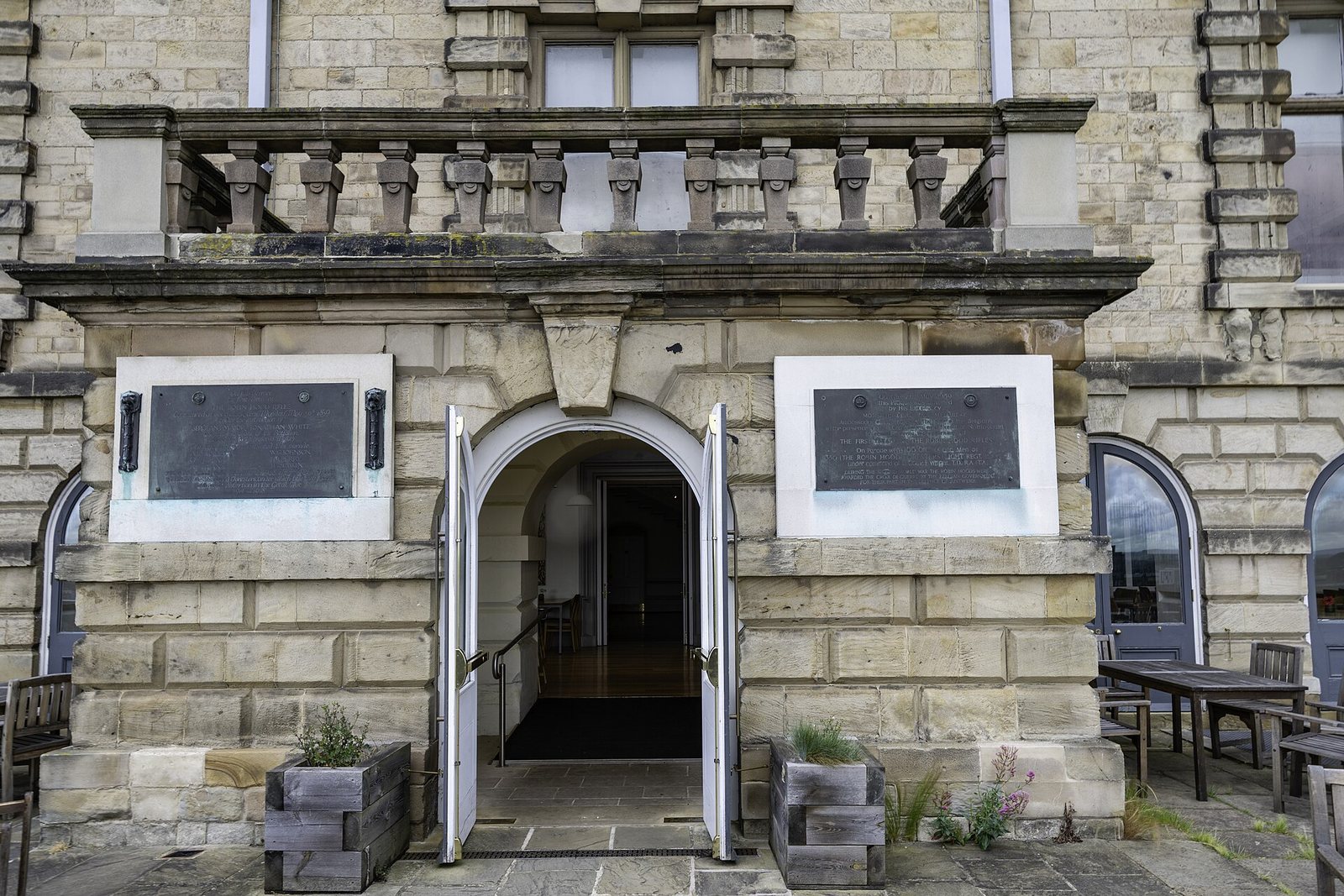
Displays include costumes related to Nottingham lace-making and Roman votive offerings, objects dedicated to a deity, from the Temple of Diana Nemorensis at Lake Nemi. Diana Nemorensis was a local form of the Roman goddess Diana associated with the lake. The museum also includes the Sherwood Foresters regimental museum and a display on local industries, including lace. A Victoria Cross memorial, dedicated in 2010, names Albert Ball, a First World War fighter pilot, and 19 other Nottinghamshire recipients. The Victoria Cross is a British award for bravery in the presence of the enemy.
Cellars and rock-cut passage
Below the mansion are cellars cut into the rock, medieval pointed arches and a long passage descending to the bottom of Castle Rock. The passage is commonly called Mortimer’s Hole.
Grounds and later changes
The mansion’s original exterior stairs on its eastern side were later removed to create a parade ground for the Robin Hood Rifles, a Nottinghamshire volunteer rifle corps. An approach road built in the 1830s for the Park Estate cut away the northernmost part of the outer bailey, on the former deer park. In 1996, a leaking water main triggered a landslip beside the mansion’s Restoration terrace. About 80 tonnes of earth and retaining wall fell to the foot of Castle Rock, exposing parts of the original castle foundations and bedrock. The terrace was rebuilt with a traditional stone façade after debate over its conservation and restoration. Later redevelopment added exhibition galleries and interactive displays, and created a children’s adventure area in the old moat themed around Robin Hood stories.