Elephant Tower: A Pisan Defensive Tower in Cagliari
Site at a Glance
- Popularity
- Medium
- Country
- Italy
- Primary era
- Medieval
- Eras represented
- Medieval
- Civilizations
- Republic of Pisa
- Site type
- Military
- Remains
- Tower
On this page8 sections
History
The Elephant Tower is a medieval defensive tower in Cagliari, Italy, built in 1307 under Pisan rule, when Pisa governed the city. It formed part of Cagliari’s defenses against an expected invasion by the Crown of Aragon and, with San Pancrazio Tower, guarded a principal entrance to the Castello quarter.
Pisan construction and Aragonese rule
Sardinian architect Giovanni Capula designed the tower on the orders of Pisan consuls Giovanni De Vecchi and Giovanni Cinquini. Consuls were civic magistrates in medieval city government.
After Cagliari came under Aragonese rule, the tower’s north side was walled up in 1328. The enclosed space was used for officials’ residences and storage.
Spanish rule and restoration
During Spanish rule, the tower also served as a prison. The severed heads of prisoners executed in the nearby square, now Piazza Carlo Alberto, were displayed on its doors as a warning. In the second half of the seventeenth century, the head of the Marquis of Cea, a nobleman with a hereditary title, remained on display for several years. He had been implicated in the murder of Viceroy Camarassa, the monarch’s governor in the territory.
In 1906, engineer Dionigi Scano led a restoration intended to return the tower to its earlier appearance. The work included reopening the side that had been closed during the Aragonese period.
Remains
Tower structure and defenses
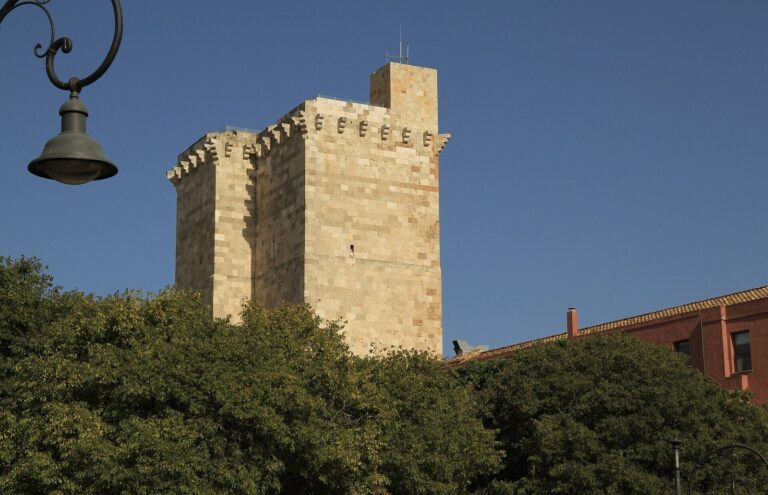
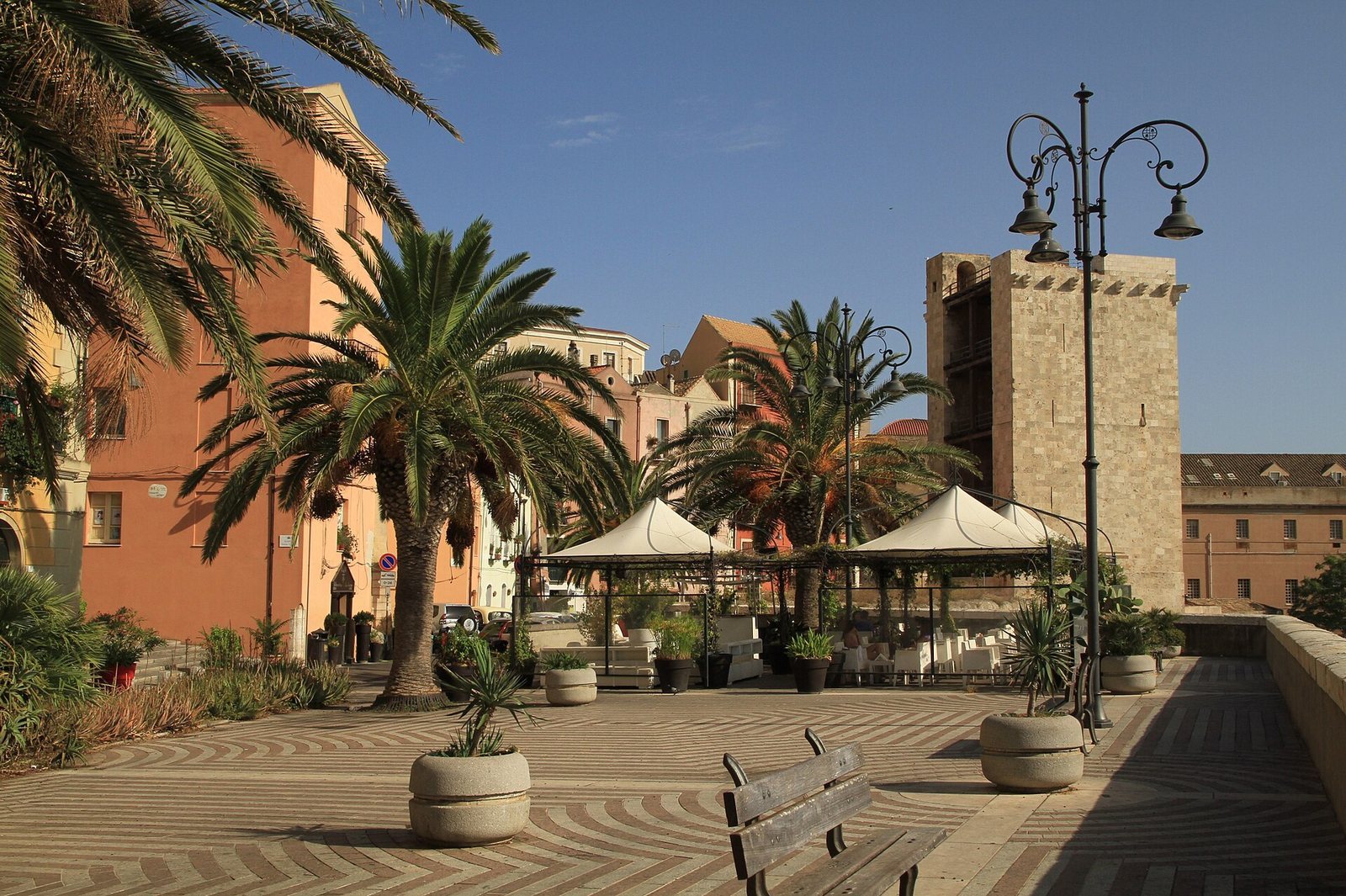
The tower stands in Cagliari’s Castello quarter beside the church of San Giuseppe Calasanzio. It is the city’s second-tallest medieval tower, after San Pancrazio Tower. Its height is about 30 metres, or around 35 metres with the small upper turret; measured from the Via Cammino Nuovo side, it reaches 42 metres.
Stonework and galleries
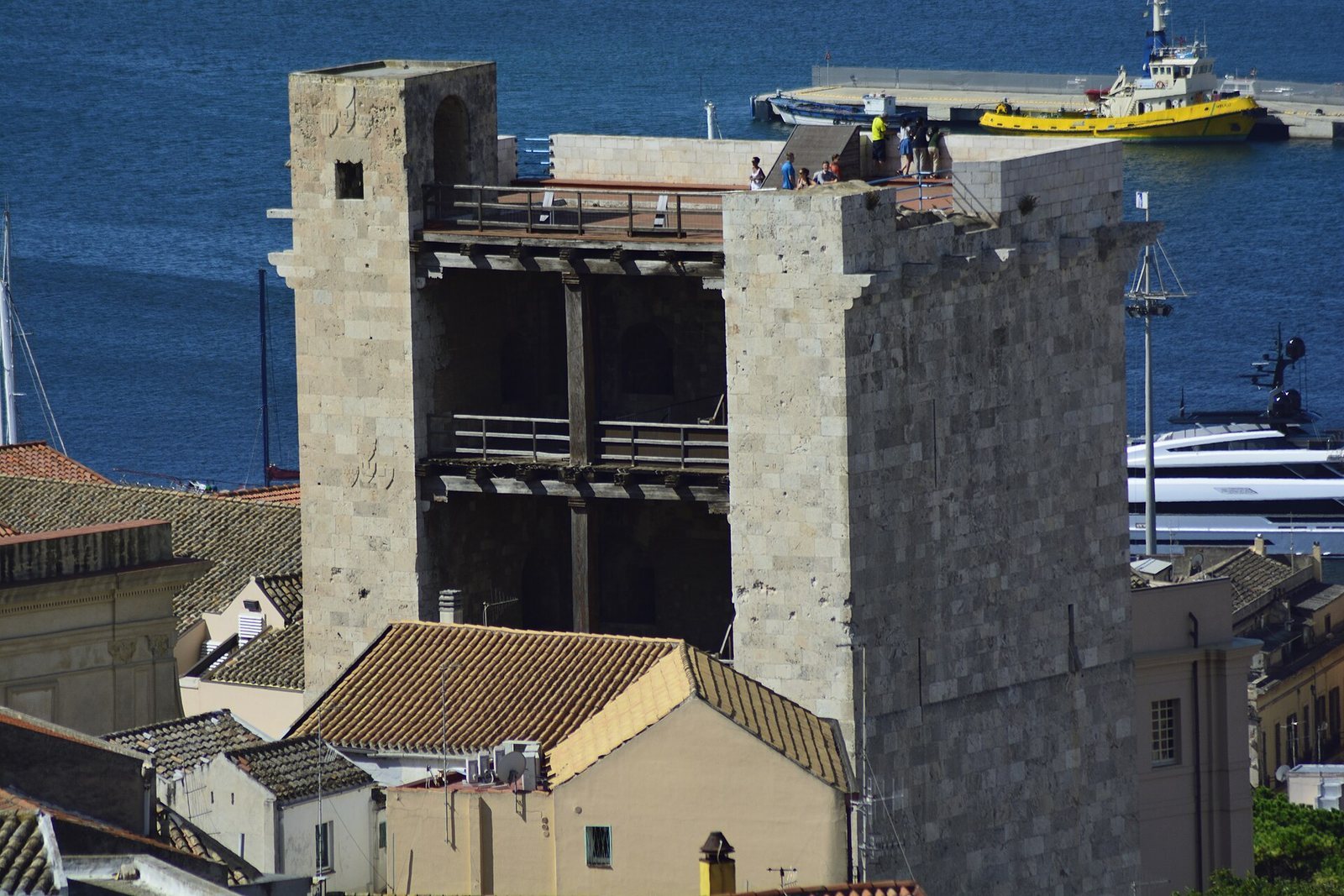
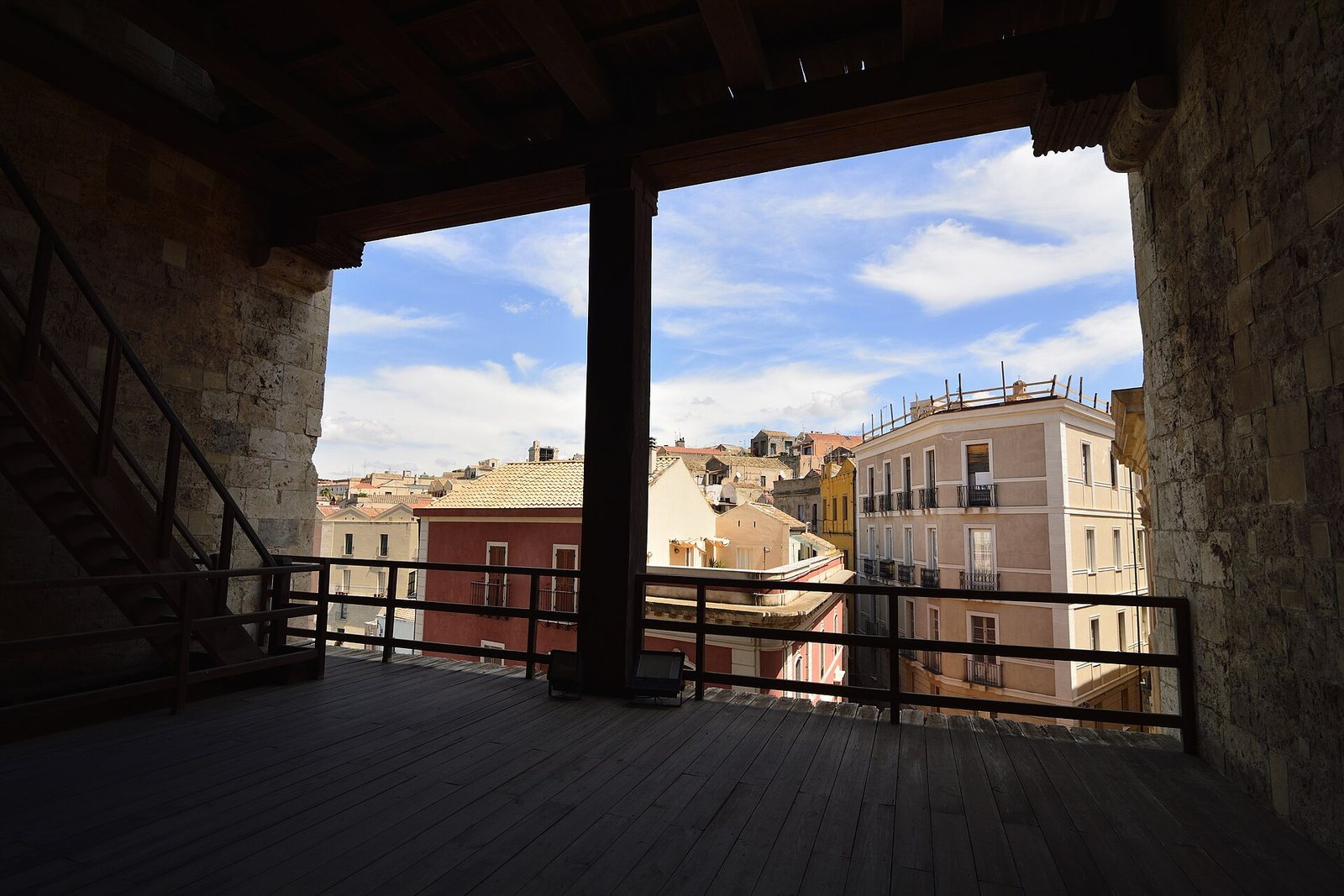
Three exterior sides are built from white limestone quarried at Bonaria. The side facing Castello has an open-sided Pisan design, with four floors and wooden galleries.
Entrance defenses
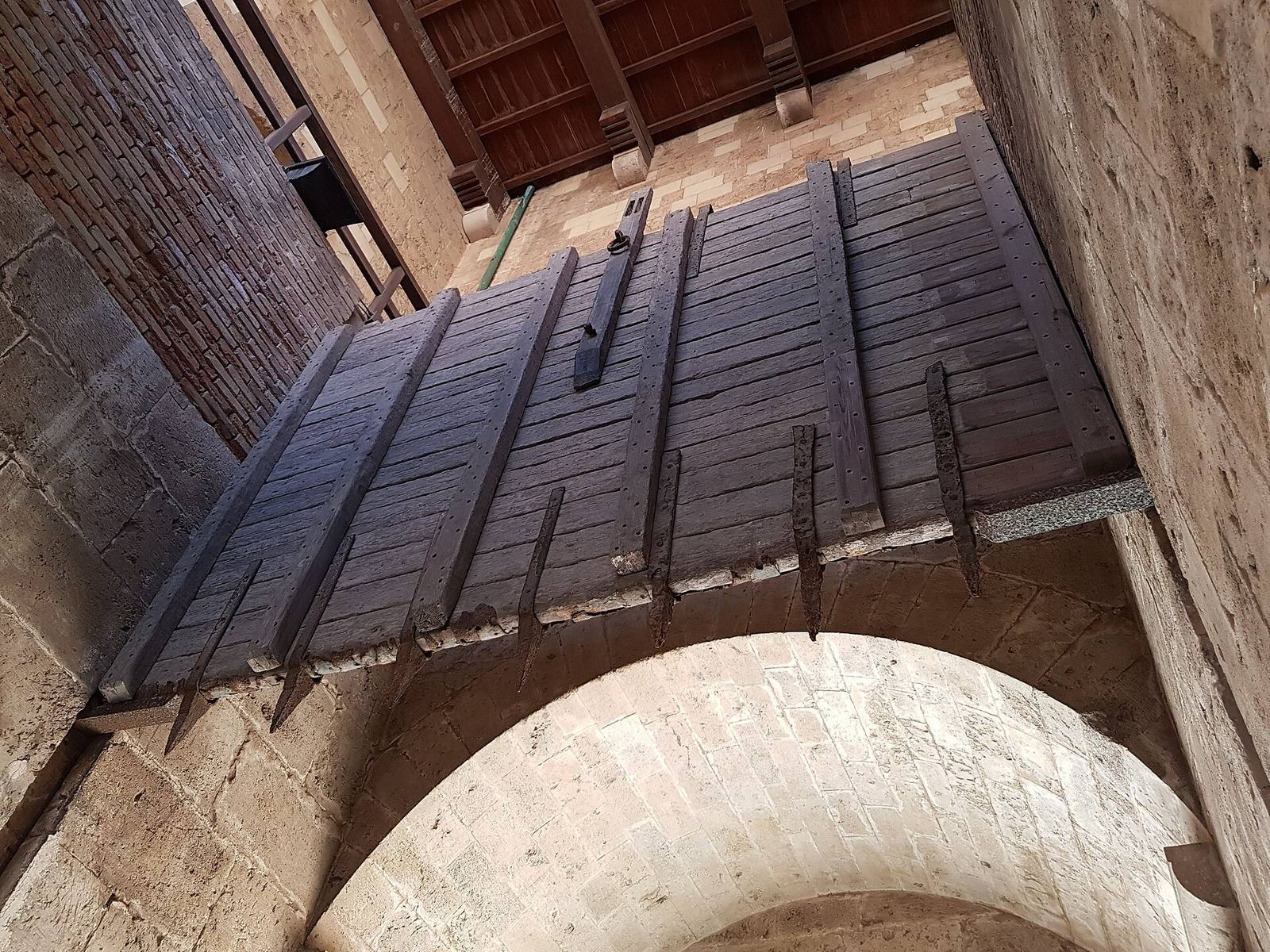
The entrance was secured by three heavy doors and two grates. Projecting stone supports above it carried a wooden defensive structure.
Inscription and emblems
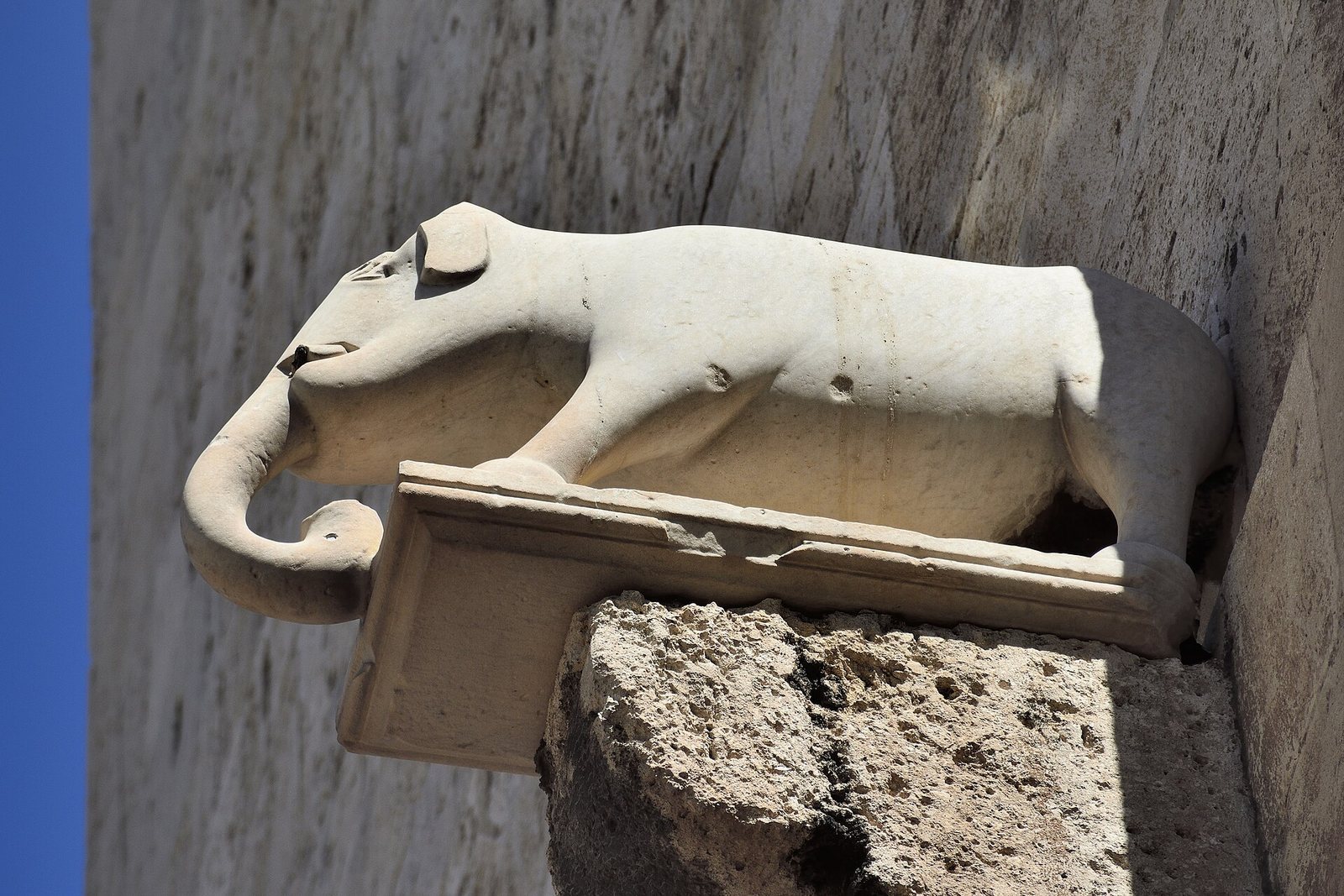
An engraved stone beside the entrance records the tower’s builder and construction date, though the inscription is now scarcely legible. Higher up, several fourteenth-century coats of arms include the city emblem. A small stone elephant, one of Pisa’s symbols, stands on a projecting bracket.