Vereide Church: A Medieval Stone Church in Nordfjord, Norway
Site at a Glance
- Popularity
- Low
- Country
- Norway
- Primary era
- Medieval
- Eras represented
- Medieval, Early Modern, Modern
- Civilizations
- Denmark–Norway, Norwegian
- Site type
- Religious
- Remains
- Church
On this page12 sections
History
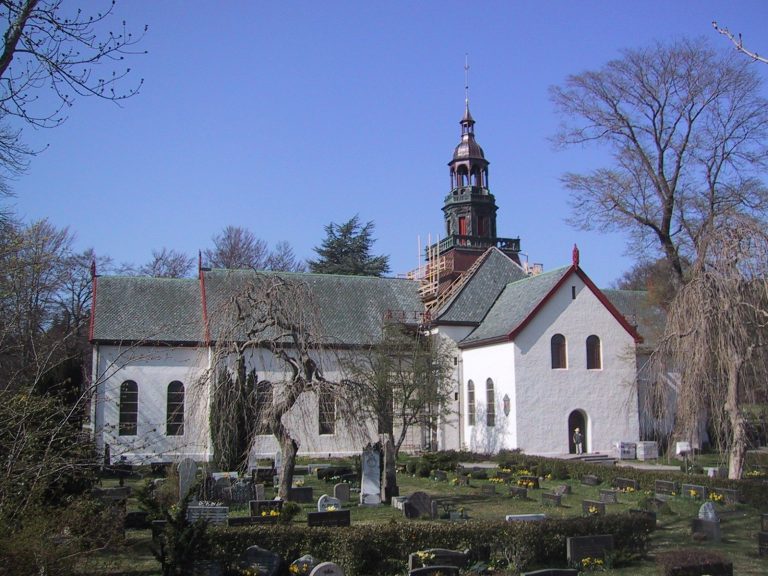
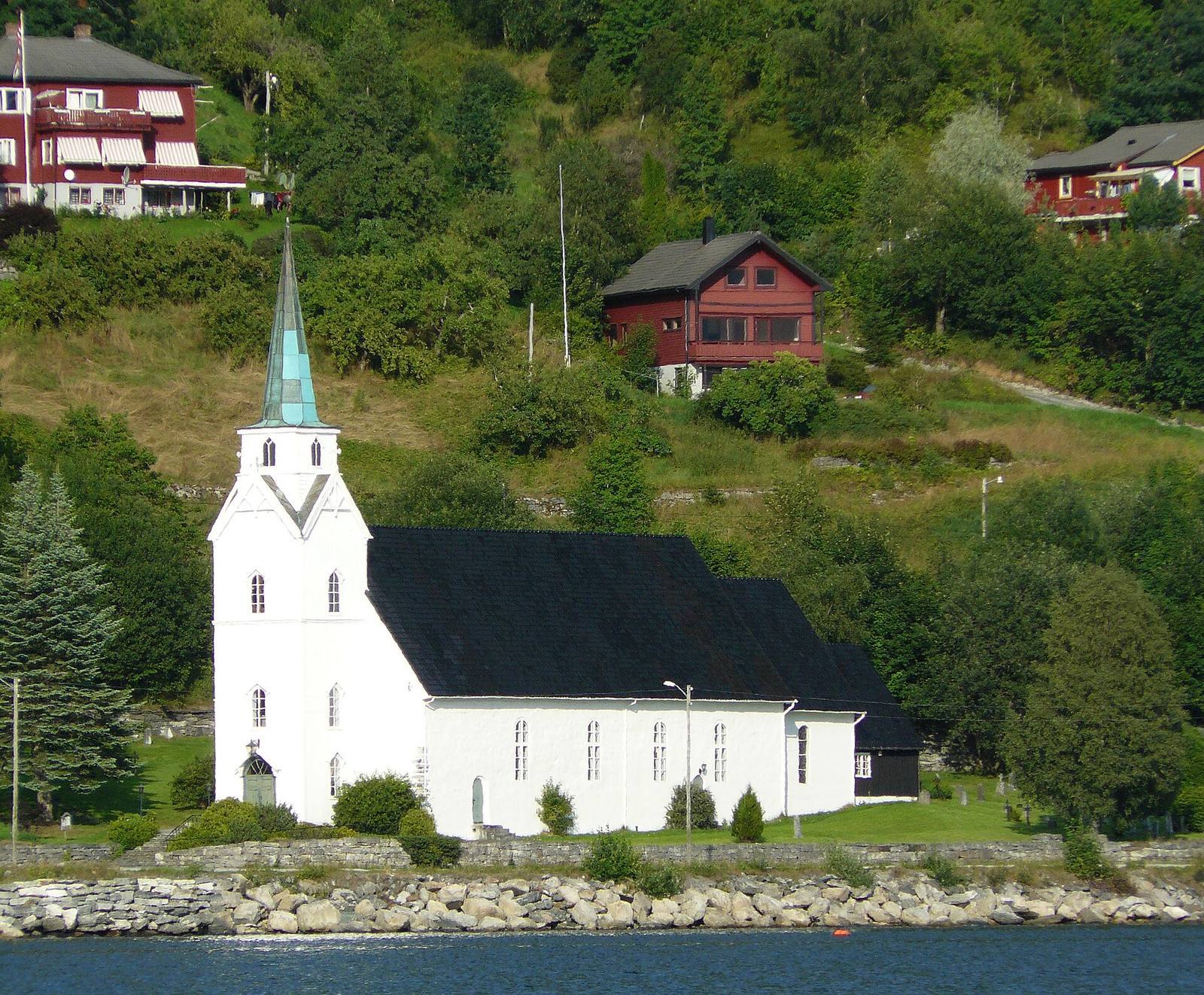
Vereide Church is a medieval stone church beside Gloppefjord, about 5 km west of Sandane in Norway. It probably dates to the 12th century, although the building’s precise age is uncertain. It was the principal church of Nordfjord and one of four principal churches in Firdafylke, a historical district in western Norway. It is the only surviving medieval stone church in Nordfjord and the largest medieval church in the former county of Sogn og Fjordane.
Medieval origins and regional role
The earliest parts of the church may date from the 12th or 13th century. A written record mentions it in 1303, when it was already established. An archway bears the date 1163, which has been suggested as the year of construction. During a renovation in 1967, parish priest Johnny Bakke instead chose 1167 as the building year to mark an 800th anniversary. Neither date resolves the uncertainty about when the church was first built.
Vereide was one of four principal churches in Firdafylke, alongside those at Eid, Kinn, and Askvoll. Its earlier religious affiliation was Catholic. Today it is an Evangelical Lutheran parish church within the Church of Norway, Norway’s national Lutheran church.
Renovation and changing use
The church underwent extensive work in 1631. A mason spent 19 days on the renovation, and the year was inscribed on the building. Local people consequently came to regard 1631 as its construction date. Monograms for the bailiff, a local administrative official, and landowner Christen Søfrenson Wittrup and his wife, Anne Abelsdotter, were also placed on the walls. Later technical and archaeological assessments placed the church’s origins roughly five centuries before this work. An earlier explanation held that the 1631 building had been made with stone from an older church farther uphill; the church is now thought to have occupied its present site since the Middle Ages.
In 1814, the church was a polling place for the election of electors, who later chose representatives to Norway’s Constituent Assembly, the body that drafted the country’s constitution.
Later alterations and protection
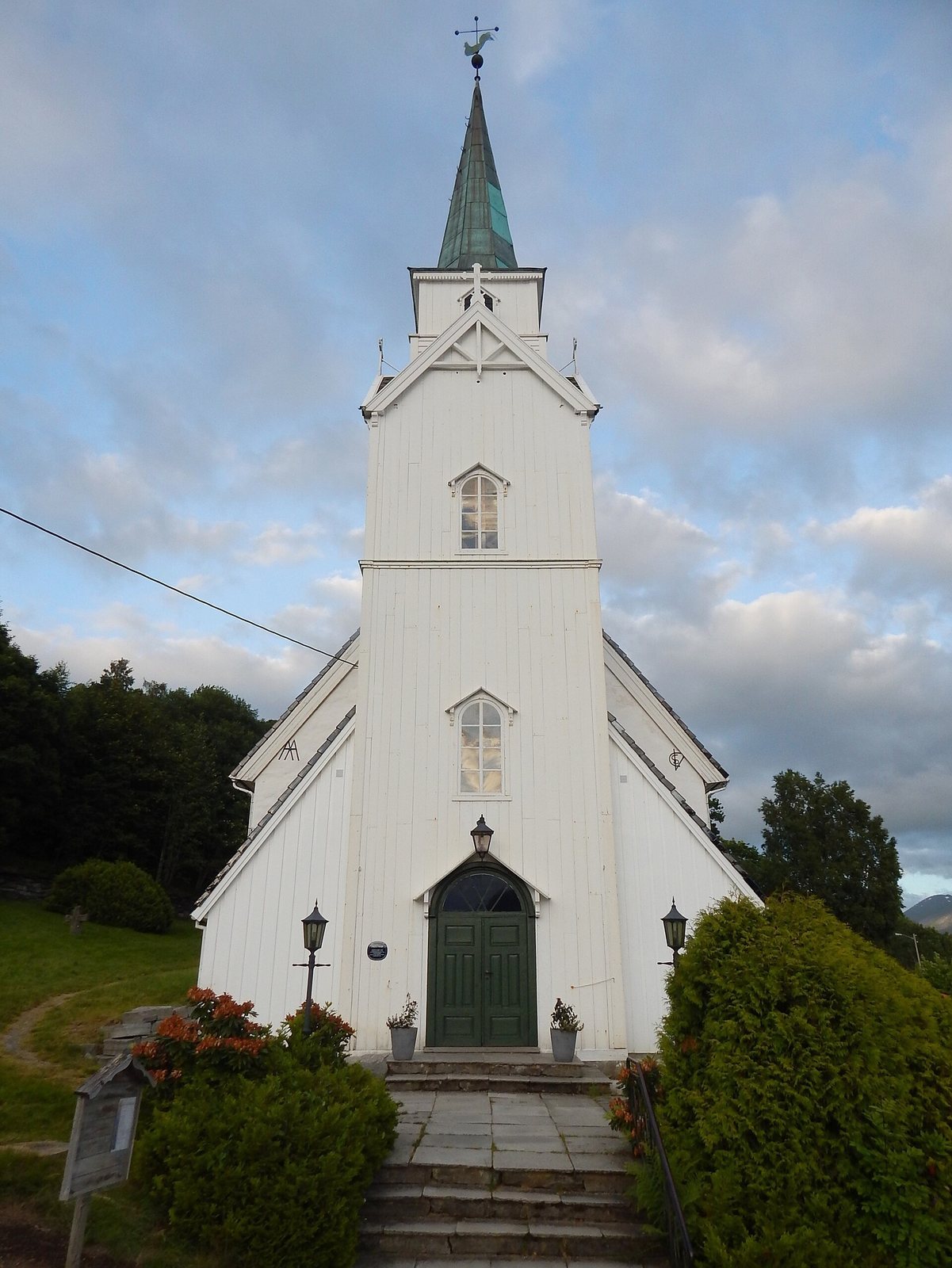
Larger windows were installed in 1861, followed by a wooden porch with a tower in 1879. A new altar area and a sacristy, a room for vestments and ritual objects, were built in 1931; the sacristy was enlarged during the 1960s. The church was renovated again in 1967. It is automatically protected as a Norwegian cultural heritage site.
Remains
Church fabric
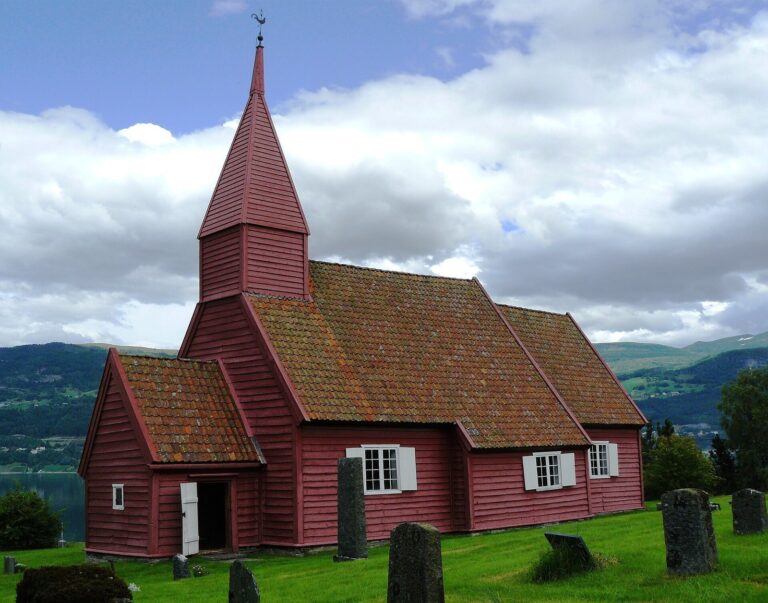
The white, single-nave stone building has an elongated plan. Its original layout consisted of a rectangular nave, the main space for the congregation, and a narrower chancel, the area containing the altar, with a lower roof. The church has been extended, but its thick stone walls remain largely unchanged. Its present form also includes a wooden porch, a bell tower, a spire with a weather vane, and the later chancel and sacristy. The building has seating for about 460 people.
Setting and burial grounds
The church stands below the Vereide plateau on the northern shore of Gloppefjord. The shoreline was arranged for church boats and small rowing boats. An old church road descends from Upper Vereide and the clergy residence at Gloppen via Stettebakkene; people still walk this route to the church. Gravestones from the former churchyard stand behind the building. A larger cemetery was established on the plateau in the early 20th century, and the churchyard beside the church is no longer used for burials.
Stone cross
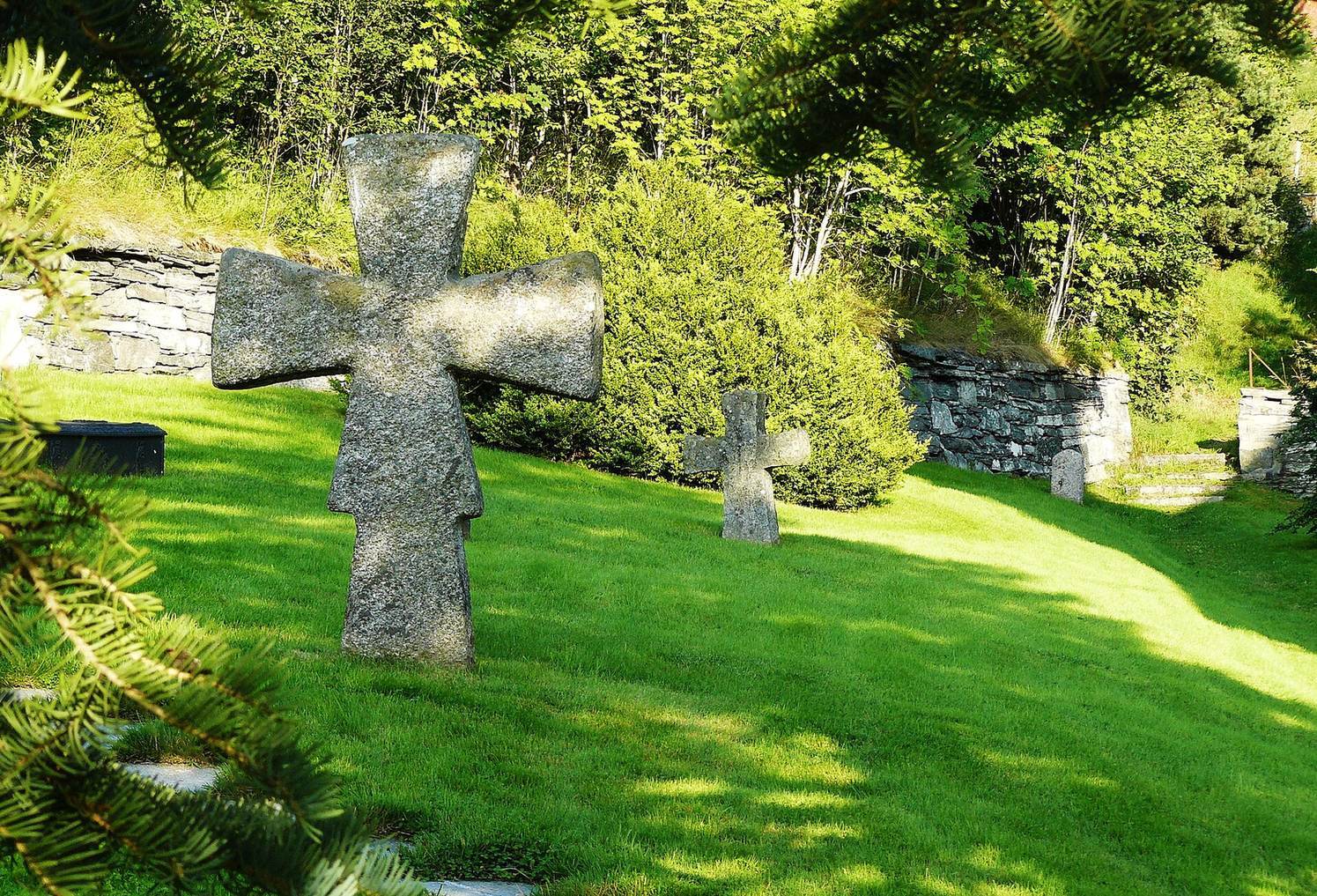
A medieval stone cross stands near the church entrance. It measures about 1.70 m high and 1.20 m wide, with arms 45 cm long, and is thought to be at least as old as the church. One theory places its original location at a cove about 500 m to the east, where it may have been visible to boats entering the fjord. It is also thought to belong to a group of crosses erected in western Norway during the early missionary period.
Interior furnishings and burials
Altarpieces and memorial
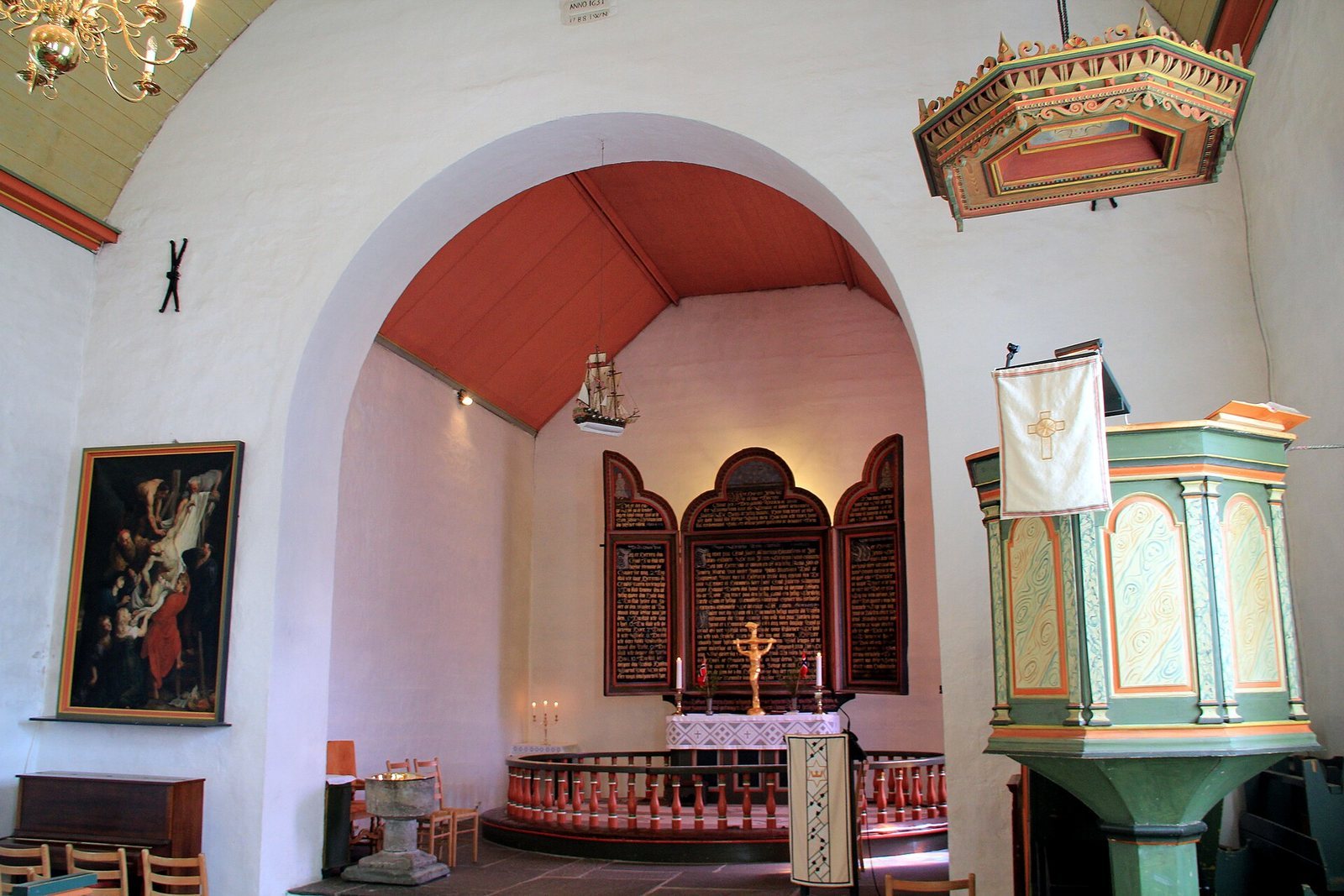
The 1604 catechism altarpiece presents material from a summary of Christian teaching. It is much larger than, but similar in type to, the altarpiece at Gimmestad Old Church. After a period out of use, it returned to the church. A second altarpiece, a copy after the Flemish Baroque painter Peter Paul Rubens by Norwegian artist Karl Uchermann, was used for a time and now hangs in the nave. A memorial tablet inside the church dates to 1608.
Ritual objects and bells
A medieval soapstone baptismal font, long out of use, was found and returned to service in 1904. It is the only item of medieval origin in the church still used today. Other furnishings include four wooden and brass altar candlesticks from the 18th century, a 17th-century chalice and paten, a modern gold crucifix showing Jesus on the cross, and a model ship dated to 1650. The ship is a votive offering, an object dedicated for religious purposes. The church also has two medieval bells and a pulpit.
Crypt
A cool crypt, a chamber beneath the church, contains well-preserved 18th-century coffins belonging to priests and their family members, including a child.