Ratsgymnasium Bielefeld: A Secondary School with Medieval Origins
Site at a Glance
- Popularity
- Medium
- Country
- Germany
- Primary era
- Medieval
- Eras represented
- Medieval, Early Modern
- Civilizations
- Holy Roman Empire
- Site type
- Civic
- Remains
- School
On this page13 sections
History
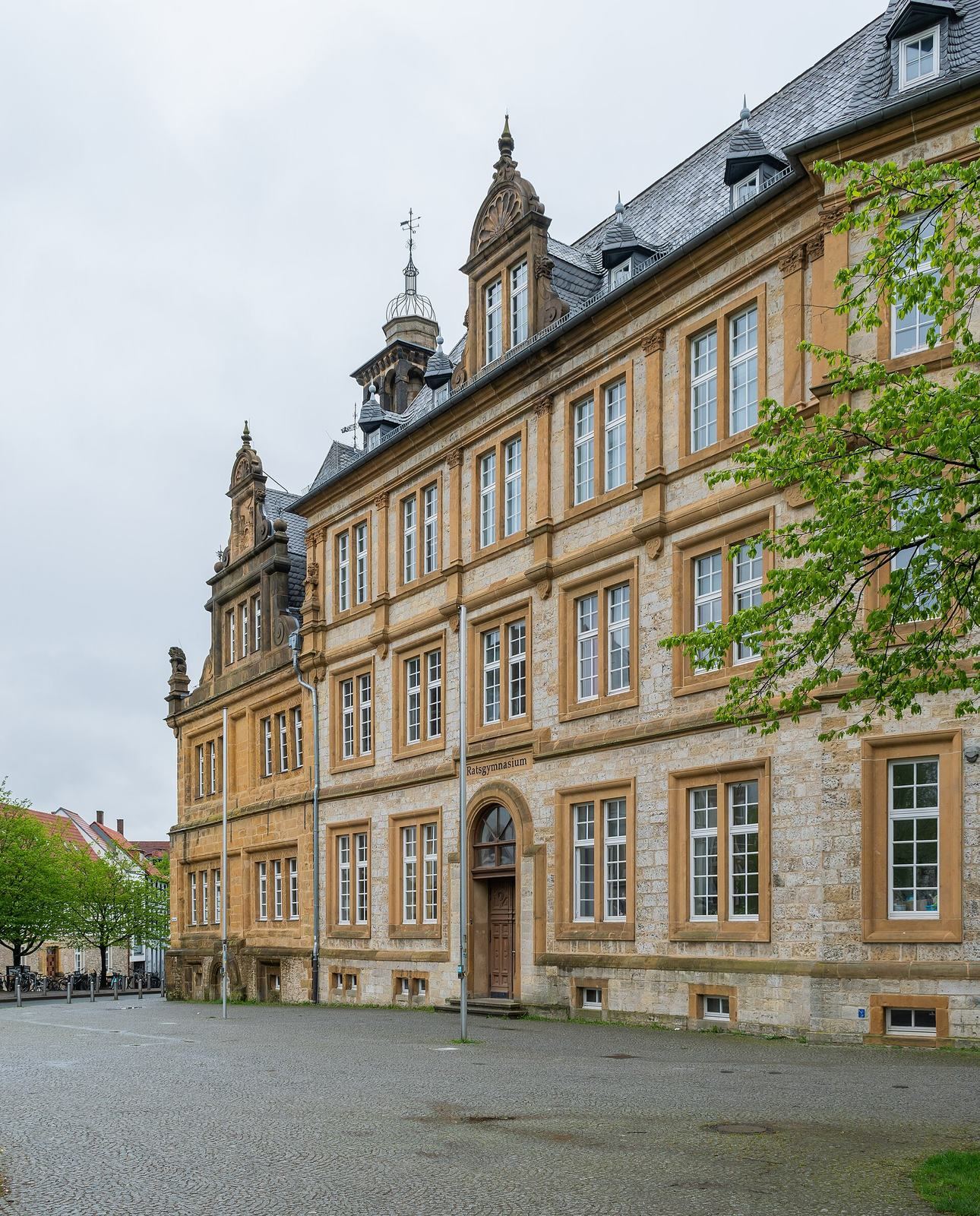
Ratsgymnasium Bielefeld is an academically oriented secondary school in Bielefeld, Germany, and the city’s oldest school. Its institutional tradition reaches back to a Latin school, where Latin study was central and often prepared pupils for advanced education, associated with the Marienstift, a collegiate religious foundation established by Count Otto III of Ravensberg. The school is named in the foundation charter dated 14 July 1293. The oldest part of its present building reflects the Weser Renaissance, a regional architectural style associated with the Weser area.
Medieval origins
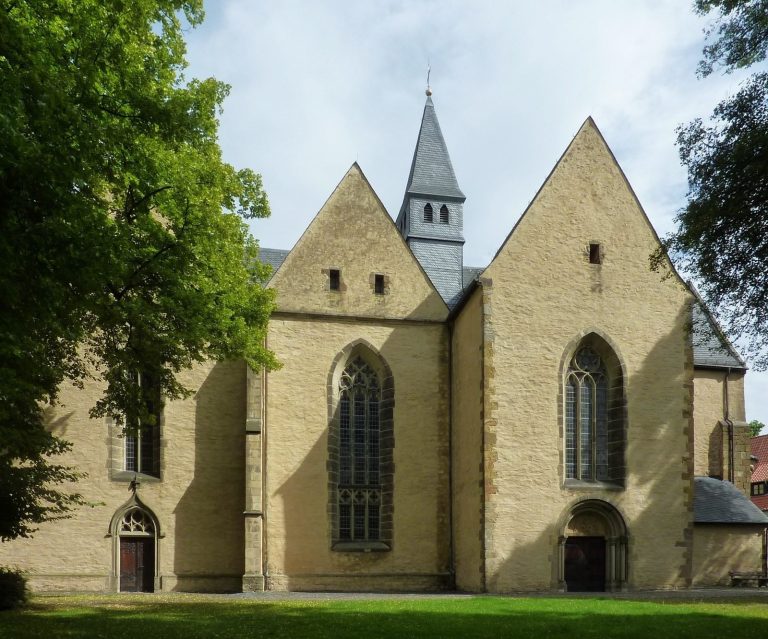
The earliest predecessor school building stood at Papenmarkt, near Neustädter Marienkirche, on land within the Marienstift’s precinct. This area, known as the Stiftsfreiheit, had special jurisdiction and legal privileges. The school’s tradition continued as Bielefeld gradually adopted Lutheranism from the sixteenth century, without major conflict.
Reformation and the remembered foundation date
During the nineteenth and twentieth centuries, 1558 was commonly treated as the school’s founding year. This date may have reflected an effort to connect the institution more closely with Lutheran and Prussian traditions. The school’s anniversaries followed that chronology, including a celebration of its 425th anniversary in 1983.
Jewish pupils and persecution
About 460 pupils of Jewish faith or descent attended the school between 1798 and 1938. During National Socialist rule in Germany from 1933 to 1945, 46 Jewish pupils and one teacher were murdered. A memorial book at the school commemorates them. In 2023, a literature course presented life stories of former pupils from both victim and perpetrator sides, drawing on letters and other original documents.
Institutional changes since 1950
The school has operated its own residential centre for school trips on the North Sea island of Langeoog since 1950. Its natural-science branch became an independent school in 1952 and is now Max-Planck-Gymnasium, named for the German physicist Max Planck. Since 1958, Ratsgymnasium has also maintained a sponsorship relationship with the former Friedrichsschule in Gumbinnen, once in East Prussia.
The school adopted the name Ratsgymnasium in 1964; earlier official names included “Gymnasium” and “Municipal Gymnasium.” It was a boys’ school until 1969, while neighboring Gymnasium am Waldhof served girls until that year. Today, Ratsgymnasium is a state-and-municipal academic secondary school with a classical-language focus. Latin is a principal subject from fifth grade, and English has also been taught from that grade since 2001.
Remains
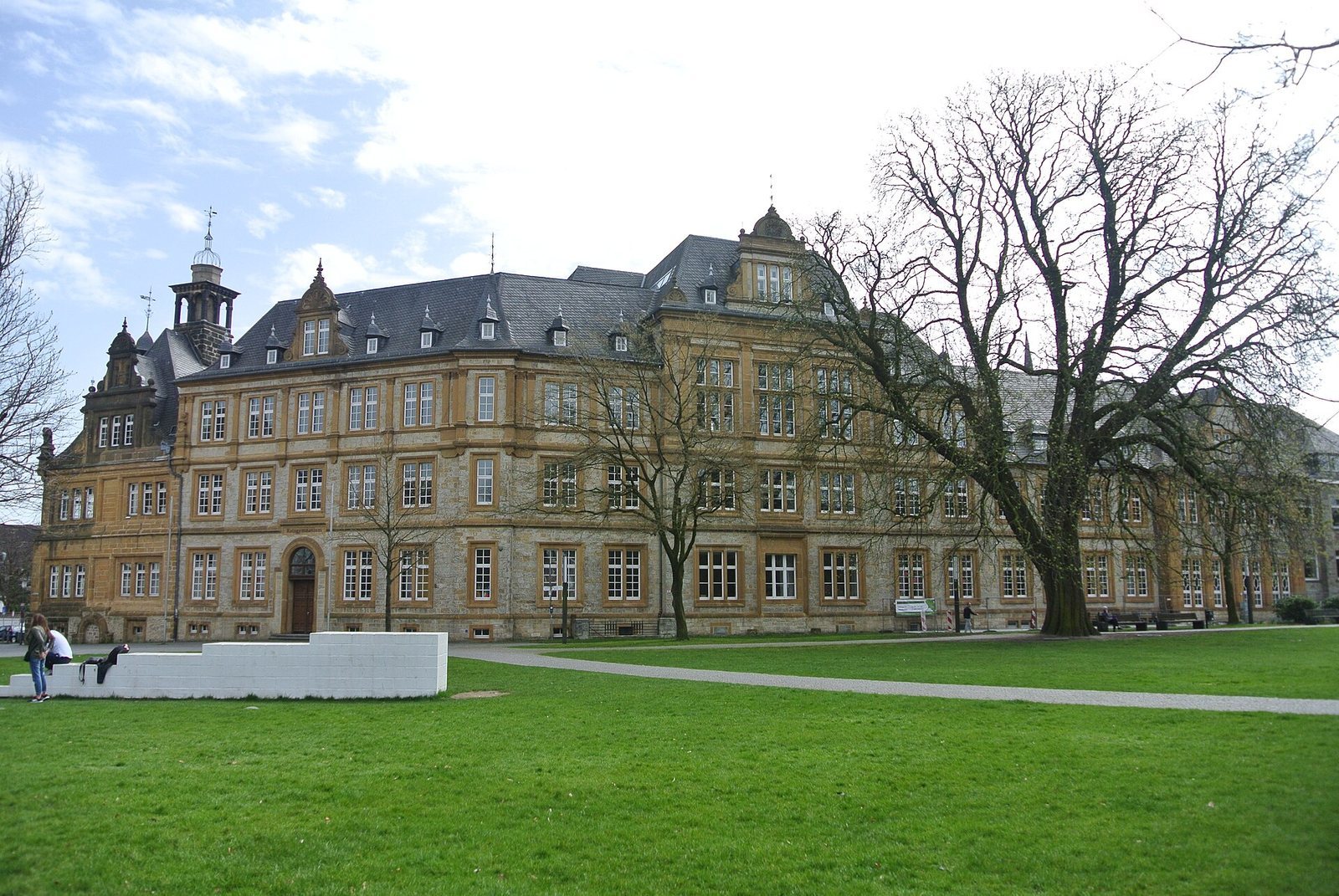
The school stands at the edge of Bielefeld’s historic old town, beside the Kunsthalle art museum and its park. Its oldest surviving section, Grest’scher Hof, is a Weser Renaissance building with a masonry core dating to the late thirteenth or early fourteenth century.
Historic building and school spaces
Grest’scher Hof
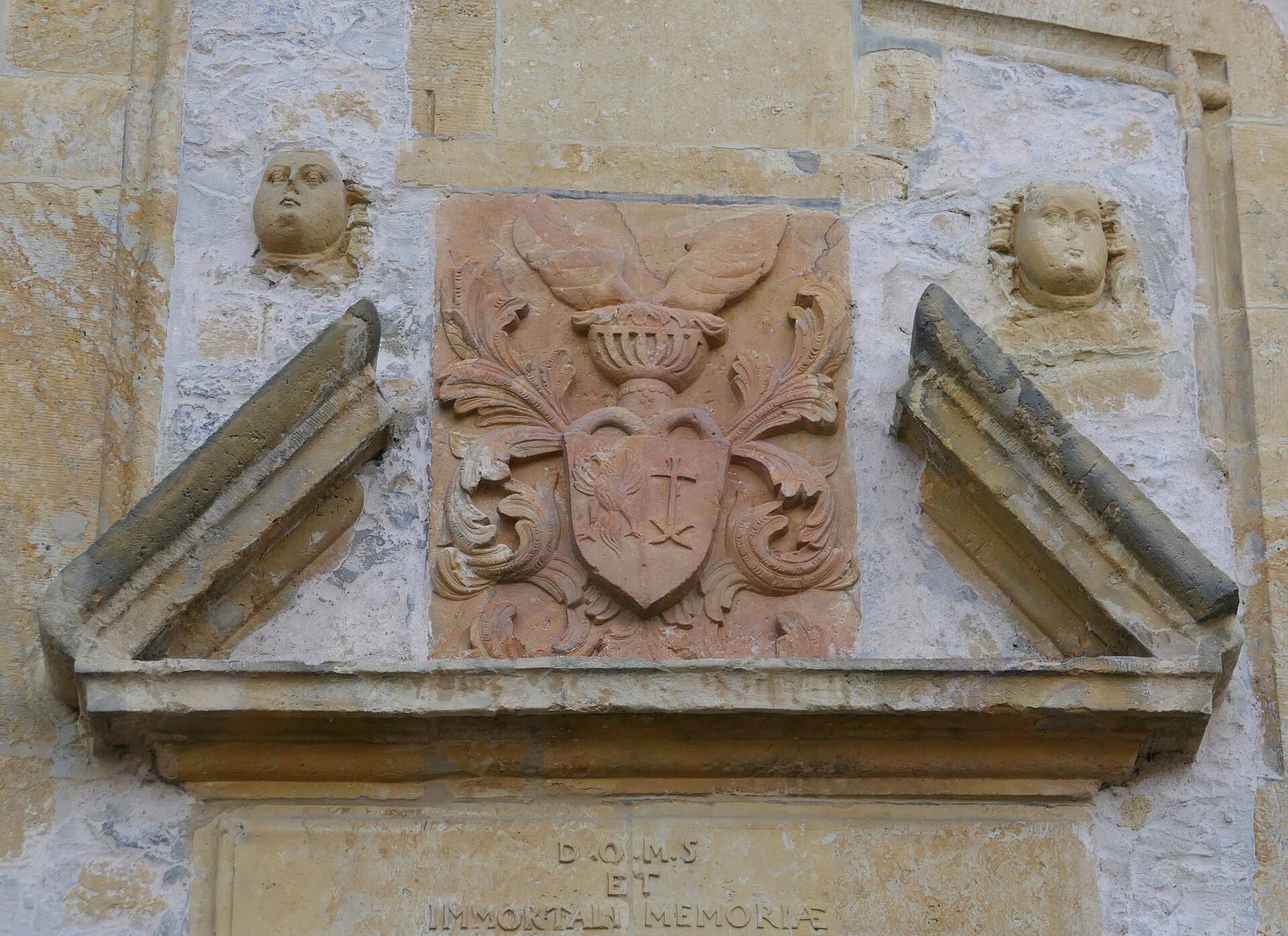
A commemorative plaque to Franz von Meinders is fixed to the north side of Grest’scher Hof. Meinders was a seventeenth-century official in the Brandenburg administration.
Assembly hall
The school’s assembly hall contains an organ and a cycle of paintings by the German painter Ernst Hildebrand.
Libraries and historical records
Teacher’s library
The teacher’s library holds about 30,000 volumes, including around 60 incunabula, books printed before 1501, and seven late-medieval manuscripts. Nearly 5,000 of its roughly 7,500 titles date from the sixteenth to the nineteenth centuries.
Johann Wilhelm Loebell’s library
A separate scholarly library of about 7,000 volumes belonged to Johann Wilhelm Loebell (1786–1863), a German historian.
Historical school reports
A collection of about 30,000 historical school reports, published between 1825 and 1915, was transferred to the Bielefeld City Archive. The reports came from academic, practical, and civic secondary schools across the German Empire, as well as middle schools in Austria-Hungary.