San Lucifero: A Parish Church in Cagliari
Site at a Glance
- Popularity
- Medium
- Country
- Italy
- Primary era
- Early Modern
- Eras represented
- Early Modern, Modern
- Civilizations
- Crown of Aragon, Italian, Kingdom of Sardinia, Spanish
- Site type
- Religious
- Remains
- Church
On this page12 sections
History
San Lucifero is a late Mannerist church in Cagliari’s Villanova district, Italy, built by the municipal government between 1646 and 1682 over a place believed to be the burial site of Lucifer of Cagliari. Its construction followed a search for saints’ relics in an area that had served as an early Christian cemetery, near the Basilica of San Saturnino.
Early Christian cemetery and relics
During the first quarter of the seventeenth century, excavations in the cemetery sought relics, especially those of martyrs. The effort was bound up with a dispute between the archbishops of Cagliari and Sassari, each claiming precedence over Sardinia and Corsica. The standing of each archdiocese was judged in part by how many “holy bodies,” or remains believed to belong to martyrs, could be recovered from its ancient burial grounds.
Excavations near San Saturnino uncovered human remains attributed to several martyrs. Funerary inscriptions bearing the initials B.M. were regularly interpreted as “Blessed Martyr,” although the same initials could also mean “of good memory.” The remains were solemnly moved to the Martyrs’ Sanctuary, an underground chamber beneath the presbytery of Cagliari Cathedral. They included relics attributed to Saint Saturninus, Cagliari’s patron, and Saint Lucifer of Cagliari, a fourth-century bishop who opposed Arianism, a movement that disputed the full divinity of Christ.
In 1623, remains attributed to Lucifer were found in a sarcophagus inside an ancient shrine. Two accompanying inscriptions identified him as archbishop of Cagliari and primate of Sardinia and Corsica. A primate is an archbishop given precedence within an ecclesiastical territory. One inscription also stated that Lucifer lived to the age of 81 and died on 20 May. The inscriptions and the relics were kept in the Martyrs’ Sanctuary.
Church and religious institutions
San Lucifero was built over the place then believed to be Lucifer’s burial site, at a time when the area was rural. From 1693 to 1767, Dominican friars, members of a Catholic religious order, ran the church, convent, and college. The complex then passed to the Trinitarians, a Catholic order historically associated with the release of captives. They moved there from their former home at San Bardilio and remained until 1803.
Civic and parish uses
In 1826, King Carlo Felice designated the complex as a poorhouse; it was later converted into an orphanage. By 1861 the church and convent had been abandoned and were in poor condition, a state noted by the Sardinian priest and scholar Giovanni Spano. From 1907, the former poorhouse housed the royal industrial school, which continues as a technical industrial institute.
As the Villanova district grew, Archbishop Francesco Gregorio Barchialla made San Lucifero a subsidiary parish of the collegiate church of San Giacomo in 1891. In 1924, Archbishop Ernesto Maria Piovella established an independent parish at San Lucifero, dedicated to Our Lady of Remedy. Its first parish priest, Don Mosè Farci, served until 1957. The church remains the seat of the parish.
Remains
Church architecture
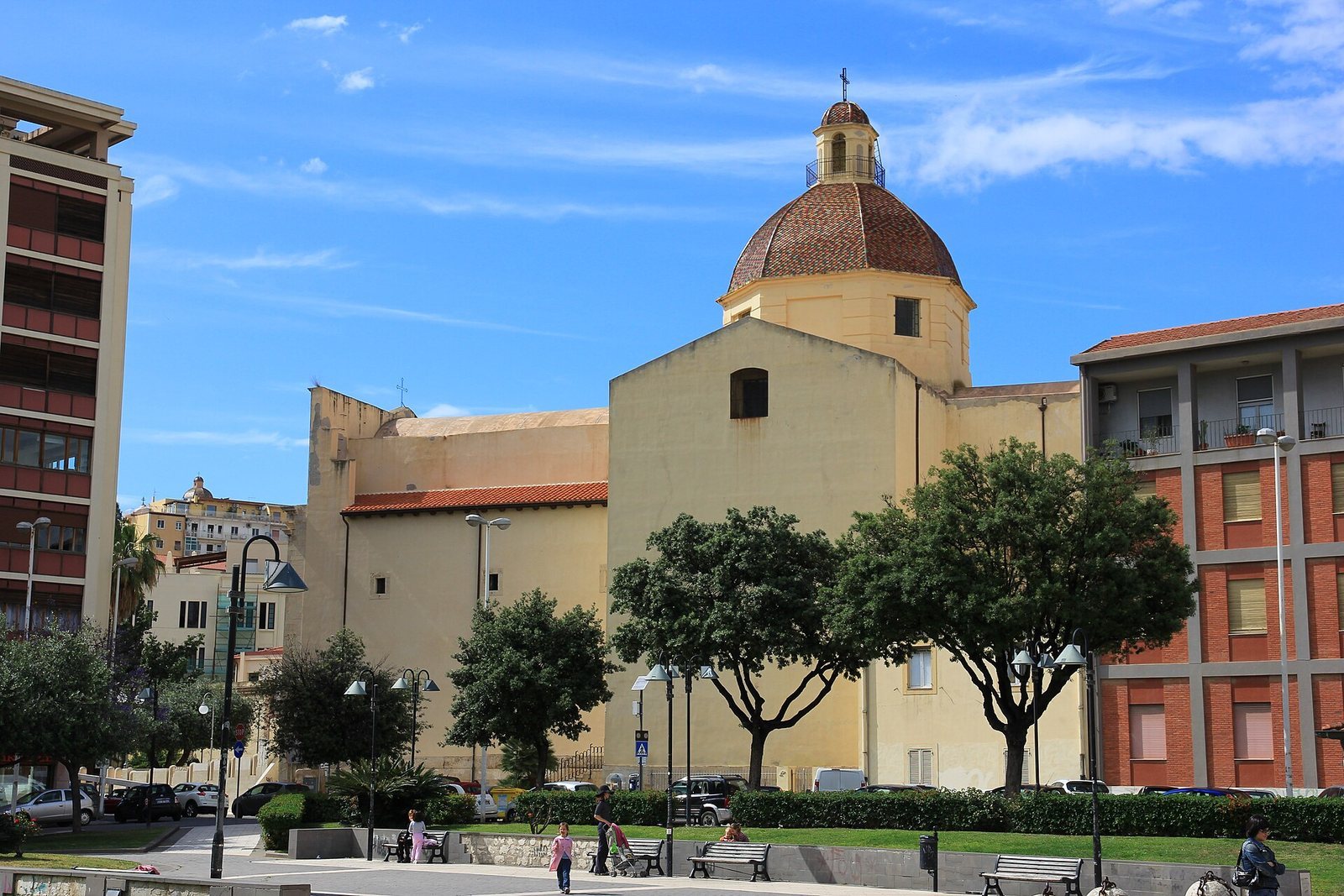
The church follows a Latin-cross plan, with a transept (the crosswise arm) crossing the nave (the main lengthwise space). Its late Mannerist design draws on Cagliari Cathedral and includes a high dome and a raised presbytery, the clergy’s altar area, above an underground crypt.
Facade
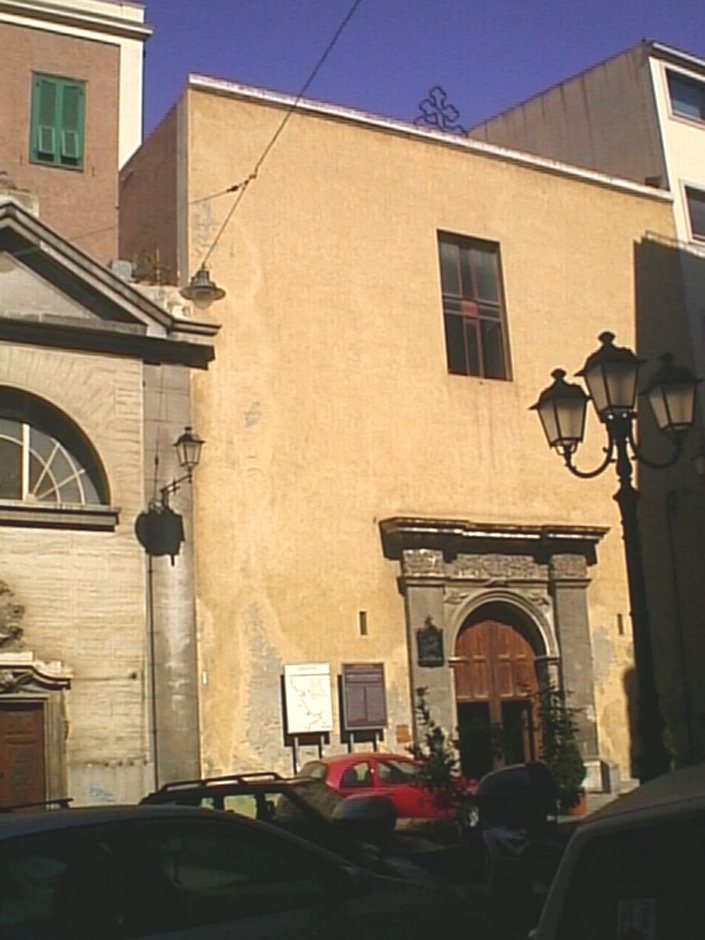
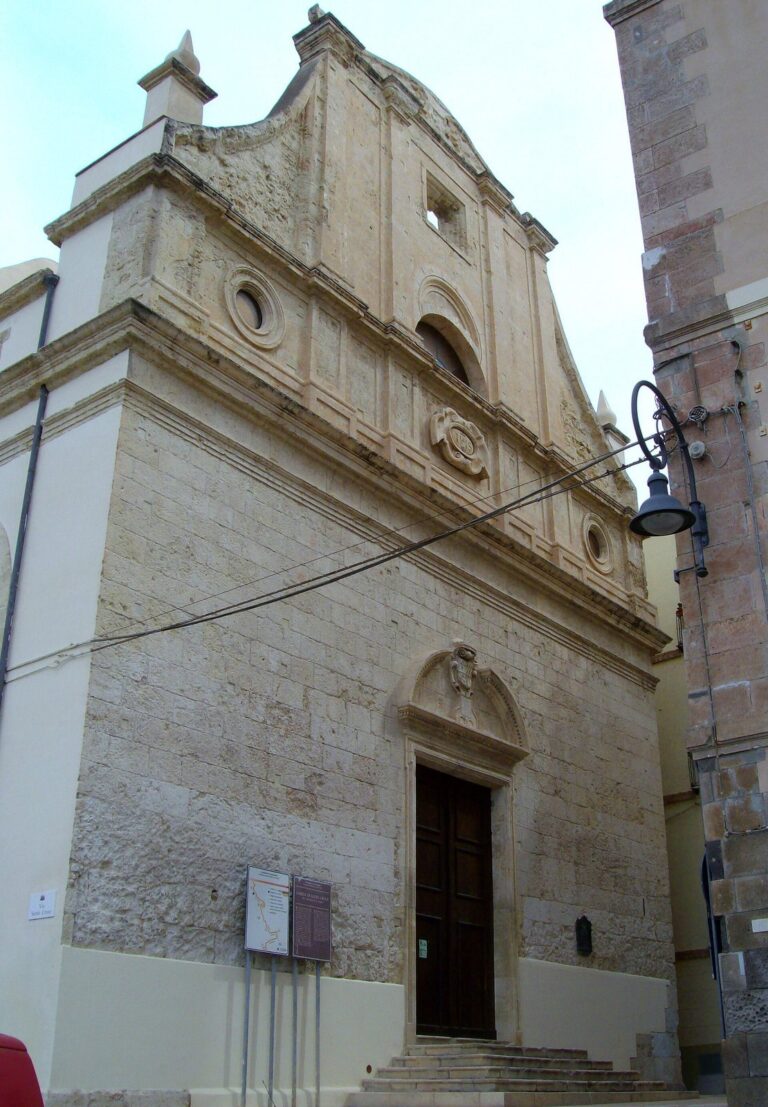
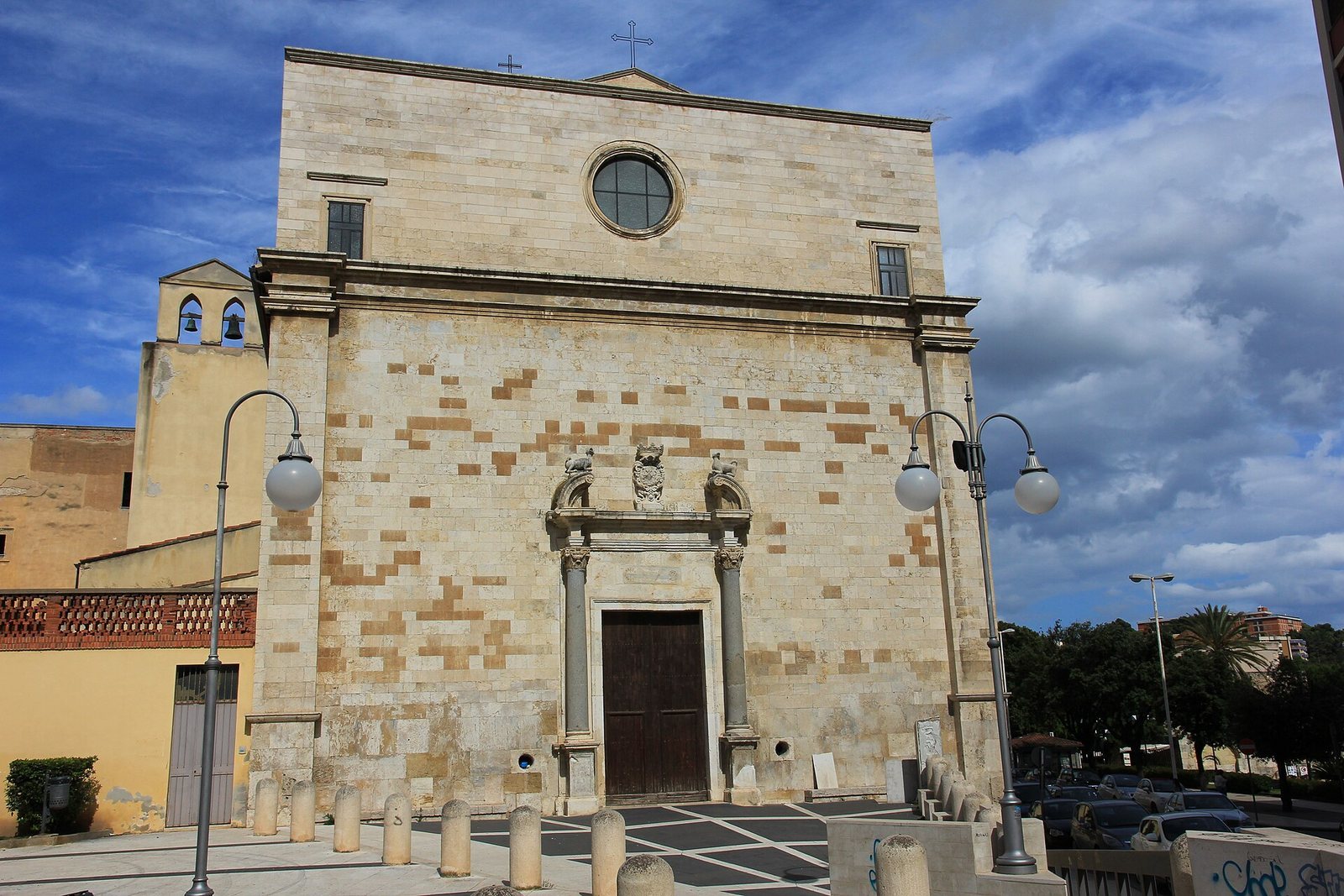
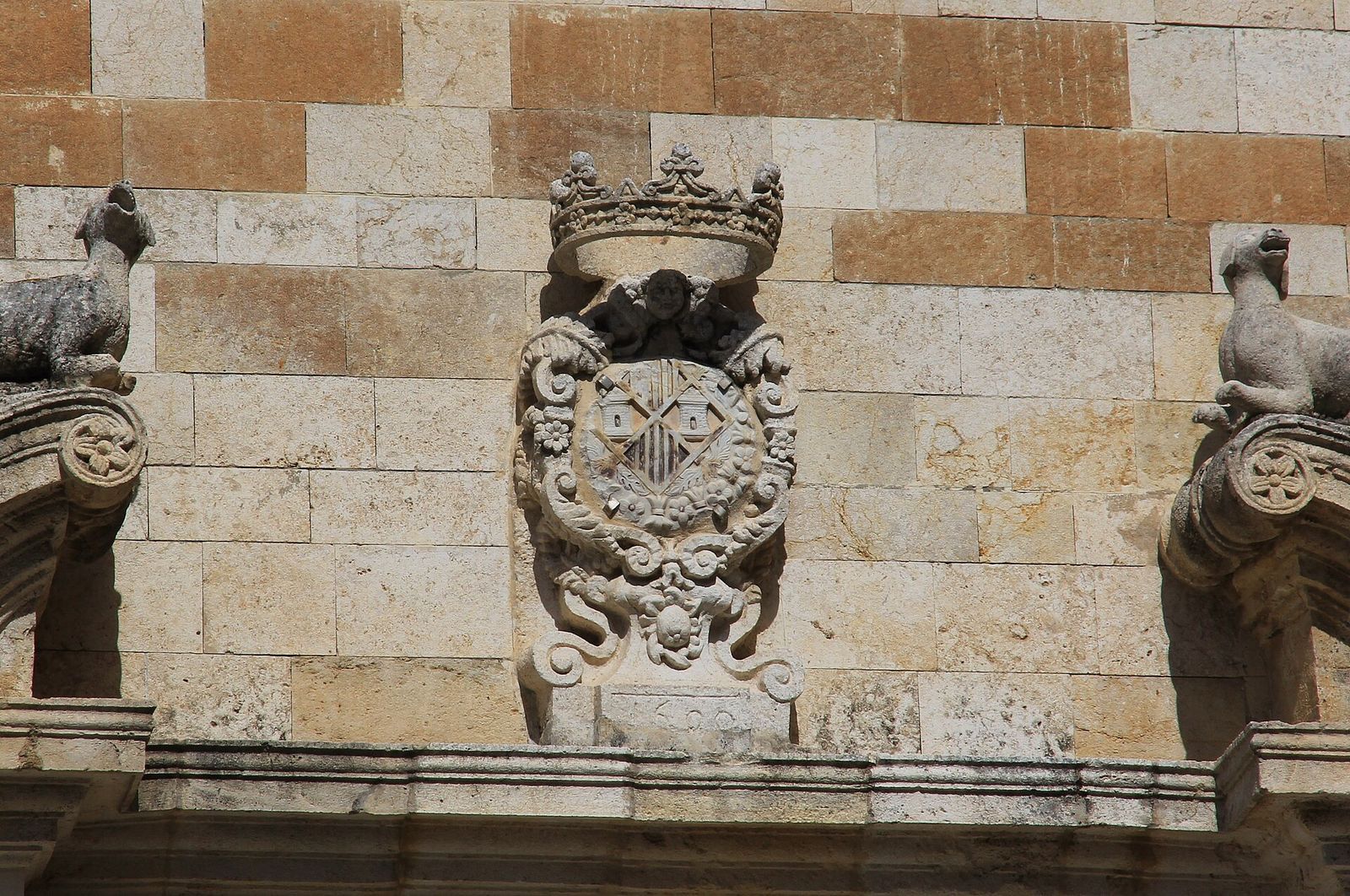
The facade has a level upper outline and two stories separated by a projecting horizontal band. Shallow supports attached to the corners have capitals with paired scroll forms in the Ionic style. The upper story contains a circular window and two rectangular openings. Completed in 1692, the entrance is framed by reused granite columns and topped by a cornice with curved scrolls. Cagliari’s coat of arms occupies the center, while two dog statues stand on the scrolls as emblems of the Dominicans. The dogs also evoke the wordplay “dogs of the Lord” associated with the order.
Nave and chapels
Inside, shallow wall supports divide the single nave, with three connected chapels on each side. The church also has a transept and a rectangular altar recess. A classical horizontal band, decorated with small tooth-like blocks, runs along the point where the arched ceilings begin. Continuous barrel-shaped vaults cover the nave and transept.
Presbytery and crypt
A distinctive wooden balustrade encloses the raised presbytery. Two wooden lions support it beside the central staircase, whose steps are decorated with glazed tiles. Organ pipes fill the rear wall of the apse. Built by the Tamburini firm of Crema in 1961, the organ has three keyboards and 27 stops, each controlling a set of pipes to produce a particular tone.
The crypt beneath the presbytery contains an ancient shrine and two other underground chambers. The shrine is the chamber associated with the sarcophagus found in 1623.
Transept altar and tomb
A large Baroque altar of gilded wood in the right transept is dedicated to Our Lady of Remedy, the parish’s patron. It holds a statue of the Virgin by Giuseppe Antonio Lonis, an eighteenth-century Sardinian sculptor. In the left transept is the tomb of Don Mosè Farci.
Saint Lucifer chapel
In the first chapel on the right, a white-marble statue of Saint Lucifer lies beneath the altar table, dressed in pontifical vestments. A painting in the same chapel shows him seated on a bishop’s throne.
Paintings
The church also contains two anonymous paintings from the late seventeenth century, both restored in 2007. They depict The Martyrdom of Saints Lussorio, Cesello, and Camerino and The Virgin and Child with Saints Lucifer and Dominic and the City’s Five Councilors.