Mäulesmühle: A Historic Watermill and Milling Museum in Germany
Site at a Glance
- Popularity
- High
- Country
- Germany
- Primary era
- Modern
- Eras represented
- Modern
- Civilizations
- Kingdom of Württemberg
- Site type
- Economic
- Remains
- Watermill
On this page11 sections
History
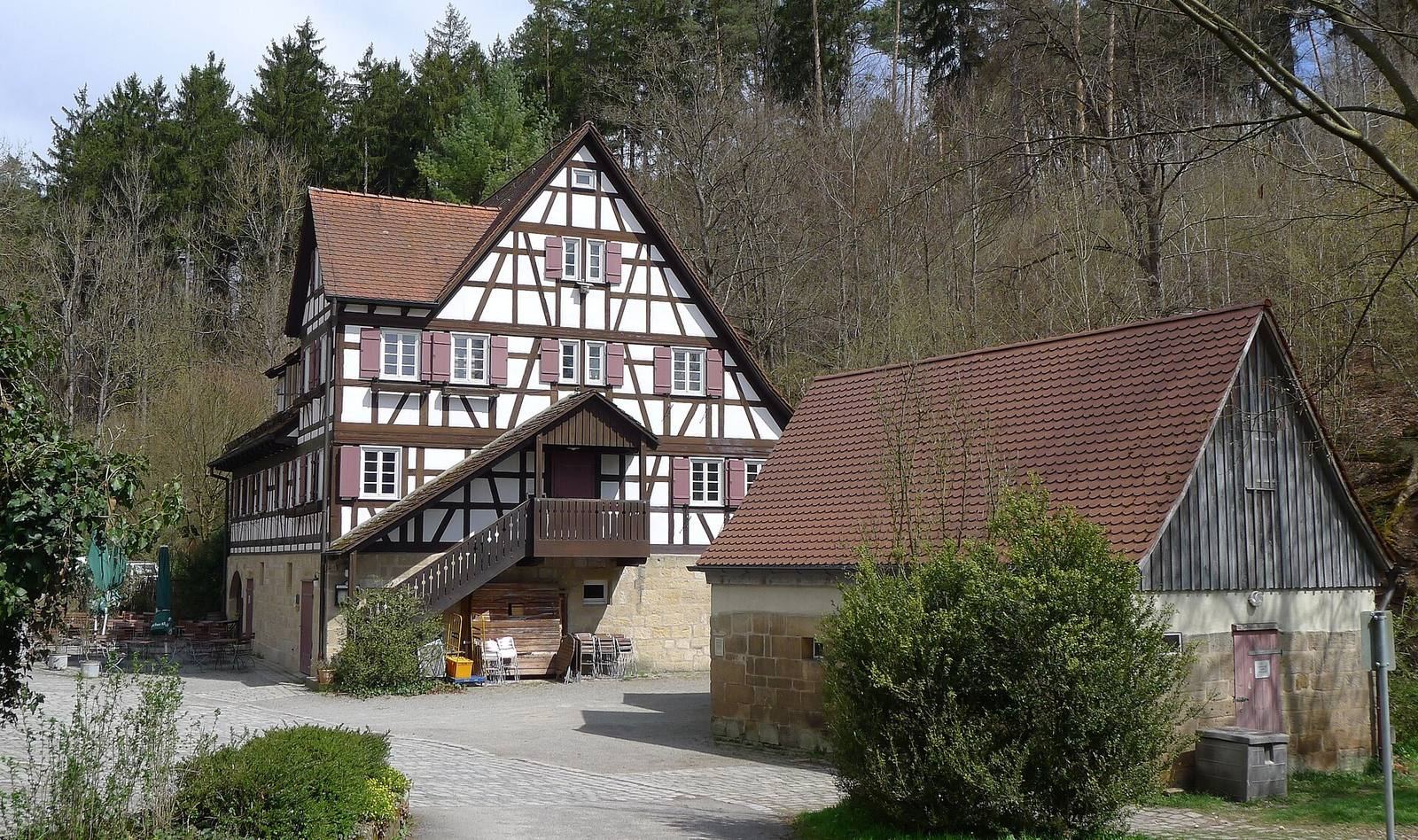
Mäulesmühle is a historic watermill in Leinfelden-Echterdingen, Germany, rebuilt in its present form in 1819. It is the third mill downstream among the eleven watermills of the Siebenmühlental, or Seven Mills Valley, which had more mills than its name suggests.
Early records and the Maylen family
A deed from 1383 refers to the mill as ruedgers Mühlin. It appears on a 1575 map of Württemberg drawn by the cartographer Heinrich Schweickher. Records from 1749 describe changes affecting the surrounding landscape and neighboring rights in the land register, an official record of land parcels and property rights. The name Mäulesmühle developed from the Maylen family, which owned and operated the mill in the seventeenth and eighteenth centuries. Their name for it, Maylens Mühle, gradually took its present form.
Milling and the railway
The mill was rebuilt in 1819. Water-powered operation ended in 1945, but grain continued to be milled there until 1949. The Siebenmühlental railway crossed the area on a viaduct from 1928 to 1955, though it had no station at Mäulesmühle.
Reconstruction and cultural use
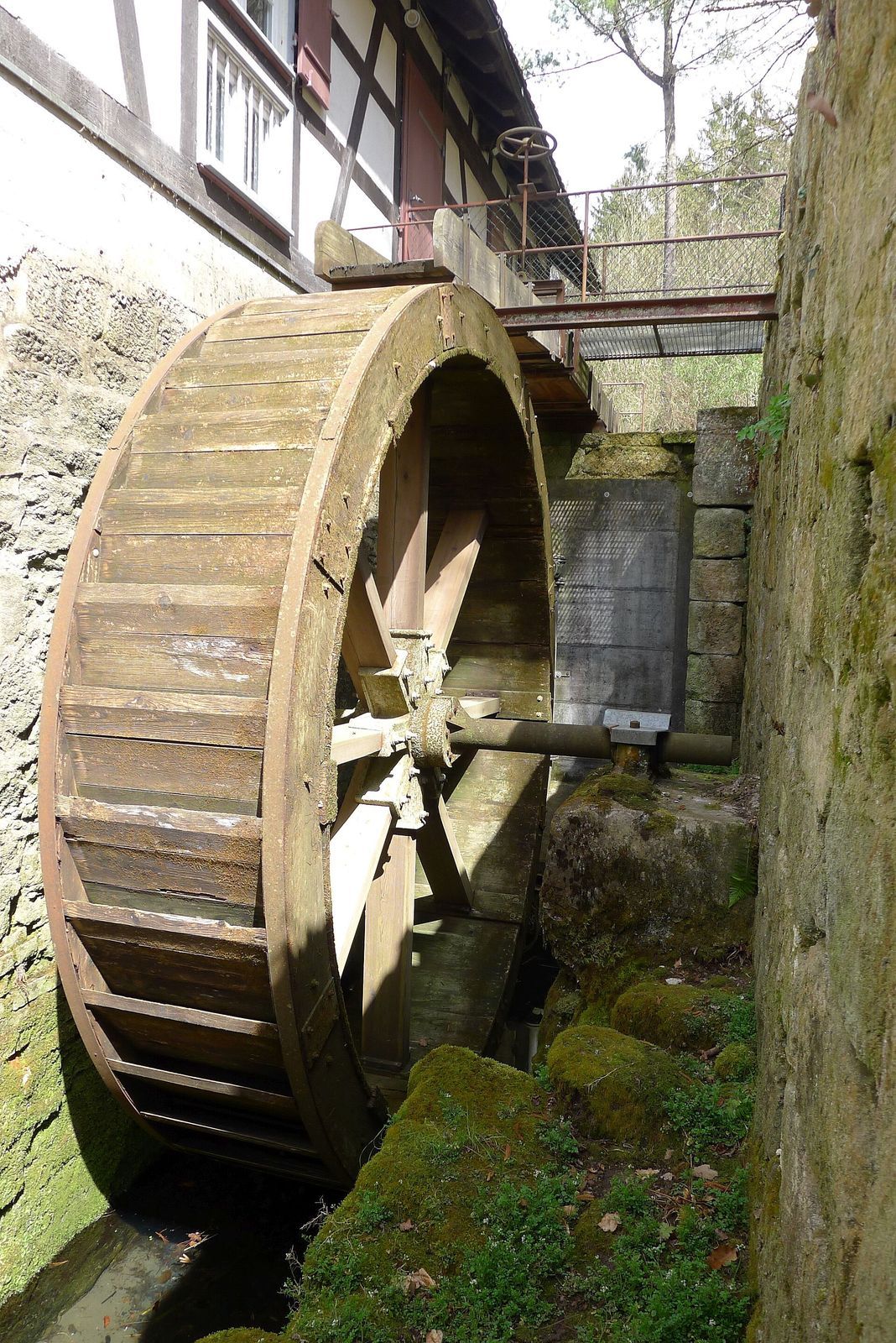
The city of Leinfelden-Echterdingen owns the mill and completely rebuilt it in 1986–87 for a new use. Its historic machinery, including the mill wheel and grinding equipment, is protected. The building now houses a museum about the mill and milling, as well as an organic restaurant that has operated there since 2007.
From 1985, the adjoining Komede-Scheuer, a barn theatre for dialect performances, hosted the Swabian sketch series Hannes und der Bürgermeister, featuring Albin Braig and Karlheinz Hartmann. The public broadcaster SWR recorded its production Freunde in der Mäulesmühle there from 2019. Braig’s involvement at the site ended in May 2023, after which the city used it for cultural activities.
Remains
The mill stands just below 390 metres above sea level on the Reichenbach’s east bank. At this point the stream bends south, while the Weilerwaldgraben enters from the north on the Reichenbach’s left bank. The site lies between the wooded heights of the Glemswald to the south and the Schönbuch to the north. Its main building, adjoining barn and the railway viaduct form the principal surviving structures in this part of the valley.
Mill building and machinery
The mill building
The two-storey mill is half-timbered, with a frame that also supports its machinery. A sandstone foundation bears the heavy equipment and helps protect the building from water. Fieldstones fill the spaces between the timber framing, held in place with a binder rich in clay. The 1986–87 reconstruction followed the former exterior design and reused some of the earlier building’s beams. Inside, old and new materials can still be distinguished.
Milling machinery
The equipment includes a functioning grain-grinding machine dating from 1819 and an overshot waterwheel, turned by water delivered over its top. For demonstrations, water is pumped electrically to the wheel. A separate machine removes husks from grain through friction; an airstream then separates chaff from wheat, and a rotating sorting cylinder sieves out impurities. The mill museum occupies the ground floor and presents the building’s history and the work of milling.
Barn and railway remains
The adjoining barn
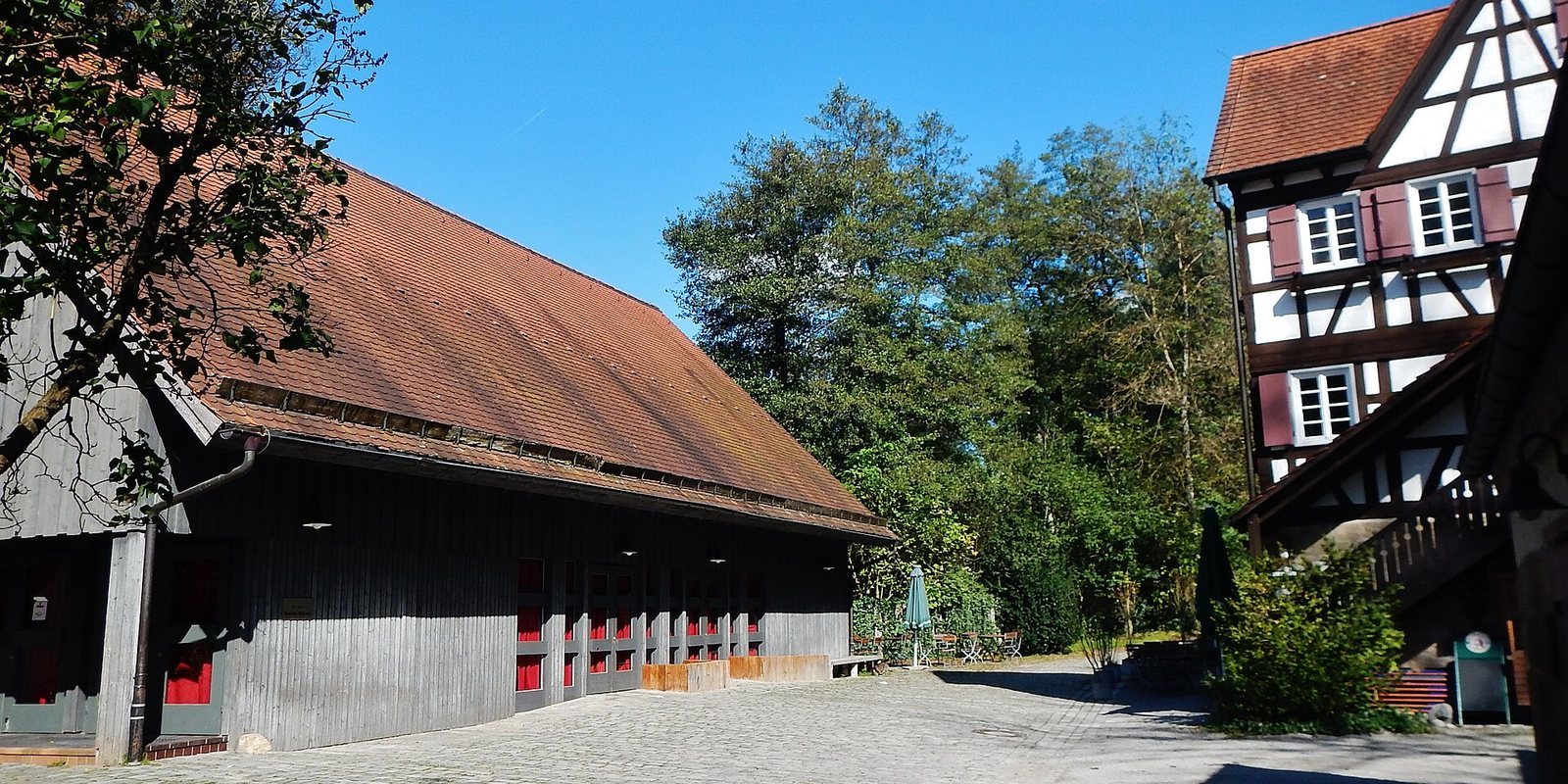
The Komede-Scheuer stands beside the main mill building. This barn, adapted as a venue for dialect performances, is a distinct part of the mill complex.
Viaduct and former railway route
The surviving railway viaduct crosses the area at Mäulesmühle. A stone railway kilometre marker stands shortly before it. It is one of the two last surviving markers along the former route and now indicates distance on the path. Much of the old railway line is asphalted and used by walkers and cyclists; the route begins beyond the former Musberg station.