Sicyon: An Ancient Greek City-State in Corinthia
Site at a Glance
- Popularity
- Very High
- Country
- Greece
- Primary era
- Classical
- Eras represented
- Classical, Medieval
- Civilizations
- Ancient Greek, Crusader, Principality of Achaea
- Site type
- City
On this page18 sections
History
Sicyon was an ancient Greek city-state in Corinthia, in the northern Peloponnese of Greece, between Corinth and Achaea. Its territory, called Sicyonia, bordered Corinthia, Phlius, Pellene, and the Corinthian Gulf. The region was also known as Asopia or Parasopia, names associated with the Asopos River.
Traditions and Dorian rule
Accounts of Sicyon’s earliest history combine changing populations with mythic traditions. The first inhabitants were said to be Pelasgians, whose historical identity is uncertain, followed by Aeolians and Ionians, ancient Greek cultural and linguistic groups. Traditions described a monarchy of 26 kings followed by seven priests of Apollo, while the travel writer Pausanias listed 24 kings, beginning with Aegialeus. Sicyon was also linked in tradition to the Trojan War and identified with Mecone, where Prometheus was said to have tricked the gods. The poet Callimachus described Mecone as a gathering place of the gods and the setting for Zeus, Poseidon, and Hades to divide their realms.
The city’s name was variously connected to a legendary first settler or, more probably, an ancient word for cucumber, reflecting local cultivation. In the mid-11th century BC, Dorians from Argos conquered Sicyon. Dorians were an ancient Greek cultural and linguistic group, and Sicyon became one of three Dorian states in Corinthia. It remained under Argive control for centuries. Its population included three Dorian tribes, an Ionian group, and a dependent population that worked the land.
Independence and the archaic city
Sicyon regained independence after 676 BC under Orthagoras and a succession of rulers later called the Orthagorids. These rulers were tyrants, meaning sole holders of power outside the usual hereditary kingship; the term did not necessarily imply cruelty. Orthagoras’s son Myron was killed by his brother Isodamus, after whom Cleisthenes took power. The best-known Cleisthenes ruled about 600–560 BC. He changed the constitution in favor of the Ionians, replaced Dorian cults with worship of Dionysus, and led the First Sacred War in 590 BC in support of Delphi. Sparta expelled his successor, Aeschines, in 556 BC.
Sicyon then allied with Sparta for more than a century. Its institutions endured after the tyrants’ fall until Dorian predominance returned late in the sixth century BC, perhaps through the intervention of Chilon, a Spartan senior magistrate called an ephor. Sicyon joined the Peloponnesian League, an alliance led by Sparta, and its policy thereafter was generally shaped by Sparta or Corinth.
The city developed a reputation for artistic production. The Cretan sculptors Dipoenus and Scyllis were associated with Sicyonian woodcarving and bronze work, and archaic metal facings found at Olympia point to this tradition. Sicyonian pottery, similar to Corinthian ware, traveled with Corinthian goods as far as Etruria. Painting was also reputed to have originated in Sicyon. The city’s treasuries at Delphi and Olympia were renowned, and its coins carried a chimera and the letter sigma on one side and a dove on the other.
Persian Wars and classical conflicts
During the Persian Wars, Sicyon contributed 15 triremes, warships powered by three banks of oars, to the Battle of Salamis and 3,000 hoplites, heavily armed infantry soldiers, to the Battle of Plataea. Its name held the fifth position on the Delphic Serpent Column, after Sparta, Athens, Corinth, and Tegea. At Mycale in September 479 BC, Sicyon’s contingent suffered more losses than any other city’s.
Commercial rivalry with Athens in the western Mediterranean brought repeated attacks by Athenian naval forces during the fifth century BC. Sicyonians fought Tolmides in 455 BC and, in a land battle in 453 BC, Pericles and 1,000 hoplites. In the Peloponnesian War, Sicyon sided with Sparta and Corinth, remaining loyal to Sparta when its allies fell out during the Peace of Nicias. It sent 200 conscripted hoplites under Sargeus to the Athenian expedition to Sicily; they later joined the force that relieved Syracuse. In the Corinthian War, Sicyon again supported Sparta and served as its base for operations against allied troops around Corinth.
Fourth-century rule and artistic achievement
The Thebans captured Sicyon and installed a garrison in 369 BC. From 368 to 366 BC, Euphron first governed in favor of democracy, then established a tyranny. Sicyonian aristocrats killed him at Thebes, but his fellow citizens buried him at home and honored him as a second founder.
In the fourth century BC, Sicyon became a center of Greek art. The painter Eupompus led a school attended by Pamphilus and Apelles, while Lysippus and his pupils made Sicyonian sculpture renowned. Apelles and Pausias were among the city’s celebrated painters. The tyrant Aristratus, a friend of the Macedonian royal family, was depicted by Melanthius beside Nike on a chariot. Menander’s fourth-century comedy Sikyonioi also treated the people of Sicyon.
Macedonian rule and the Achaean League
In 323 BC, Euphron the Younger restored democracy, but Macedonian forces subdued the city during the Lamian War. A Macedonian commander named Alexander was murdered at Sicyon in 314 BC. His widow Cratesipolis controlled the city for six years, until Ptolemy I persuaded her to transfer it to Egyptian rule. Ptolemaic commanders Cleonides and Philip governed from 308 to 303 BC.
In 303 BC, Demetrius Poliorcetes captured Sicyon, destroyed the old city in the plain, and moved the remaining population to the acropolis, the city’s elevated, often fortified core. For a time the settlement bore the name Demetrias, before Sicyon returned. Demetrius left a garrison in the fortress, and its commander Cleon established another tyranny. About twenty years later, Cleon was killed by Euthydemus and Timocleidas, who ruled jointly. Their rule probably ended around 267 BC, when the people expelled them and selected Cleinias for democratic government. A gymnasium, a training complex, was attributed to Cleinias; around this time Xenocrates of Sicyon also published a history of art.
Cleinias was killed in 264 BC by his relative Abantidas, who ruled for twelve years. In 252 BC, Abantidas was killed by Aristotle the Dialectician and Deinias of Argos. His father Paseas briefly took power, only to be killed by Nicocles. In 251 BC, Cleinias’s son Aratus, then 20, seized Sicyon in a night attack, expelled the last tyrant, restored democracy, recalled exiles, and brought the city into the Achaean League, a federation of Greek communities. This ended the internal conflicts, and Aratus remained a leading figure in Achaean politics until his death in 213 BC. An Aetolian raid in 241 BC and an unsuccessful siege by Cleomenes III of Sparta in early 224 BC interrupted Sicyon’s prosperity.
Roman rule and medieval settlement
Sicyon remained a stable democracy in the Achaean federation until Rome dissolved the League in 146 BC. Earthquakes damaged the city in 153 and 141 BC. After Corinth was destroyed in 146 BC, Sicyon gained territory and the presidency of the Isthmian Games, festivals held near Corinth in honor of Poseidon. It was heavily in debt by Cicero’s time. Under Roman rule, Corinth and Patrae overshadowed it, and Pausanias described it as almost deserted around AD 150.
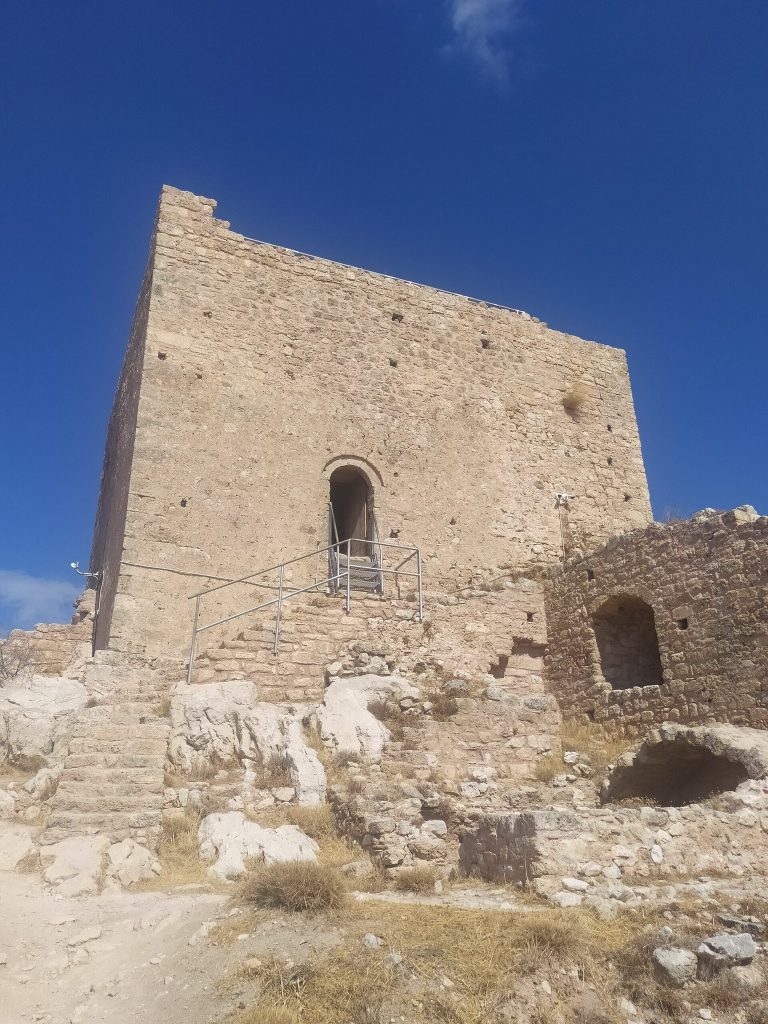
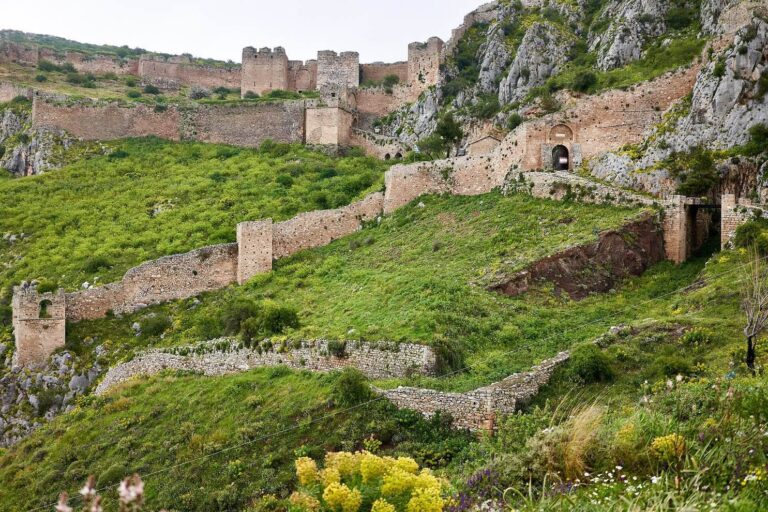
Sicyon declined in the early Middle Ages but became a bishop’s seat. It may have offered refuge from Slavic settlement in Greece during the seventh century; the later name Hellas, the Greek name for Greece, has been understood as a possible trace of that role. After the Fourth Crusade, a western European expedition that established Latin-ruled states in parts of the Byzantine world, the settlement then called Vasilika came under the Principality of Achaia, a Frankish state in the Peloponnese. Prince William of Villehardouin built a castle on the ruined ancient acropolis to strengthen Corinth’s defenses.
Raids by Turkish pirates had led to the abandonment of many nearby villages by 1369. Corinth and Vasilika passed from Niccolò Acciaioli to Donato Acciaioli in 1362; by 1372, Donato’s son Angelo had mortgaged them to his cousin Nerio I Acciaioli. When Nerio died in 1394, the towns passed to his daughter Francesca, who had recently married Carlo I Tocco. Her sister Bartolomea and Bartolomea’s husband, Theodore I Palaiologos, ruler of the Morea, contested the inheritance. Francesca and Carlo retained Vasilika and Megara, while Theodore received Corinth. Theodore II Palaiologos seized Vasilika in 1427. The Ottoman Turks took Corinth and Vasilika in 1458 and completed their conquest of the Morea in 1460–1461.
Sicyon also persisted in later cultural memory. Shakespeare’s 1606 play Antony and Cleopatra places Fulvia’s death there, although she died in 40 BC while in revolt against Octavian. Friedrich Hölderlin’s 1797 novel Hyperion opens with a description of Sicyon’s plain. The present-day village of Sikyona, called Vasiliko until 1920, lies beside the ancient and medieval site. Archaeological work continues under the Sikyon Project.
Remains
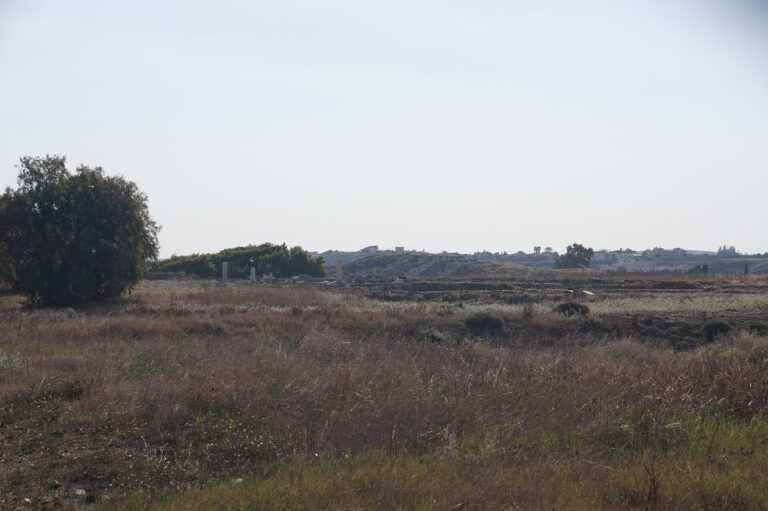
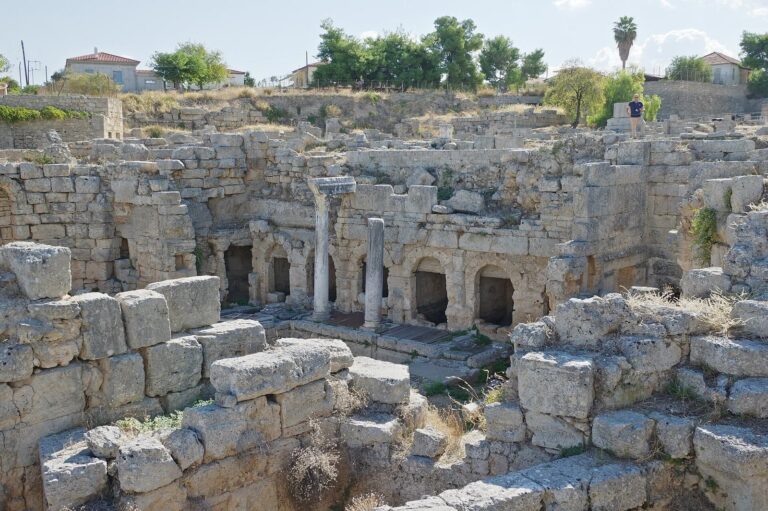
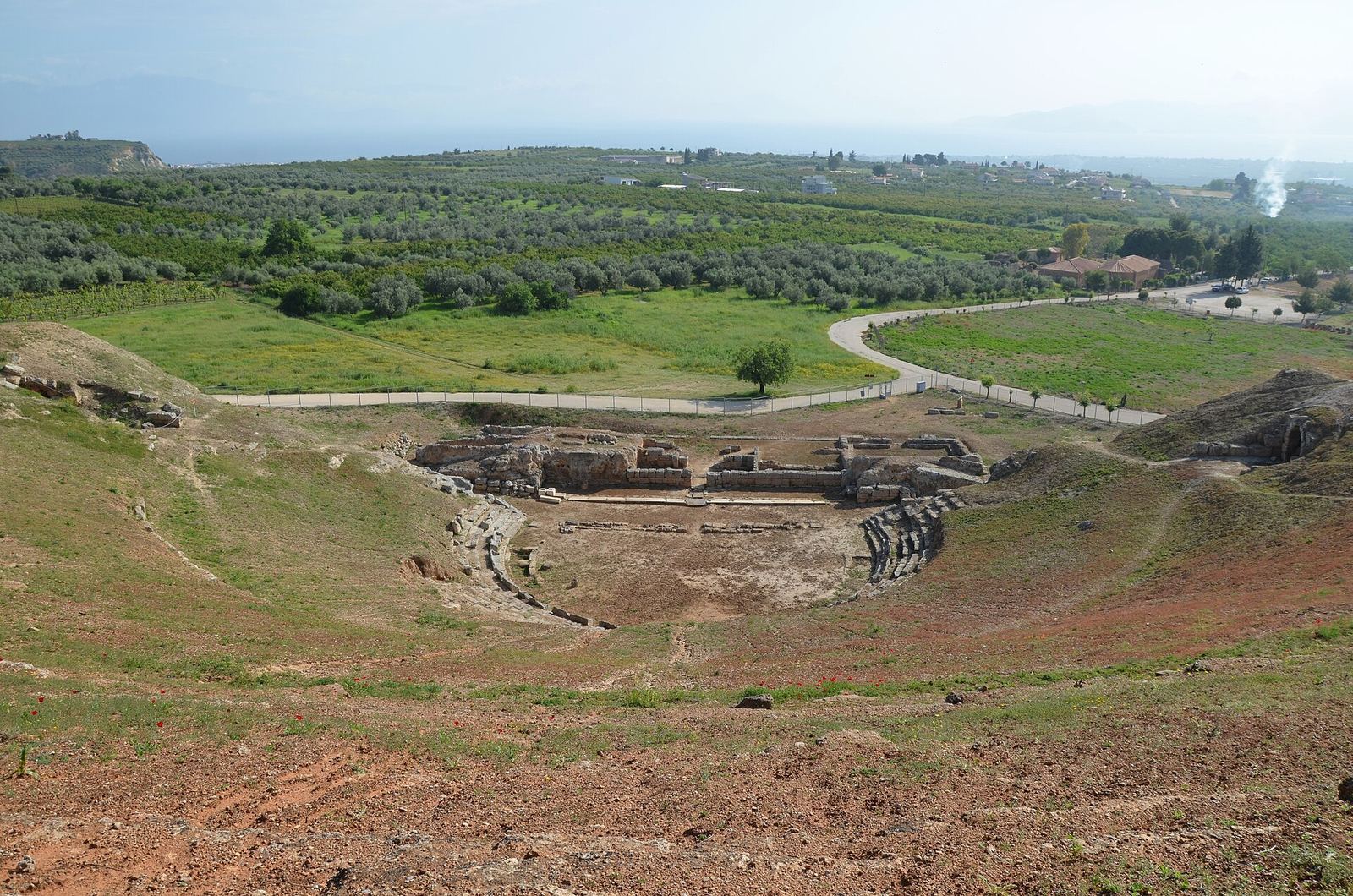
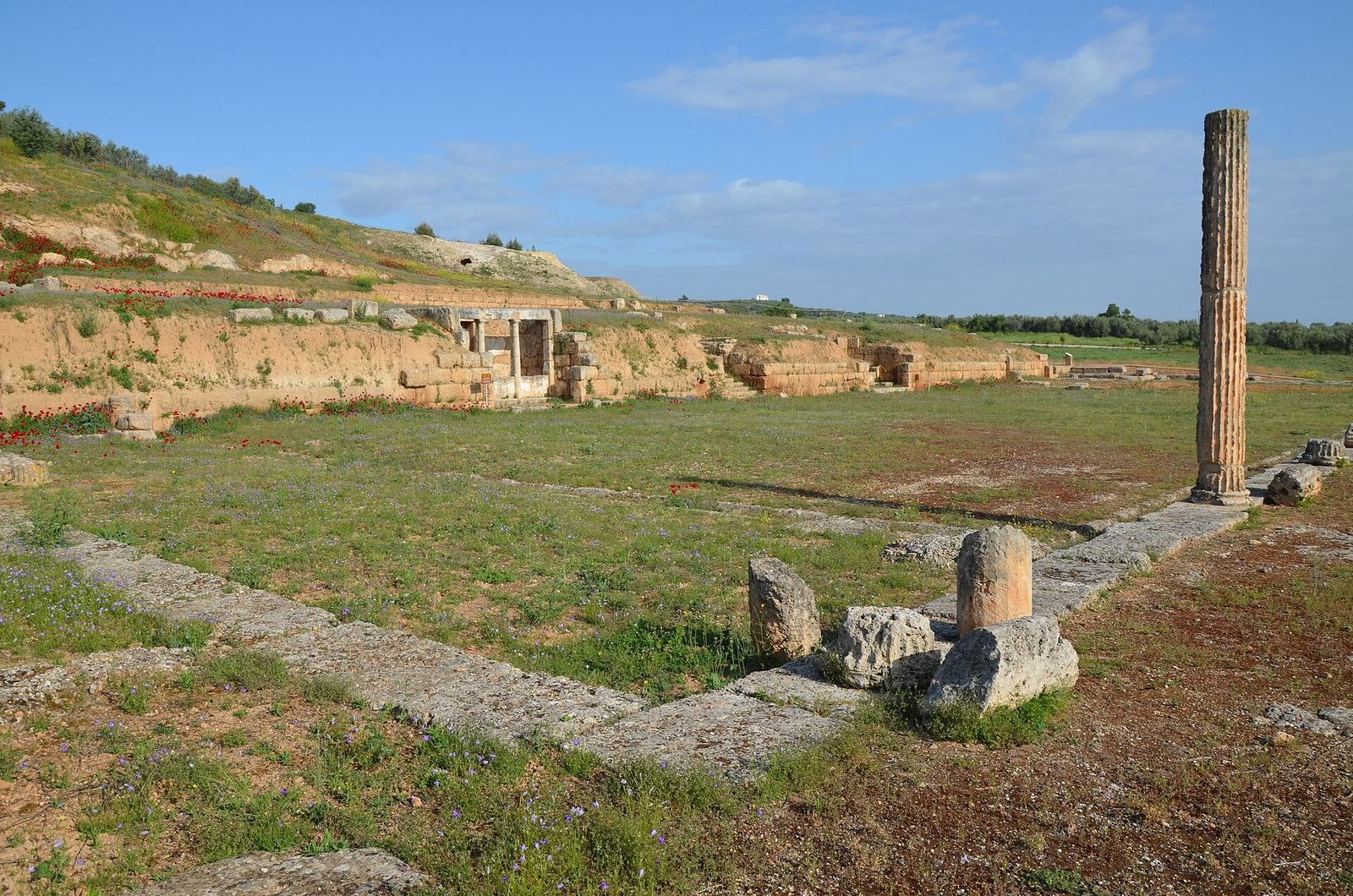
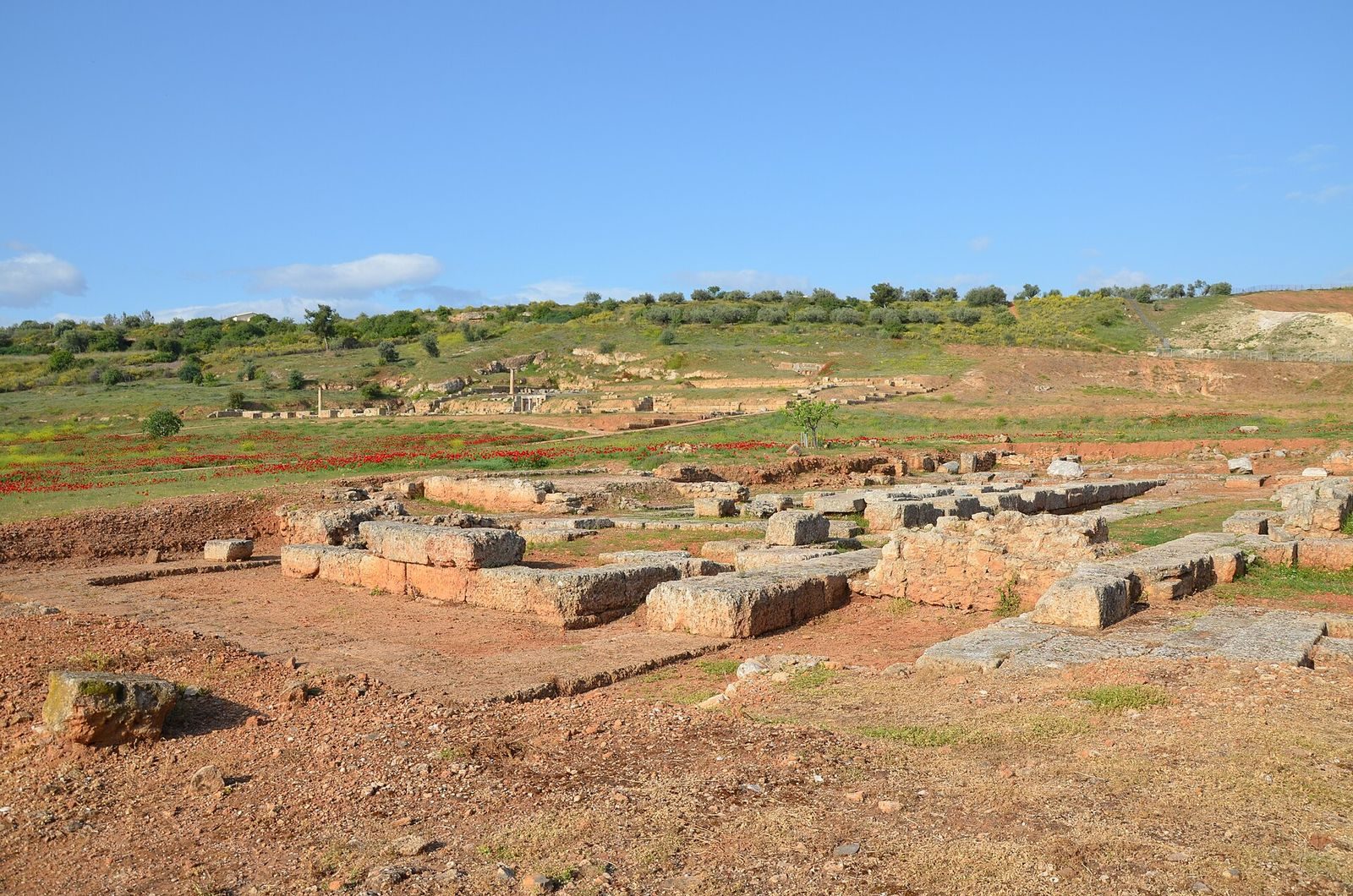
The ancient city occupied a low, triangular plateau about three kilometers from the Corinthian Gulf. A fertile plain of olive groves and orchards lay between the city and its harbor, at the mouth of the Asopos River. The ancient remains lie just west of the present-day village of Sikyona.
Fortifications and civic buildings
Acropolis wall and fortress
A triangular wall enclosed the reduced settlement established on the acropolis in 303 BC. Demetrius Poliorcetes’s garrison occupied the fortress there. The wall’s form and position reflect the arrangement of the city after the move from the plain.
Agora and public buildings
The agora, the civic gathering place and marketplace, included a Painted Stoa, a roofed colonnade attributed to Lamia, a flute player. A gymnasium attributed to Cleinias was another major public building. The city also had a stadium and a council house with a large stoa. The Stoa of Cleisthenes and an altar of Poseidon Isthmios stood in the same area as images of Zeus Meilichios and Artemis Patroa. Zeus’s image was shaped as a pyramid and Artemis’s as a pillar.
Sanctuaries and monuments
Approach from Corinth
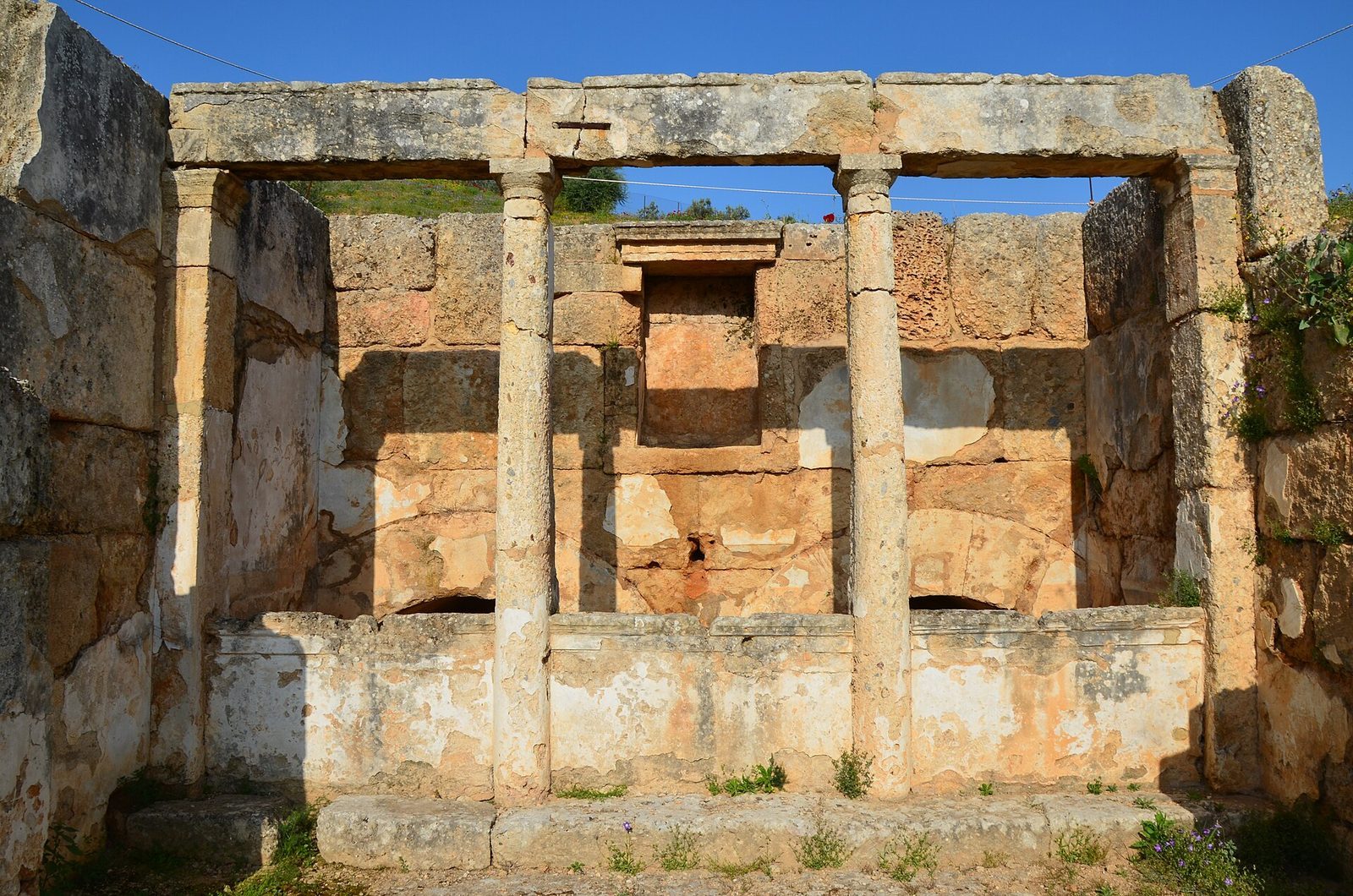
Pausanias described the route into Sicyon from Corinth as passing the tomb of Lycus of Messenia, with an Olympium, a sanctuary or temple of Zeus in his Olympian aspect, to its right. At the city entrance, a spring issued from the roof of a cave.
Acropolis sanctuary and theater
On the acropolis stood a sanctuary of Acraean Fortune, a local form of Tyche, the personification of fortune, and the Dioscuri, twin heroic figures. Their sacred images were used in worship. The theater contained a statue of Aratus holding a shield. A temple of Dionysus stood beyond it.
Agora precinct and nearby temples
Pausanias placed a temple of Artemis Limnaia beyond the agora and a sanctuary of Persuasion outside it. The tradition associated that sanctuary with Apollo and Artemis, who came there after killing the Python. Beyond the precinct of the Roman emperors stood a temple of Apollo.
Sacred Gate and other sanctuaries
Near the Sacred Gate was a sanctuary of Artemis Pheraea. Nearby stood a temple of Athena and the tomb of Epopeus, its builder, with a sanctuary of Hera beyond them. Pausanias also described a second temple of Hera, a temple of Apollo Carneian, and altars dedicated to Pan and Helios.
Other recorded cult buildings
The city included a temple of Apollo Lykeios, a gymnasium with a statue of Heracles, and a sanctuary of Asclepius. A temple of Aphrodite contained statues of the goddess and Antiope.
Roman-period archaeological remains
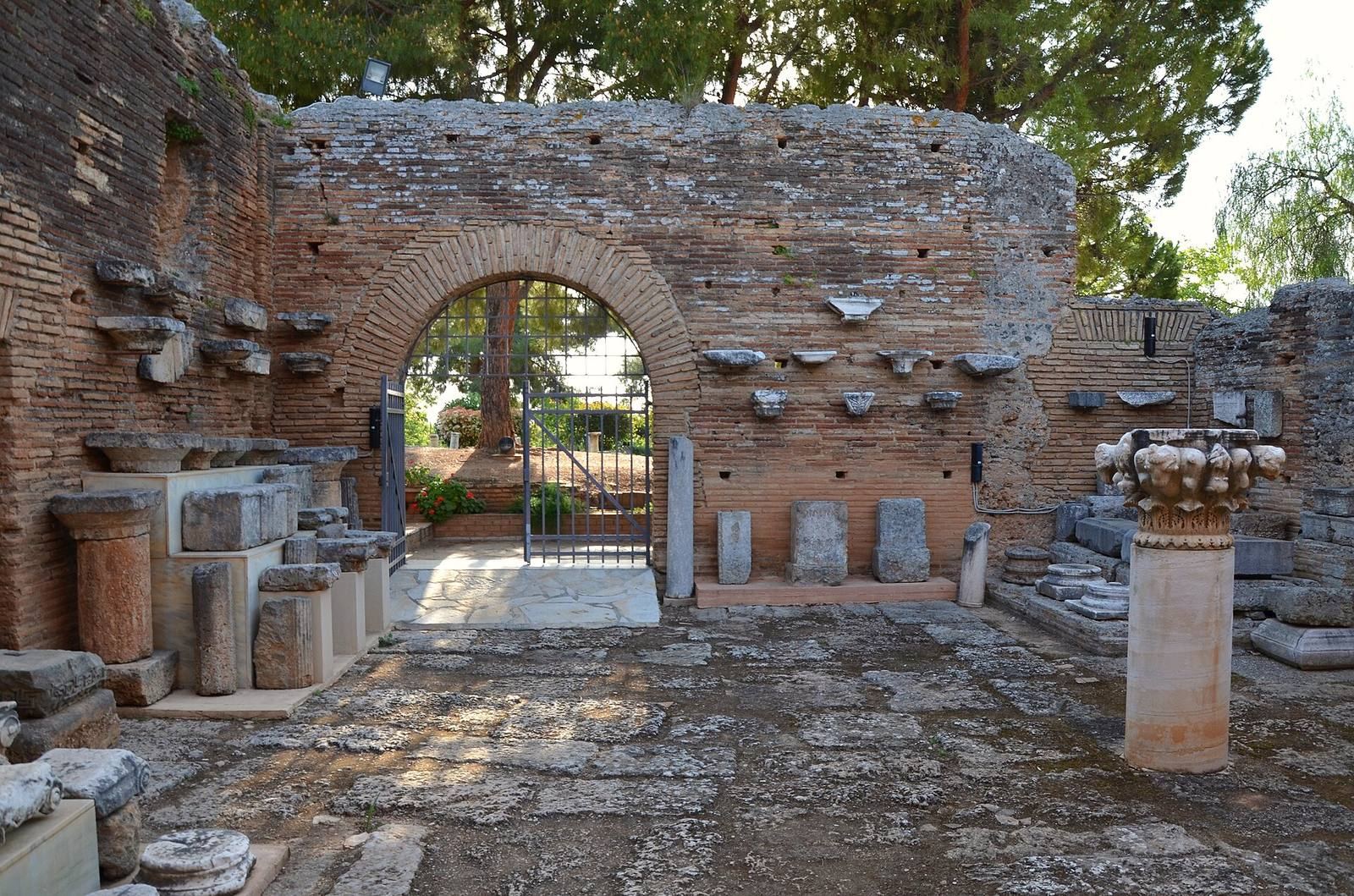
Roman shops at Sicyon were destroyed by an earthquake around AD 400. Their remains provide archaeological evidence for the city’s later Roman period.