Church of Saint Stephen: A Roman Catholic Parish Church in Tordenaso, Italy
Site at a Glance
- Popularity
- Very Low
- Country
- Italy
- Primary era
- Early Modern
- Eras represented
- Medieval, Early Modern, Modern
- Civilizations
- Duchy of Parma and Piacenza, Holy Roman Empire, Italian
- Site type
- Religious
- Remains
- Church
On this page10 sections
History
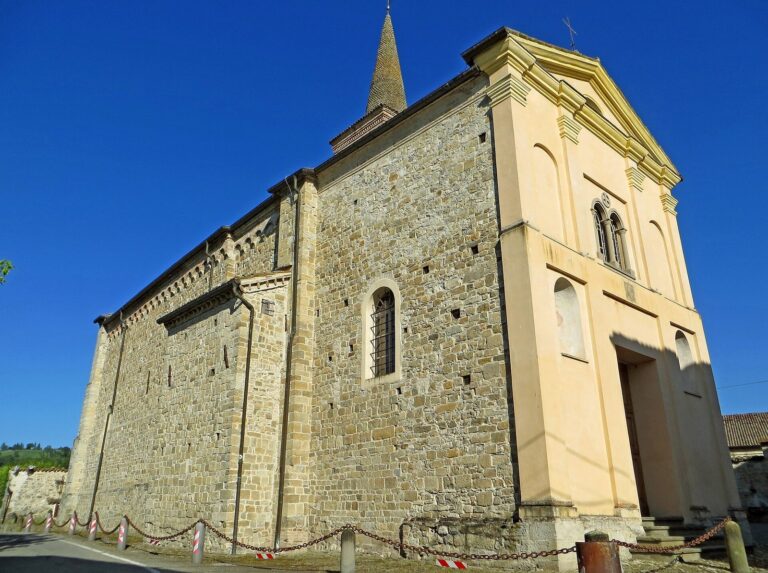
The Church of Saint Stephen is a Roman Catholic parish in Tordenaso, a locality within Langhirano, Italy. Dedicated to Saint Stephen, traditionally regarded as Christianity’s first martyr, it belongs to the Diocese of Parma. The original place of worship dates to the medieval period, and its first known mention is from 1230.
Medieval records and the Vetrola chapel
A record from 1230 lists a chapel at Tordenaso among the dependencies of the parish church of Castrignano. By 1394, Saint Stephen’s church was joined with the Chapel of Saint Bartholomew at Vetrola; both were under Castrignano’s jurisdiction, a connection already in place by 1230.
Renewal and parish status
In the early sixteenth century, the Tordenaso church fell into ruin. The Vetrola chapel then took over its title and became dedicated to Saints Bartholomew and Stephen. The Tordenaso church was renovated and reopened for worship in 1520. It became a parish in 1564 and assumed the Vetrola church’s title after that building collapsed in a landslide.
Alterations and modern repairs
During the eighteenth century, the church was altered and its interior decorated, while a rectory was built. From 1854 to 1867, repairs addressed the vaults, roof, and floors. The façade was rebuilt in 1916, and the exterior was restored in 1960. The rectory was damaged by fire around 1978 and subsequently renovated.
An earthquake damaged the church on 9 November 1983, prompting structural consolidation of its foundations in 1985. A second earthquake, on 23 December 2008, caused cracking and led to the church’s closure for worship. Restoration and seismic improvements took place from 2013 to 2018, after which the church reopened.
Remains
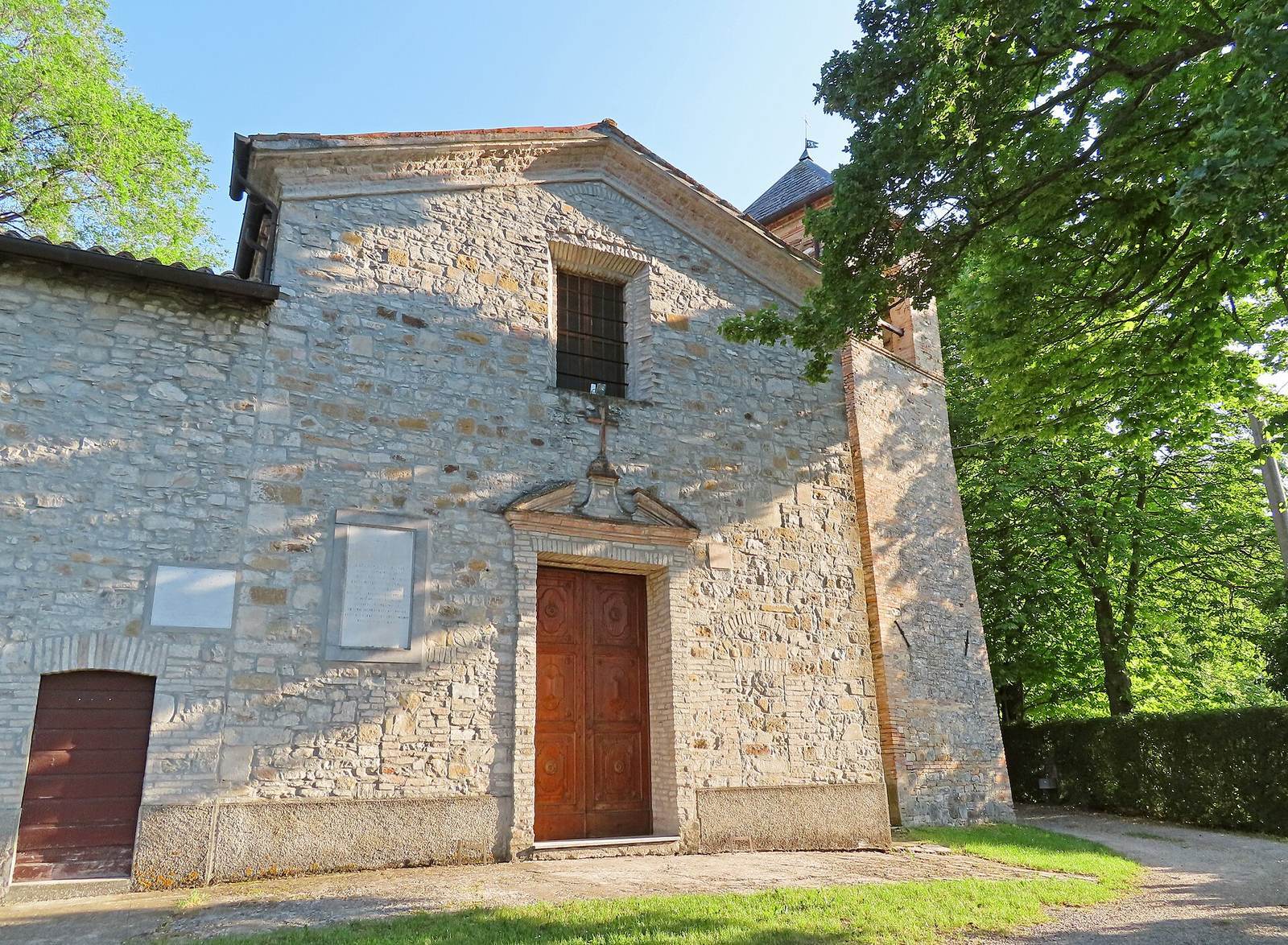
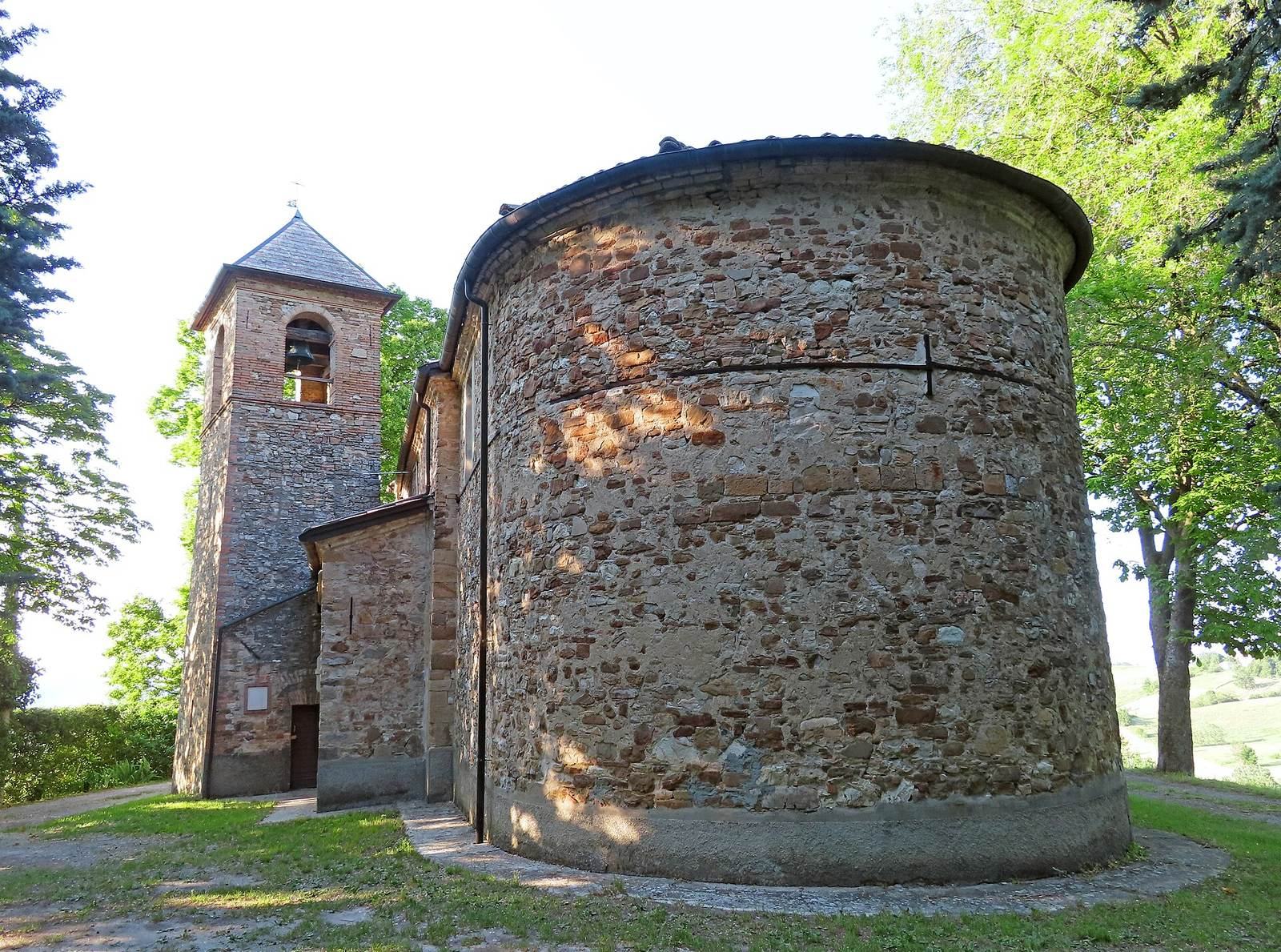
The church has a single nave, or main hall, with one chapel on each side. Its entrance is on the north, while the presbytery, the area around the main altar, and the apse, the rounded sanctuary end, lie to the south. Stone facing covers the exterior, and the nave’s interior is plastered.
Exterior
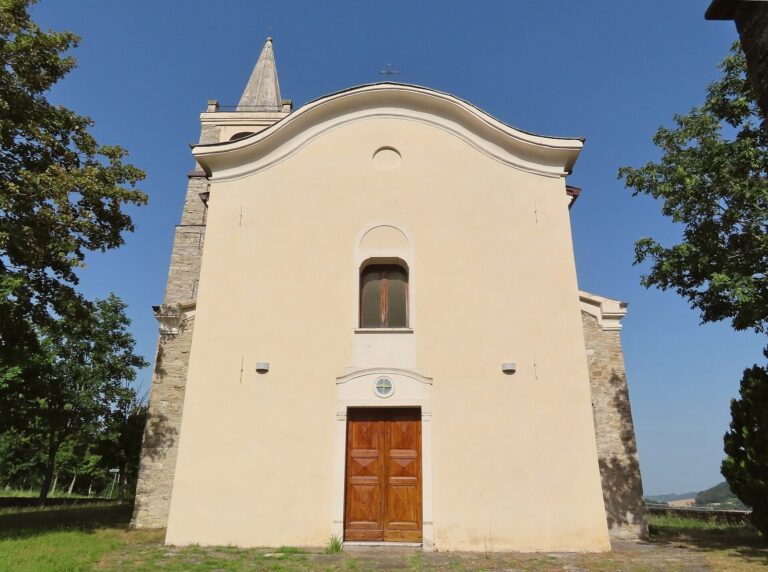
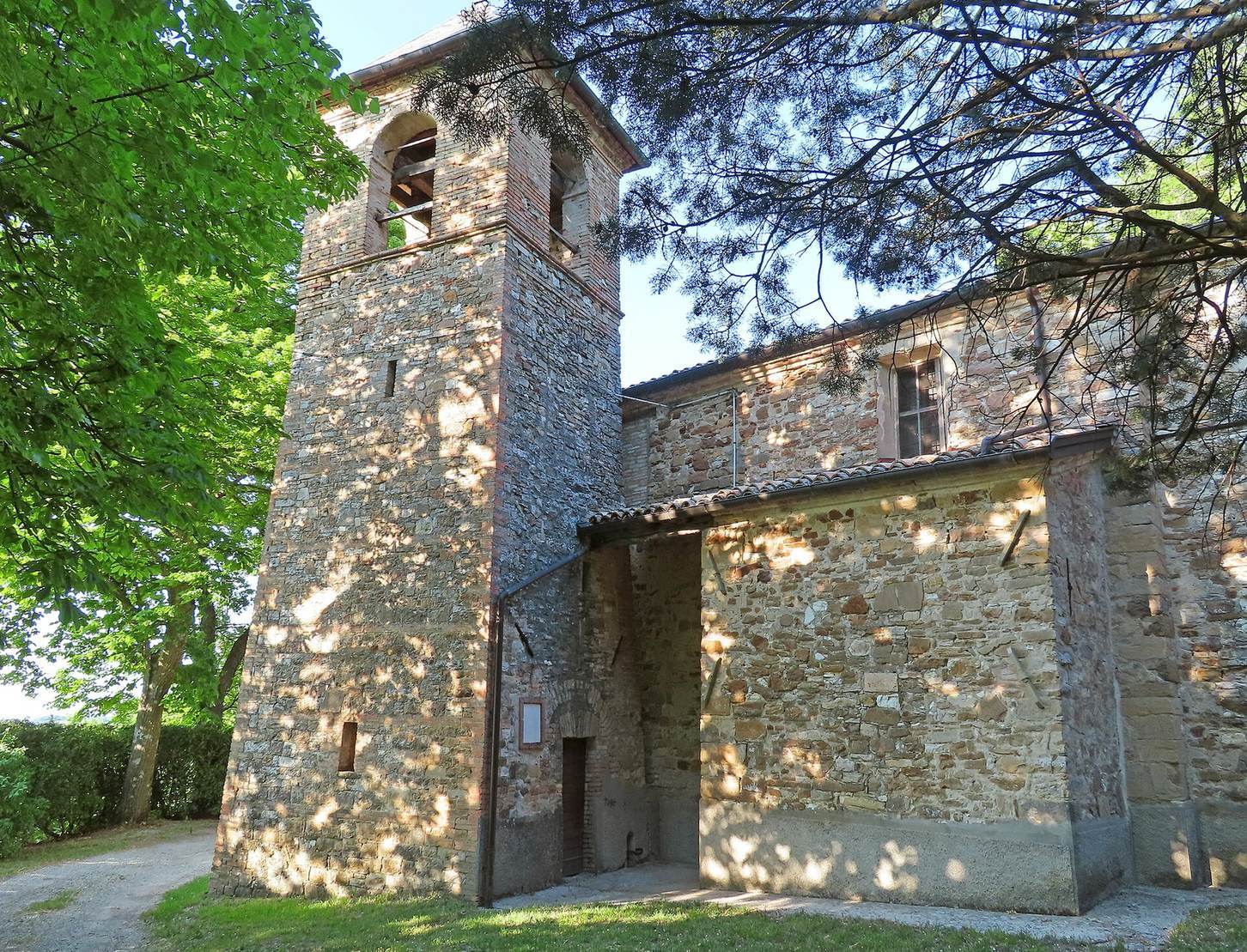
The simple, symmetrical façade has a gabled outline. Its broad central entrance is framed by moulding and topped by a triangular pediment, a decorative triangular feature. At the centre of the pediment is a crest of curved and straight forms, crowned by a metal cross. Above it, a window has sides that widen toward the interior, and a moulded cornice follows the roof slopes. The rectory adjoins the left side of the façade. On the church’s right flank, the bell tower rises from a tall base with inward-sloping sides. Its bell chamber has a large, round-arched opening on each of its four sides.
Interior
Nave and side chapels
The nave is covered by a barrel vault, a continuous arched ceiling, with lunettes, curved sections where openings meet the vault. Doric pilasters, flat wall projections with capitals based on the Doric order, divide its sides and support a moulded cornice. Broad, round arches connect the nave to the side chapels, each of which has a barrel-vaulted ceiling. The right-hand chapel contains a late-seventeenth-century painting above its altar. It depicts Mary and the infant Jesus with Saint Maurus, an early Benedictine monk, and Saint Anthony the Abbot, associated with early Christian monasticism.
Presbytery and apse
The presbytery is slightly raised and entered beneath a shallow, flattened arch supported by two Doric pilasters. Its painted barrel vault also has lunettes. At the centre stands a wooden altar table added around 1980; behind it is a marble Rococo high altar made in 1740. Rococo is an ornate artistic style that developed in the eighteenth century. The rear apse, dating to the eighteenth century, ends in a semi-dome. Its altarpiece, a painting made with its frame around 1750–1760, depicts Mary and the infant Jesus with Saint John the Baptist.
Paintings and furnishings
Other works and furnishings include Ignazio Stern’s 1723 painting of the Dream of Saint Joseph. Stern was an eighteenth-century painter associated with Baroque art. The church also contains an eighteenth-century exposition throne, a stand used to display a sacred object, and a painted-leather altar frontal, a decorative covering for the front of an altar, depicting Saint Stephen. Other items include a nineteenth-century processional canopy, a cabinet dated 1790, a sixteenth-century embossed copper tray, and old sacred vestments.