Church of the Blessed Virgin Mary in Włościejewki: Parish Church and Marian Sanctuary
Site at a Glance
- Popularity
- Very Low
- Country
- Poland
- Primary era
- Early Modern
- Eras represented
- Early Modern, Modern
- Civilizations
- Polish–Lithuanian Commonwealth
- Site type
- Religious
- Remains
- Church
On this page7 sections
History
Seventeenth-century church and Marian devotion
The Church of the Blessed Virgin Mary in Włościejewki is a seventeenth-century Roman Catholic parish church and Marian sanctuary in Poland. A Marian sanctuary is a church recognized as a place of particular devotion to Mary. The church is dedicated to the Immaculate Conception of the Blessed Virgin Mary, the Catholic belief that Mary was preserved from original sin from the moment of her conception. Its feast is observed on 8 December.
A brick church stood in Włościejewki by 1610, though its founder is unknown. It probably collapsed or burned down. A replacement was consecrated on 23 August 1659 by Maciej Marian Kurski, an auxiliary bishop of Poznań, an office that assists the diocesan bishop. The church was completed during the seventeenth century.
Local tradition says that the Virgin Mary appeared during construction, stood on a stone, and miraculously left a footprint on it. The faithful formerly kissed the marked stone.
Nineteenth-century patronage
In 1847, silver crowns were stolen from the Marian painting on the night before Christmas. Włościejewki then belonged to the Niegolewski family, which paid for replacement crowns. A few years later, Andrzej Niegolewski, a Polish nobleman and military officer, funded the renovation of the entire main altar.
Remains
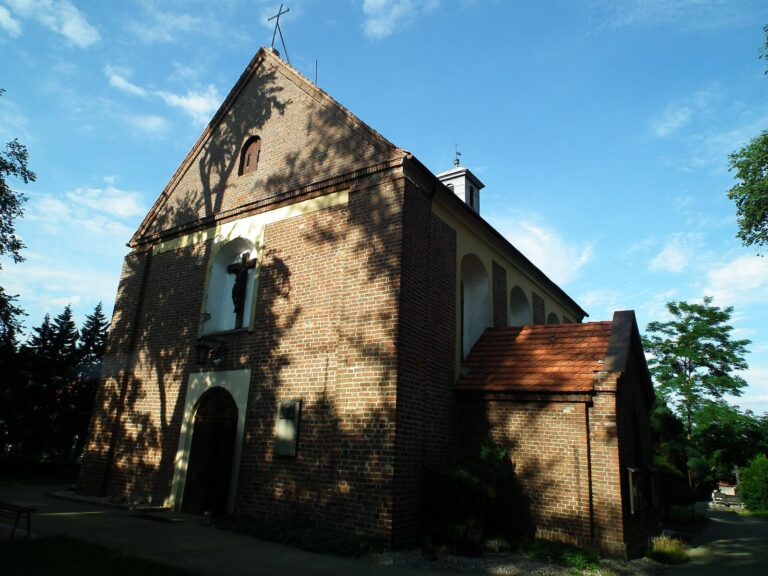
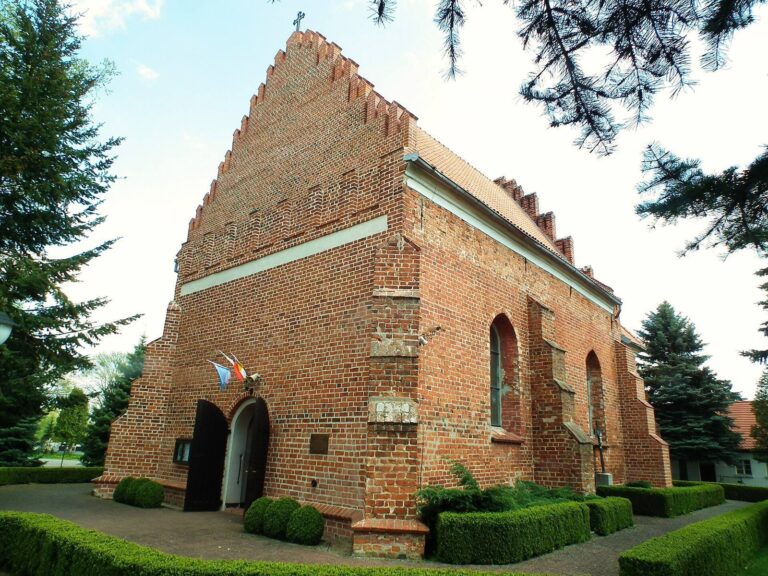
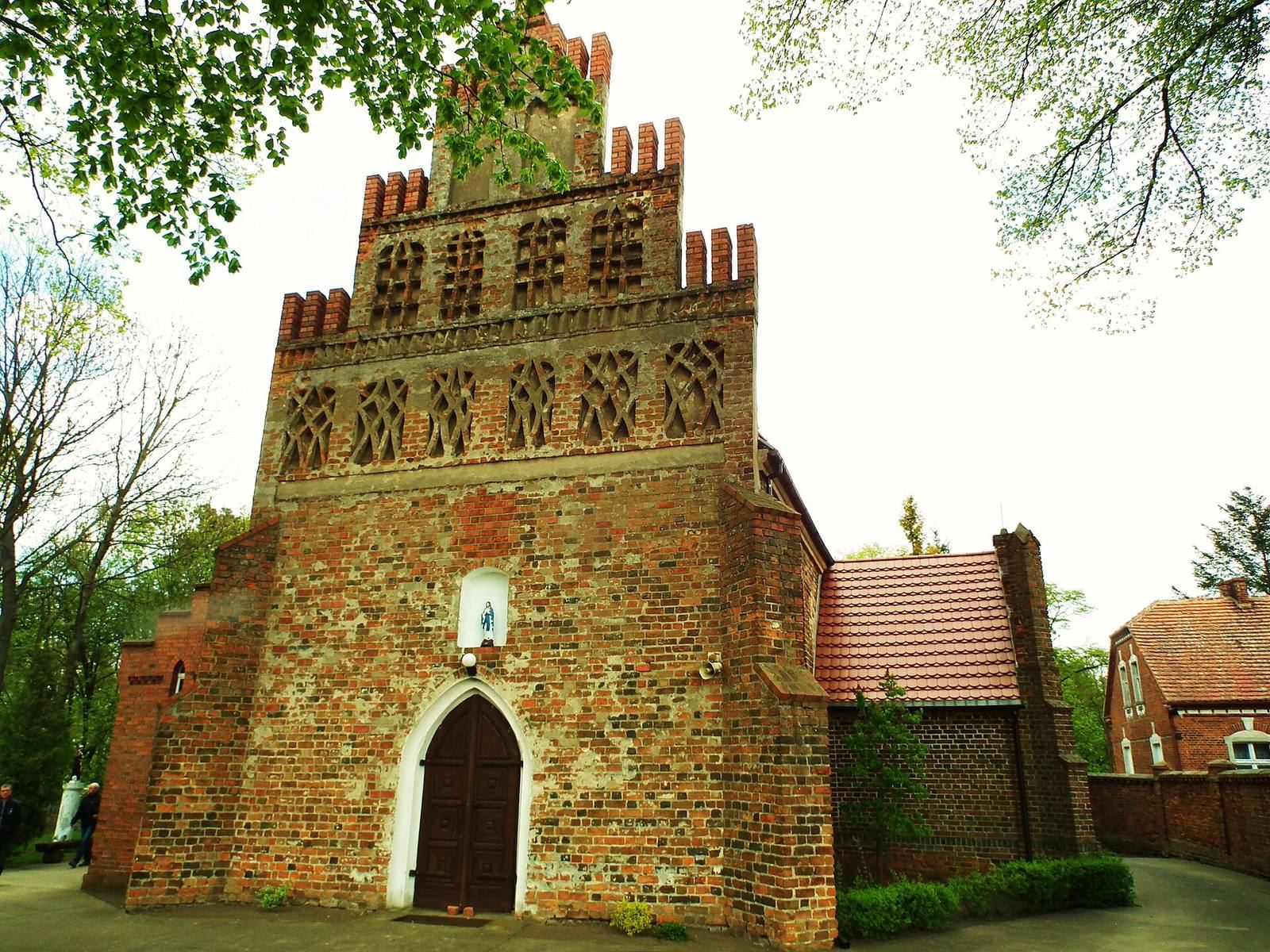
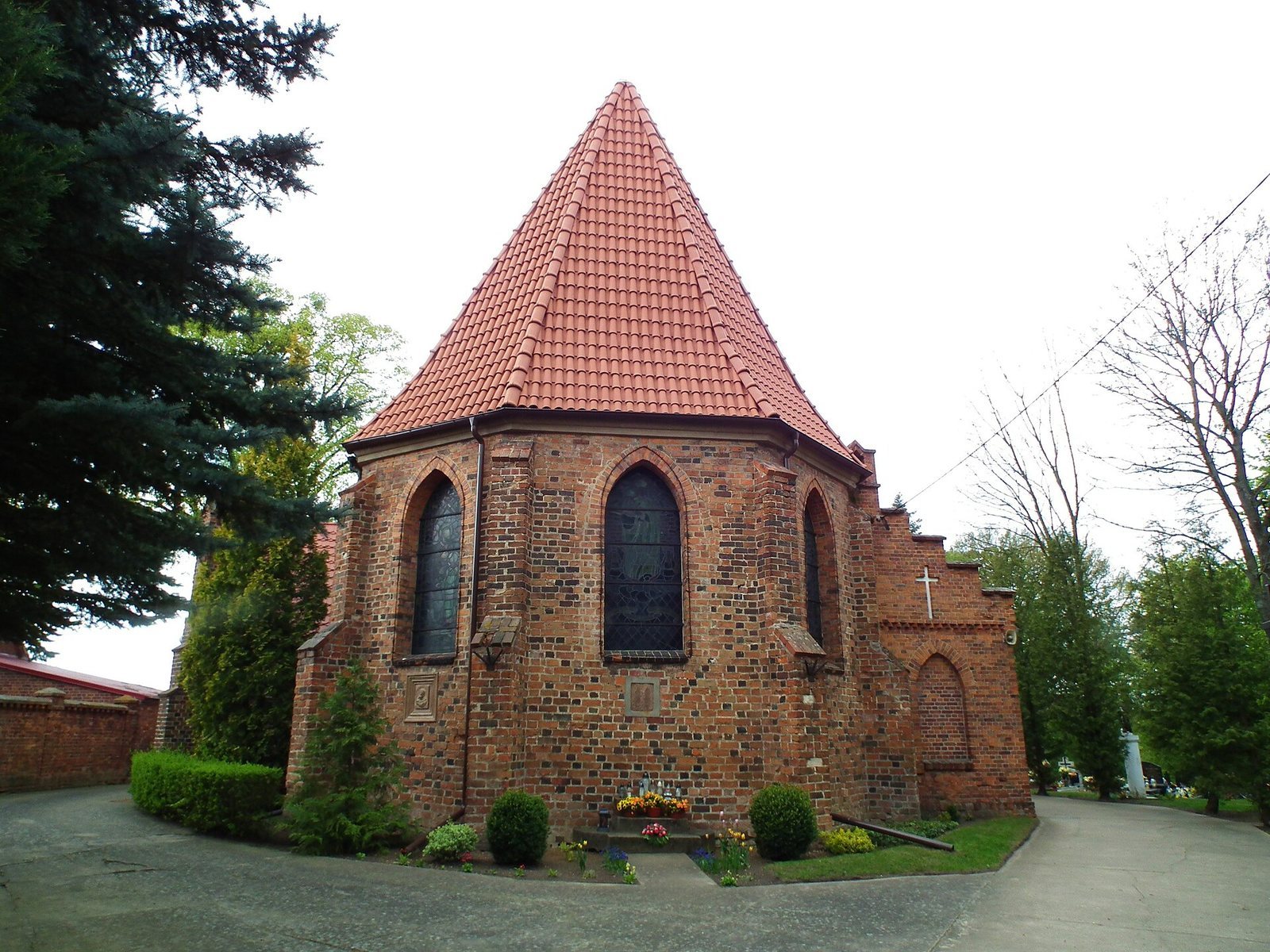
The brick church has a single-nave hall plan, a polygonal chancel, the area around the main altar, and four altars. Its surviving features include later additions, a richly decorated façade, and furnishings associated with Marian devotion.
Church plan and exterior
The church’s stepped gable is decorated with niches, and a pointed-arch entrance lies beneath it. A sacristy and porch were added in the nineteenth century, while a Neo-Gothic chapel, built in a revival of Gothic forms, extends from the south side. A stone bearing a footprint-like mark is set into the exterior wall near the entrance.
Main altar and interior memorials
The Neo-Gothic main altar contains a painting of the Madonna and Child on a wooden panel, dated to the first half of the seventeenth century. A fitted silver covering was added in the second half of that century, and the painting is regarded as miraculous. Plaques inside the church commemorate the 200th anniversary of the Battle of Vienna, fought in 1683 when a relief army defeated the Ottoman forces besieging the city, as well as patrons of conservation work.
Churchyard and bell tower
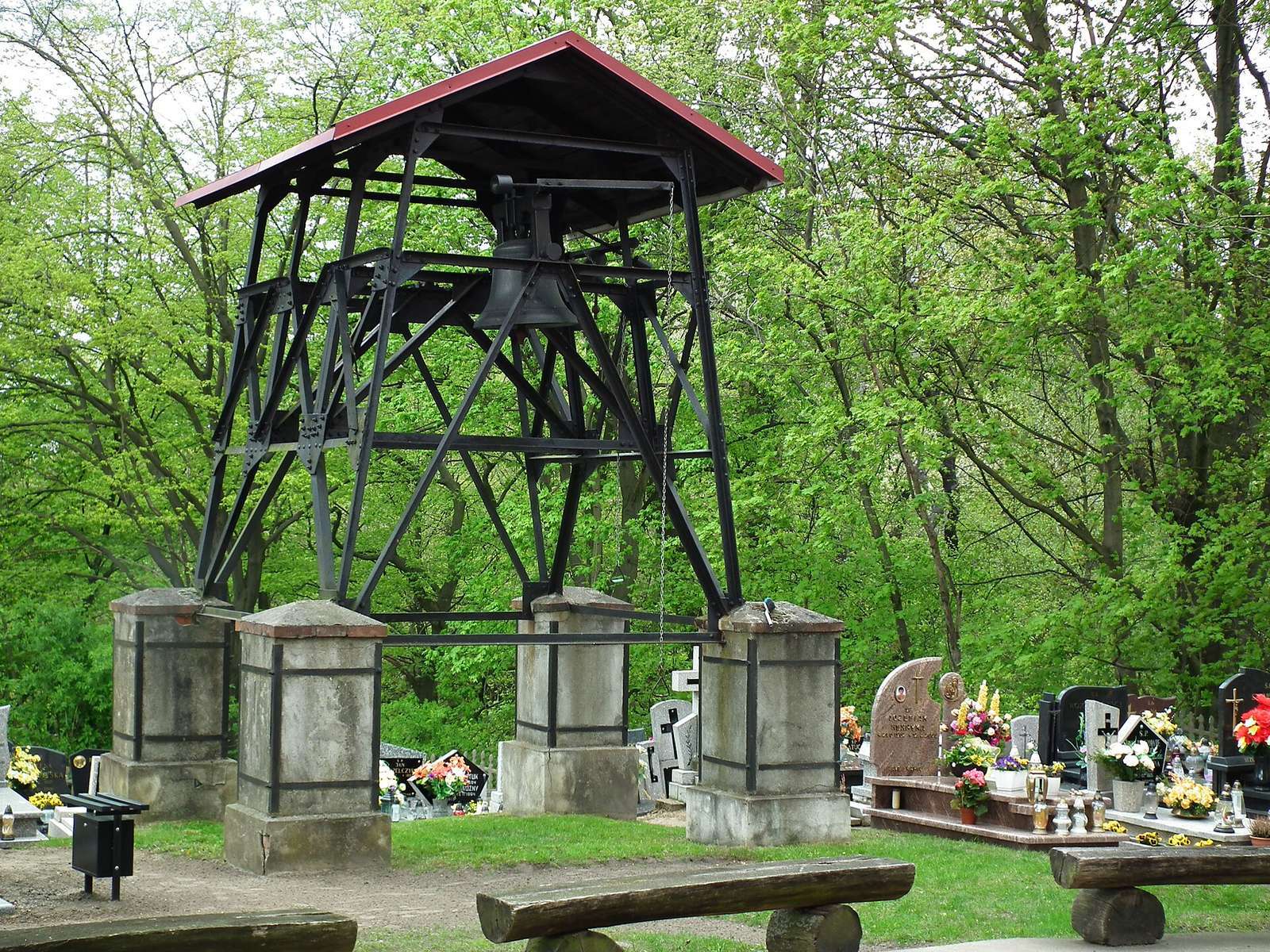
A cemetery lies beside the church. Nearby stands a metal bell tower supported by massive supports.