Solokha: A Scythian Royal Burial Mound in Ukraine
Site at a Glance
- Popularity
- Medium
- Country
- Ukraine
- Primary era
- Iron Age
- Eras represented
- Iron Age
- Civilizations
- Scythian
- Site type
- Burial
- Remains
- Burial Mound
On this page13 sections
History
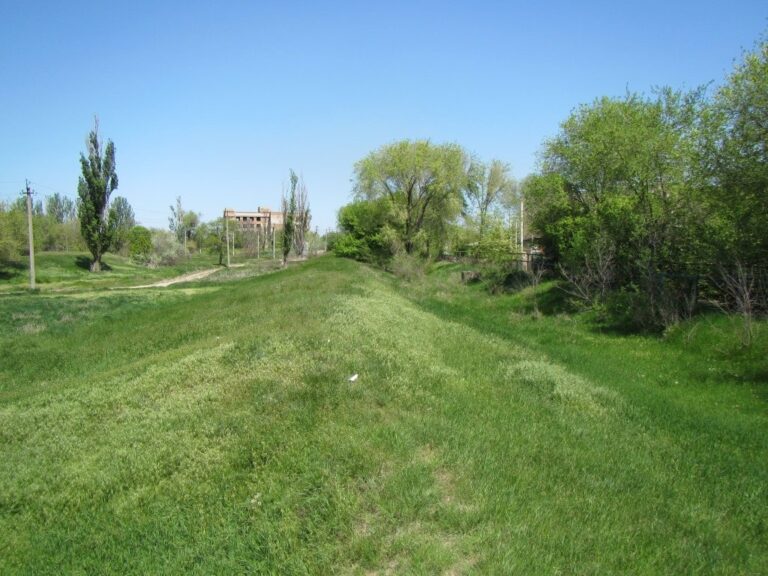
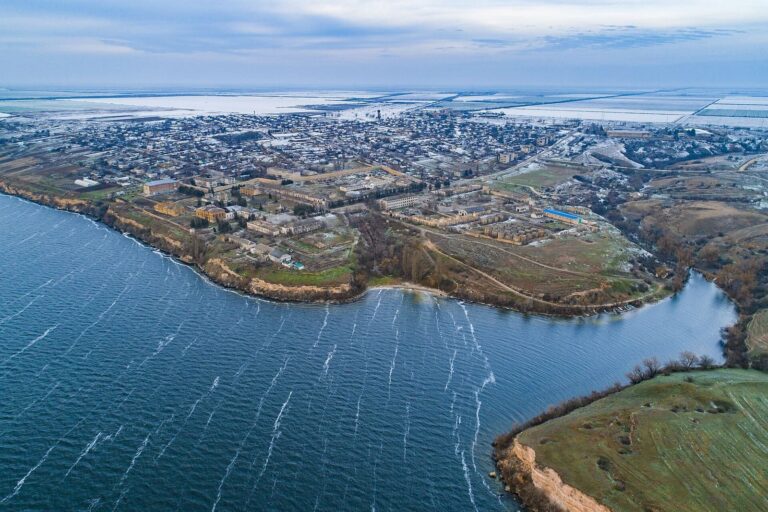
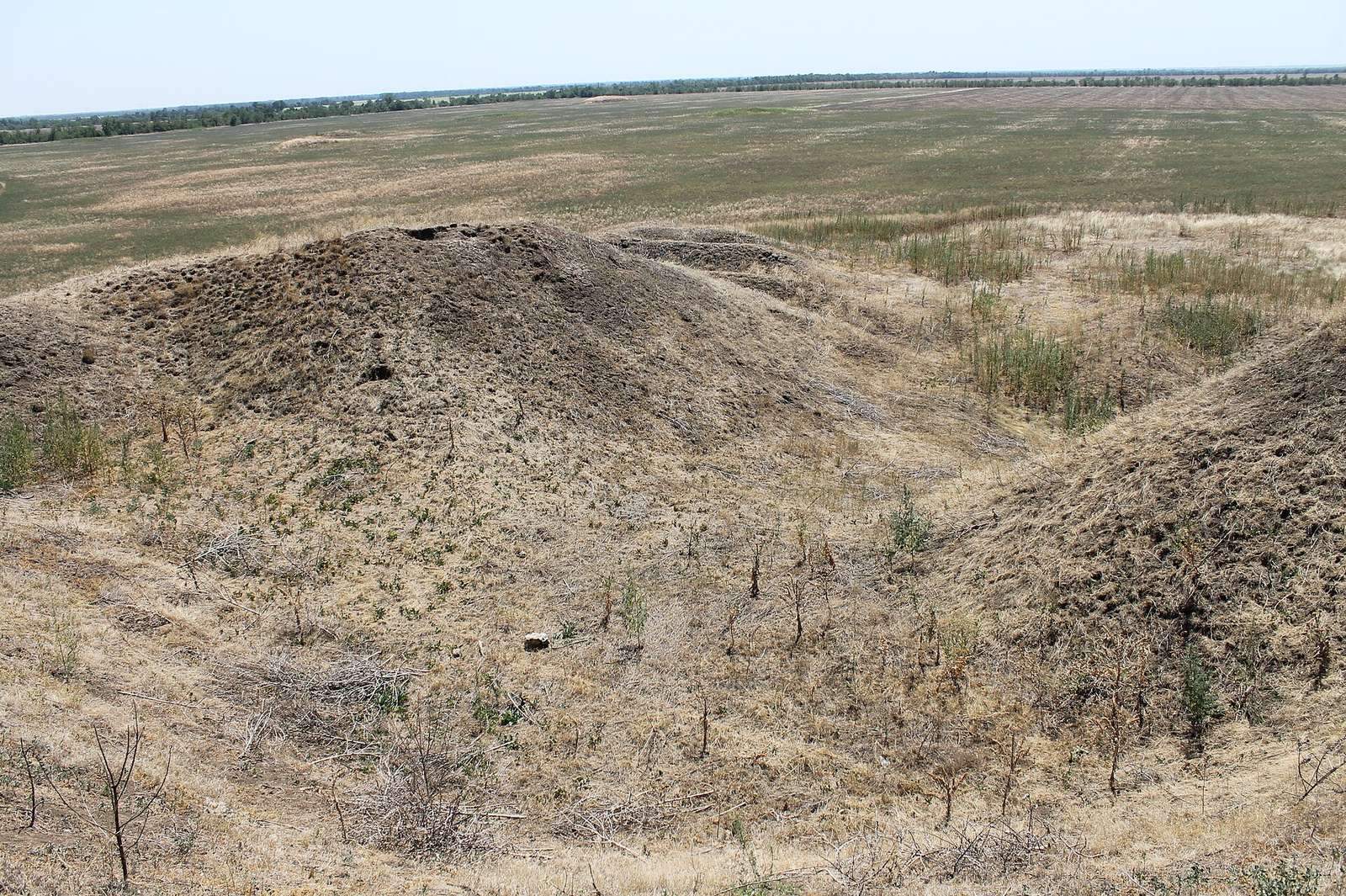
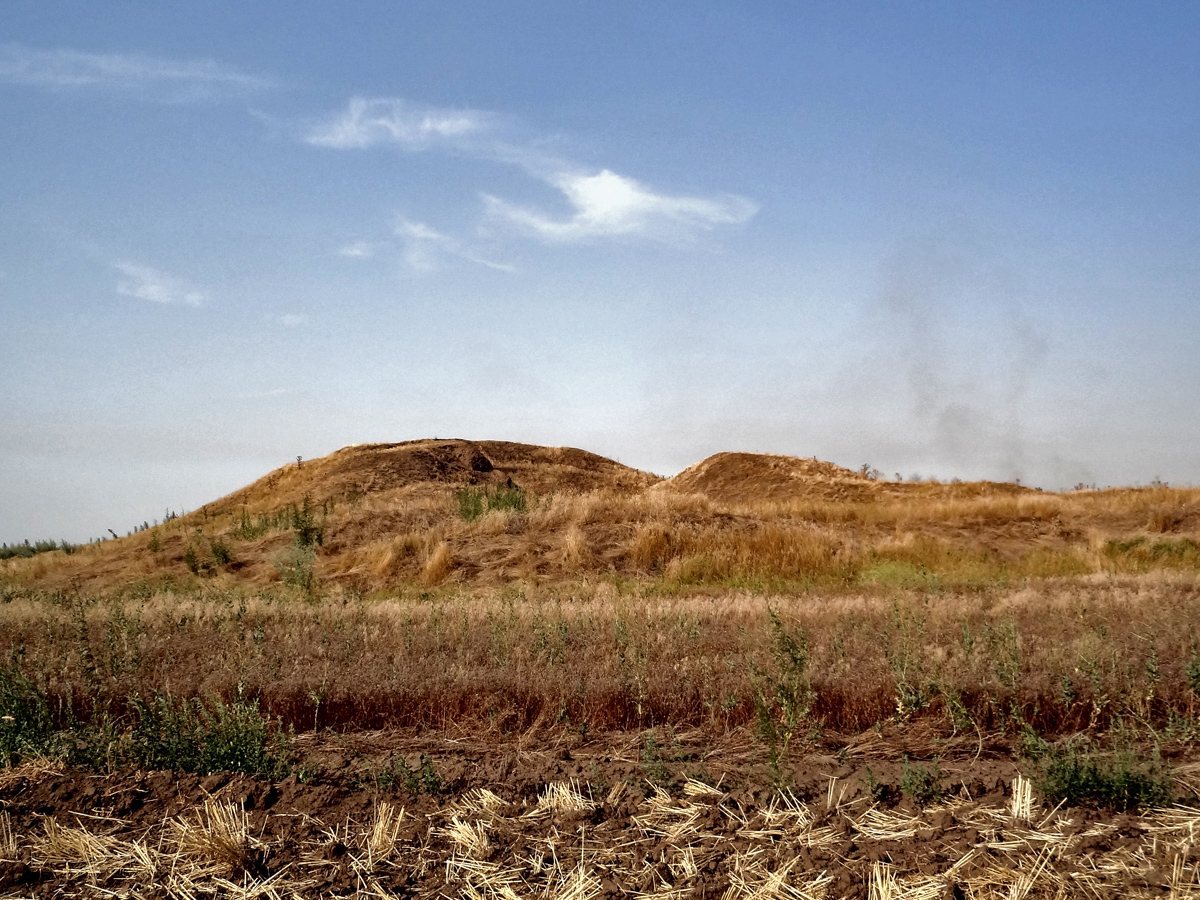
Solokha is a Scythian royal burial mound in Ukraine, on the left bank of the Dnieper opposite Nikopol. It lies southwest of Velyka Znamianka and about 18 kilometres from Kamianka-Dniprovska. The Scythians were ancient peoples of the Eurasian steppe, known for distinctive material culture and societies described by Greek writers. Solokha is regarded as one of the richest royal Scythian tombs.
The royal burials
The central tomb dates to the late fifth century BC. A second tomb, set to one side, was made in the early fourth century BC. Their dates are based on finds such as Greek vessels and horse equipment, together with radiocarbon analysis. The earlier burial had been robbed in antiquity, while the later one remained intact.
The central burial has been associated with a high-status woman, although another interpretation holds that the remains represent both a man and a woman. The later tomb belonged to a man identified as a ruler. The sequence of burials reflects the mound’s expansion: part of the earlier mound was cut back for the second tomb, and the covering earth was enlarged to encompass both.
Excavation and interpretation
Russian archaeologist Nikolay Veselovsky led excavations at Solokha in 1912 and 1913. A surveying marker had previously been installed on the summit, flattening it. Because the mound had not otherwise been cut down from above, its original height could be estimated. Solokha is designated an Immovable Monument of National Significance of Ukraine.
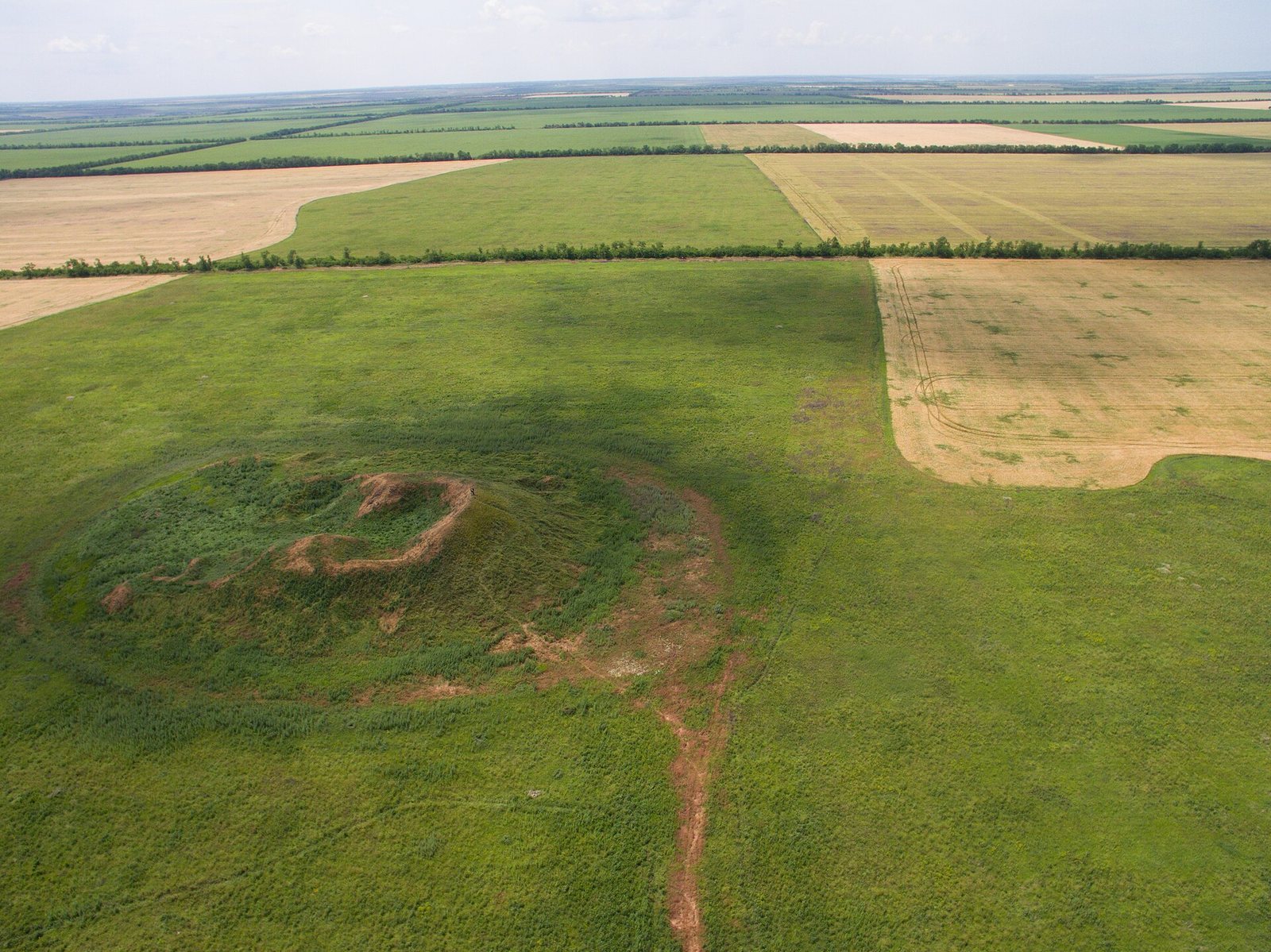
The wider burial ground once contained 75 mounds. Its land is now ploughed, a condition that has prompted concern among researchers. Solokha has also been linked with Gerrhos, the region where the fifth-century-BC Greek historian Herodotus said the royal Scythians buried their kings. This identification is an interpretation, not a certainty.
Remains
Tomb layout and construction
The mound
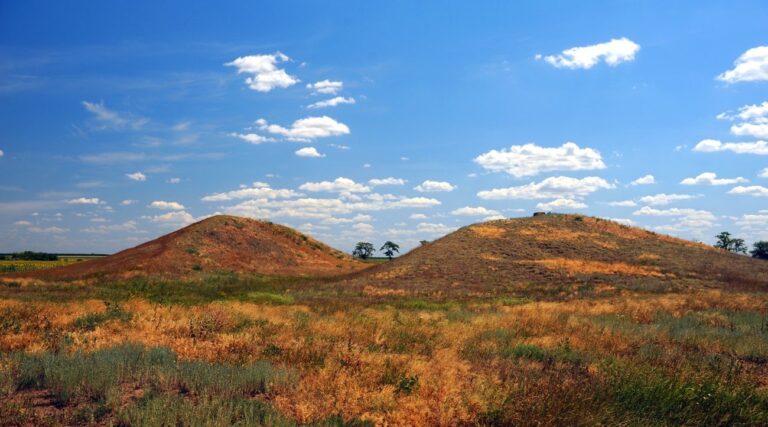
The mound is approximately 18 metres high and 100 metres in diameter. It covers a central tomb and a later tomb positioned to one side, forming a burial complex that grew around successive royal burials.
The central tomb
The central tomb had two chambers. One held human burials, while the other served as a storeroom. Finds from this tomb include a silver kylix, a shallow drinking cup, engraved with a Greek inscription meaning “wolf.” The word may have been the owner’s name or nickname. Fine images of animals remain visible on its oxidized surface, and a gilded disk set inside the base carries a raised wheel design. A fifth-century-BC cup from the Bashova Mogila mound, also engraved with its owner’s name, is a close parallel.
The lateral tomb
The lateral tomb had a stepped shaft leading to a corridor about 10 metres long, which opened into a burial chamber. Three niches were cut into the chamber’s sides. The largest held the ruler, along with a concealed cache; the other two contained grave goods.
Burials and grave goods
Finds from the central tomb
Objects recovered from the central tomb include gold plaques from ceremonial clothing, a gold needle, Greek storage jars and bronze arrowheads. The silver cup’s engraved decoration and the objects of gold provide evidence of the richness of the burial furnishings.
The associated horse burial
A separate, well-preserved burial associated with the central tomb contained two horses. Their harnesses were decorated with gold.
The ruler’s burial
The intact lateral burial held the remains of a man identified as a ruler. He was accompanied by a weapon-bearer, a servant, a groom and five horses. Gold plaques adorned his clothing; a gold neck-ring and a gold mesh ornament lay at his neck and chest. He wore five gold bracelets, three on his right arm and two on his left.
The burial also contained two swords, one with a gold-decorated hilt and gold scabbard. A silver-covered gorytos, a combined bow case and quiver, held 80 bronze arrowheads, and a gold phiale, a shallow bowl used for drinking or offerings, had been placed over it. Other objects included a mace, a bronze Greek helmet altered by a Scythian craftsman, Greek clay storage jars, a rhyton, a drinking vessel often shaped at one end, cast bronze cauldrons and bronze leg guards.
The gold comb
A gold comb, found by archaeologist A. A. Bobrinsky, probably came from a Greek workshop and dates to the fourth century BC. Its sculpted scene shows three warriors fighting. The comb is now held among the Hermitage Museum’s Scythian art collections.