Anime Purganti: A Baroque Church Dedicated to the Souls in Purgatory
Site at a Glance
- Popularity
- Very Low
- Country
- Italy
- Primary era
- Early Modern
- Eras represented
- Early Modern
- Civilizations
- Kingdom of Sicily, Spanish
- Site type
- Religious
- Remains
- Church
On this page15 sections
History
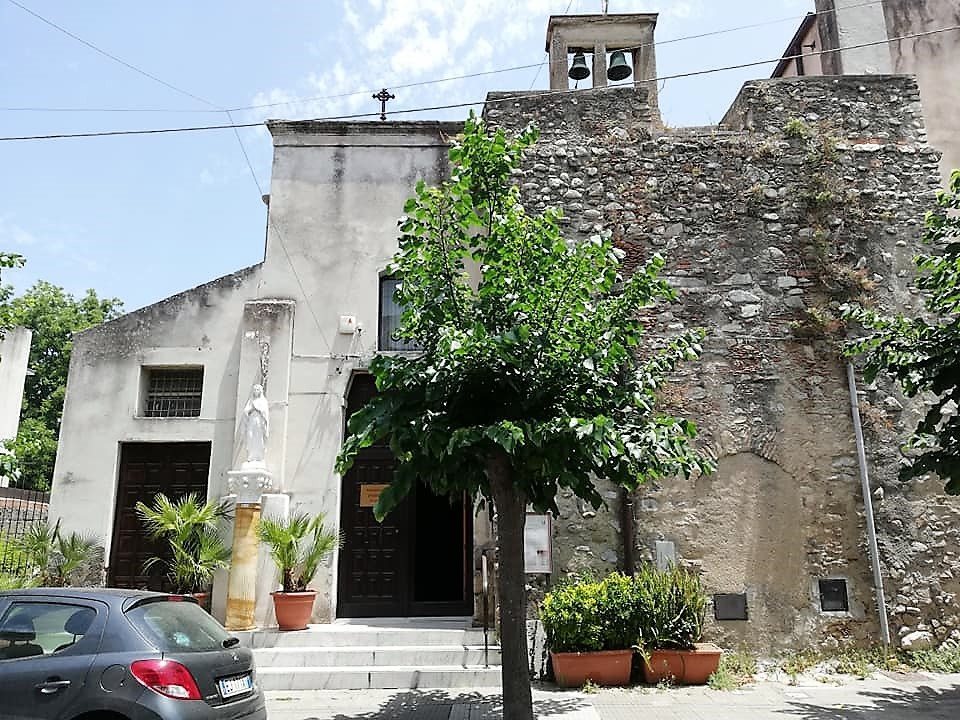
Anime Purganti is a Baroque church in Pozzo di Gotto, Italy, dedicated to the Souls in Purgatory and attached to the old Cathedral of Saint Vitus. Diego Fiorello built a chapel dedicated to the Holy Souls beside the cathedral in 1658. On December 16, 1663, priest Mario Catalfamo granted buildings and land nearby for an oratory, and the Confraternity of Purgatory was founded at the same time. In Catholic teaching, purgatory is a state of purification after death, and prayers and Masses for the dead are believed to aid souls undergoing it.
Confraternities and worship
The Confraternity of Purgatory is now called the Confraternity of the Souls in Purgatory under the title of the Immaculate Conception. Its principal purpose is to commemorate the dead. Its other duties include comforting the sick, arranging Christian burial, helping survivors, especially widows and orphans, and offering Masses for the dead. A confraternity is a religious association whose members organize devotional and charitable work. A separate association, the Confraternity of the Most Holy Sacrament, was founded at the church on April 18, 1715. The church is under the patronage of Saint Sebastian and belongs to the Roman Catholic Archdiocese of Messina-Lipari-Santa Lucia del Mela, within the Barcellona Pozzo di Gotto vicariate and the archpriesthood of Pozzo di Gotto.
The church’s observances include the June 15 feast of Saint Vitus. Its celebrations begin at the Cathedral of Santa Maria Assunta and conclude at Anime Purganti. On September 15, worshippers commemorate Our Lady of Sorrows, a title for Mary mourning the suffering and death of Jesus. The church’s statues of the scourged Christ and Our Lady of Sorrows also take part in local Good Friday rites during Holy Week.
Remains
Interior layout
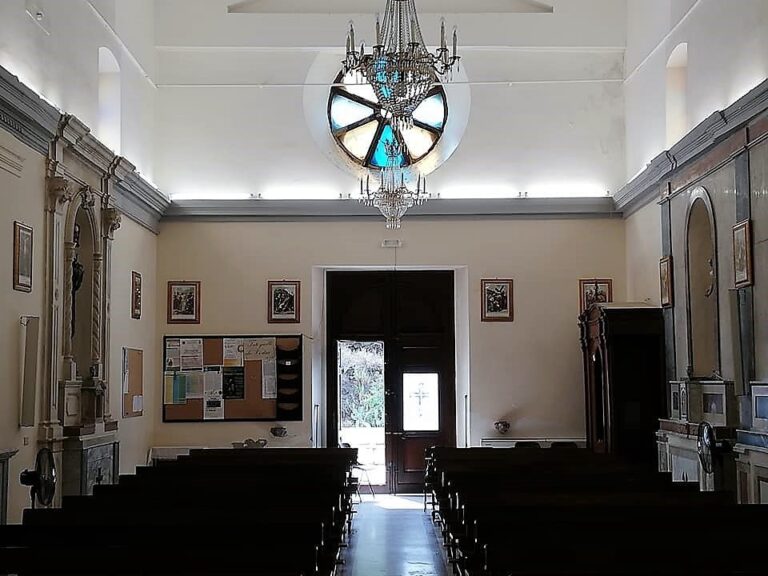
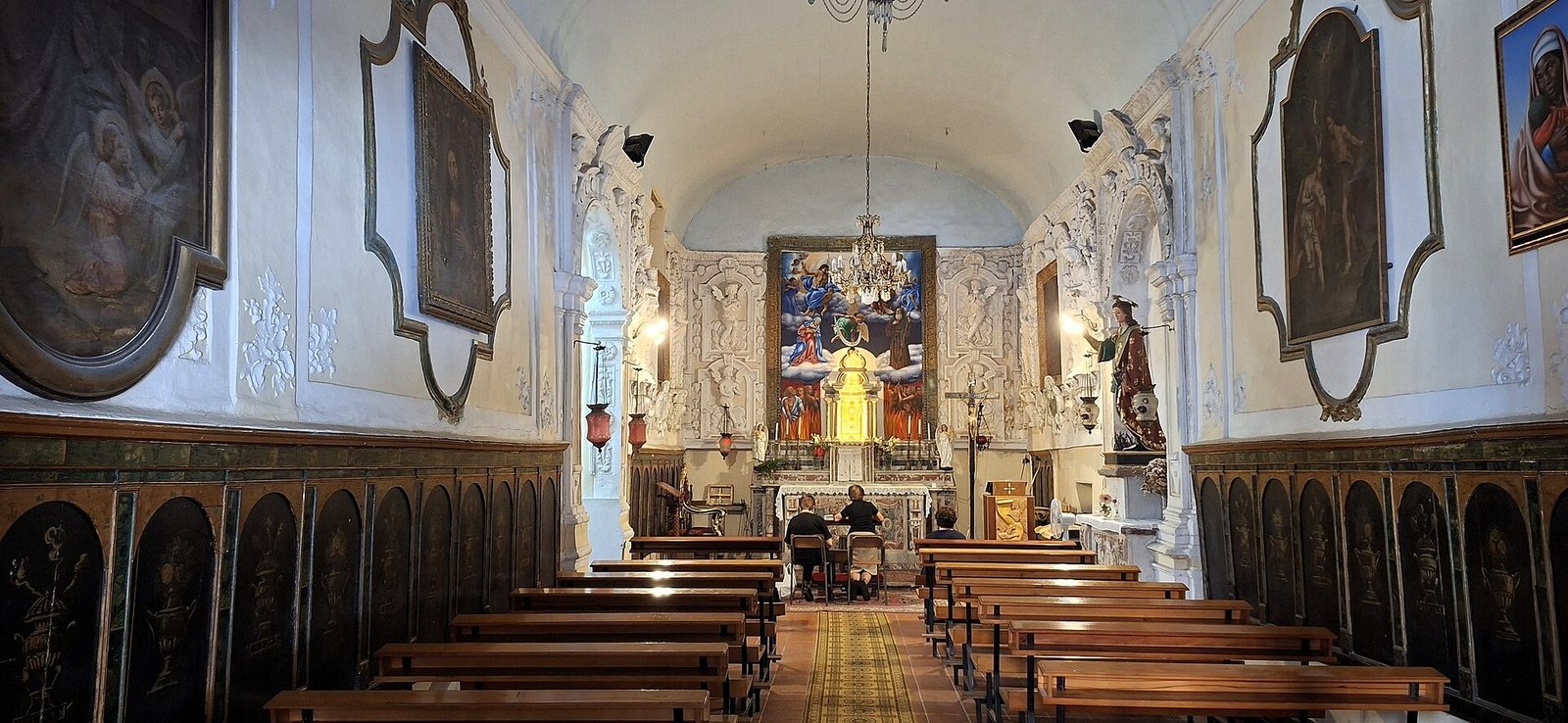
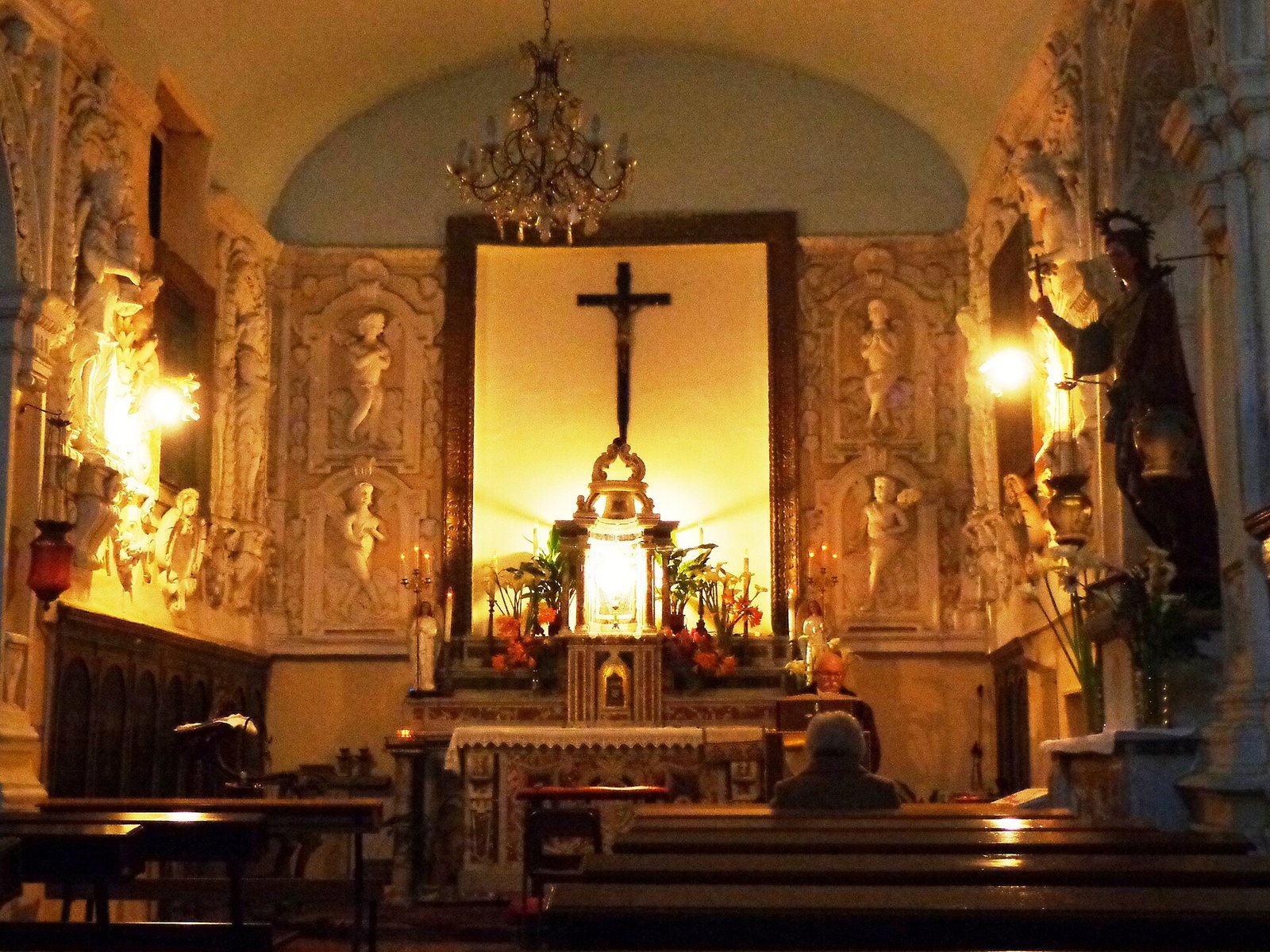
The church has a single nave, or main hall, beneath a barrel-vaulted ceiling. At its eastern end, the altar area is arranged against the wall. Baroque stucco decoration influenced by the style of Sicilian artist Giacomo Serpotta adorns its walls.
Main altar
The altar table has a front panel inlaid with marble, while the tabernacle above it is topped by a columned structure resembling a Roman temple and crowned at the top. A monumental gilded frame now encloses a crucifix. Pairs of smaller frames beside it are arranged one above another, with putti, small childlike decorative figures, turned toward the altar’s center. Pietro Cannata’s painting of the Trinity and the Souls in Purgatory probably once occupied the large frame, but it was stolen. The Confraternity of the Souls in Purgatory commissioned a replacement from contemporary artist Francesco De Francesco.
Nave walls and furnishings
Right wall
Three oil paintings of the Ascension, made in the second half of the seventeenth century by unknown artists, hang on the right wall. Nearby statues include an unidentified religious figure carrying a yoke across the shoulders and another figure probably representing Saint Agatha, an early Christian martyr traditionally associated with Sicily.
Left wall
Three seventeenth-century oil paintings of the Assumption of the Virgin decorate the left wall. Their makers are unknown, and the paintings have been attributed variously to Antonino Alberti, known as il Barbalonga, Giovanni Quagliata, or Andrea Suppa. Associated statues include Saint Barbara, identified by the crenellated tower she holds, and another unidentified Sicilian martyr. Saint Barbara, like Saint Agatha, is traditionally associated with Sicily.
Seating and wall panels
Eight carved wooden seats stand along the left wall and three along the right. Wooden panels on the walls are divided into compartments decorated with stylized amphorae and floral and plant motifs.
Side altars and devotional images
Saint Vitus altar
A recessed arch on the right side of the nave contains the altar dedicated to Saint Vitus. Its marble-inlaid front has a central medallion, and a wooden statue of Saint Vitus the Martyr stands on the altar table.
Chapel of the Crucifix
An arch on the left leads to the Chapel of the Crucifix. Its altar has a marble-inlaid front and supports a seventeenth-century wooden crucifix with a silver crown. The crucifix closely resembles Giuseppe Rossitto’s cypress-wood sculptural group of the Crucifixion, made in 1870 and kept at the Cathedral of Santa Maria Assunta.
Processional images
An old wooden statue depicts Christ being scourged, while a papier-mâché statue represents Our Lady of Sorrows. Both figures are used in preparing the platforms that carry religious images in Good Friday processions.
Other paintings
Other paintings in the church depict the dying Saint Joseph, the Baptism of Jesus in the Jordan River, Saint Joseph with the child Jesus and angels, and Jesus blessing.
Crypt
A crypt lies beneath the church floor and has been restored by the cultural heritage Superintendency.