Saint Elisabeth of Hungary Church in Trybsz: A Sixteenth-Century Wooden Church
Site at a Glance
- Popularity
- Medium
- Country
- Poland
- Primary era
- Early Modern
- Eras represented
- Early Modern
- Civilizations
- Habsburg, Hungarian
- Site type
- Religious
- Remains
- Church
On this page6 sections
History
Construction and seventeenth-century renewal
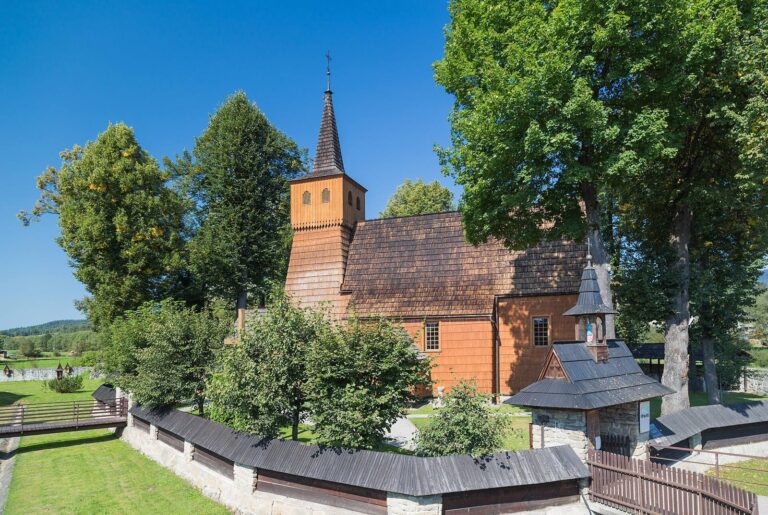
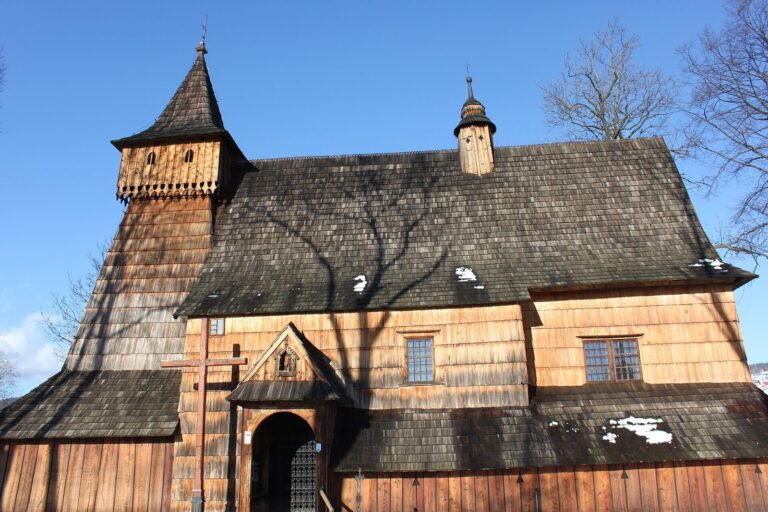
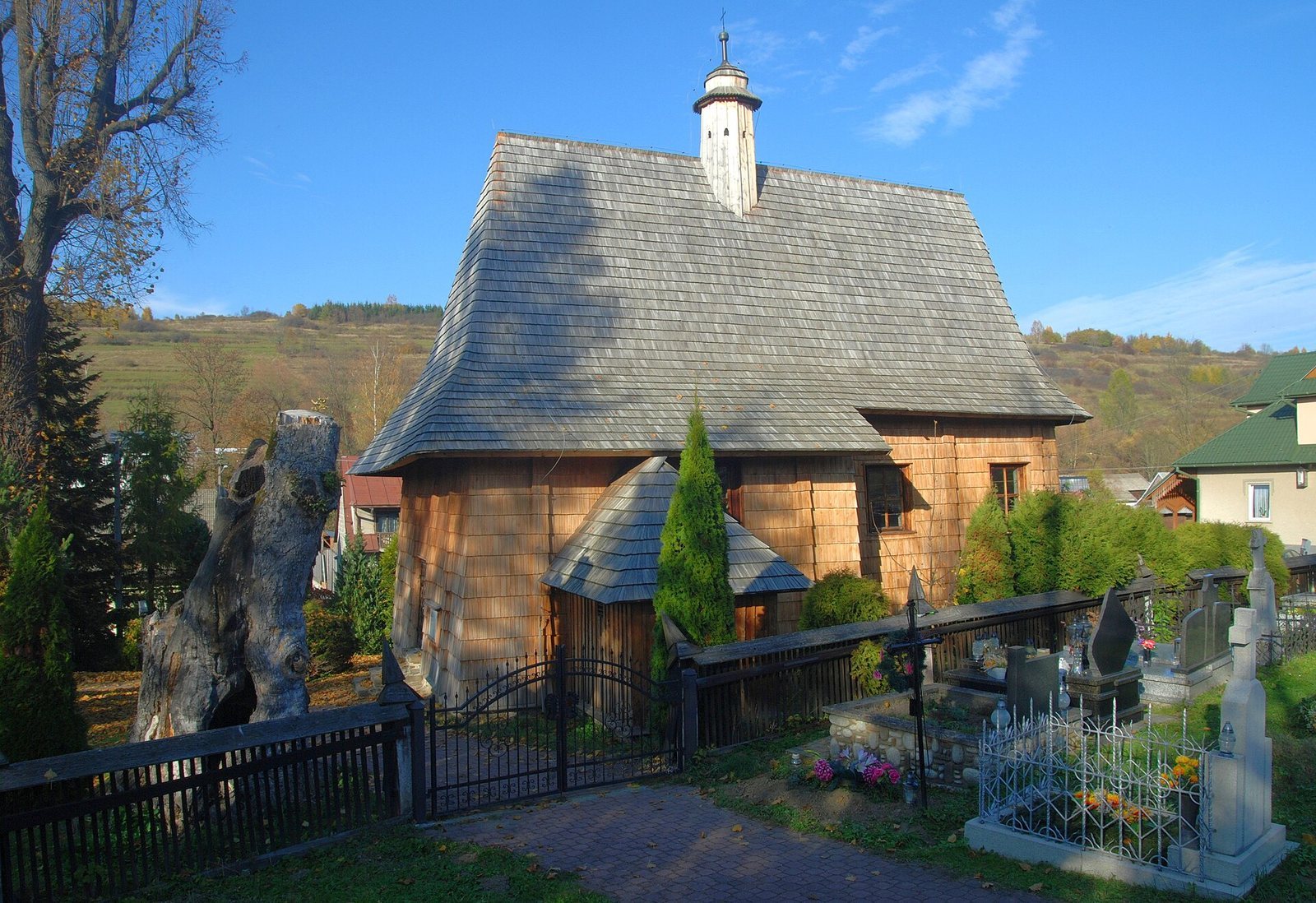
The Saint Elisabeth of Hungary Church in Trybsz is a Roman Catholic wooden church in Poland, completed in 1567. It is dedicated to Saint Elisabeth of Hungary, a Hungarian princess later canonized as a Catholic saint, and belongs to the parish named for her.
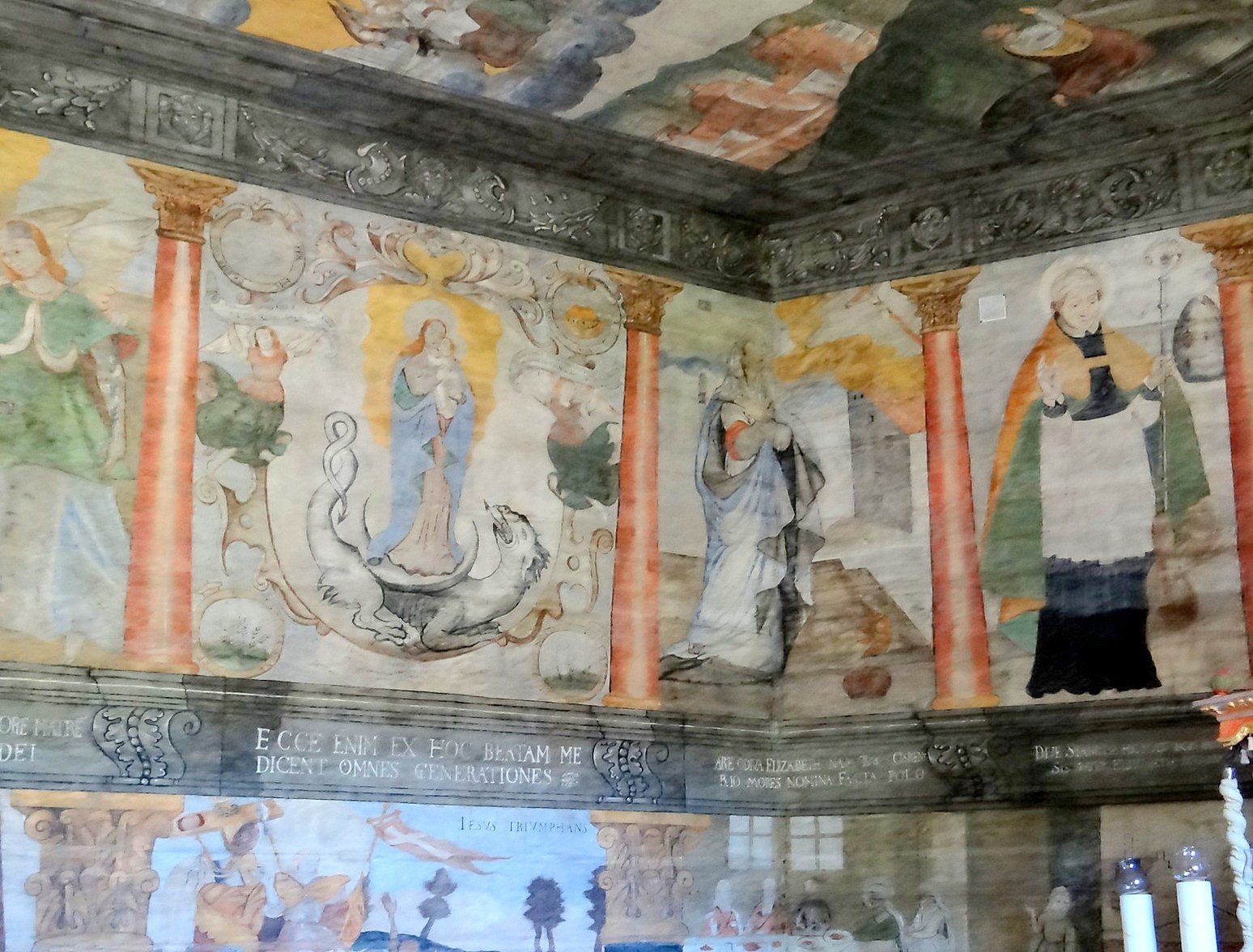
During the first half of the seventeenth century, the church was renovated and refurnished. An unidentified painter decorated its walls in 1647.
Disuse and conservation
In the early twentieth century, a new masonry church was built beside it, and the old church ceased to serve as a place of worship. It fell into disrepair, and furnishings were moved to the new church. These included fragments of a triptych, a three-panel artwork dating to about 1530, and altars in the Baroque style, an early modern European artistic style. Repairs took place in 1924 and 1936. Conservation of the architecture followed in 1972, with work on the painted decoration in 1976. The church is no longer used for worship.
Remains
Structure and exterior
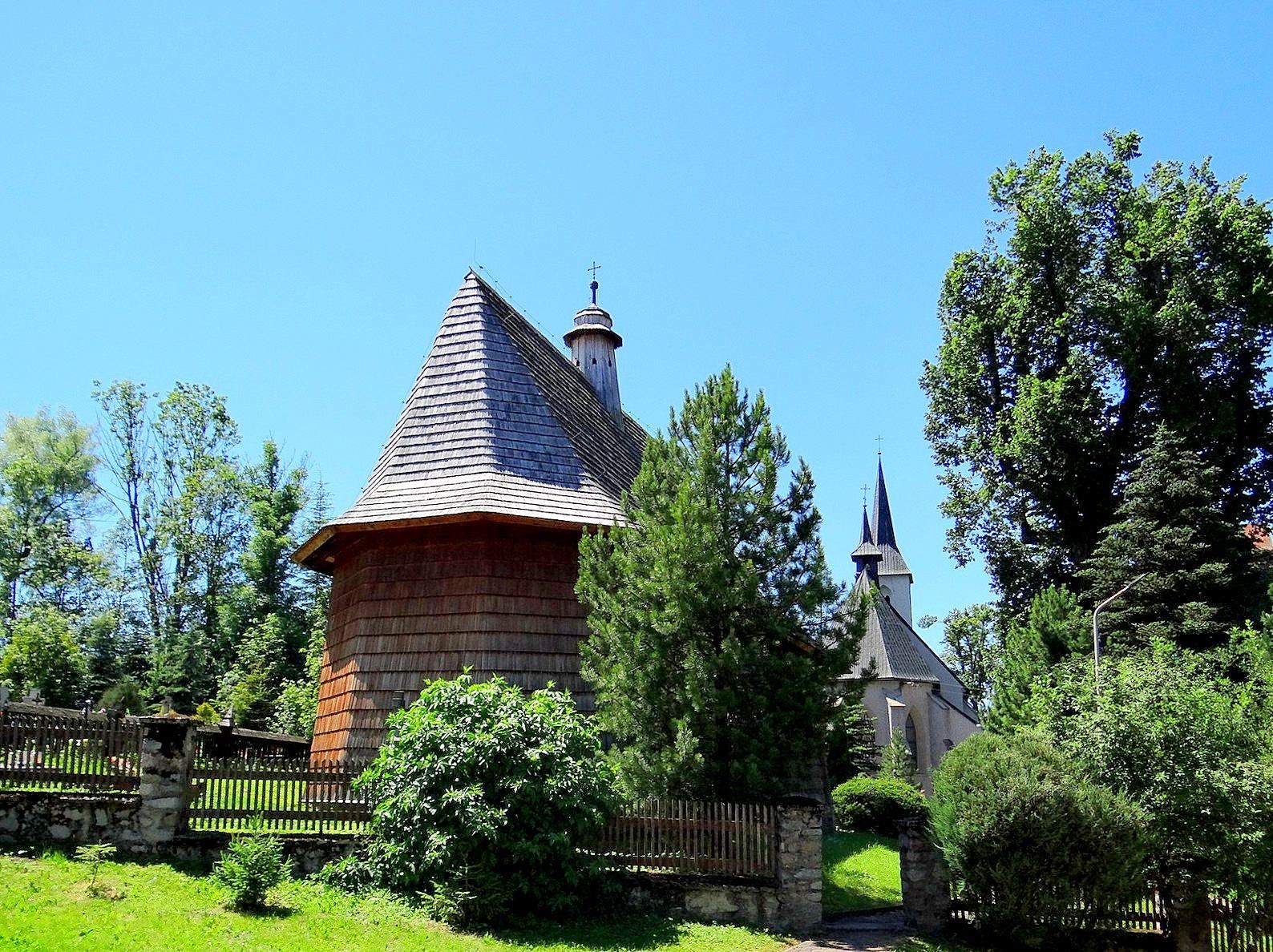
The small church is built as two connected sections from larch logs joined without nails. Its plan follows an east-west axis, with an elongated chancel, the area around the altar, closed at three sides, and a wider nave, the main space for the congregation. A small porch adjoins the nave on the south. The chancel’s shingle-covered walls slope, a design intended to protect them from collapse. Shingles cover the roof, which has several pitches and carries a small turret for a bell. During repairs in 1924, the tower with its enclosed upper storey and the sacristy, a room used for church vessels and vestments, were dismantled.
Painted interior and furnishings
The interior has a flat ceiling with curved sections in the nave. Painted scenes on the walls and ceiling depict episodes from the lives of Jesus, the Virgin Mary, and the saints. The ceiling shows the Last Judgment, with a panorama of the Tatra Mountains in the background, described as the oldest in Poland. Furnishings that remain include an altar table with a wooden tabernacle, a receptacle for the Eucharist, and an eighteenth-century Rococo pulpit. Rococo was a later, more ornamented European style that followed the Baroque.