Saint Lawrence Church in Pluty: A Gothic Parish Church in Poland
Site at a Glance
- Popularity
- Very Low
- Country
- Poland
- Primary era
- Medieval
- Eras represented
- Medieval, Early Modern, Modern
- Civilizations
- Crusader, Kingdom of Prussia, Polish–Lithuanian Commonwealth, Teutonic Order
- Site type
- Religious
- Remains
- Church
On this page7 sections
History
Saint Lawrence Church in Pluty, Poland, is a Roman Catholic parish church completed in the mid-14th century in the Gothic style. Dedicated to Lawrence of Rome, an early Christian deacon and martyr, it serves as the parish seat within the Archdiocese of Warmia, the Catholic ecclesiastical jurisdiction in the Warmia region.
Rebuilding and expansion
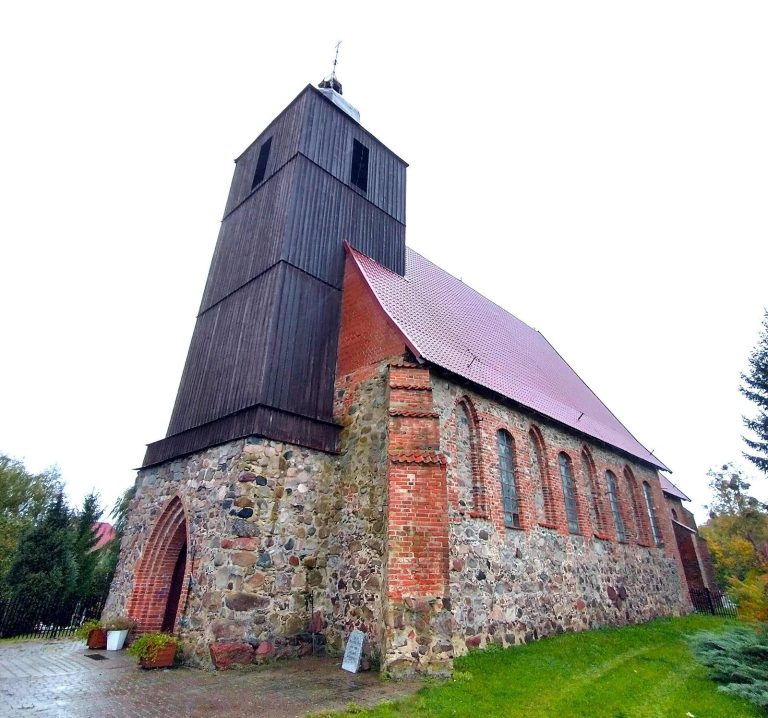
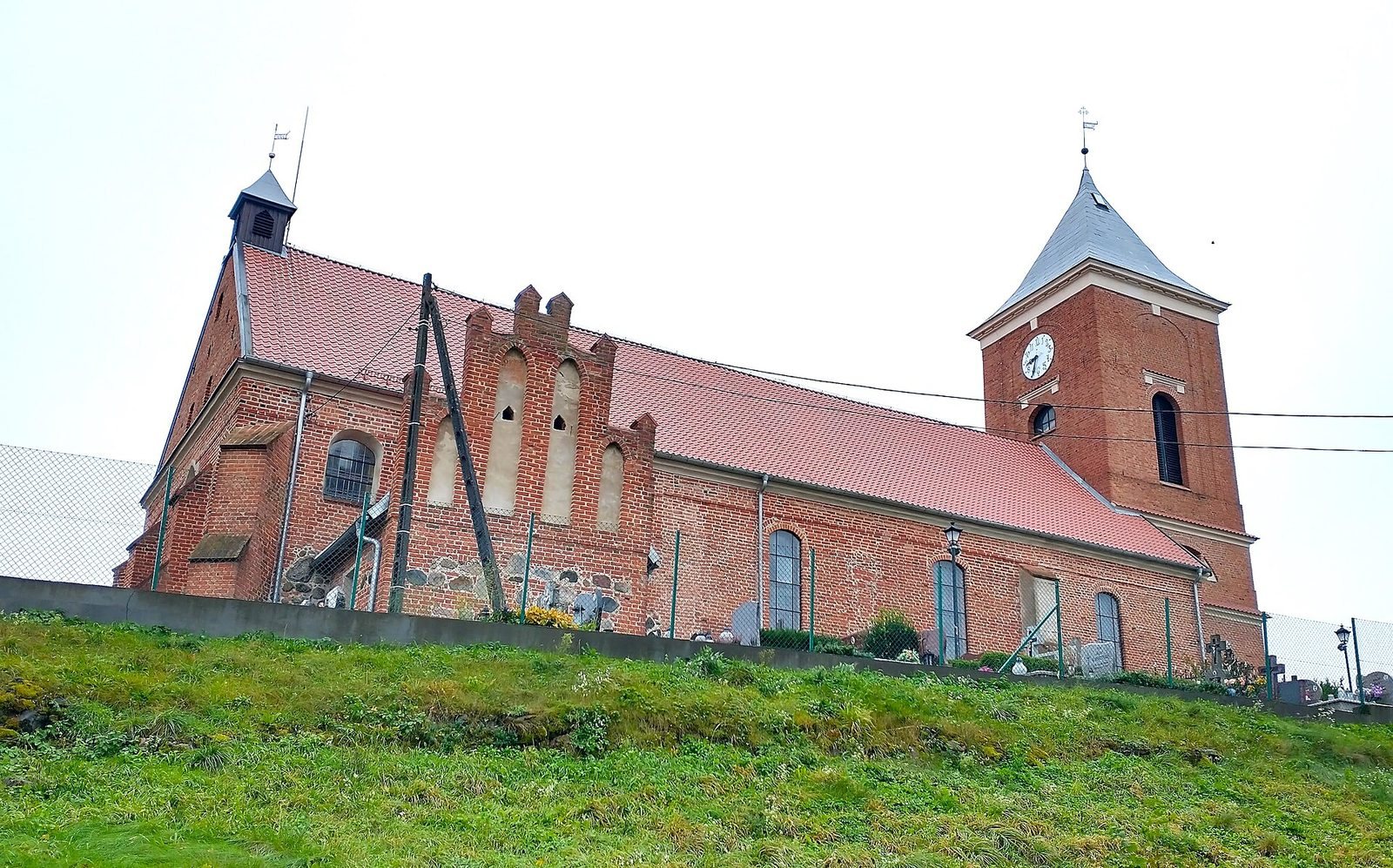
The church was rebuilt in the 16th century. In 1801, it was extended westward and a tower was added.
Churchyard and resettlement
People of Ukrainian origin resettled from southeastern Poland to Warmia and Masuria during Operation Vistula were buried in the churchyard. The 1947 operation forcibly relocated Ukrainians to territories in northern and western Poland.
Remains
Layout and exterior
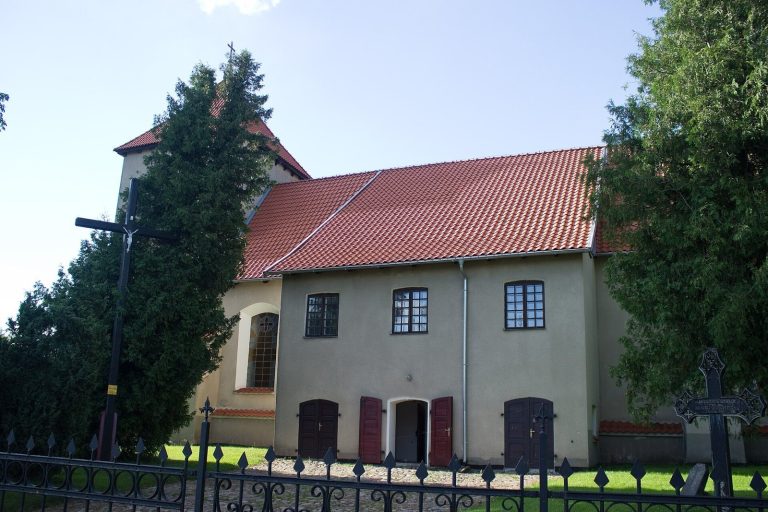
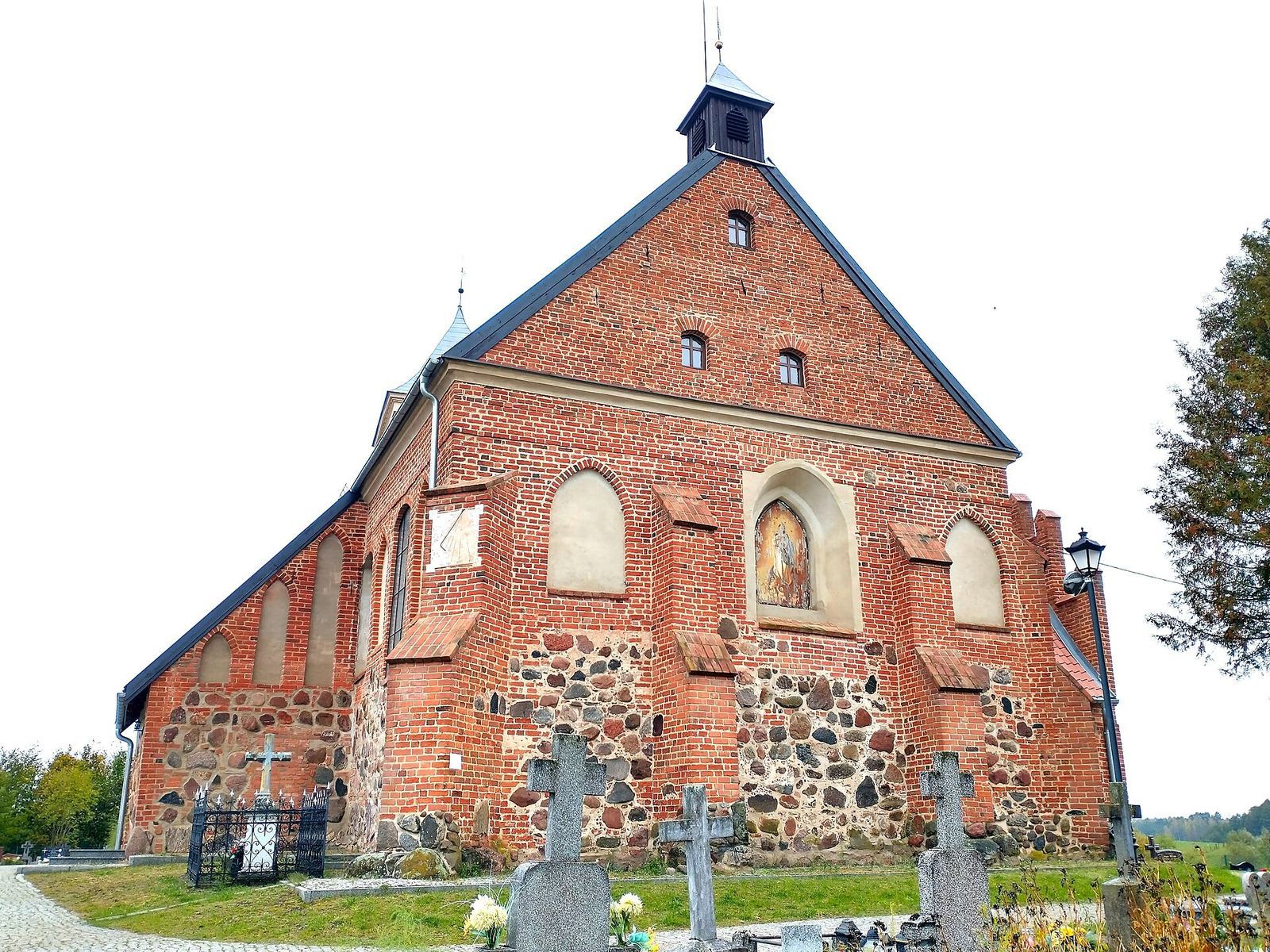
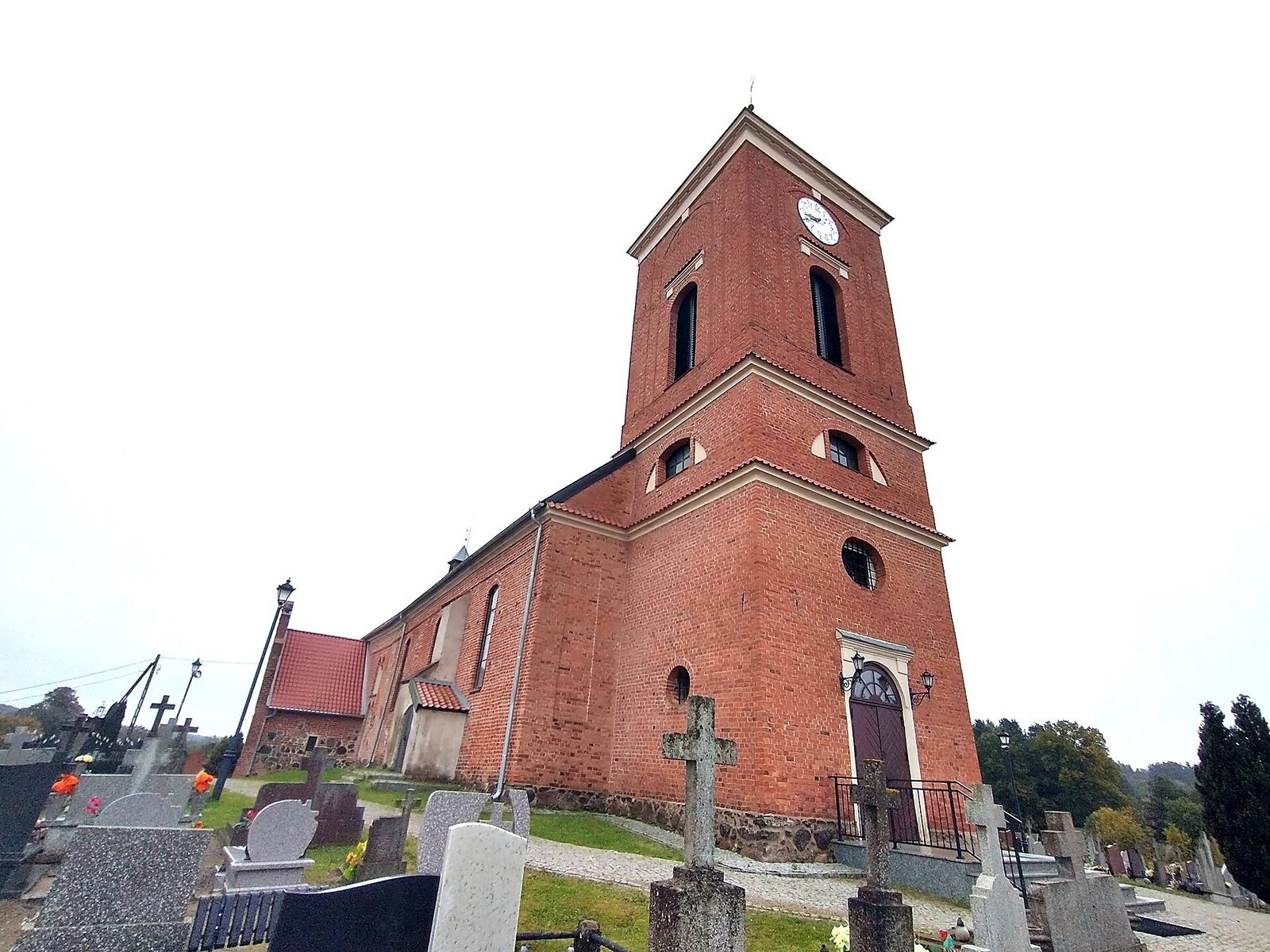
The church has a rectangular plan and a Gothic structure built with fieldstone at ground level and brick above. Plaster now covers the exterior, while the single tower is enclosed by tombs. Four buttresses, exterior supports that brace walls, strengthen the chancel end. Small pointed-arch blind niches, shallow recesses that do not pass through the wall, flank the windows. A sacristy, a room for preparing worship and storing liturgical objects, is attached on the north side; a porch stands on the south. The church is surrounded by an old cemetery and trees.
Interior furnishings
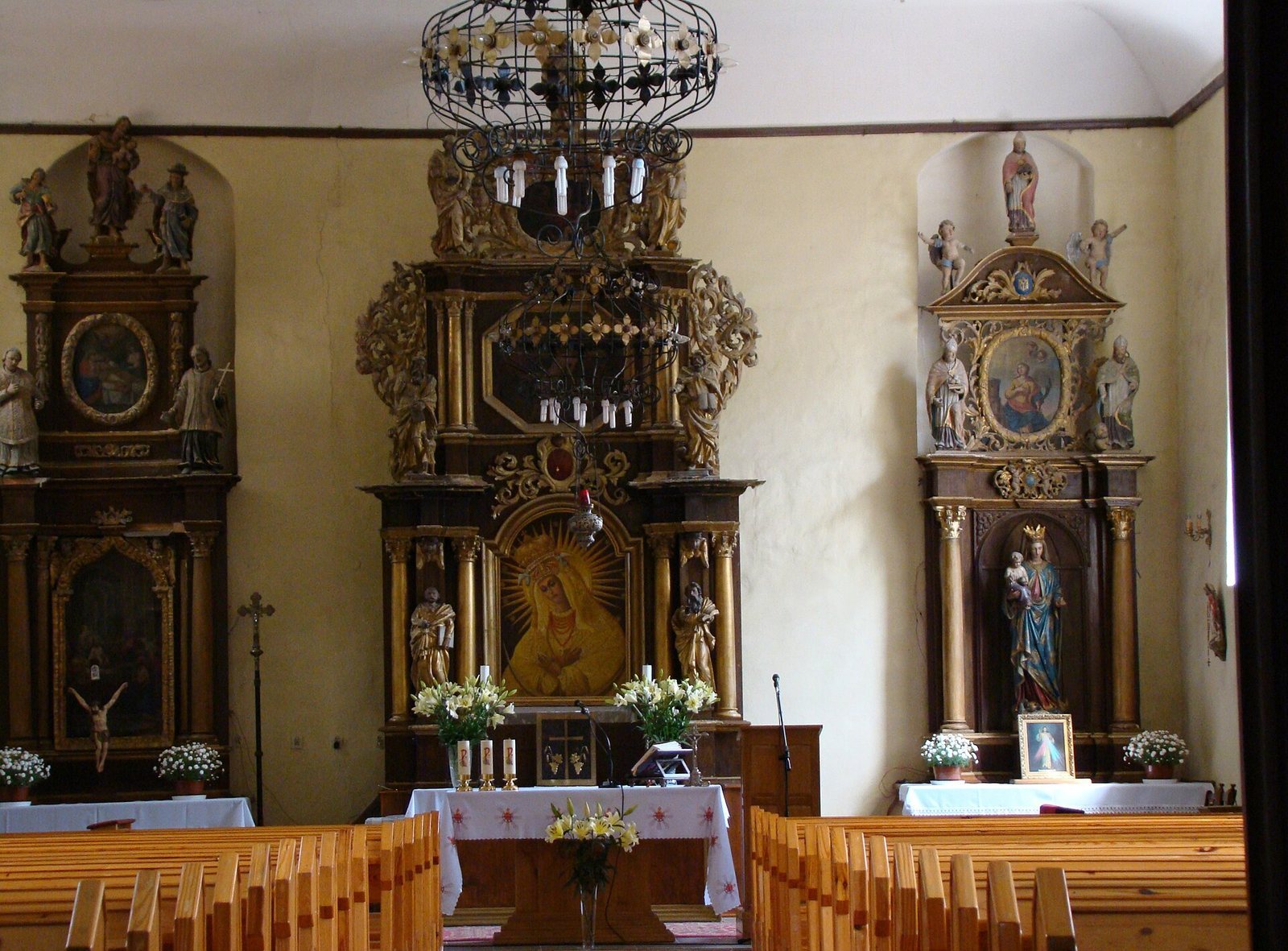
The interior furnishings are Baroque, an early modern style. The main altar was made in Königsberg in 1694, probably in the workshop of Izaak Riga, a sculptor and woodcarver active there. The side altars date to about 1697, and the left altar holds Piotr Kolberg’s 1702 painting of the Last Supper. A late-Baroque pulpit and benches date to 1732. Medieval furnishings include a granite baptismal font used for baptism and a granite holy-water stoup for devotional use. The choir loft, an elevated space for singers or musicians, dates to the 19th century. The early-20th-century organ is Neo-Baroque, a later revival of Baroque, and has a Rococo case; the galleries and paintings are Neoclassical, styles that emerged in the 18th century.
Cemetery
The churchyard contains numerous Ukrainian gravestones bearing inscriptions in Cyrillic script.