Zlatoustovskaya Tower of Veliky Novgorod Detinets: Defensive Tower, Prison, and Museum
Site at a Glance
- Popularity
- Low
- Country
- Russia
- Primary era
- Medieval
- Eras represented
- Medieval, Early Modern, Modern
- Civilizations
- Russian
- Site type
- Military
- Remains
- Tower
On this page8 sections
History
The Zlatoustovskaya Tower of Veliky Novgorod Detinets is a defensive tower in Russia, within a fortified central enclosure known as a Detinets. It was rebuilt in 1484–1490 on the base of an earlier structure during a major reconstruction of the Kremlin. Its patrons were Ivan III, grand prince of Moscow, and Gennady, archbishop of Novgorod and a senior leader in the Orthodox Church.
Defense, legend, and name
Legends associate the tower with prison use in the sixteenth century, and popular names included Prison Tower and Devil’s Tower. Seventeenth-century documents, however, identify it as a military tower. The name Zlatoustovskaya came from the nearby Church of St John Chrysostom. John Chrysostom was an early Christian preacher and theologian, and his name means “golden-mouthed.” The church was built between 1350 and 1375 and dismantled in 1694.
Prison and museum uses
The tower was altered during the sixteenth, seventeenth, eighteenth, and nineteenth centuries. In the late eighteenth century, two wings were added beside it, first partly in stone and later entirely in stone, and the complex became a men’s prison. The tower held prisoners; the southern wing contained a guardroom, while the northern wing housed a prison hospital. The prison closed in 1832. From the nineteenth century, the tower also held the archive of the Treasury Chamber, a government office responsible for financial administration.
A museum opened in the northern wing in 1886, while a library occupied the southern wing. Between 1889 and 1892, the tower was adapted as a museum of antiquities. Its three floors held a conference hall, a weapons collection, and a watchman’s room, and the wings were rebuilt in different forms.
Twentieth-century changes
After the 1917 Revolution, the Zlatoustovskaya was the only tower in the Detinets not used for housing or storage. It suffered serious damage during the Second World War and was repaired in 1946. A printing works for the newspaper Novgorodskaya Pravda later operated in the tower.
A further restoration took place in 1973–1975. From 1975 until the position ended in 1986, the tower served as the headquarters of a ceremonial guard of Novgorod schoolchildren. They kept a daily Watch of Memory at the Eternal Flame of Glory memorial, 50 metres to the north. The memorial marks a mass grave of Novgorod residents who took part in the Revolution and Civil War, as well as Soviet soldiers killed during the liberation of Novgorod from German occupation. Museum-reserve services are now housed in the tower and its adjoining addition. The Novgorod Kremlin ensemble received state protection in 1960 and UNESCO World Heritage status in 1992; the tower is also a cultural heritage monument of federal significance.
Remains
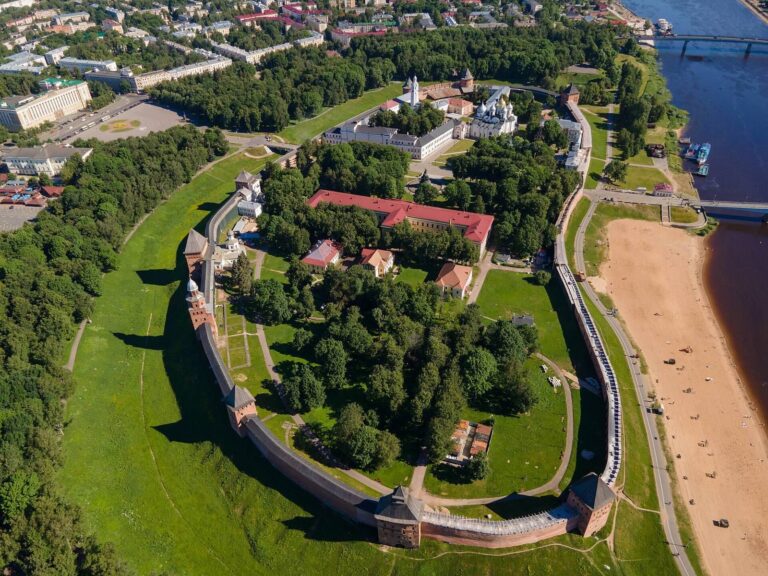
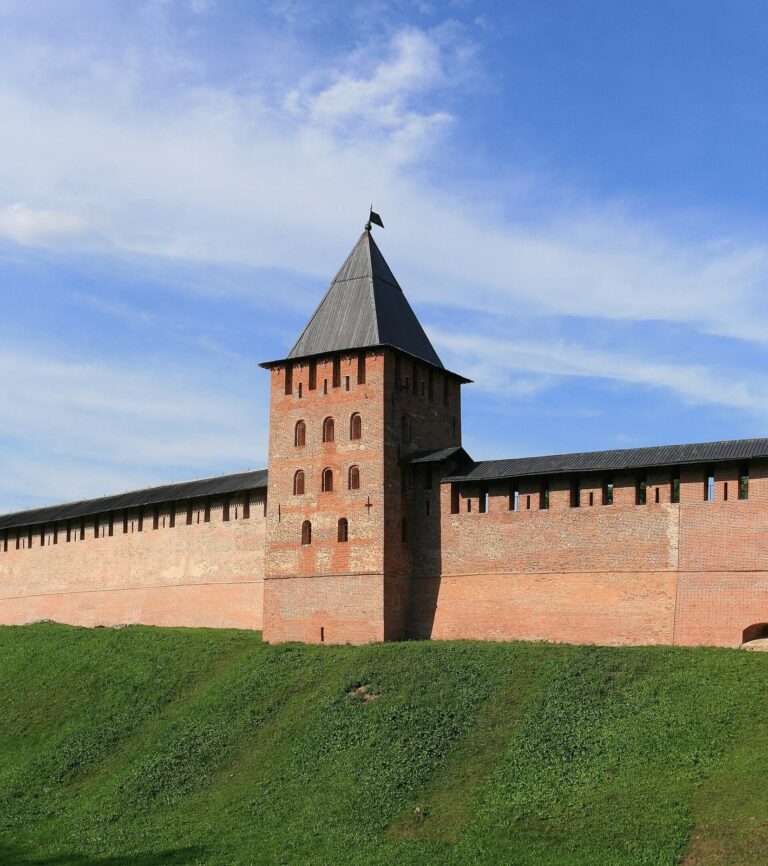
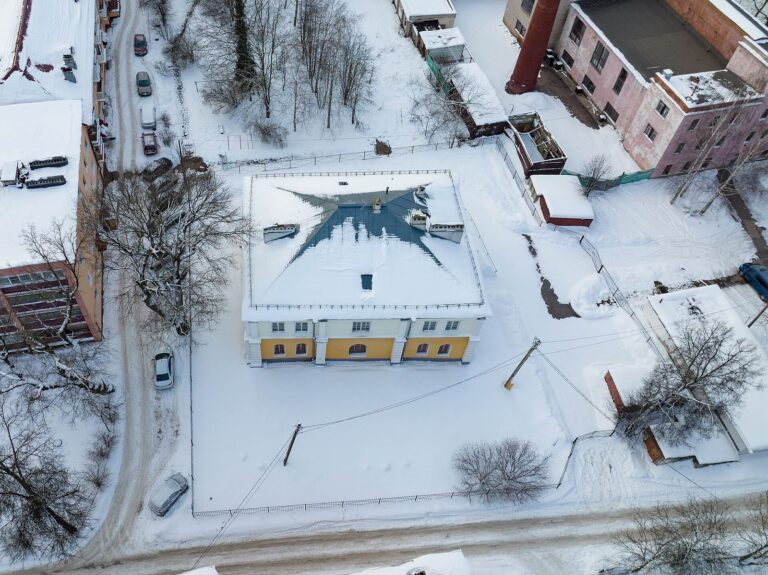
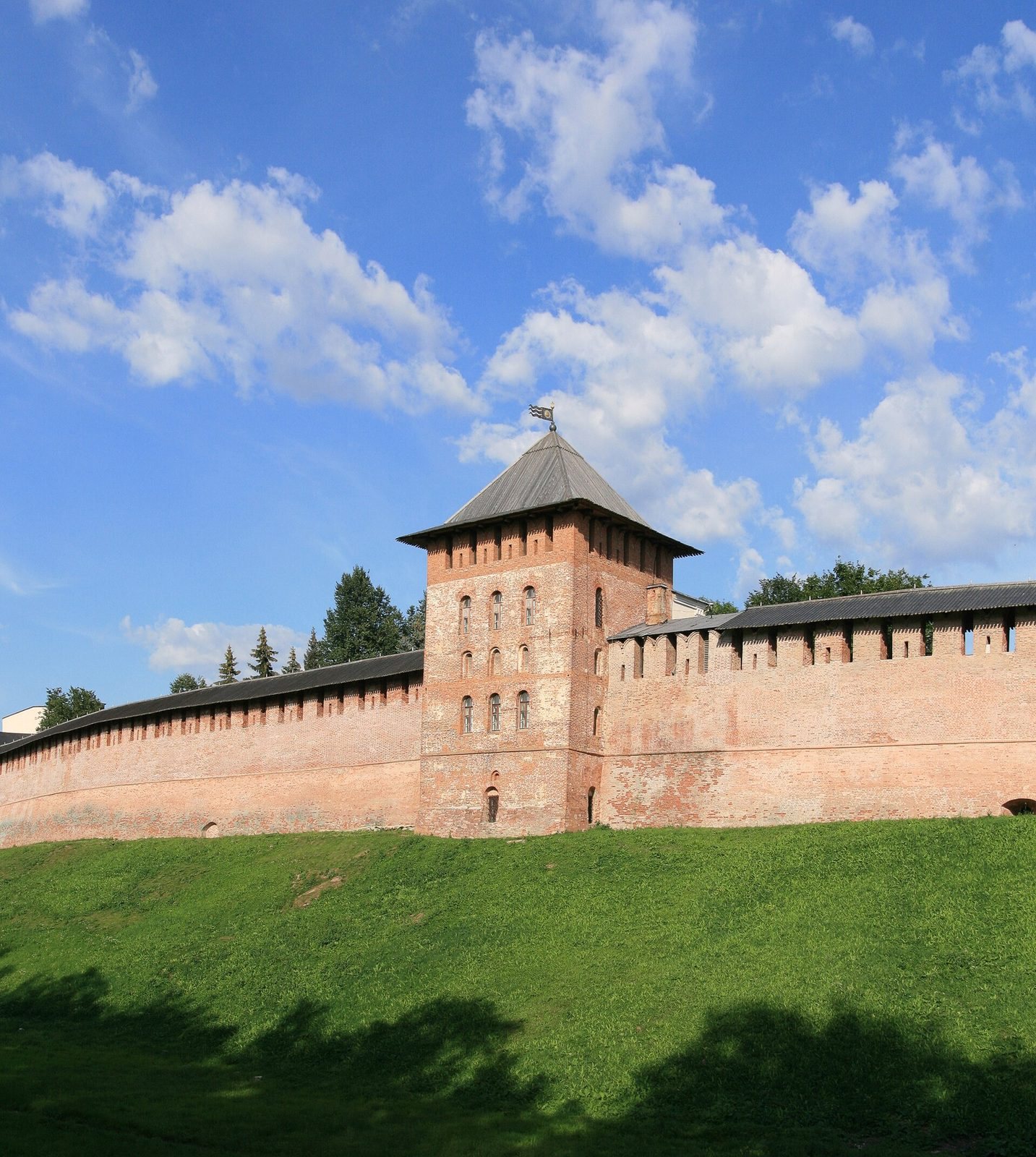
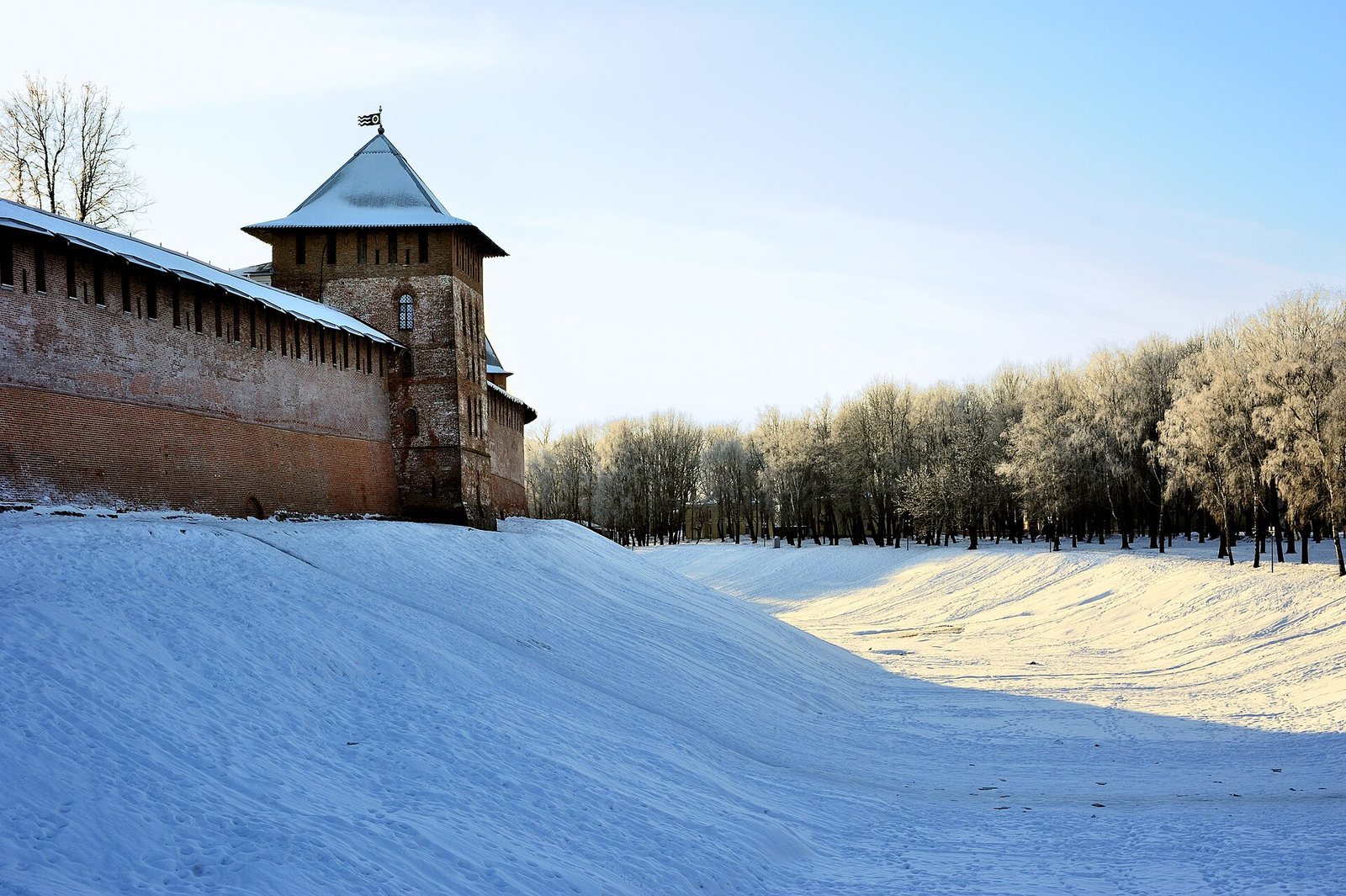
The complex stands in the western part of the Kremlin, west of the Government Offices building. Its four-sided tower is flanked by two wings, one on each side. The tower is a blind defensive structure, meaning it has no passage through it.
Tower and adjoining structures
Defensive tower
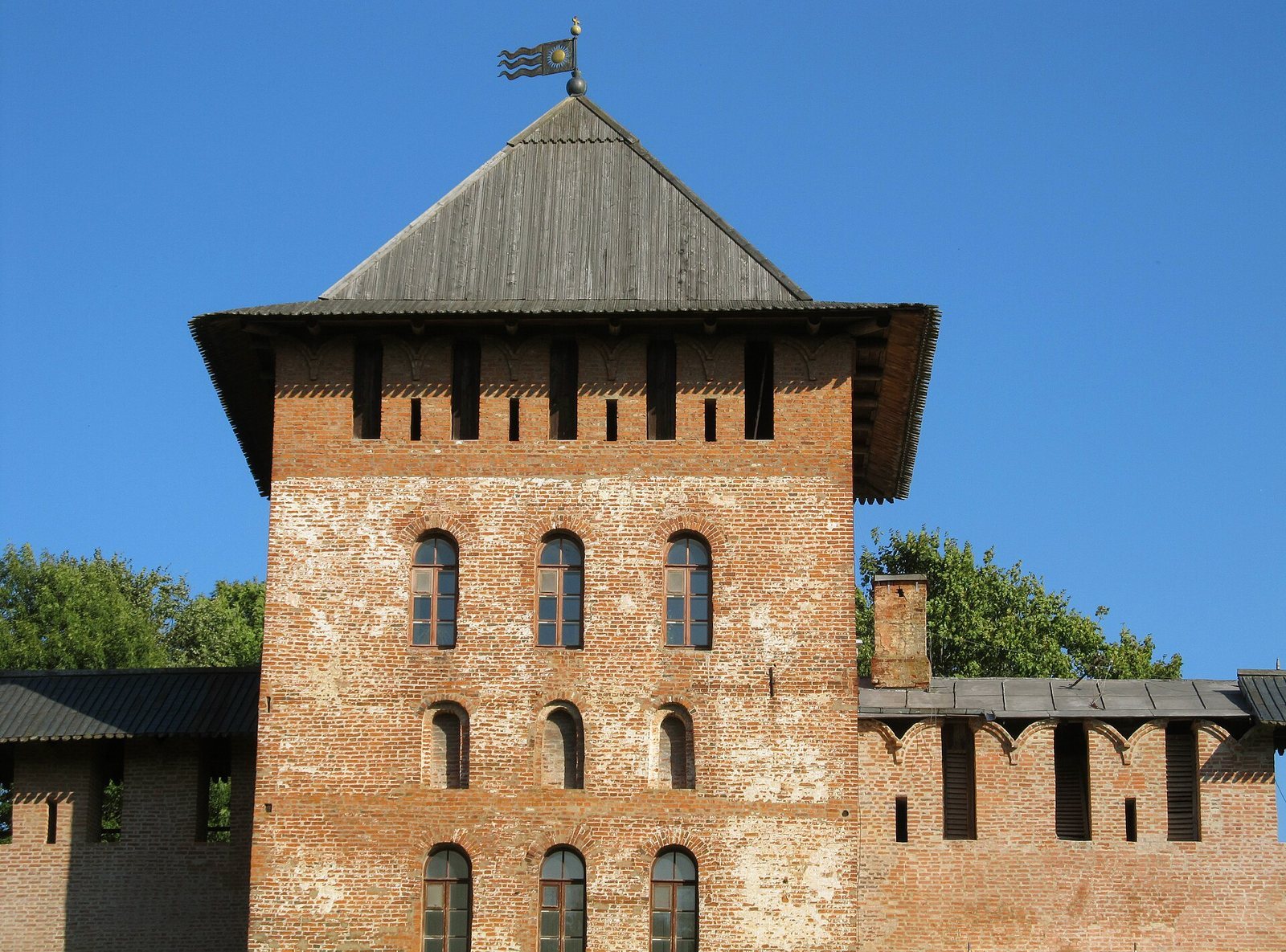
The tower has four tiers, while vaults and wooden floors divide its interior into five or six levels. Its narrow loopholes, openings used by defenders, were altered during the late nineteenth-century museum work: some were enlarged and others blocked. A staircase was installed in the eastern addition. The 1973–1975 restoration largely retained the tower’s nineteenth-century appearance while revealing or reinstating selected earlier details. It added masonry at the top, recreated forked battlements with split tops, and reopened some loopholes between the second and third floors. The work also added a low, tent-shaped roof modeled on the Icon of the Sign, which depicts the Virgin Mary and the Christ Child, and an icon of St Michael, an archangel. Icons are devotional images in the Eastern Orthodox tradition.
Two-wing addition
The adjoining addition consists of a wing on either side of the tower. The wings were first built partly in stone and later made entirely of stone. The upper floor of the southern wing was removed during repairs in 1946.