Church of the Immaculate Heart of the Blessed Virgin Mary in Pomorska Wieś: A Gothic Catholic Church
Site at a Glance
- Popularity
- Very Low
- Country
- Poland
- Primary era
- Medieval
- Eras represented
- Medieval, Early Modern, Modern
- Civilizations
- German, Polish–Lithuanian Commonwealth, Teutonic Order
- Site type
- Religious
- Remains
- Church
On this page9 sections
History
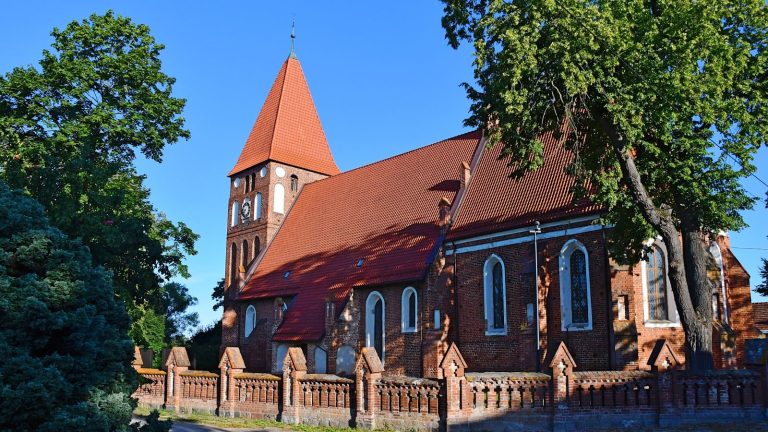
The Church of the Immaculate Heart of the Blessed Virgin Mary in Pomorska Wieś, Poland, was first built in the fourteenth century in the Gothic style, a medieval architectural style.
Fourteenth-century foundation and rebuilding
On 26 May 1671, a fire burned the church and part of the village, leaving only sections of the walls. Samuel Barner, a land judge who served in a regional land court, ordered the church rebuilt in 1672.
Later changes and Catholic use
The tower was dismantled in 1758 and rebuilt in 1766. In 1792, a positive organ, a small type of organ, was brought from Corpus Christi Church in Elbląg. It was later sold and replaced with another instrument. The church was repaired in 1852 and 1853, and a new organ was acquired in 1899.
Catholics took over the church in November 1945. It belongs to the Roman Catholic parish of the Immaculate Heart of the Blessed Virgin Mary, within the Diocese of Elbląg, a bishop’s administrative district, and the Elbląg South Deanery, a subdivision of the diocese. Its liturgical feast is the Solemnity of the Immaculate Heart of Mary, a Catholic devotion honoring Mary’s inner life and virtues.
Remains
Surviving structures and furnishings
Church fabric
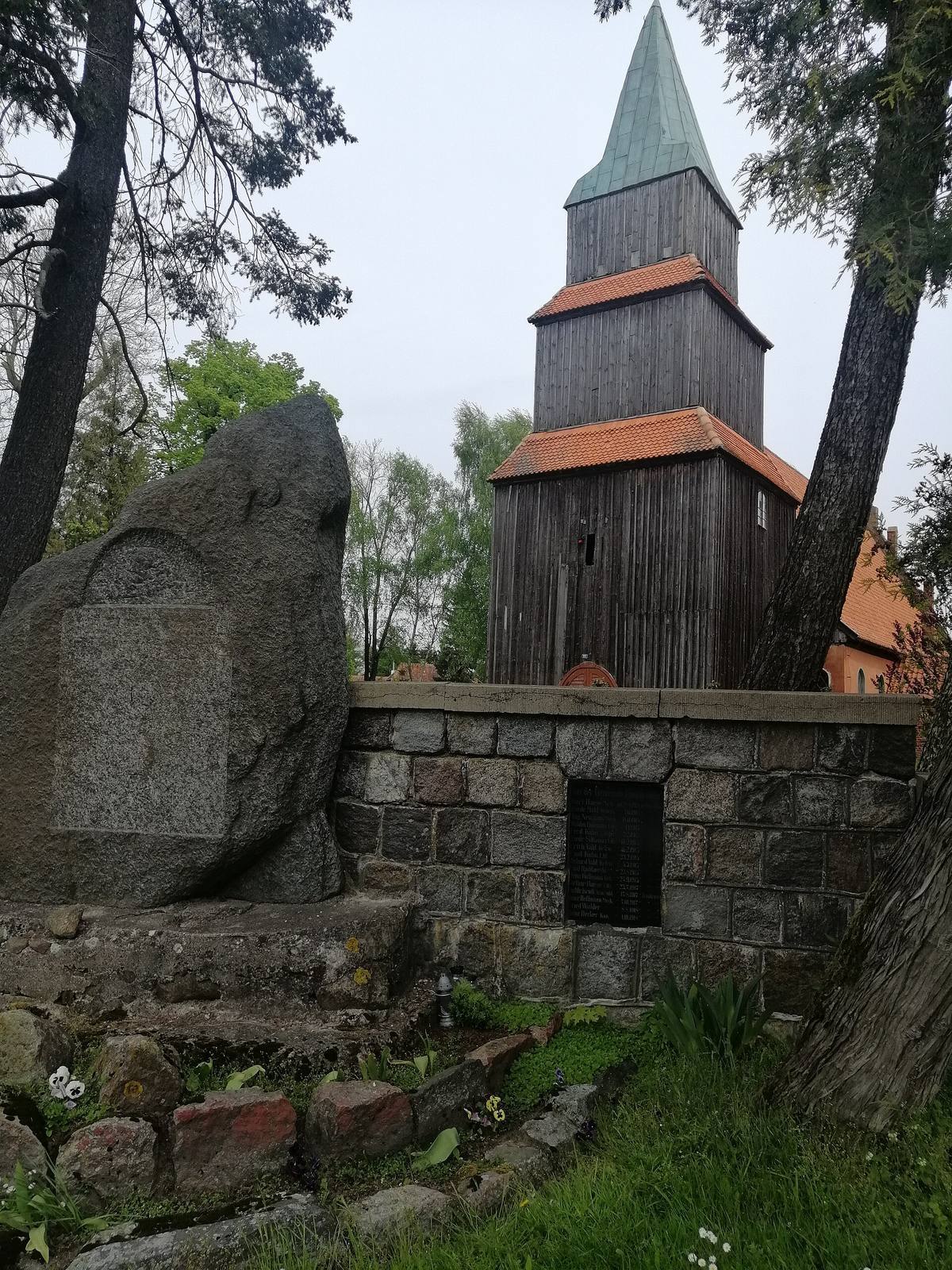
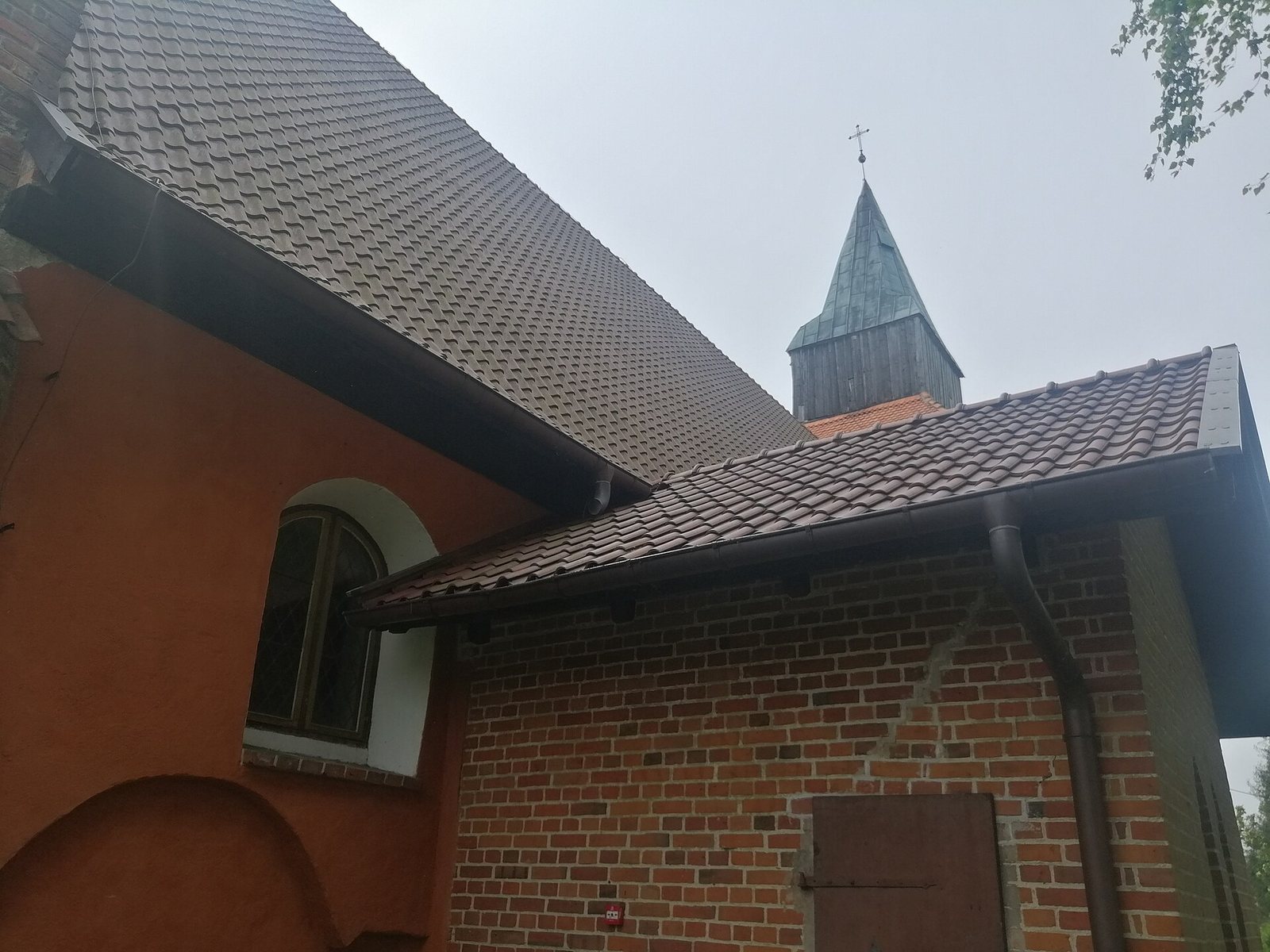
The church is built of brick and wood. Its chancel, the part around the altar, and a granite vessel for holy water are among its fourteenth-century features. The vessel is in the Gothic style, and the church’s tower is wooden.
Ceiling and organ façade
A painted ceiling dating to 1688 depicts the Last Judgment, the Christian belief that God will judge humanity at the end of time. The Baroque organ façade, the visible front of an organ, dates to 1689. Its decoration includes floral patterns and figures.
Bell
A bell made by bell founder Dawid Jonas was acquired in 1690. Its inscription says that Jonas recast it in Elbing.
First World War memorial
An obelisk beside the church commemorates local residents killed in the First World War. One of its plaques bears the names of the fallen.