Huaca Mangomarca: An Archaeological Complex in Lima, Peru
Site at a Glance
- Popularity
- Medium
- Country
- Peru
- Primary era
- Classical
- Eras represented
- Classical
- Civilizations
- Unclassified
- Site type
- City
On this page7 sections
History
Huaca Mangomarca is an archaeological settlement in San Juan de Lurigancho, Lima, Peru, whose origins date to about AD 300 under the influence of the Lima culture. The settlement later became the capital and elite residence of the Lurigancho chiefdom. Its name is also rendered Manqu Marka, translated as “village of the lord.”
Early settlement and regional growth
Mangomarca began during the Early Intermediate Period, an archaeological phase in the pre-Columbian history of the central Andes. Its political, economic, and cultural importance developed toward the end of the succeeding Middle Horizon and grew further in the Late Intermediate Period, a phase of regional development dating approximately from AD 900 to 1470.
The Lurigancho chiefdom and Ichma
During the Late Intermediate Period, Mangomarca was the seat of the Lurigancho, also called Ruricancho, chiefdom, a local territory governed by an Indigenous ruler. The chiefdom was subordinate to the Ichma, a pre-Inca society and political power on Peru’s central coast. Ichma authority extended across the Rímac and Lurín valleys, with Pachacamac as its principal ceremonial center. Canto Chico and Campoy were other important Lurigancho settlements.
One disputed explanation connects the name Lurigancho with Hurin Huancho. It associates the chiefdom’s founding with Huanchos and Huallas said to have come from the highlands. Around AD 1200, the Ichma allied with the Colleq, also called Collique, of the lower Chillón Valley and repelled an invasion by the highland groups known as the Yauyos and Chacllas.
Inca rule and later history
Around AD 1470, the Incas incorporated the Ichma and Collique lordships into the Inca Empire. Mangomarca’s Inca-period phase is dated to approximately AD 1470–1532, and the settlement is thought to have remained inhabited until the Spanish arrival.
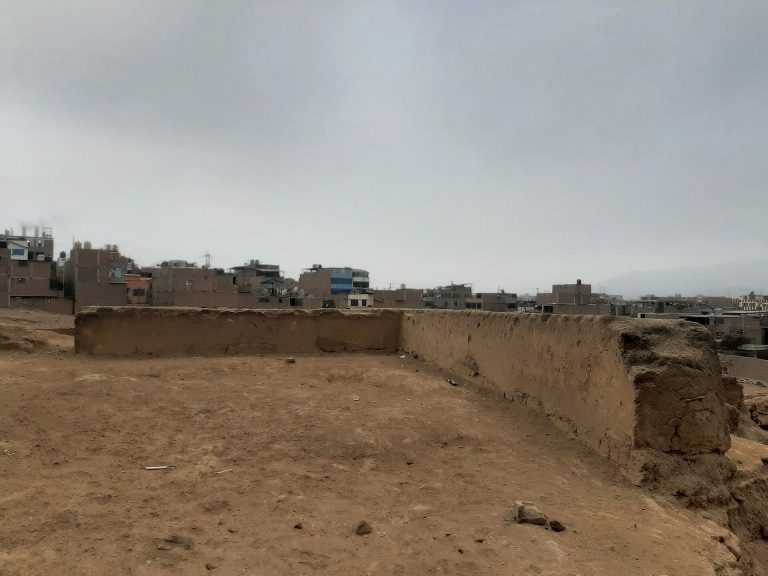
After a long period of neglect, the site was used by nearby residents for rubbish disposal and also became a refuge for criminals and people using drugs. Peruvian archaeologist Julio C. Tello investigated Mangomarca, preparing architectural plans, photographs, descriptions of its features, and a reference archaeological map of the Lima Valley.
Recognized as a National Cultural Heritage of Peru, Mangomarca has received safeguarding measures from the Ministry of Culture since the 2010s, including signs and identification of the archaeological area. In 2017, the San Juan de Lurigancho municipality assessed the complex and carried out surface cleaning. An outreach project at the site was led by archaeologist Julio Avant of the Ruricancho Cultural Institute. Nearby schools have also used the perimeter for annual Inti Raymi observances, a festival associated with the Sun in Inca tradition.
Remains
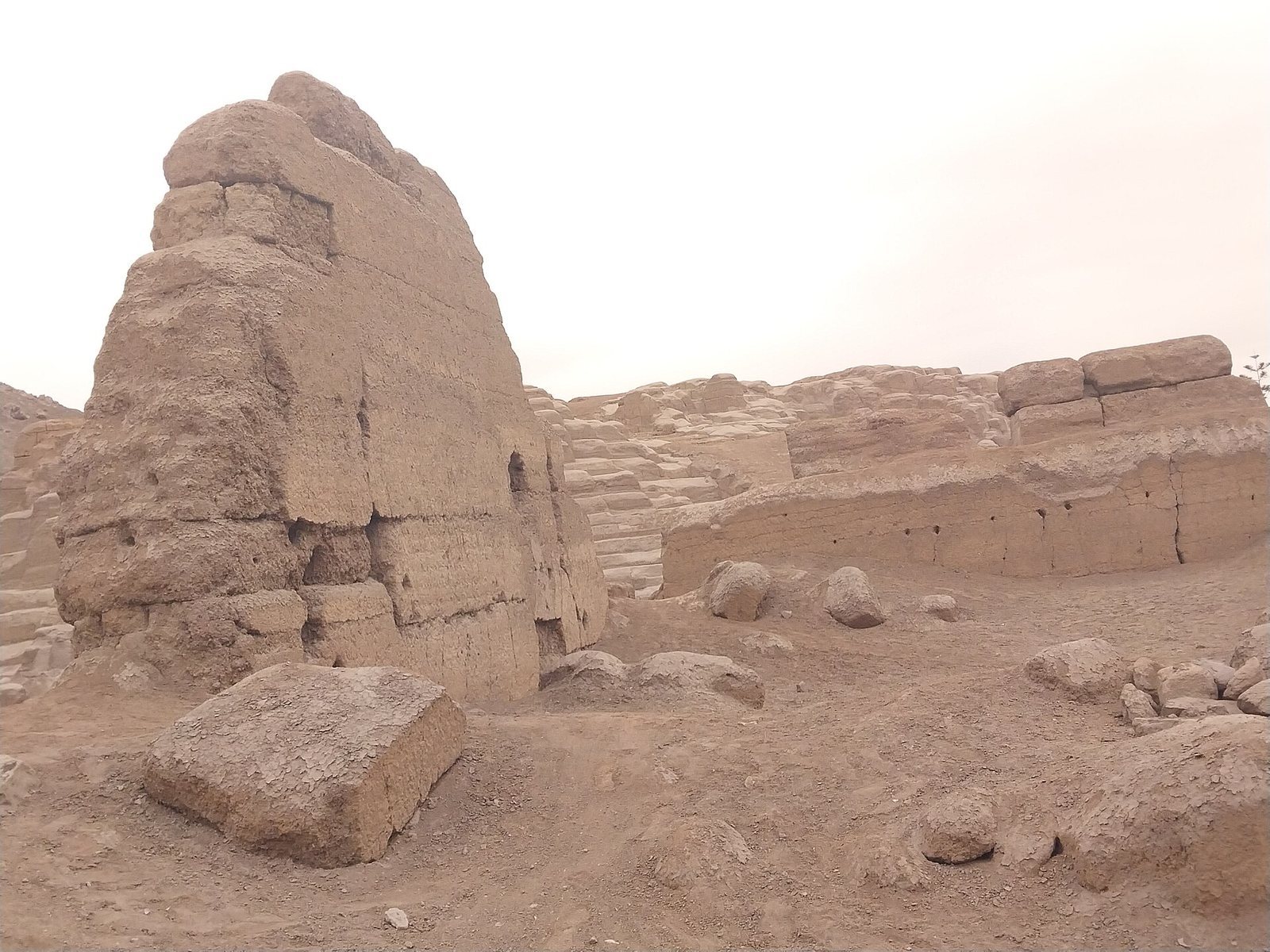
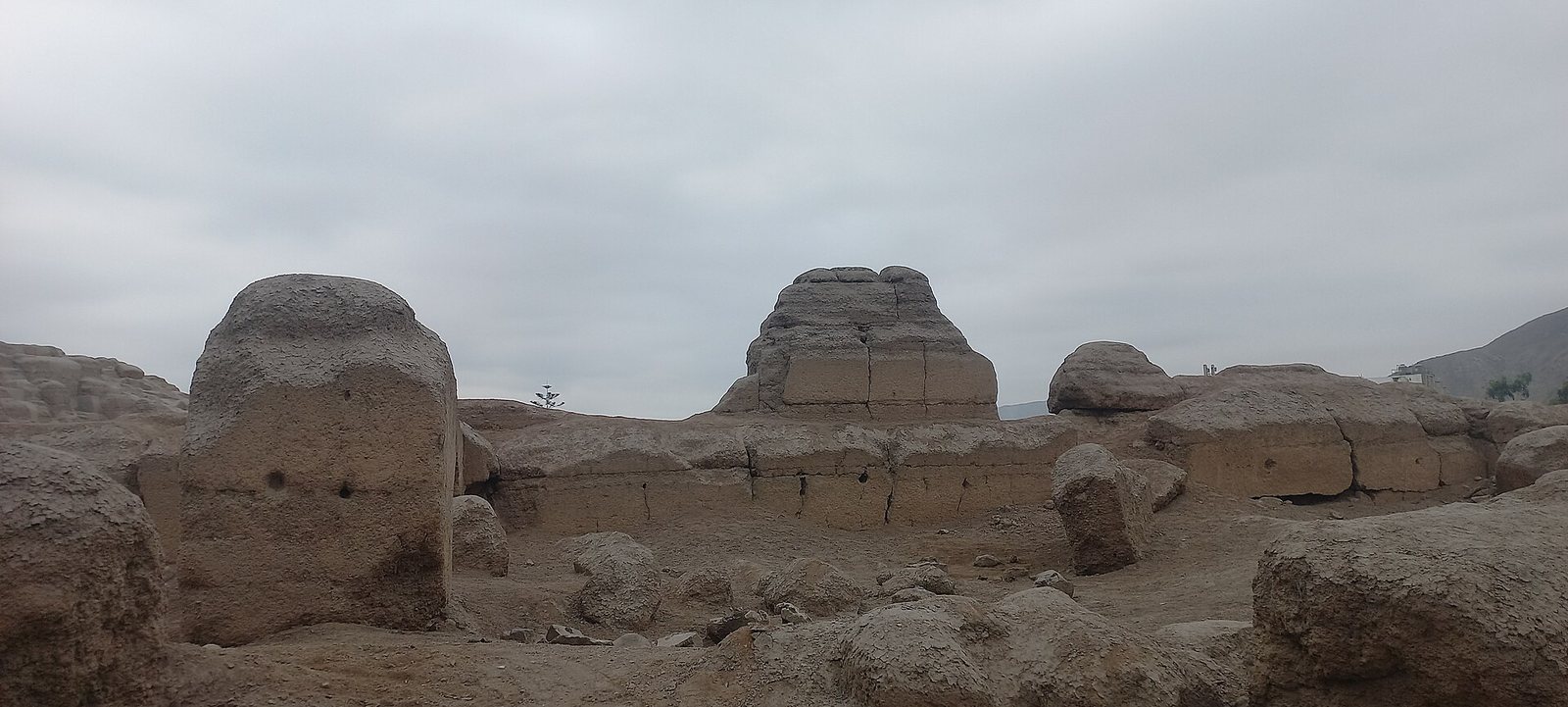
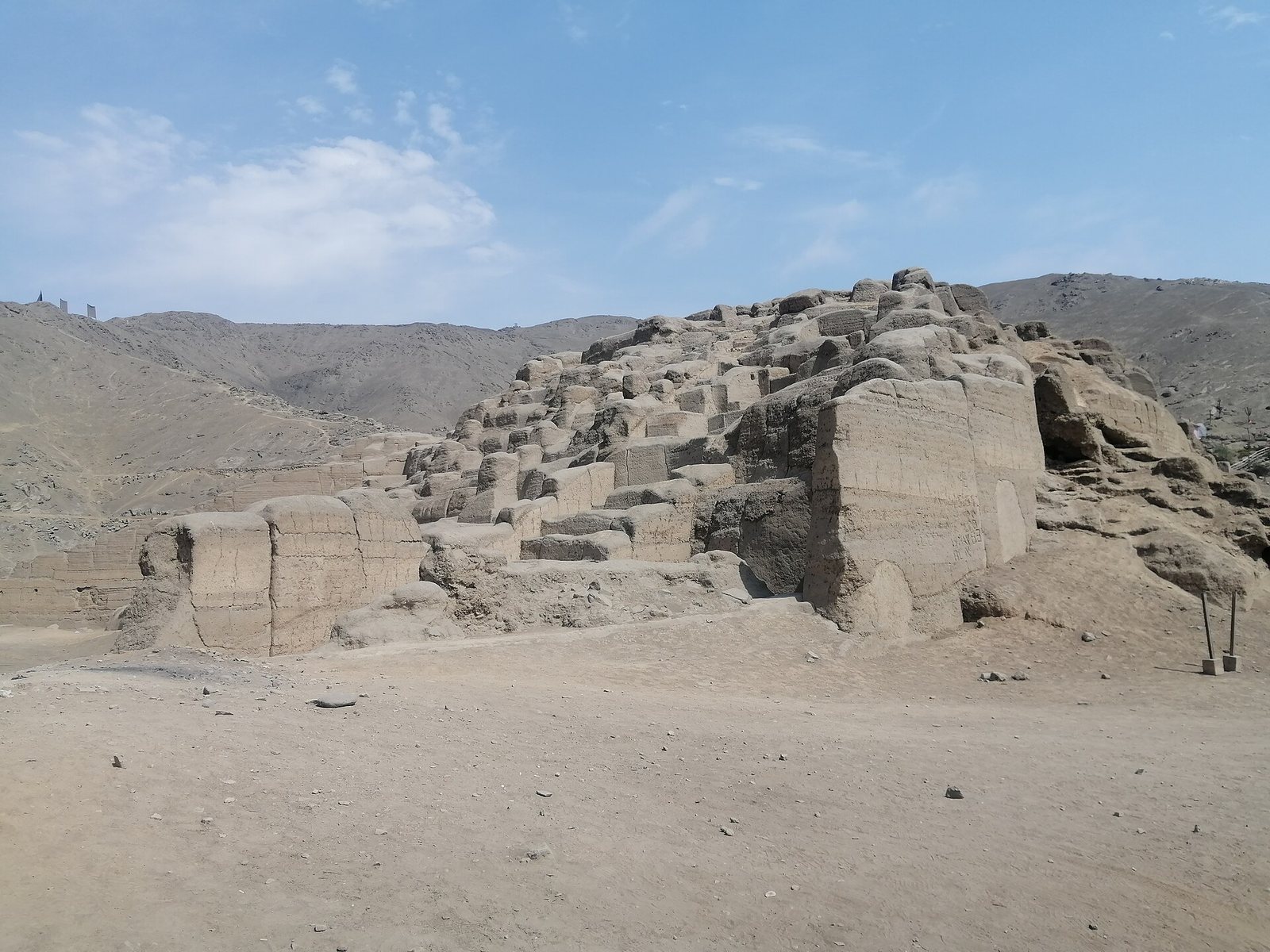
The complex occupies an extensive, rocky area at about 220 metres above sea level, on the right bank of the Rímac River between the Campoy and Lima hills. Its layout brings together raised structures, enclosed spaces, and burial areas, with earth-based construction. The Campoy Fortress and Lurigancho Hill are nearby, and the surrounding foothills turn green during the winter months from June to September.
Pyramid and enclosure system
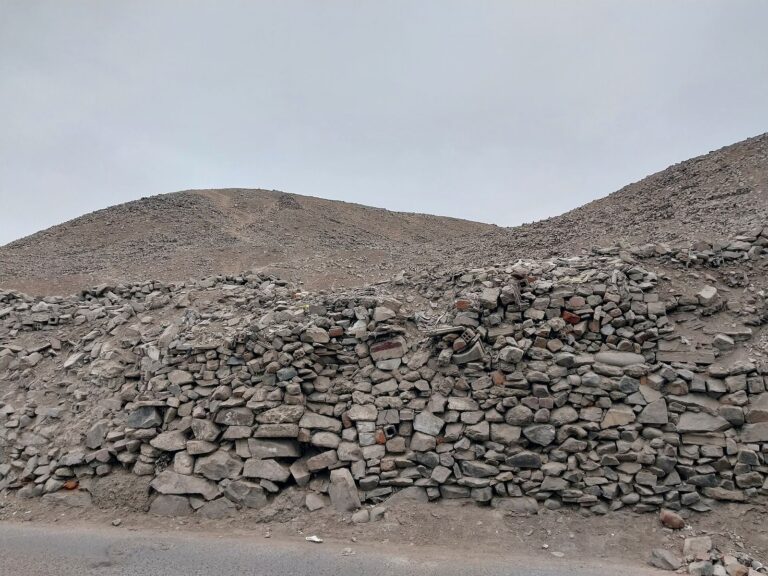
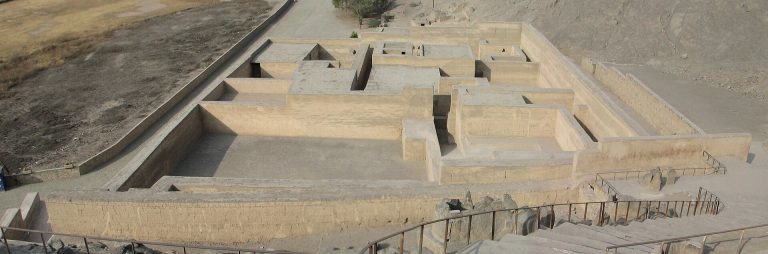
The principal structure is a stepped pyramid built on a rocky mound and reached by a curved staircase. Large retaining walls, a network of enclosures and passages, and a perimeter wall form other parts of the complex. Builders used rammed earth, soil compacted in forms to create walls, made from stones and mud, as well as adobe, or sun-dried earth bricks. The arrangement appears to have served both residential and ceremonial purposes. About 70 percent of the complex’s original structure has been lost, a loss attributed to prolonged abandonment. A modern perimeter fence encloses only part of the archaeological area.
Cemeteries and pottery
Two large cemeteries contain tombs shaped as rectangular chambers, with interiors lined by rough stones set in mud. Burial areas also yielded fragments of Nievería pottery, a ceramic style associated with the Lima culture. The pieces have fine finishes and elegant decoration on an orange background; the style is linked to the final phase of the Lima culture, around AD 600–700.