Church of Saints Justin and Clement: A Roman Catholic Church and Museum in Italy
Site at a Glance
- Popularity
- Medium
- Country
- Italy
- Primary era
- Early Modern
- Eras represented
- Medieval, Early Modern
- Civilizations
- Grand Duchy of Tuscany
- Site type
- Religious
- Remains
- Church
On this page9 sections
History
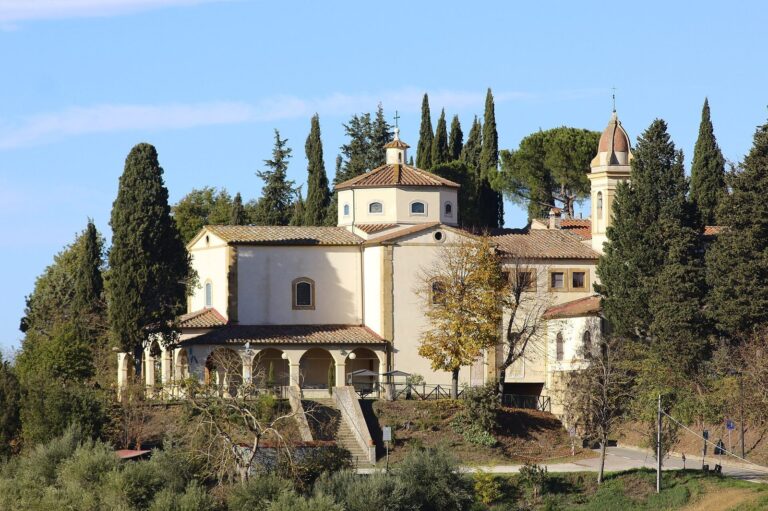
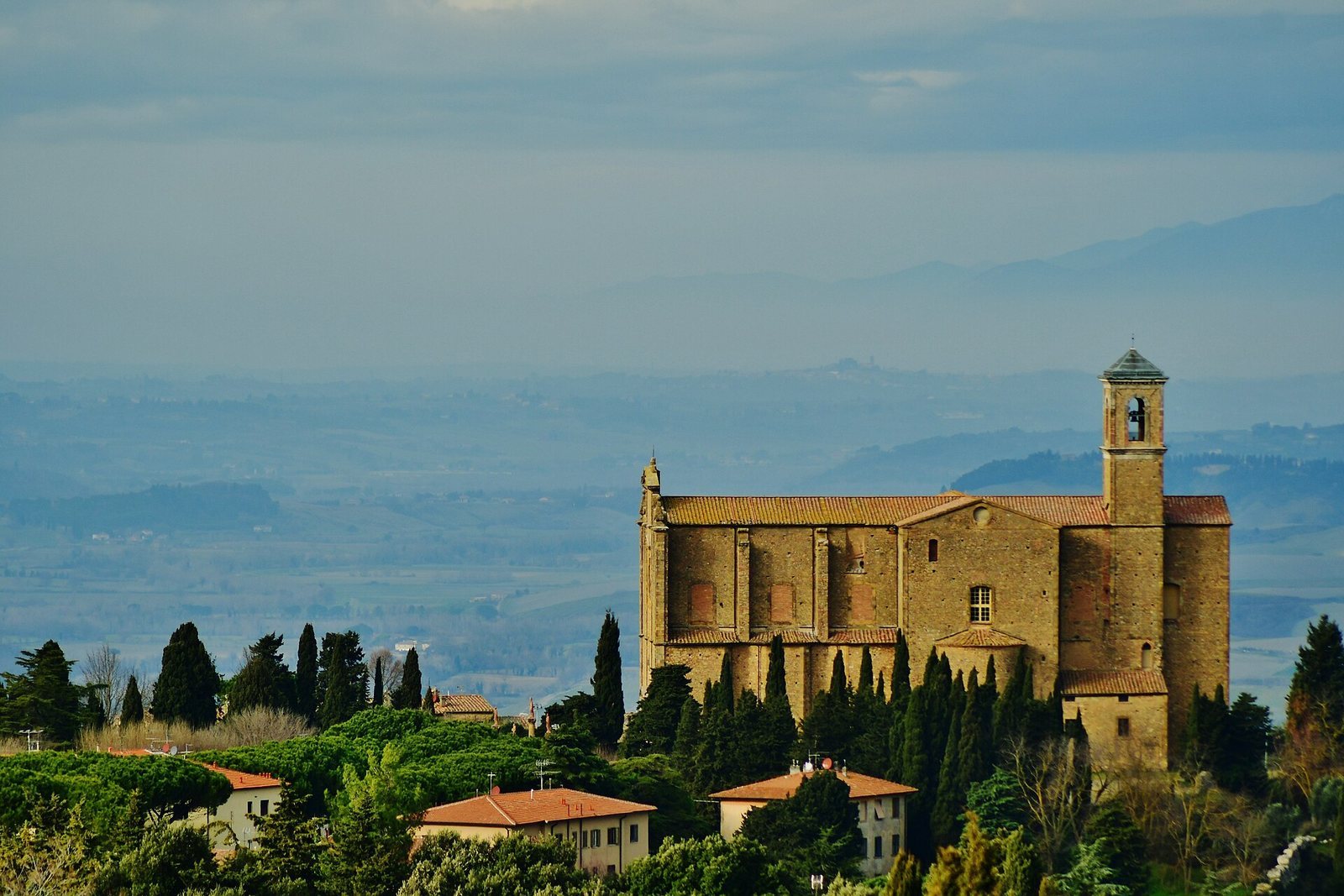
The Church of Saints Justin and Clement, also known as San Giusto and San Giusto Nuovo, is in Italy. Construction of its present building began in 1628 in the Renaissance style, a European cultural movement that revived classical forms. The Roman Catholic church belongs to the Diocese of Volterra, the Catholic district overseen by its bishop, and now functions as a museum.
Traditions and early churches
Tradition says that Justin and Clement were African Christians, perhaps brothers, who reached Volterra as refugees in AD 537 during a Visigothic invasion of their homeland. They preached orthodox Christianity among local people that included followers of Arianism, an early Christian teaching that differed from the doctrine the church regarded as orthodox. Justin is said to have led resistance during a siege by Totila, an Ostrogothic king, and to have become Volterra’s first Catholic bishop. Clement served as a priest under him.
Tradition places two chapels at the saints’ burial sites in the second half of the sixth century. Lombard invasions destroyed the chapels, which were rebuilt and enlarged in the late seventh century. The predecessor church, San Giusto in Botro, stood above caves or tombs associated with the saints and was attributed to Lombard builders.
Monastic affiliation and rebuilding
Around AD 1000, the religious complex was renovated as part of a Benedictine monastery. The church remained affiliated for about 850 years with the adjacent Abbey of Saints Justin and Clement, a monastery governed by an abbot. Benedictines were associated with it from around 1030 to 1113. The Camaldolese, a reform branch of Benedictine monasticism, followed from 1113 to 1808, and Benedictines returned from 1816 to 1846.
Erosion in the Balze, the steep slopes around Volterra, damaged the old church and nearby buildings. By the seventeenth century, erosion had engulfed part of San Giusto in Botro. Work on the replacement church began on October 28, 1628. Giovanni Coccapani designed it, and his pupil Ludovico Incontri brought the project to completion. Bishop Galletti consecrated the building in 1775.
The abbey building collapsed in the late nineteenth century, and a work made for the abbey was transferred to the church afterward. The abbey itself no longer survives.
Remains
Exterior and layout
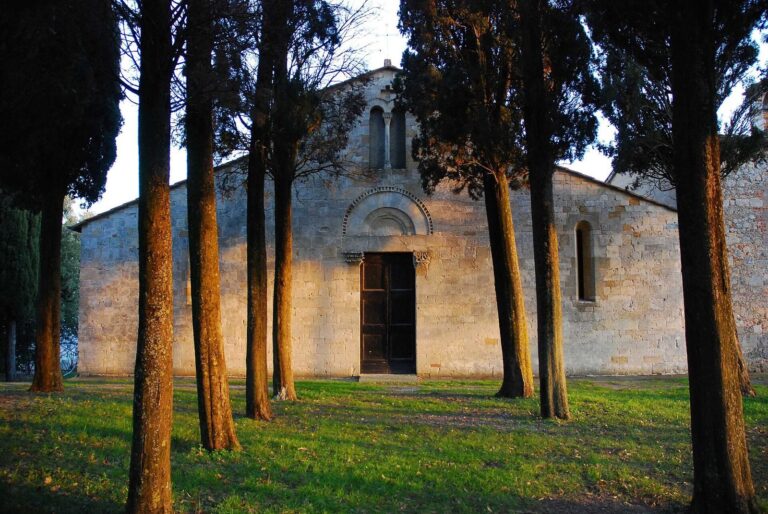
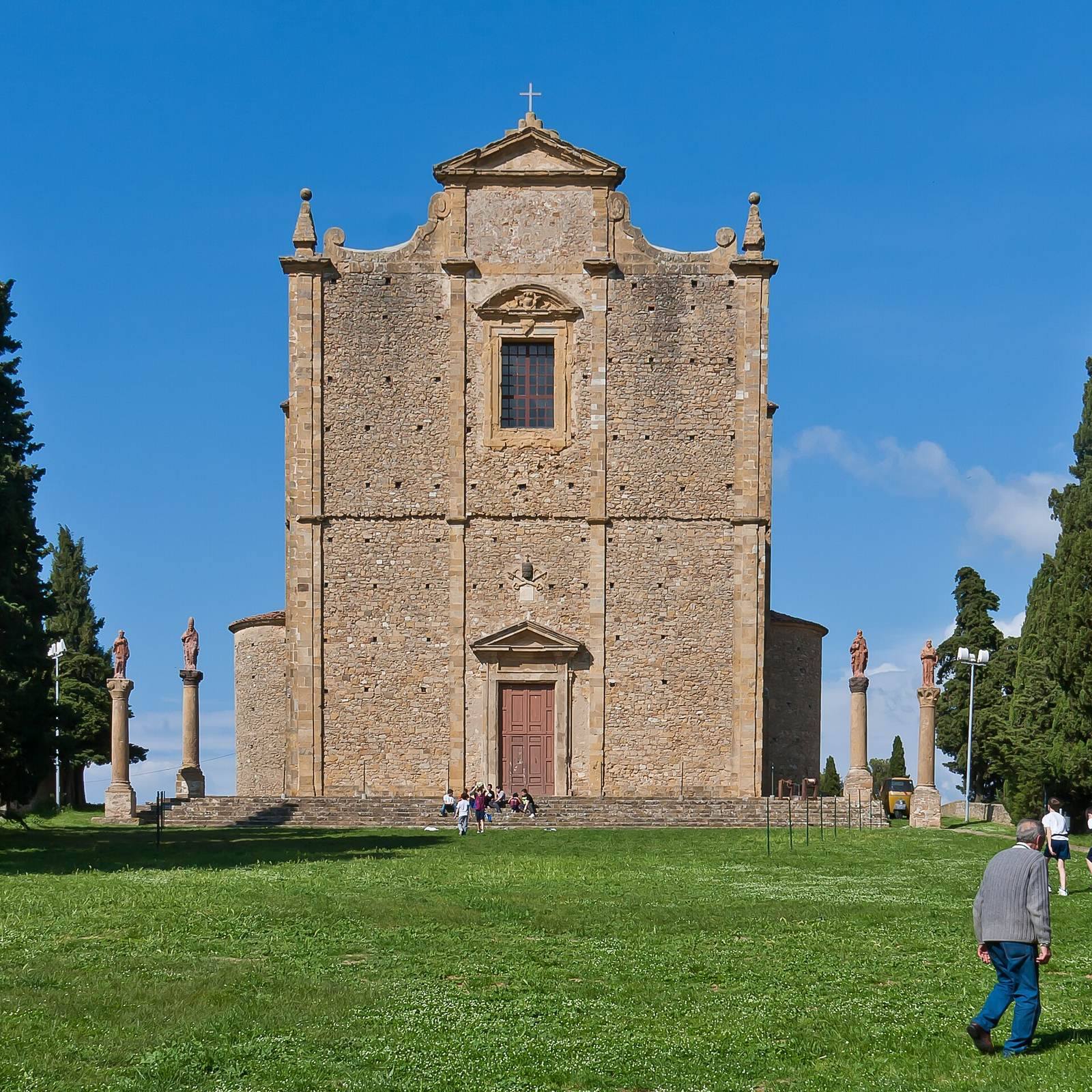
The surviving stone building has a single-nave plan and a high barrel-shaped ceiling, a continuous arch-shaped roof. Four stone columns dating to the tenth century stand before the church and may have been reused from its predecessor. Terracotta, or fired-clay, statues of the patron saints rise above the columns and may also have come from the earlier church. On the facade, two outer pilasters, shallow wall projections with a column-like form, support obelisks, tall tapering four-sided monuments, in a style associated with the architect Francesco Borromini. A triangular pediment rests on two central pilasters.
Interior and furnishings
Side altars
The church has six side altars. The first altar on the right holds Cosimo Daddi’s Visitation of the Virgin, depicting Mary’s visit to Elizabeth, with angels holding the Eucharist, the consecrated bread and wine of Christian communion, above. Giovanni Domenico Ferretti’s Sermon of St Francis Xavier is at the second right-hand altar. It shows the sixteenth-century Jesuit missionary preaching to an elegantly dressed crowd represented as ancient Romans. Giuseppe Arrighi’s Martyrdom of Saints Attinia and Greciniana, painted around 1642, occupies the third altar on that side. On the left, the second altar contains Pietro Dandini’s Martyrdom of St Ursula and the Virgins. At the third is Cesare Dandini’s painting-within-a-painting, showing Neri di Bicci’s Four Saints in Adoration of the Madonna and Child, depicting the Virgin Mary and the infant Jesus.
Choir and main altar
An ancient altar is incorporated into the choir, the area traditionally reserved for clergy and singers. Its marble cover once lay over Saint Justin’s tomb and bears the names of Cunincpert, a seventh-century Lombard king, Bishop Gaudenziano, and the bishop’s steward Alchis. Alchis is identified as the founder of the first temple dedicated to Justin. The main altar contains an urn of relics, physical remains or objects associated with saints and venerated in Christian practice, belonging to the early evangelizers and martyrs Carissimo, Dolcissimo, and Crescenzio. Seventeenth-century statues by Francesco Franchi accompany the urn.
Paintings in the chapel and museum
A chapel contains Baldassarre Franceschini’s Elijah Asleep, painted in 1631. Franceschini was also known as Volterrano. Neri di Bicci’s Madonna of Grace, painted in 1451, originated at San Giusto in Botro and was later kept in the present church. It is now in the Diocesan Museum of Sacred Art in Volterra.