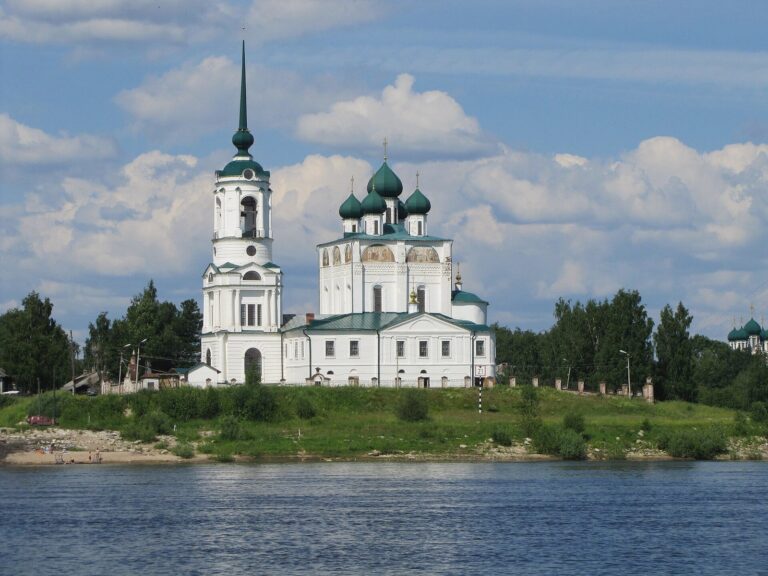
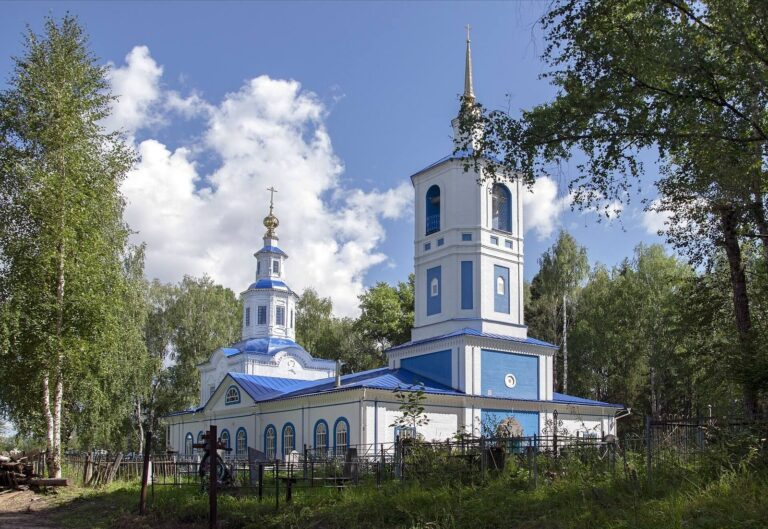
Koryazhemsky Nikolayevsky Monastery: A Russian Orthodox Monastery in Koryazhma
Site at a Glance
- Popularity
- Medium
- Country
- Russia
- Primary era
- Early Modern
- Eras represented
- Early Modern, Modern
- Civilizations
- Russian
- Site type
- Religious
- Remains
- Monastery
On this page13 sections
History
The Koryazhemsky Nikolayevsky Monastery is a former Russian Orthodox men’s monastery in Koryazhma, Russia. Longin, a monk of Pavlo-Obnorsky Monastery who is venerated as a saint, and Simon Soyginsky founded it in 1535. It belonged to the Kotlas Diocese and became a center of monastic and cultural life.
Foundation and cultural life
Longin’s disciple Christopher lived at the monastery for an extended period before founding the Hermitage of Christopher, a small religious community associated with withdrawal from ordinary life. The monastery’s cultural life flourished in the mid-seventeenth century under Abbot Alexander, who headed the community from 1643 to 1651. He later became a bishop, a senior church official, first of Kolomna and then of Vyatka. The Tale of Longin of Koryazhma is tentatively attributed to him.
Suppression, revival, and dissolution
In 1764, the monastery was assigned Class III status, one of the administrative categories used for monasteries in the Russian Empire. It was suppressed in 1863 and resumed activity in 1896.
In September 1918, five men were shot at the monastery. They were Theodosius (Sobolev), an archimandrite, a senior monastic title, of Solvychegodsk Vvedensky Monastery; Pavel (Moiseyev), an archimandrite of Koryazhemsky Monastery; the hieromonks Nicodemus (Shchapkov) and Seraphim (Kulakov), monks who were also ordained priests; and Pavel Ganichev, a merchant from Arkhangelsk. The monastery was dissolved again in the 1920s.
Churches and the monastery today
In 1988, the former monastic churches were transferred to the Russian Orthodox Church. The monastery itself is no longer active, although its churches remain active. Some of its historic documents are held in the Russian State Archive of Ancient Acts. In 2005, the Russian Orthodox Church’s Holy Synod, its governing assembly of bishops, included the four clergy shot in 1918 in the Council of New Martyrs and Confessors of Russia, a collective designation for Orthodox Christians honored for martyrdom or steadfast confession of their faith. The monastery’s architectural ensemble is a regional cultural heritage site.
Remains
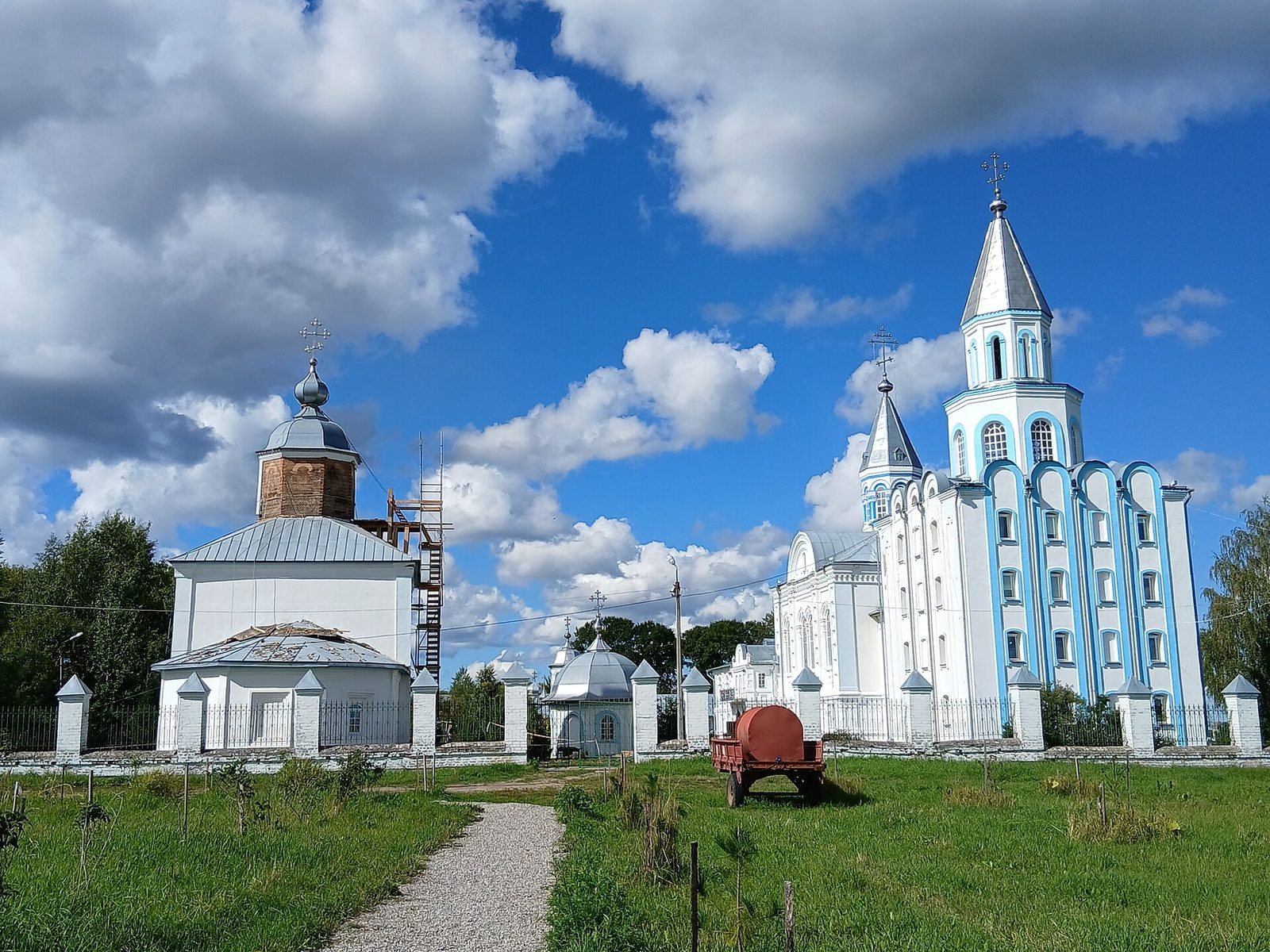
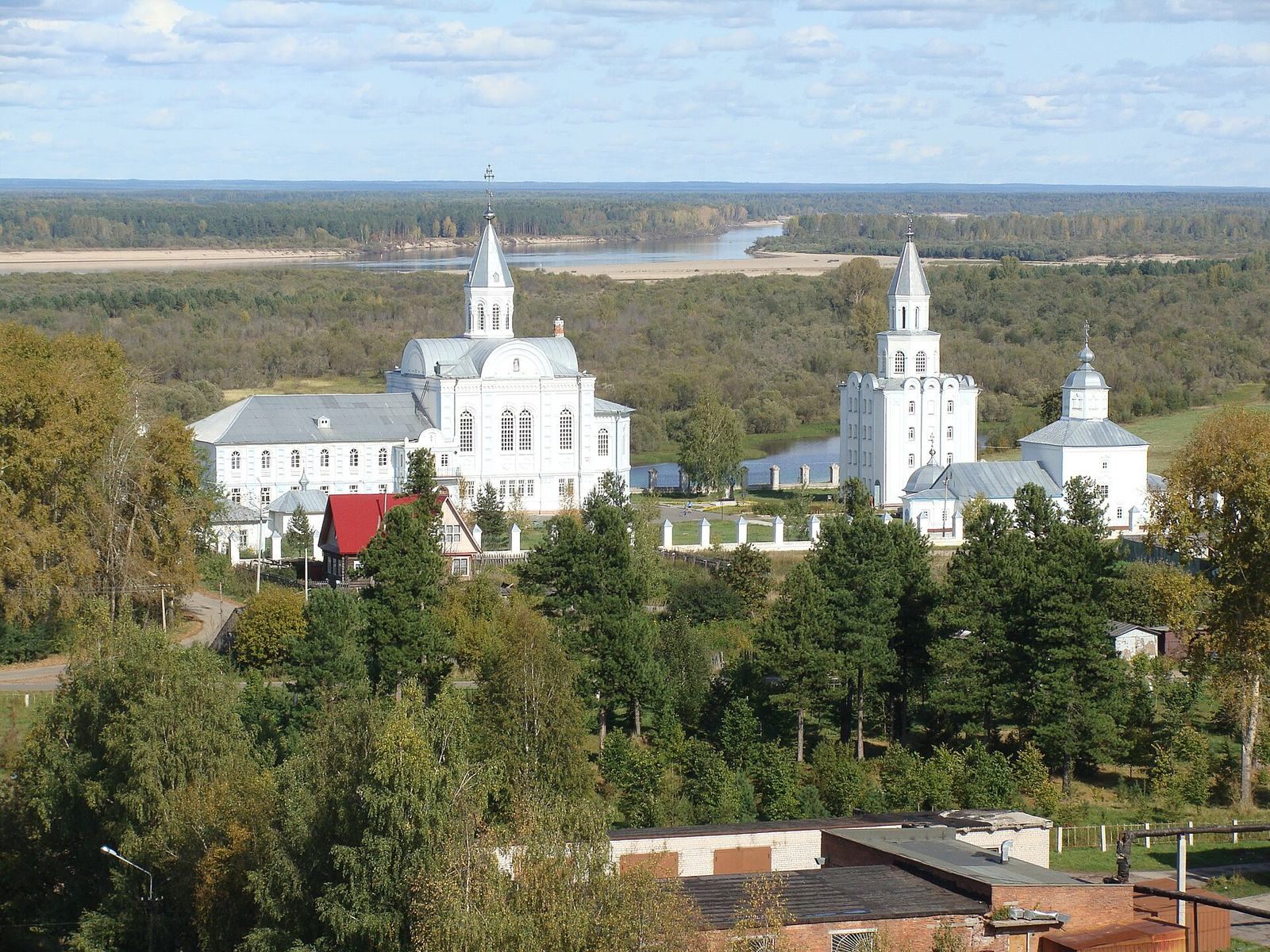
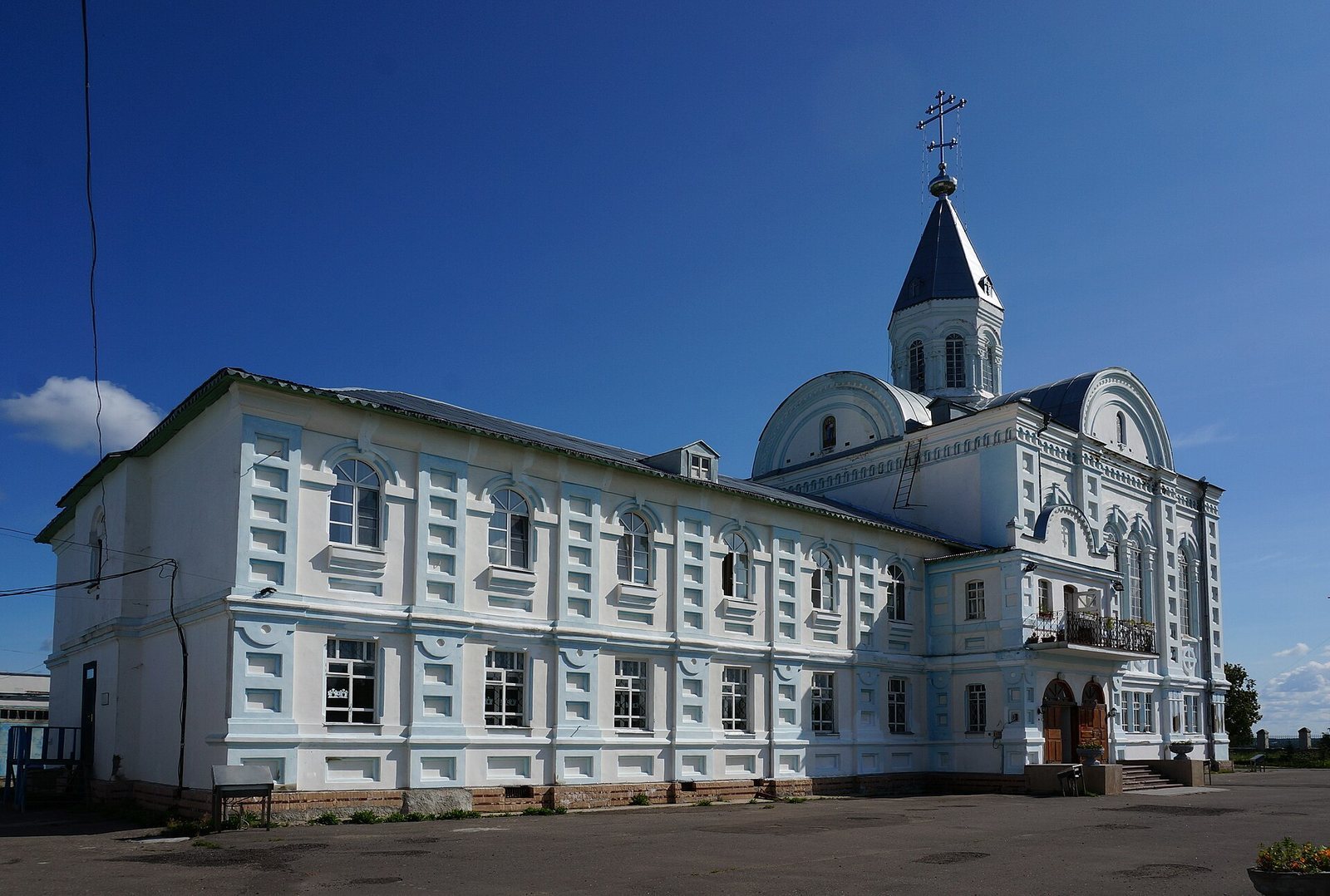
The monastery stands where the Koryazhemka River flows into the Vychegda. Its buildings include churches, the Bishop’s Chambers, and a bell tower, erected in successive periods from the seventeenth century to the 1990s.
Churches and associated buildings
Church of the Savior Not Made by Hands
A Church of the Savior Not Made by Hands was built no later than 1650. The date identifies the latest known limit for its construction.
Spasskaya, or Savior, Church
The monastery’s Spasskaya, or Savior, Church dates to the first half of the eighteenth century.
Annunciation Cathedral
The Annunciation Cathedral was built in 1671 and rebuilt in 1887. The cathedral is now lost.
St Nicholas Cathedral
St Nicholas Cathedral dates to the late nineteenth century.
Bishop’s Chambers
The Bishop’s Chambers were also built in the late nineteenth century.
Church of St Longin of Koryazhma
The foundation stone of the Church of St Longin was laid on August 8, 1904, and the church was built in 1907. It houses the founder’s chains, worn as religious discipline, and hair shirt, a rough garment used as an act of penance. The church also contains two iconostases, screens bearing icons that separate the sanctuary from the main worship area, made by woodcarver Anatoly Panferov.
Bell tower
The monastery’s bell tower was built in the 1990s.