Staritsa Kremlin: The Fortified Historic Center of Staritsa
Site at a Glance
- Popularity
- Medium
- Country
- Russia
- Primary era
- Medieval
- Eras represented
- Medieval, Early Modern, Modern
- Civilizations
- Russian
- Site type
- Military
- Remains
- Fortified Town
On this page15 sections
History
The Staritsa Kremlin was a medieval fortified center in Staritsa, Russia, founded in 1297 by Mikhail Yaroslavich, grand prince of Tver. A chronicle from that year names Staritsa as a settlement on the Volga near Zubtsov, within Tver Land, the medieval territory ruled from Tver.
Foundation and Tver rule
A stone Archangel Cathedral was built between 1335 and 1398. In 1366, Prince Mikhail Alexandrovich directed major strengthening of the fortress. Staritsa developed into a busy center for trade and crafts, and by the close of the fourteenth century the settlement had grown to nearly three times its earlier size.
Moscow forces led by Dmitry Ivanovich Donskoy captured Staritsa briefly in 1375. A second fortified area was added to the southeast in 1391. By order of Prince Ivan Mikhailovich, a church dedicated to St Nicholas, a fourth-century bishop revered as a Christian saint, was built in 1403 and 1404.
Principality and royal residence
After Staritsa became part of the unified Russian state in the sixteenth century, the Kremlin was known as the Log-built Town, while the adjoining defense was called the outer fortified town. In 1505, Staritsa was granted to Andrei, the youngest son of Ivan III, and became the seat of the Principality of Staritsa.
After Ivan IV, known as Ivan the Terrible, took Staritsa from his cousin Vladimir Staritsky, the Kremlin became one of the tsar’s favored residences. A large wooden palace was built there. Royal donations also supported construction at the Assumption Monastery across the Volga. Its oak-walled grounds could serve as a forward defensive position. The name Assumption refers to the Christian belief that the Virgin Mary was taken up into heaven.
In 1581, Ivan IV received Antonio Possevino, a Jesuit and papal diplomat, at the Kremlin. Possevino’s diplomatic work helped secure the Treaty of Yam-Zapolsky, a truce between Russia and the Polish-Lithuanian Commonwealth that contributed to ending the Livonian War, a sixteenth-century conflict over Livonia and the eastern Baltic.
Destruction and rebuilding
A Holstein envoy who visited in 1602 described Staritsa as a large, extensive fortress. In 1609, during the Time of Troubles, a period of dynastic crisis and political upheaval in Russia, Polish-Lithuanian forces supporting False Dmitry II, a claimant to the Russian throne, burned the fortress and destroyed the Archangel Cathedral. The attack was probably carried out by a detachment led by the Polish military leader Alexander Zborowski.
Rebuilding began in 1631 under town master Ivan Ododurov, a civic official responsible for directing construction, with craftsmen arriving from Rzhev, Zubtsov, and Volokolamsk. The fortress was completed in 1633, then burned again in 1638. By order of Tsar Alexei Mikhailovich, it was restored in 1666 around the Log-built Town; the outer fortified town was not rebuilt. The Kremlin remained in existence into the eighteenth century. Its remains are designated a federal-level cultural heritage property of Russia.
Remains
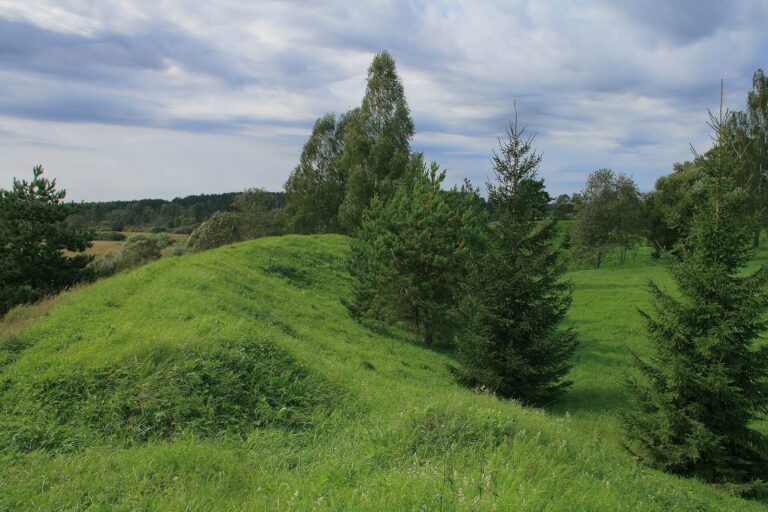
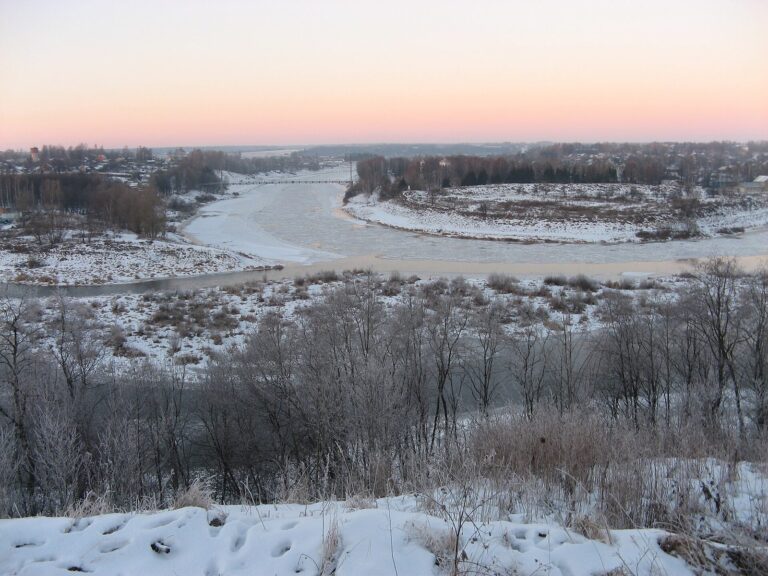
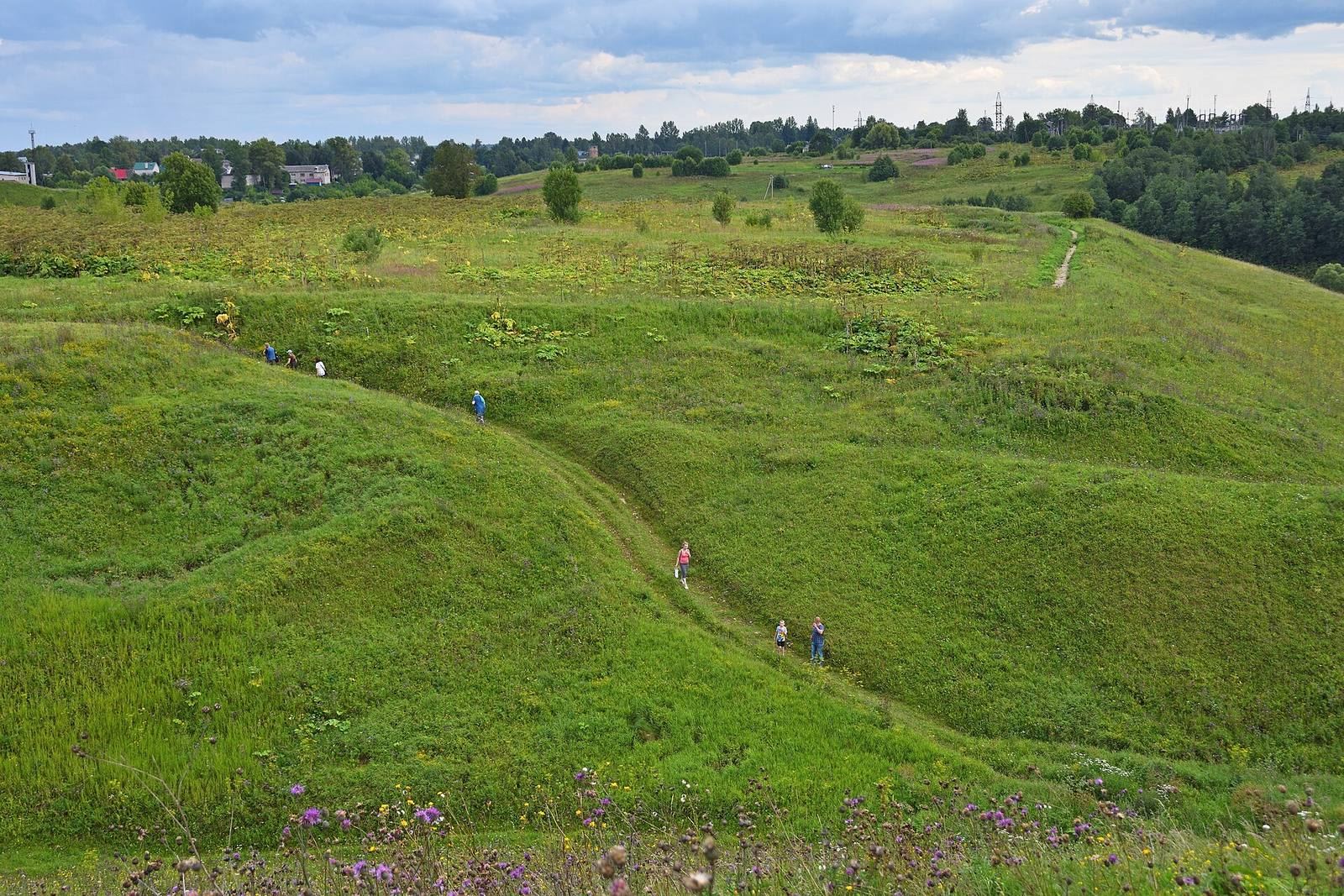
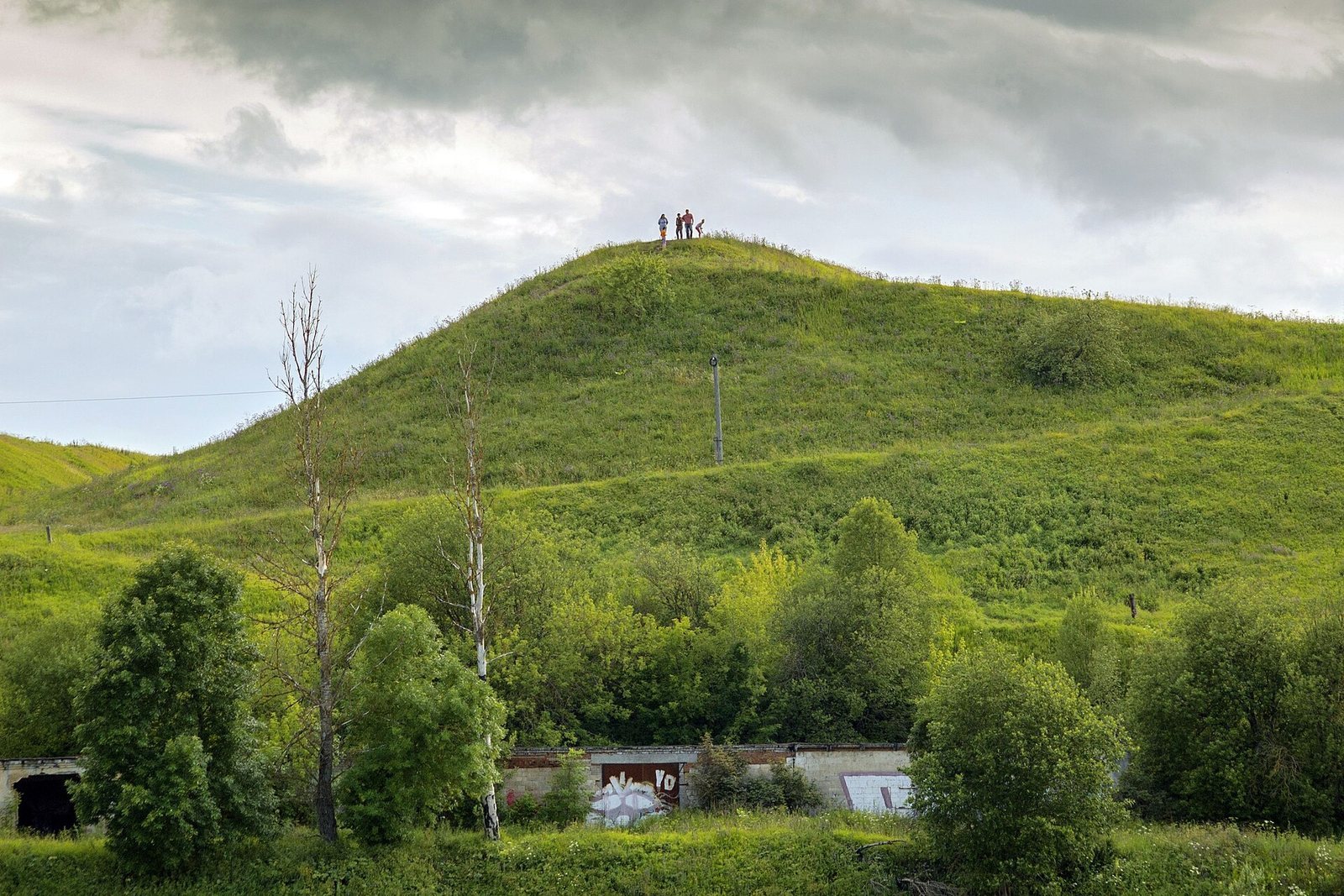
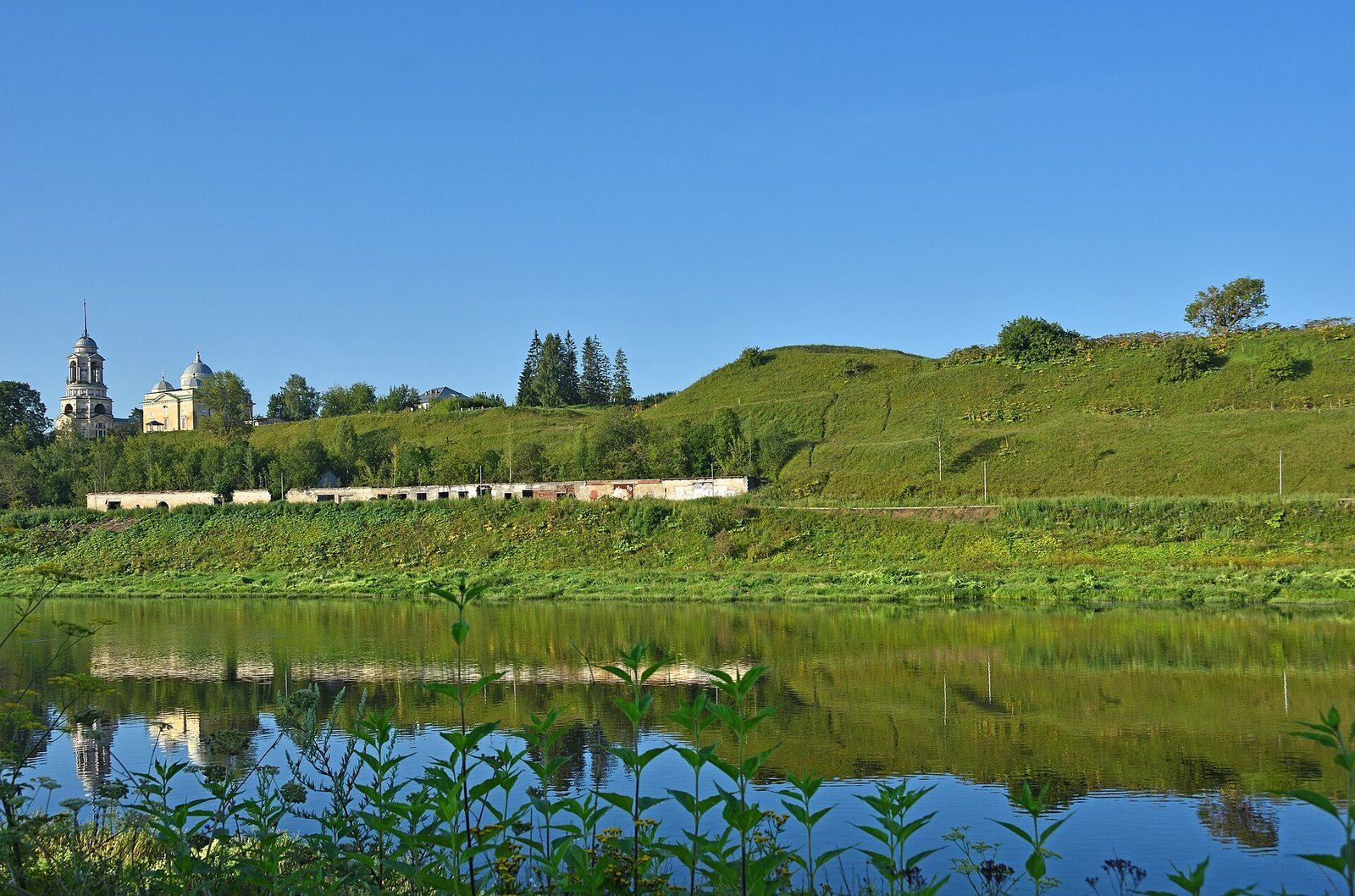
The remains occupy high ground at the northwestern edge of modern Staritsa, where the Volga meets the Starchonka River. The site comprises the Old Fortified Settlement, or Kremlin, and the New Fortified Settlement, the outer town to its southeast. Their preserved ramparts, raised earth defenses, rise as much as 80 m above the Volga. The defenses were built of timber despite local deposits of high-quality white stone.
Fortified enclosures
Old Fortified Settlement
The fortified area measured about 52,000 m² in the fourteenth century. Work carried out in 1366 included a ditch 178 m long and 7 m deep, an adjoining rampart 4.5 m thick, and a concealed water channel. These features formed part of the defenses of the inner settlement.
New Fortified Settlement and timber walls
The New Fortified Settlement formed a second line of defense, with earthen ramparts, wooden walls and towers, and a broad surrounding ditch. In the sixteenth century, walls enclosing both settlements extended for almost 2.5 km. The ramparts reached 8 m in height, while the ditches were up to 20 m wide and 7 m deep.
Late-seventeenth-century descriptions give the wooden walls a total length of 599.5 sazhen, a traditional Russian measure of about 2.13 m. Timber frames packed with clay and lime formed the walls, which had 13 towers: two with gates and 11 without. Three towers had watch posts, and one had a hidden descent to the Staritsa River. The tallest, a corner tower, exceeded 55 m.
Buildings and excavated features
Religious buildings
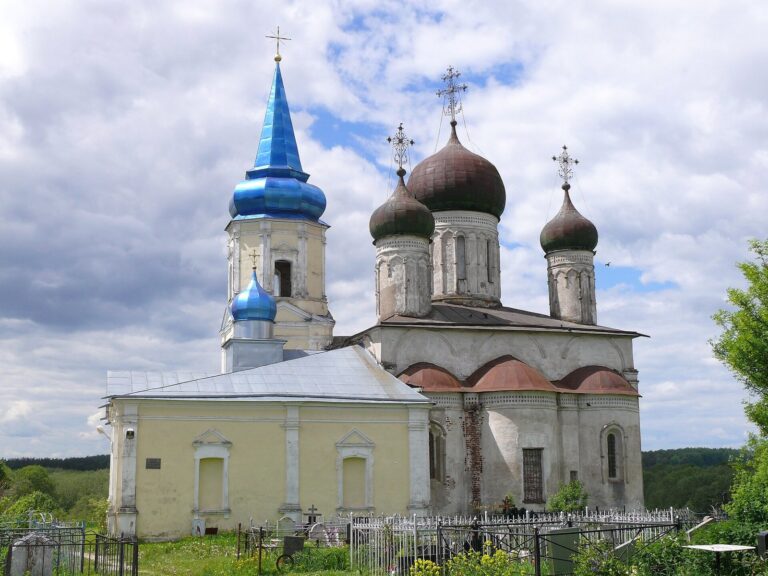
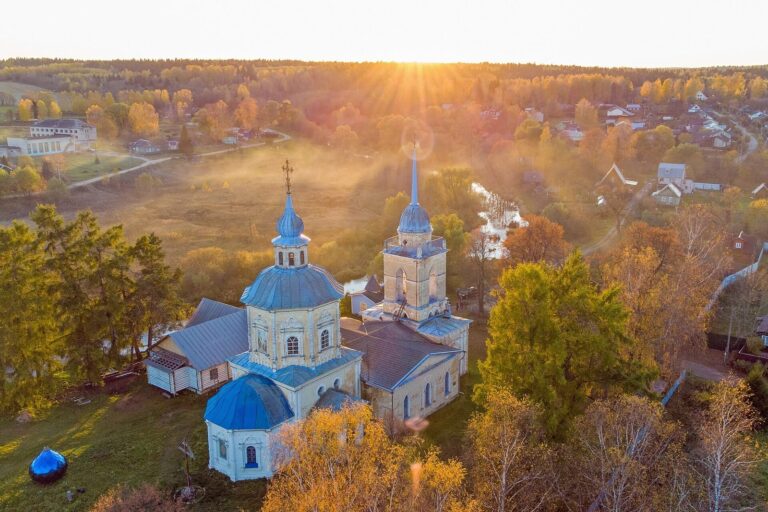
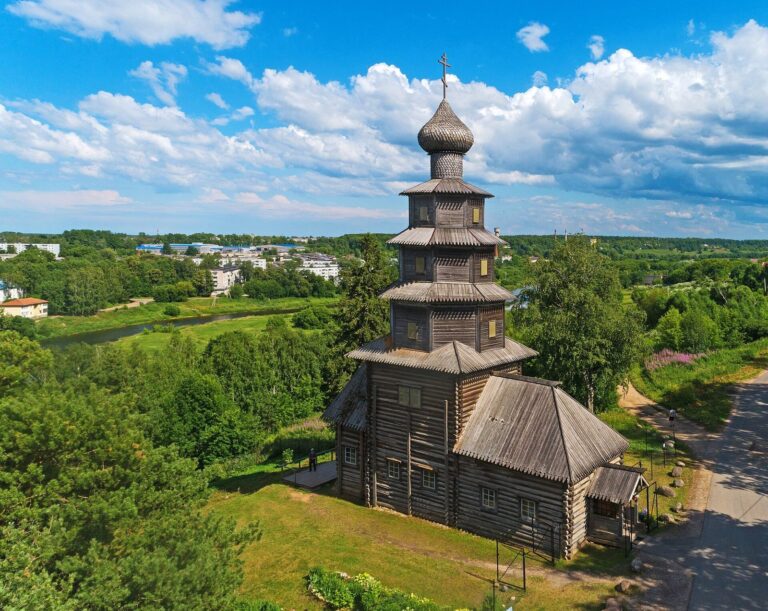
The Kremlin’s religious buildings included the stone Archangel Cathedral and the church of St Nicholas. The Old Fortified Settlement also contained a Boris and Gleb Cathedral, built from 1558 to 1561 by order of Prince Vladimir Andreyevich Staritsky. Boris and Gleb were early Christian martyrs venerated as saints in the Orthodox Church; this cathedral had five tent-shaped roof structures. On the New Fortified Settlement stand a disused Boris and Gleb Cathedral and the nineteenth-century Savior Bell Tower in the classical style. Savior is a title for Jesus Christ.
Stone chamber
A two-storey stone chamber, possibly built in the early sixteenth century, stood until 1632. Its foundations were uncovered during excavations in 1903.
Inscribed semicircular wall
Excavations in 1903 also uncovered an ornamented semicircular wall bearing an inscription. Professor Boris Turaev proposed that its writing was Armenian, with some Georgian letters.
Structures on the New Fortified Settlement
Entrance and smithies
At the entrance, white-stone smithies dating to 1792 are set into the base of the ramparts. The entrance itself is paved with cobblestones.
Burial and residential buildings
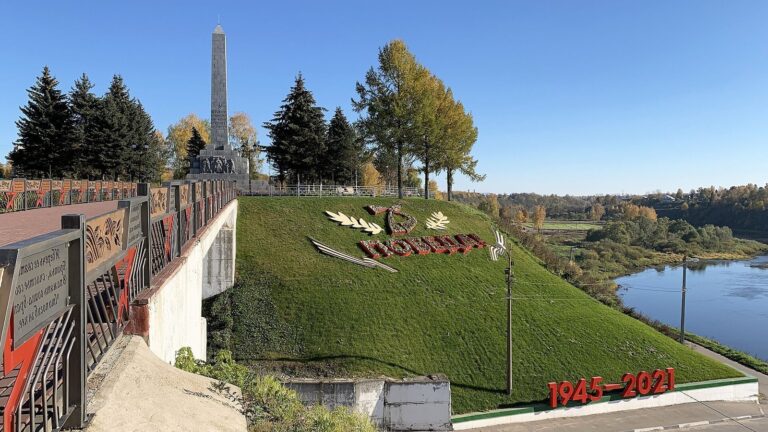
A mass grave of people killed in the Second World War lies within the New Fortified Settlement. The area also contains a small number of residential buildings dating from the Soviet period.