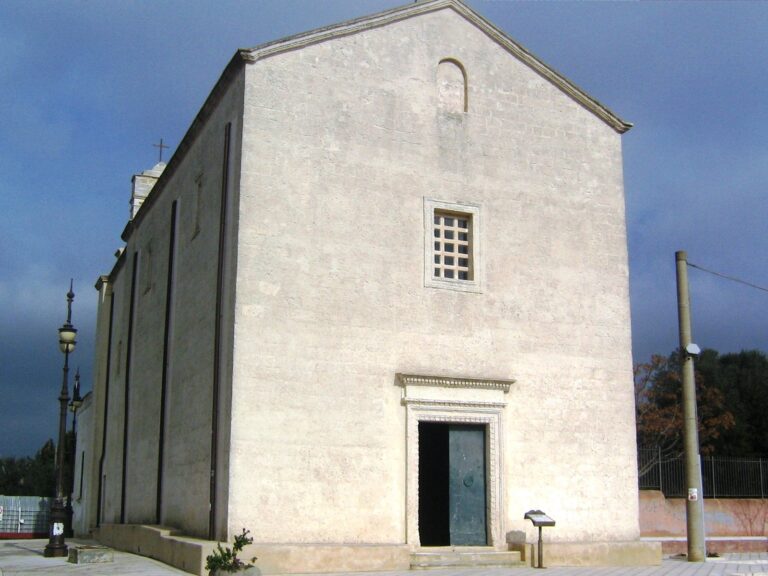
Church of Saint Francis of Paola: A Baroque Church in Gallipoli, Italy
Site at a Glance
- Popularity
- Very Low
- Country
- Italy
- Primary era
- Early Modern
- Eras represented
- Early Modern, Modern
- Civilizations
- Italian, Kingdom of Naples, Spanish
- Site type
- Religious
- Remains
- Church
On this page15 sections
History
Foundation and convent
The Church of Saint Francis of Paola is a Catholic church in Gallipoli, Italy, erected in 1621 in the Baroque style as part of a convent of the Minims. Baroque was a European artistic and architectural style characterized by elaborate forms and ornament. Francis of Paola, a fifteenth-century Italian religious leader, founded the Minims, a Catholic religious order.
The convent first operated in houses near the Sanctuary of Santa Maria del Canneto, beyond Gallipoli’s walls. A donation from Friar Carlo, a member of the Gallipoli Abatizzi family, enabled the community to move into the old city.
The confraternity and the church
On 22 April 1649, Gallipoli’s bishop, Gonzalo de Rueda, established the Confraternity of Our Lady of the Snows, also known as Cassopo, and set out its rules. The association was planned for 80 members, most of them master blacksmiths.
At first, the confraternity met in a small chapel dedicated to Our Lady of the Snows on the Bastion of San Francesco, at the site of today’s Palazzo Ferocino. The chapel was also called Cassopo, perhaps recalling Cassiope, later Santa Maria di Cassopo, on Corfu. When it became too damaged to use, members moved first to the Chapel of Saint Joseph, now the Church of Saints Cosmas and Damian.
The Minims’ convent was suppressed on 4 January 1809. Its buildings served various civic purposes before falling into disuse, while the church continued to host worship. In 1823, the confraternity moved its seat to the Church of Saint Francis of Paola.
Devotional observances
The confraternity celebrates Saint Francis of Paola on the Sunday after the liturgical solemnity of the Holy Trinity. Preparations include prayers on the 13 preceding Fridays, among them the rosary and Eucharist, followed by further prayers during the nine days before the feast. On the feast day, a procession goes to the commercial port quay for Mass, and a laurel wreath is cast into the sea in memory of seafarers.
Our Lady of the Snows is celebrated on 5 August after three days of prayer. The observance includes welcoming new members and carrying an image of the Virgin in procession through the old city. Members also take part in the Holy Thursday visit to the Sepulchers and in the procession of Our Lady of Sorrows on the Friday before Palm Sunday.
Members wear a sky-blue robe and hood with a red silk shoulder cape bearing two oval images: Our Lady of the Snows and a Pietà, a depiction of Mary mourning the dead Christ, associated with the Rosary altar. For the Holy Thursday and Our Lady of Sorrows processions, they also wear a red pilgrim’s hat and carry a staff.
Remains
The Baroque church has a rectangular façade and a single nave, the main body of the building. Its interior leads to a presbytery, the area around the main altar. The former convent survives in ruins, including remnants of its cloister, an enclosed convent courtyard.
Exterior and convent remains
Church façade and entrances
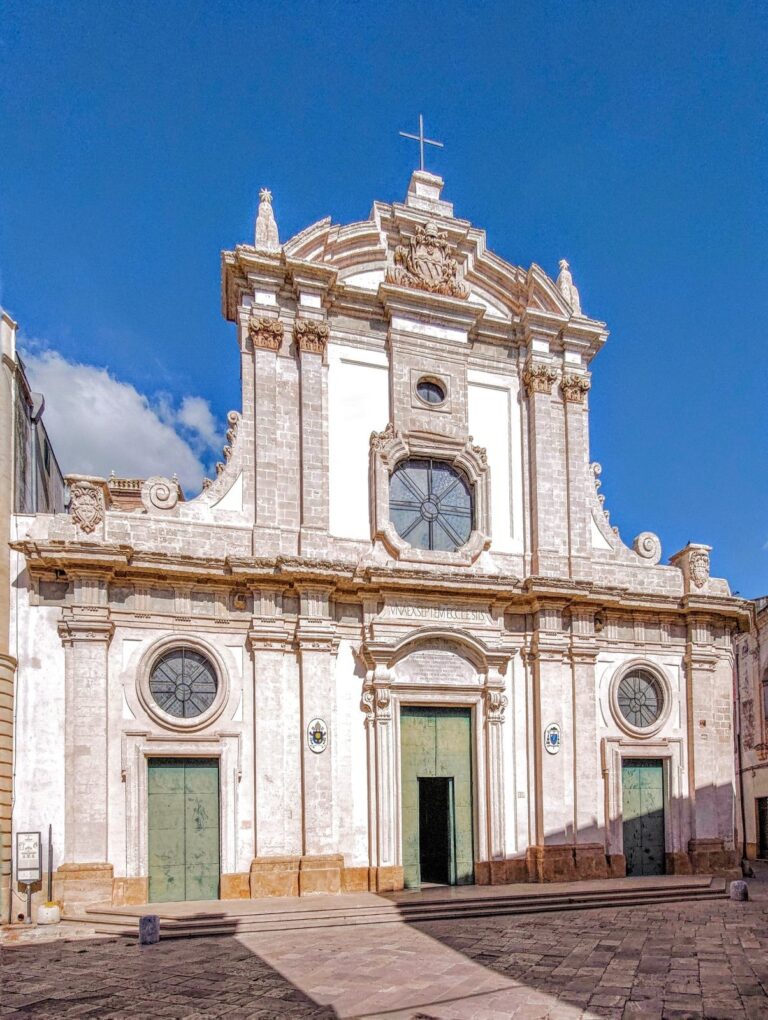
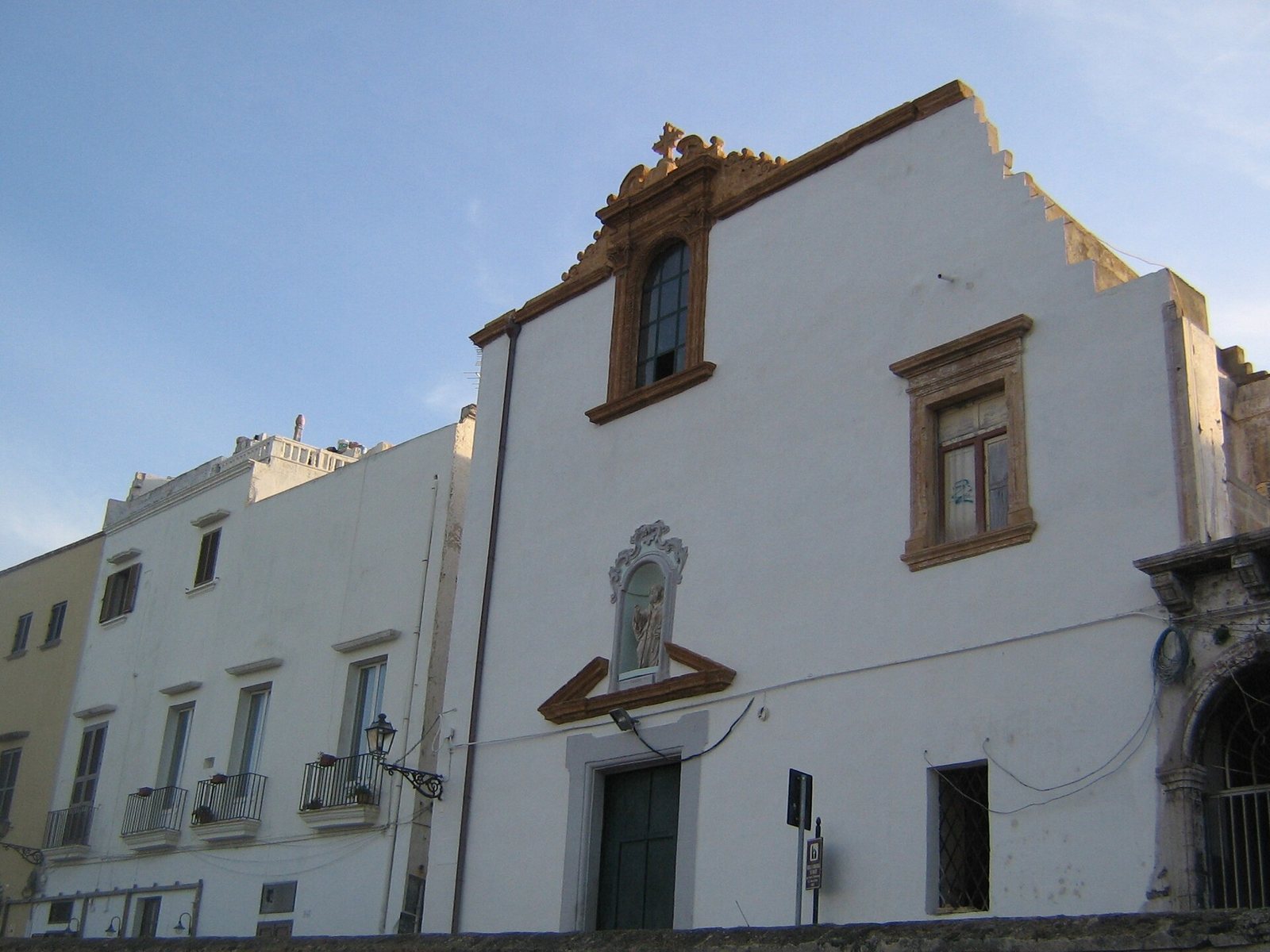
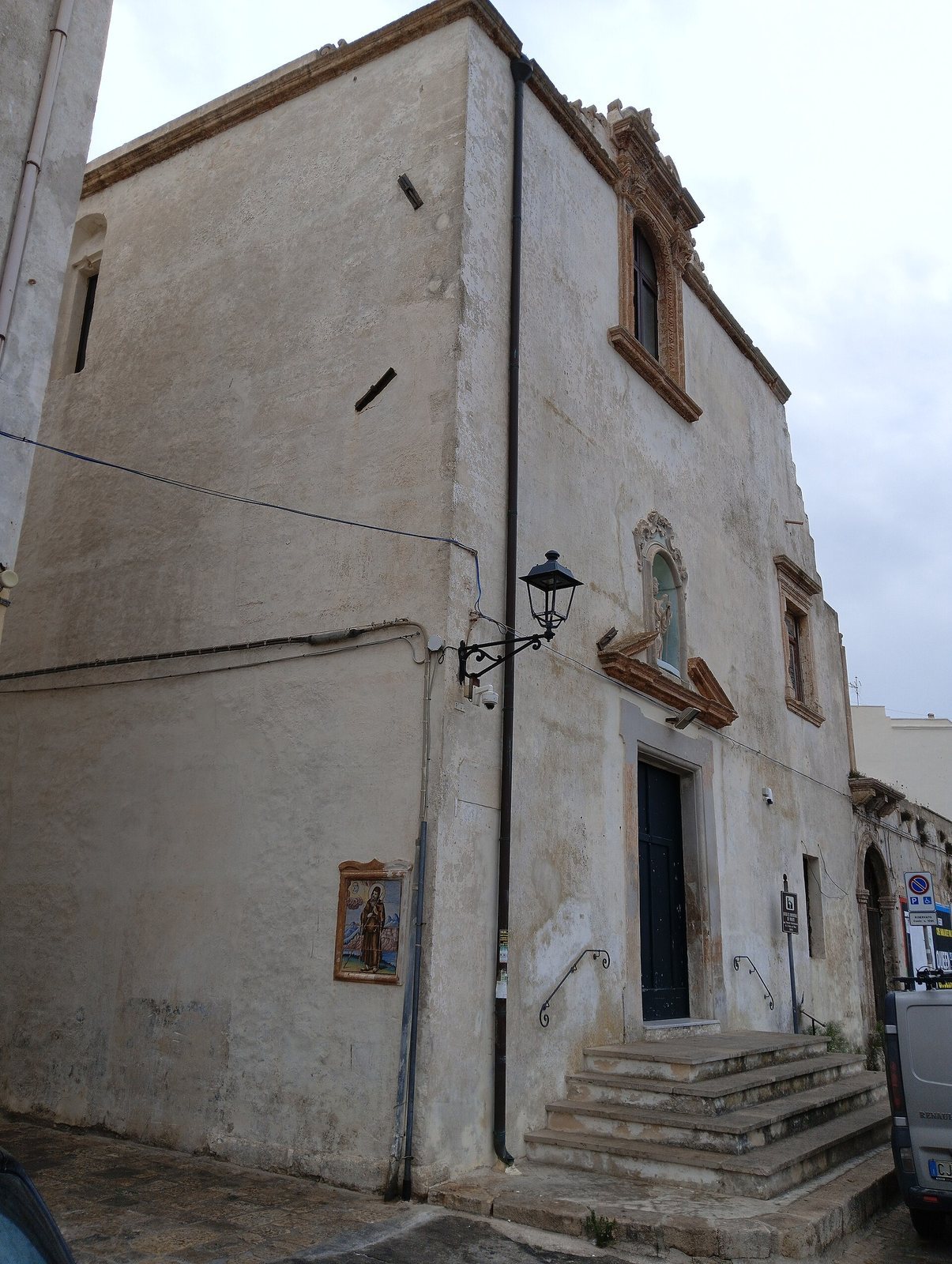
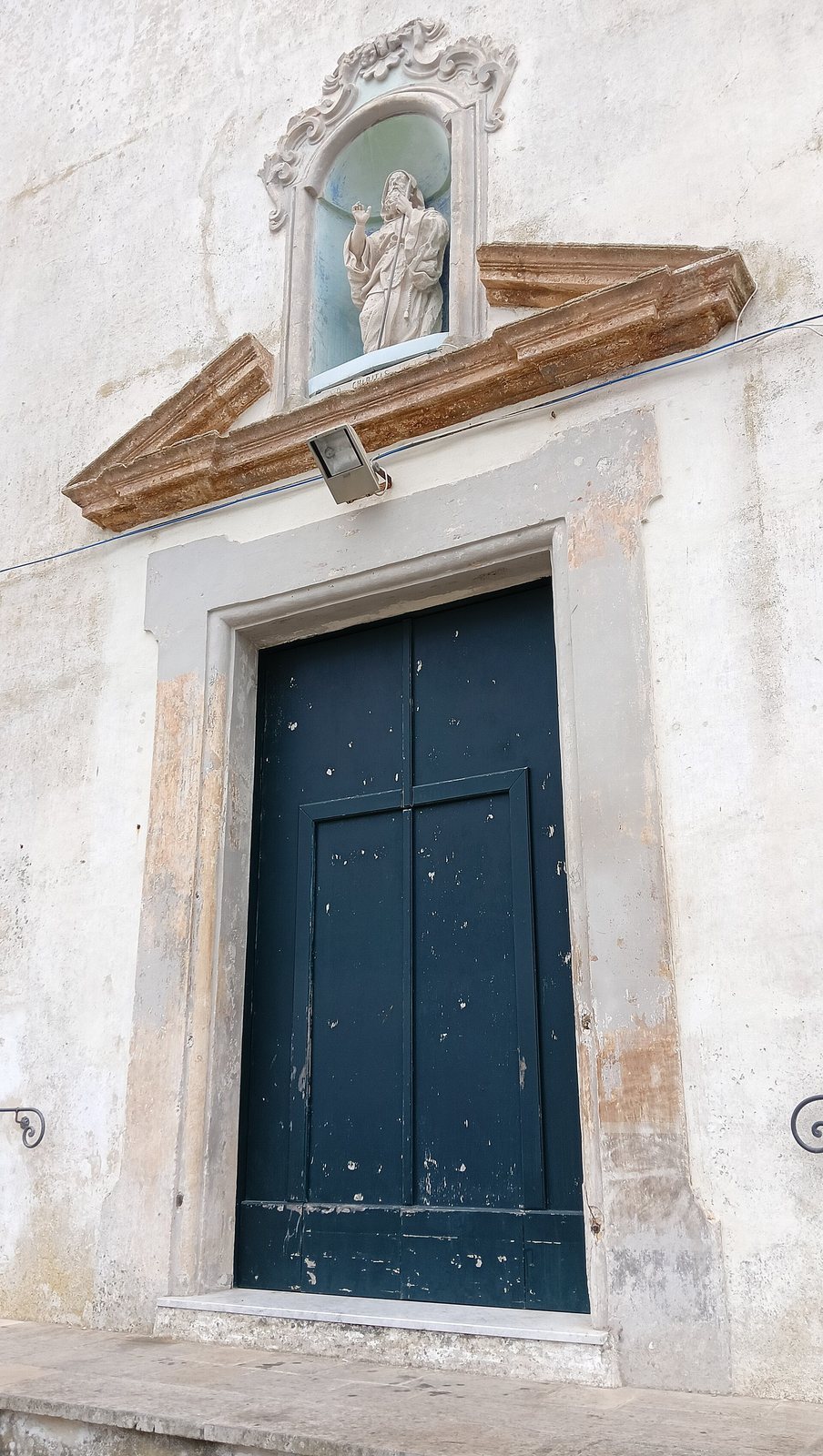
The restrained façade rises against the city walls facing the harbor. It has a slight pediment and a simple entrance portal, above which a niche holds a statue of Saint Francis of Paola. A finely decorated window is aligned with the portal, and a second entrance opens on the side facing an adjacent street.
Former convent
Among the convent’s ruins, some cloister columns remain. Traces of frescoes on them depict episodes from the life of Saint Francis of Paola and the history of the Minim order.
Interior and furnishings
Nave and presbytery
A monumental arch separates the nave from the presbytery. Its face is covered with wood and decorated with floral designs and gold leaf. The original floor of decorated glazed earthenware tiles was replaced with modern terracotta in the 1960s.
Paintings in the nave
Two paintings on the sides of the nave show Saint Paul preaching and Saint Peter, one of Jesus’s apostles, receiving his commission from the Lord.
Main altar and presbytery paintings
The main altar bears a painting by Romualdo Formosa depicting the death of Saint Joseph, whom Christian tradition identifies as Mary’s husband. Two large paintings beside the presbytery, dating to the second half of the seventeenth century, portray miracles attributed to Saint Francis of Paola.
Altar of Saint Francis of Paola
On the right, this altar has a gilded stone front dating to the mid-seventeenth century. Angels above it hold an inscribed ornamental frame, or cartouche, while a painting of the Infant Jesus sits beneath the architrave, the horizontal element above an opening. Cherubs support statues of Saint Francis de Sales, a Catholic bishop and spiritual writer, and Saint John of God, founder of the Brothers Hospitallers. At the center, a painting shows Saint Francis of Paola handing the church to the confraternity.
Altar of Saint Michael
The second-to-last altar on the left is dedicated to Saint Michael, an archangel. Stone decoration from the first half of the seventeenth century surrounds a central niche containing a statue of him trampling the devil. The figure wears gold armor and a red drape.
Altar of Saint Liborius
The last altar on the left is dedicated to Saint Liborius, an early Christian bishop. Its painting of the Madonna and Child with Saint Liborius is set in a carved wooden frame that is painted, covered with stucco, and gilded.