Madonna delle Grazie: A Roman Catholic Church in Sora, Italy
Site at a Glance
- Popularity
- Low
- Country
- Italy
- Primary era
- Modern
- Eras represented
- Early Modern, Modern
- Civilizations
- Italian, Kingdom of Naples, Spanish
- Site type
- Religious
- Remains
- Church
On this page8 sections
History
Madonna delle Grazie, also called Santa Maria delle Grazie, is a Roman Catholic church in Sora, Italy. It belongs to the Diocese of Sora-Cassino-Aquino-Pontecorvo, a territorial church jurisdiction overseen by a bishop. The church’s consecration is dated to the early eighteenth century, although its construction date is not known. The name Madonna delle Grazie means “Our Lady of Graces,” a title for the Virgin Mary in Catholic devotion.
Early records and devotion
The church is first mentioned in 1583, when Bishop Ciceroni ordered its chapel united with the Church of Santa Restituta after the death of its chaplain, Don Curio Regoli. Regoli probably built the chapel shortly before that order. Devotion to Saint Gerard the Confessor, a title for a saint honored for faith who was not martyred, is recorded from the late sixteenth century. In earlier times, people from Roccavivi made a pilgrimage to the church on his feast day, probably to give thanks to Madonna delle Grazie after an avalanche devastated their town in 1616.
Bishop Matteo Gagliani inspected the church in 1706. Its consecration is placed in the early eighteenth century.
Nineteenth-century interruption and rebuilding
In 1861 the church was raised and converted into a guardhouse for the emerging unified Italian state. It reopened for worship on July 2, 1863, with major celebrations. Building work resumed in 1867 and was completed on June 29, 1868. Gold and silver offerings made in fulfillment of vows or in gratitude for favors helped fund the work.
Twentieth-century changes and worship
The church underwent maintenance in 1934 and 1951. The Alonzi family, who had emigrated to North America, provided substantial support for the later work. In 1976, during restoration at Santa Restituta, a replacement statue of Saint Cyril was transferred to Madonna delle Grazie. It has remained there, and the customary celebration of his feast ceased.
Worshippers recite the Rosary while climbing to the church on mornings throughout May. The church’s feast falls on July 2. Bourbon rulers, members of a European royal dynasty that governed parts of southern Italy, introduced the observance in the Diocese of Sora; it continued only in Sora and Roccavivi.
Remains
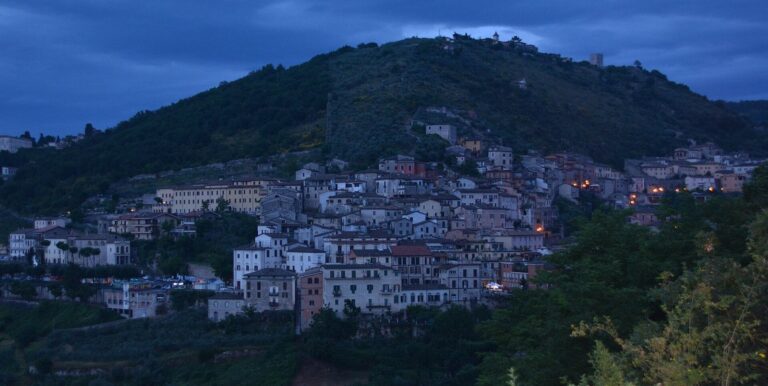
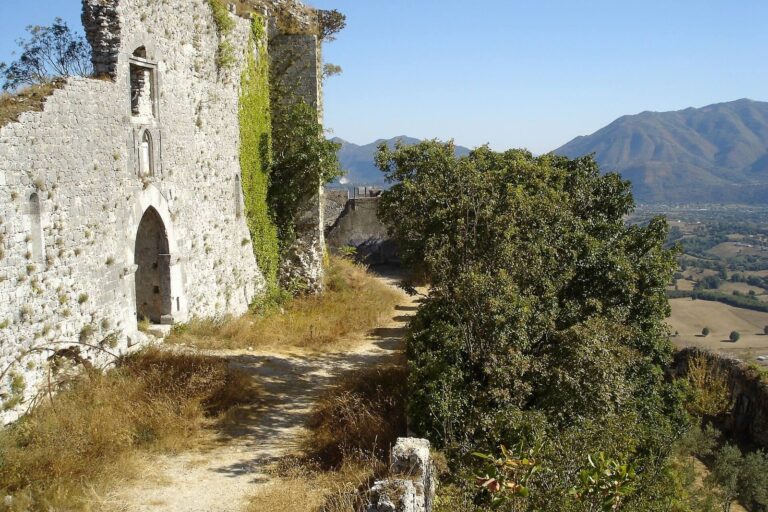
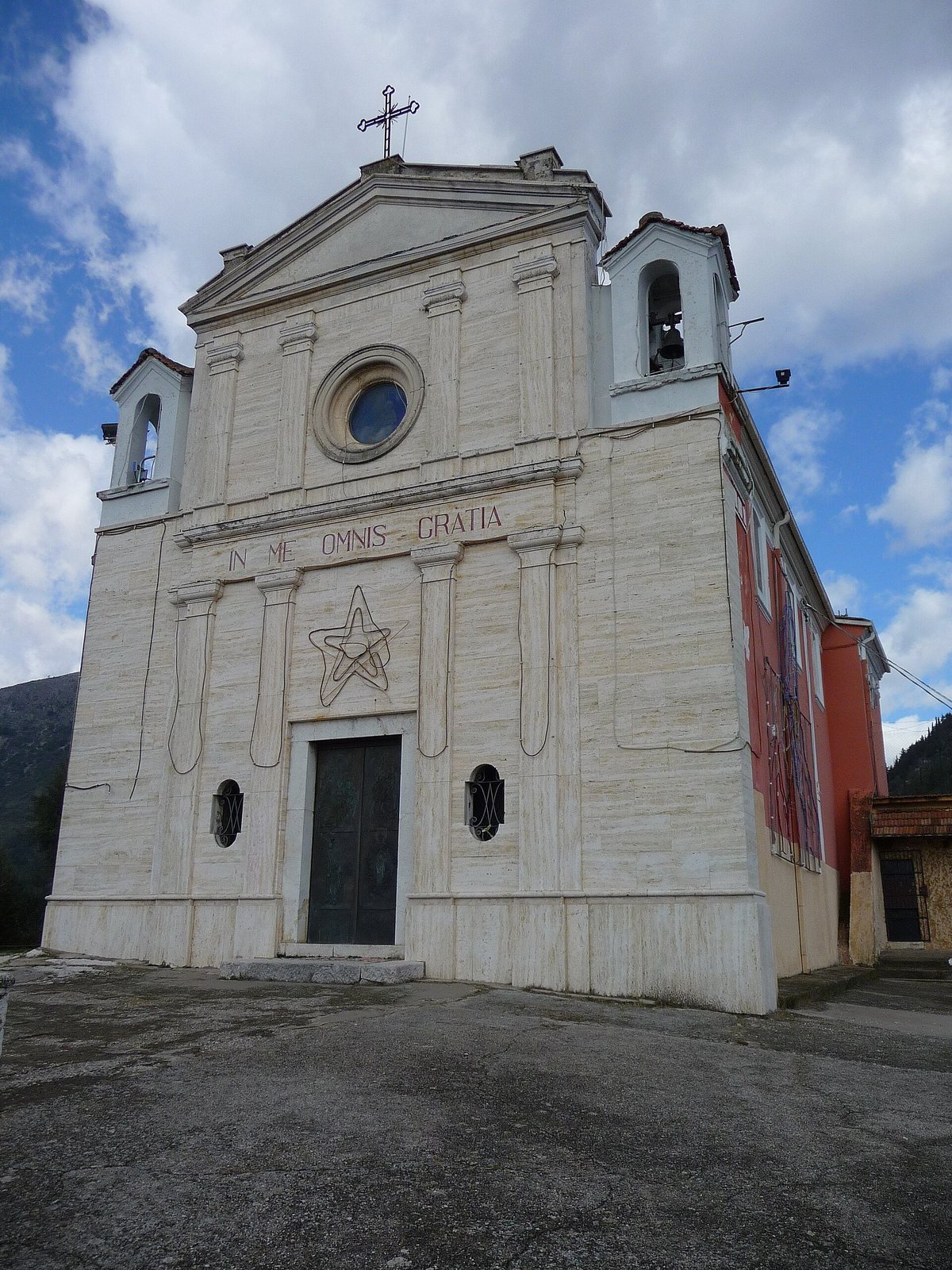
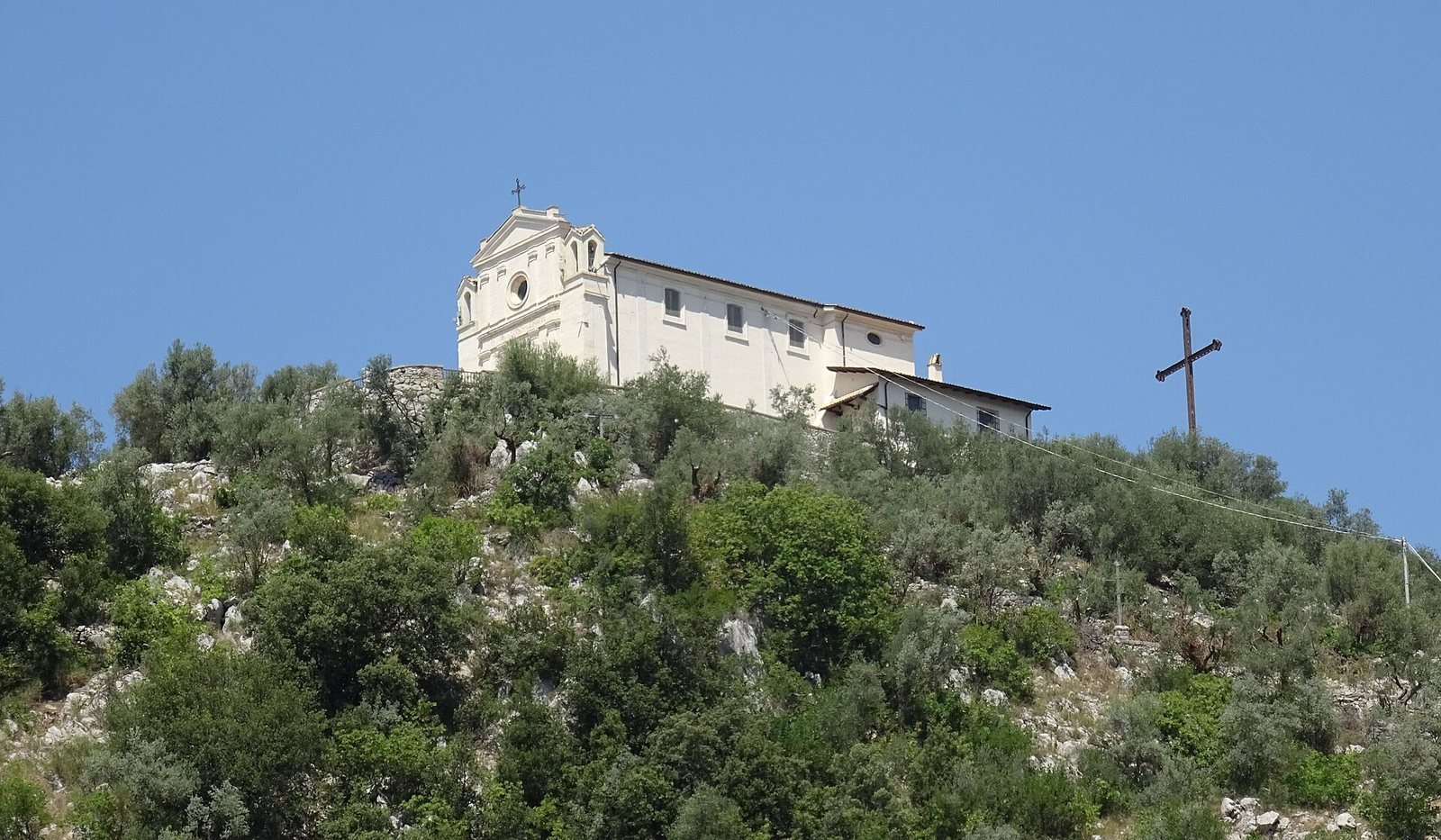
The church stands partway up Monte San Casto above Sora. Its principal approach follows an old path up a stairway of 409 steps. Two other frequently used paths pass in front of the churches of Sant’Antonio Abate and San Silvestro. The building was extended and given an atrium during the work completed in 1868, when a bell was also installed. A main stairway was built in 1908, and a chapel dedicated to Saint Cajetan was added with support from the Boimond family.
The façade received a white travertine facing and the forecourt was paved in 1971. Five iron crosses had been erected outside in 1913. In 1974, nine more iron crosses of the same kind and a large cross behind the church were added to commemorate an interdiocesan Eucharistic Congress, a Catholic gathering devoted to the sacrament of Communion, held in Sora that year.
Interior and devotional images
Altars and fresco
A description from 1706 presents the church as smaller and lower than it is now, with three altars. The central altar bore a fresco of the Virgin Mary, while the altar on the right was dedicated to Our Lady of Mount Carmel, a Marian title associated with the Carmelite tradition, and the one on the left to Saint Gerard the Confessor. The hermit who cared for the church lived in a dwelling behind it. The fresco, dated to the late seventeenth century because it was already noted in 1706, remains venerated on the main altar. Biagio Cascone restored it in 1976.
Statues and other images
A statue of Madonna delle Grazie was donated in 1909 by Nicola Lolli and Maria Grazia Tortolani. The church also holds a wooden statue of Saint Gerard the Confessor, described as one of the oldest in Sora. Other works include a bust of Saint Castus, formerly kept in the castle chapel, and a statue of Saint Aloysius Gonzaga acquired in 1956 to replace an older image.
The statue of Saint Cyril, a martyr and co-patron of Sora, was made by Luigi Guacci of Lecce. It replaced an earlier statue destroyed in the 1915 earthquake.