Church of Saint Antoninus the Martyr: A Catholic Parish Church in Italy
Site at a Glance
- Popularity
- Low
- Country
- Italy
- Primary era
- Modern
- Eras represented
- Medieval, Early Modern, Modern
- Civilizations
- Austrian Empire, Duchy of Milan, Habsburg, Holy Roman Empire, Italian, Spanish
- Site type
- Religious
- Remains
- Church
On this page14 sections
History
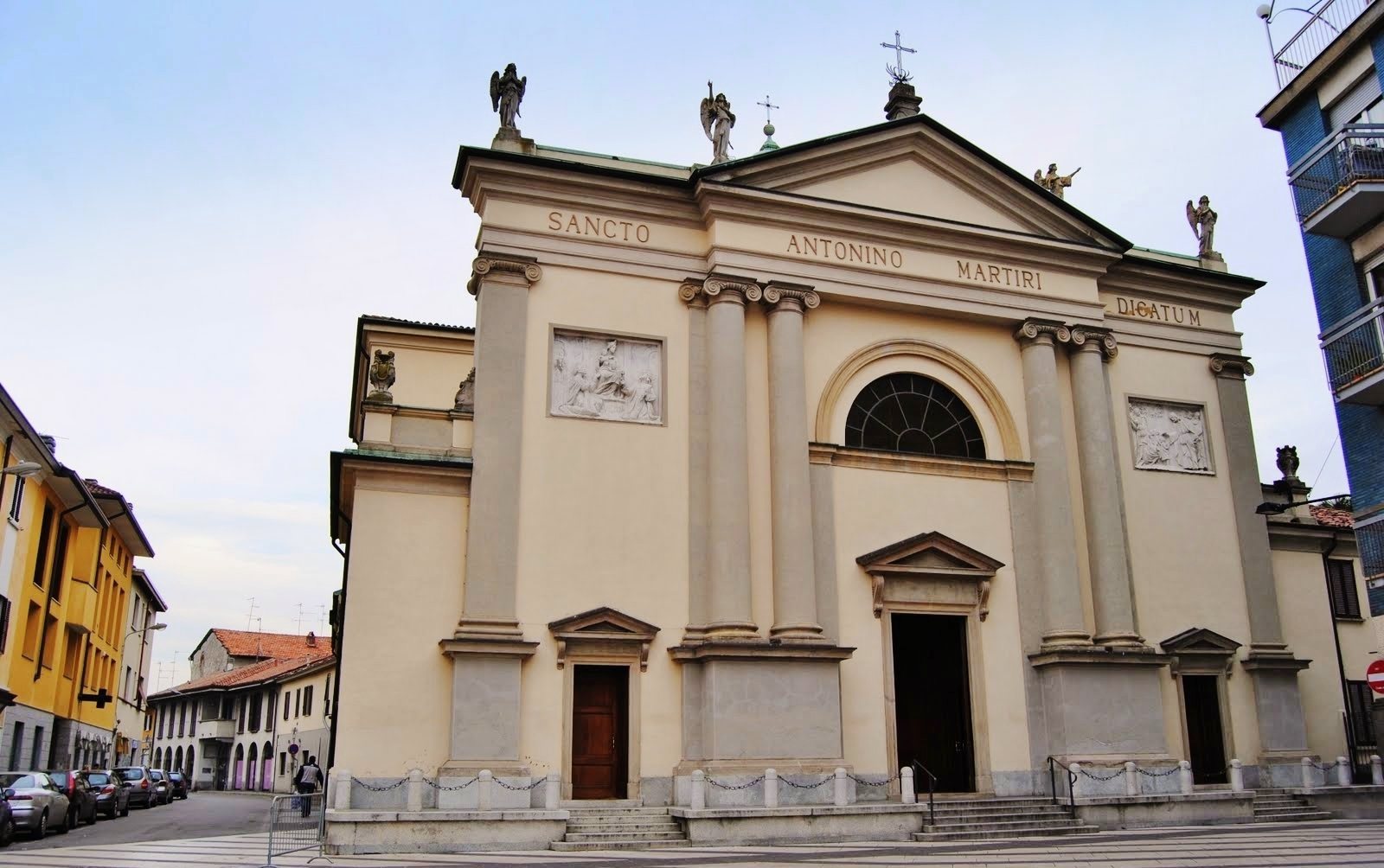
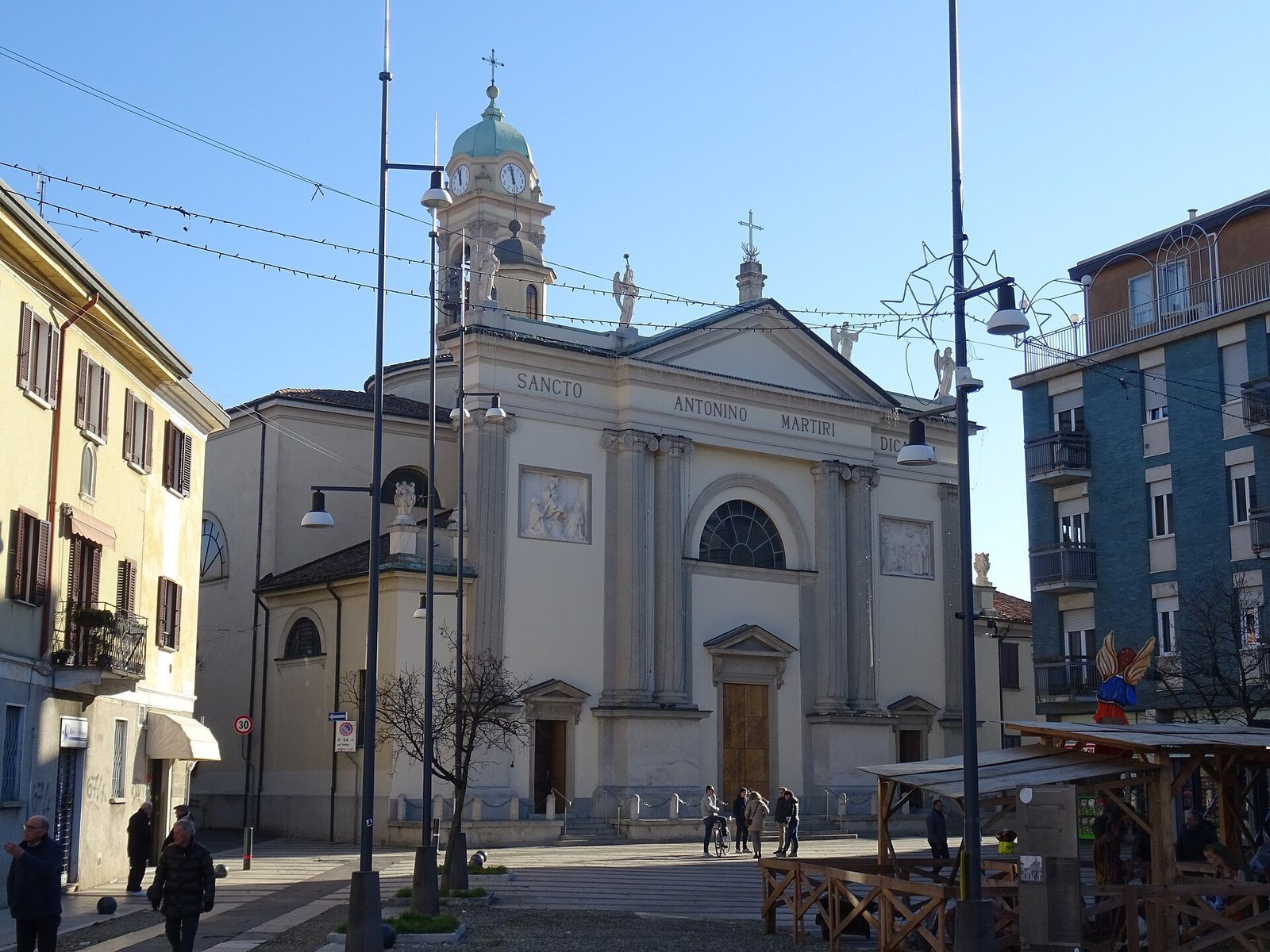
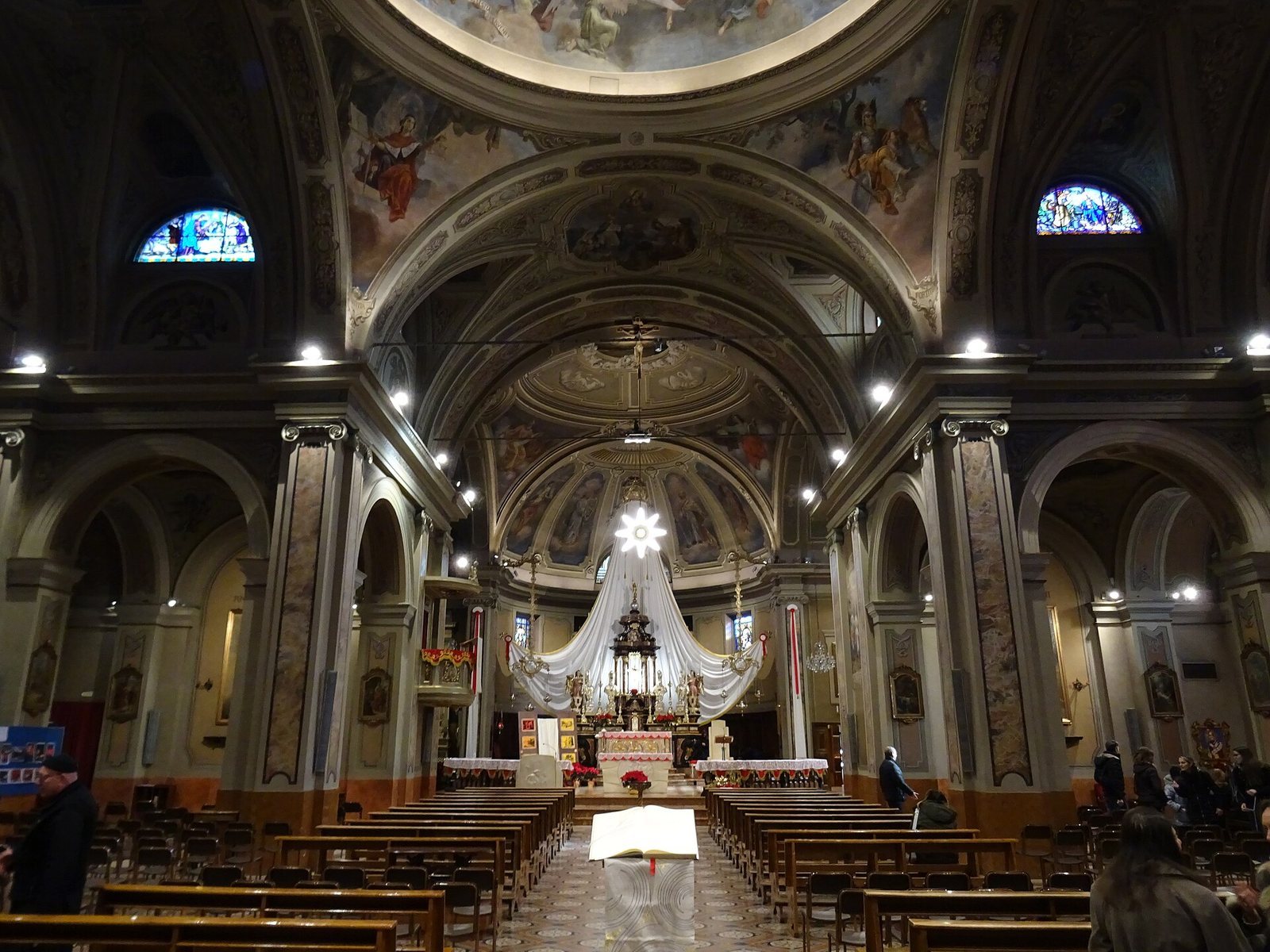
The Church of Saint Antoninus the Martyr is a Catholic parish church in Italy, dedicated to Antoninus of Piacenza, venerated as a Christian martyr. Construction is dated to 1229, and the church is neoclassical, a style drawing on classical Greek and Roman architecture. It follows the Ambrosian rite, the Catholic liturgical tradition associated with the Archdiocese of Milan, and belongs to that archdiocese and the Desio deanery, a grouping of parishes within a diocese.
Medieval origins and parish status
The earliest known written notice of the church appears in 1289 in the Liber Notitiae Sanctorum. In 1576, after Cardinal Carlo Borromeo, a senior Catholic cleric and archbishop of Milan, issued a decree establishing parishes, the church received its first parish priest, Giovanni Vismara.
Enlargements and nineteenth-century rebuilding
At the urging of Federico Borromeo, a cardinal and archbishop of Milan, the church underwent a substantial enlargement around 1604. It was lengthened again in 1751. A major project under Pogliani followed in 1842, and the rebuilt church was solemnly inaugurated in 1847.
Twentieth-century reconstruction
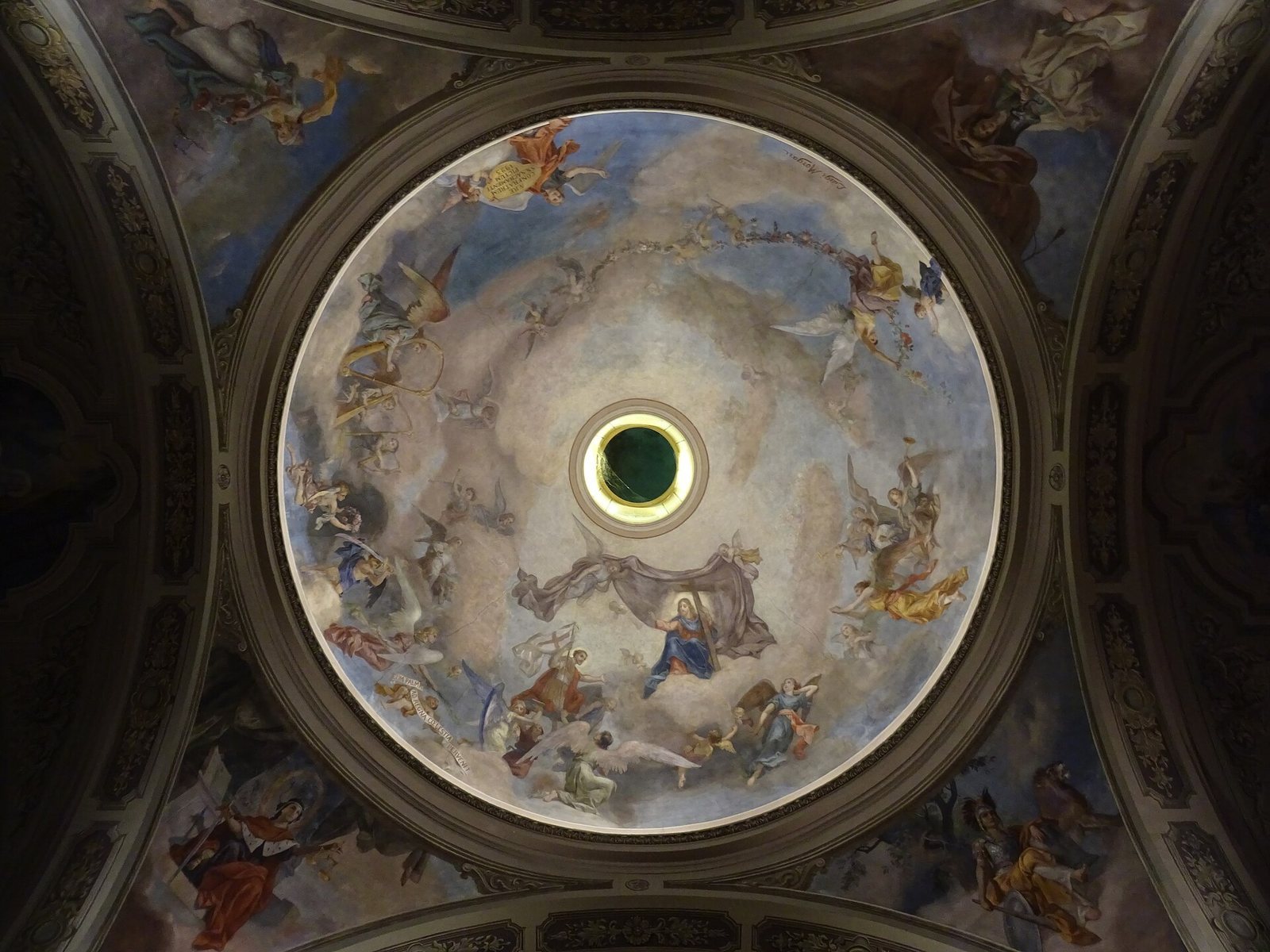
In 1921, a new restoration and rebuilding project was commissioned from engineer Barboglio of Bergamo. Work began in spring 1923, with the aim of improving the building’s proportions. That year, the priest Don Mezzera commissioned the Turin painter Luigi Morgari to decorate the church interior. Morgari worked on its wall paintings for about a decade. The church was consecrated in 1925 by Ludovico Antomelli, Bishop of Lodi. A further enlargement took place in 1935–1936. From 1933, Morgari also prepared designs for thirteen smaller stained-glass windows.
Remains
Plan and architectural development
The church’s neoclassical design has been shaped by successive alterations. Around the time of its 1289 notice, the building measured about 13 metres long and 6 metres wide, with a single nave, the main body of a church. The 1842 works expanded it from one nave to three, incorporated ground beside the old cemetery, and placed statues of the Madonna and Antoninus of Piacenza inside. In 1923, two arches were added at the front of the older building, taking up almost all of its former forecourt, while the façade was rebuilt and extended. A crosswise nave was formed halfway along the church, with a low central dome and a smaller dome-like feature. At its ends are the Chapel of the Fallen, dedicated to Saint Anthony, and the Chapel of the Blessed Virgin.
Paintings and devotional works
Chapel of the Blessed Virgin
The chapel contains fifteen paintings by Morgari depicting the Mysteries of the Rosary, events from the lives of Jesus and Mary contemplated in Catholic prayer. He completed the works in 1925.
Stations of the Cross
Morgari’s Stations of the Cross, images of episodes on Jesus’s path to crucifixion, are oil paintings on copper. He made them in 1926, and local painter Vittorio Viviani restored them in 1965.
Paintings in the aisles and church interior
The church’s collection includes eleven oil paintings on canvas dating from the late sixteenth to the early twentieth century, of which six are displayed. At the beginnings of the two side aisles are paintings by Osvaldo Bignami, made between 1897 and 1900, titled Joseph Comforting the Suffering and Jesus the Consoler. Abbondio Bagutti’s 1817 painting of Saint Charles Borromeo hangs to the left of the grotto of the Blessed Virgin Mary of Lourdes.
Paintings near the sacristy and in the parish archive
Above the sacristy entrance is an oil painting of the Virgin and Child with Saint Catherine by an unknown artist. Its general features are characteristic of seventeenth-century painting, and the Superintendency of Fine Arts judged it to have considerable artistic value. Opposite the entrance is an unknown artist’s oil painting of the Virgin and Child with the Magi, with features associated with late-sixteenth-century Venetian painting. It is probably the church’s oldest painting. The Delivery of the Keys to Saint Peter is displayed in the parish archive.
Stained glass and bells
Windows and apse decoration
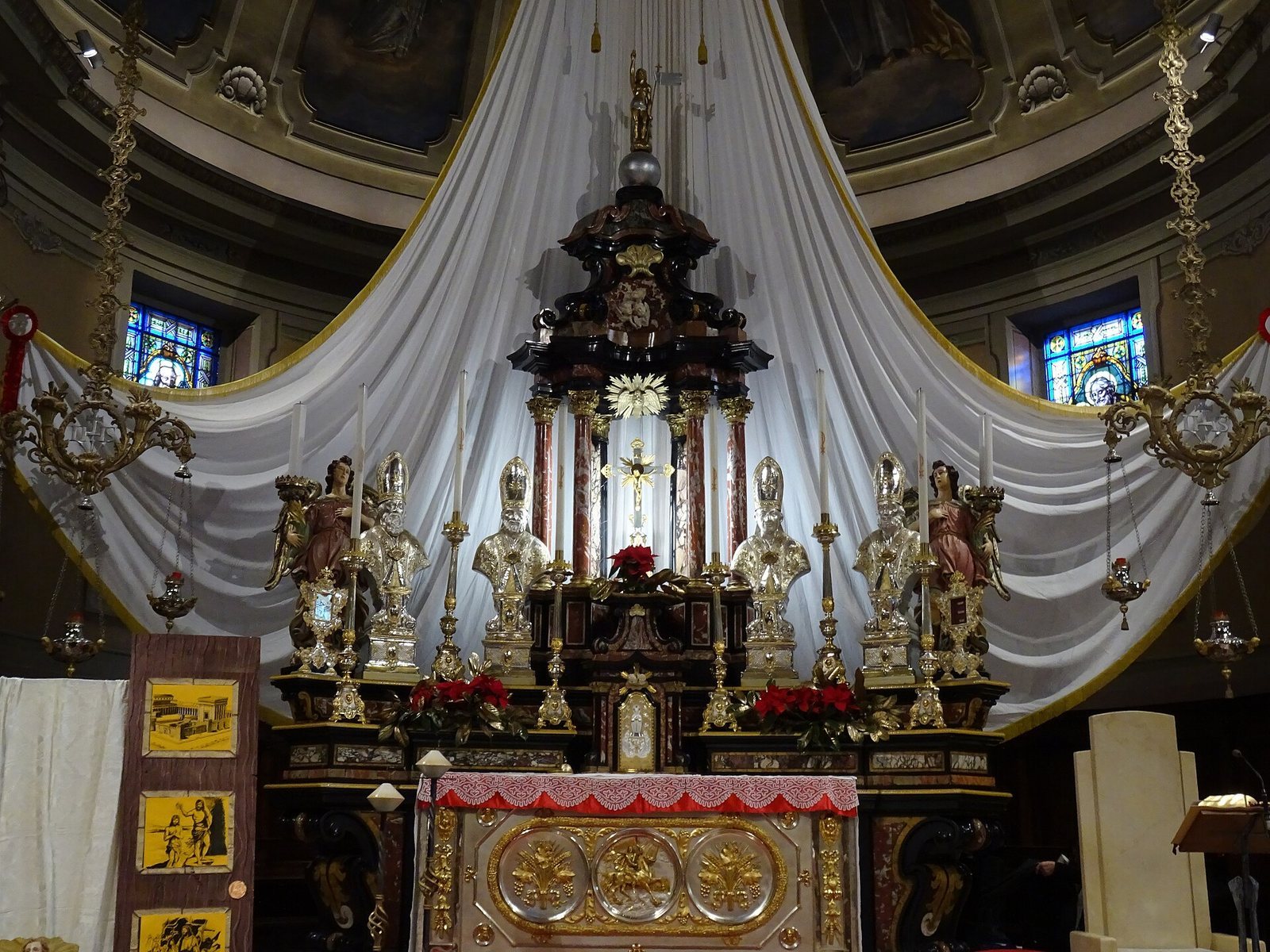
Morgari designed three large stained-glass windows, made by the Milan firm Bauzano and Arienti between 1927 and 1929. They are positioned above the entrance, the altar of the Blessed Virgin Mary, and the altar of Saint Antoninus. Following the 1935–1936 enlargement, Cesare Secchi of Milan added wall paintings and stained glass to the apse, the area at the church’s end that commonly contains the altar.
Bell peal
The bell peal, a set of bells, was cast in 1928 by the Francesco D’Adda and Sons foundry of Crema. It originally comprised eight bells, tuned to a slightly flat low C3. During the Second World War, the two largest bells, C3 and D3, were requisitioned for military use. Bells from the Luigi D’Adda foundry of Crema replaced them in 1949. The support frame was rebuilt in the 1970s, when the peal was reduced to six bells. After the fifth bell, D3, cracked around 2009–2010, a replacement was cast by the Grassmayr foundry of Innsbruck in 2010; it bears the installer’s mark.