Sant’Antonio di Padova: A Franciscan Church and Convent in Barcellona Pozzo di Gotto, Italy
Site at a Glance
- Popularity
- Low
- Country
- Italy
- Primary era
- Early Modern
- Eras represented
- Early Modern, Modern
- Civilizations
- Habsburg, Italian, Kingdom of Sicily, Spanish
- Site type
- Religious
- Remains
- Monastery
On this page12 sections
History
Franciscan foundation
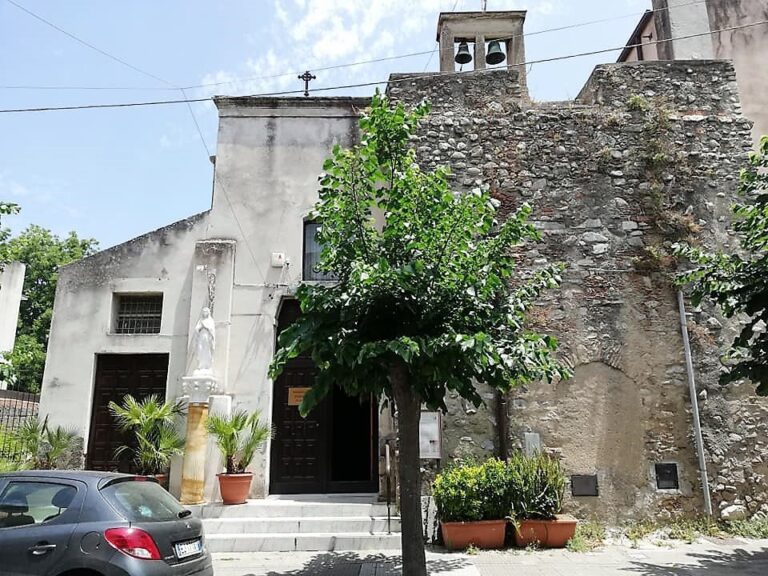
Sant’Antonio di Padova is a Franciscan church and convent in Barcellona Pozzo di Gotto, Italy. On 14 October 1613, the Observant Friars Minor, a Franciscan branch committed to stricter observance of the order’s rule, received land from the city of Castroreale in the hamlet of Barcellona for a small place of worship. The friars settled in the Sant’Antonino neighborhood and built a church in the Finocchito district, along with a convent. The convent was canonically established in 1622 with contributions from the patrons Placido Rao and Dominichella Coppolino.
Confiscation and changing uses
In 1866, after confiscation under laws suppressing religious institutions, the convent was assigned to public education and used as a nursery school. In 1868, the Ministry of War designated it for artillery troops and use as a firing range. The church was deconsecrated, stripped, and turned into a stable. Religious use resumed there in 1892. In 1899, the complex became an industrial site used by a tobacco-processing agency.
Return to religious use
Between 1936 and 1950, the complex returned to the friars’ community. On 24 May 1986, the conventual church was declared a diocesan sanctuary.
Remains
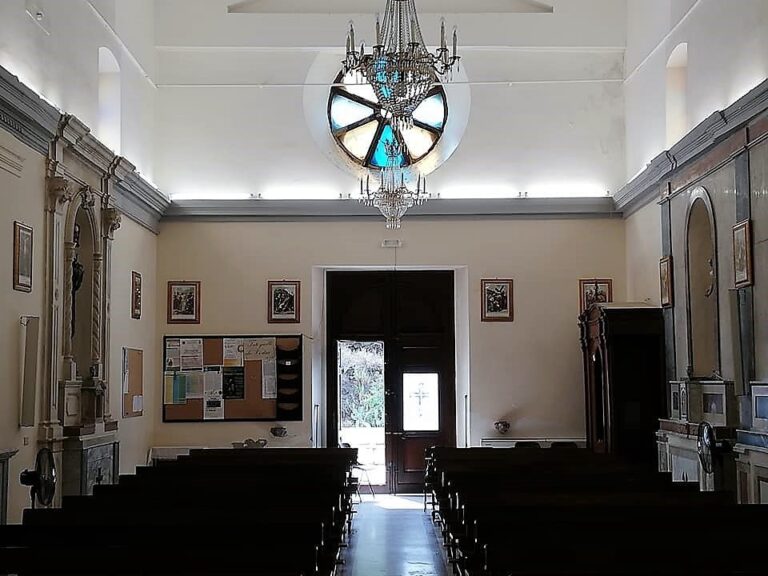
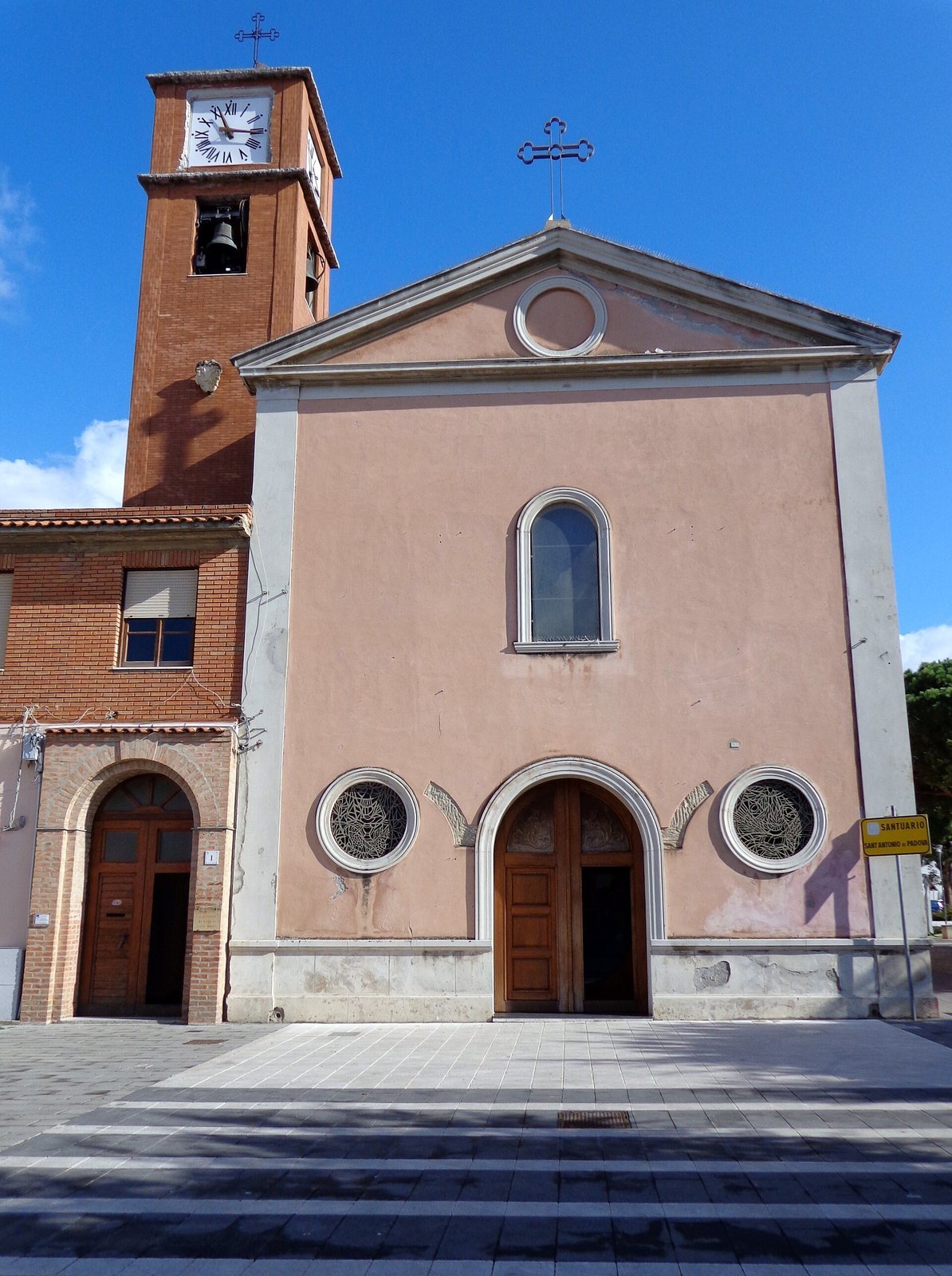
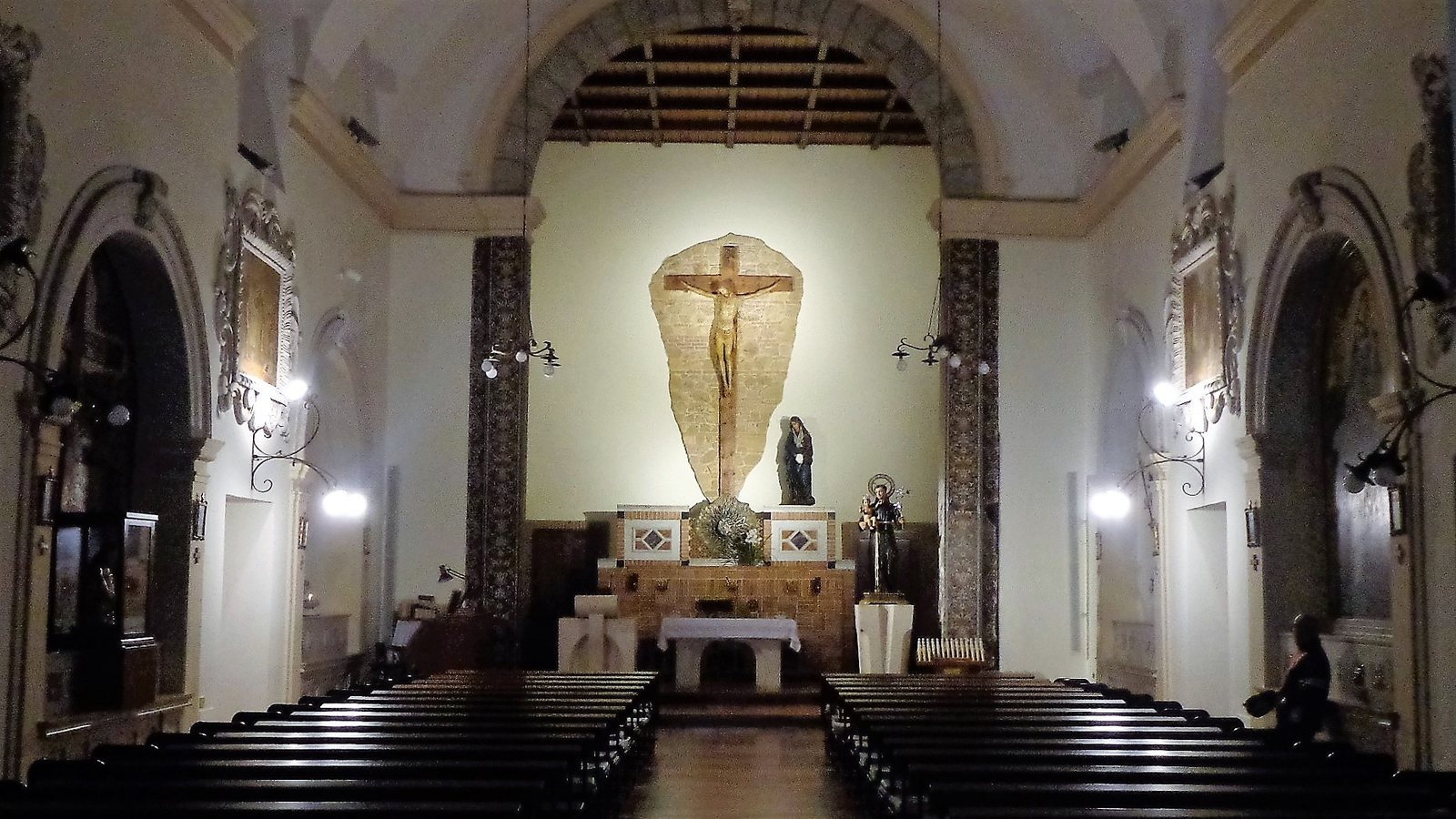
The complex comprises a church and a convent arranged around a square courtyard. The church centers on a broad nave, or main worship hall, with smaller altars along its sides. Its interior includes an entrance vestibule and hall, an elevated choir gallery, painted decoration, and sculpted works.
Convent
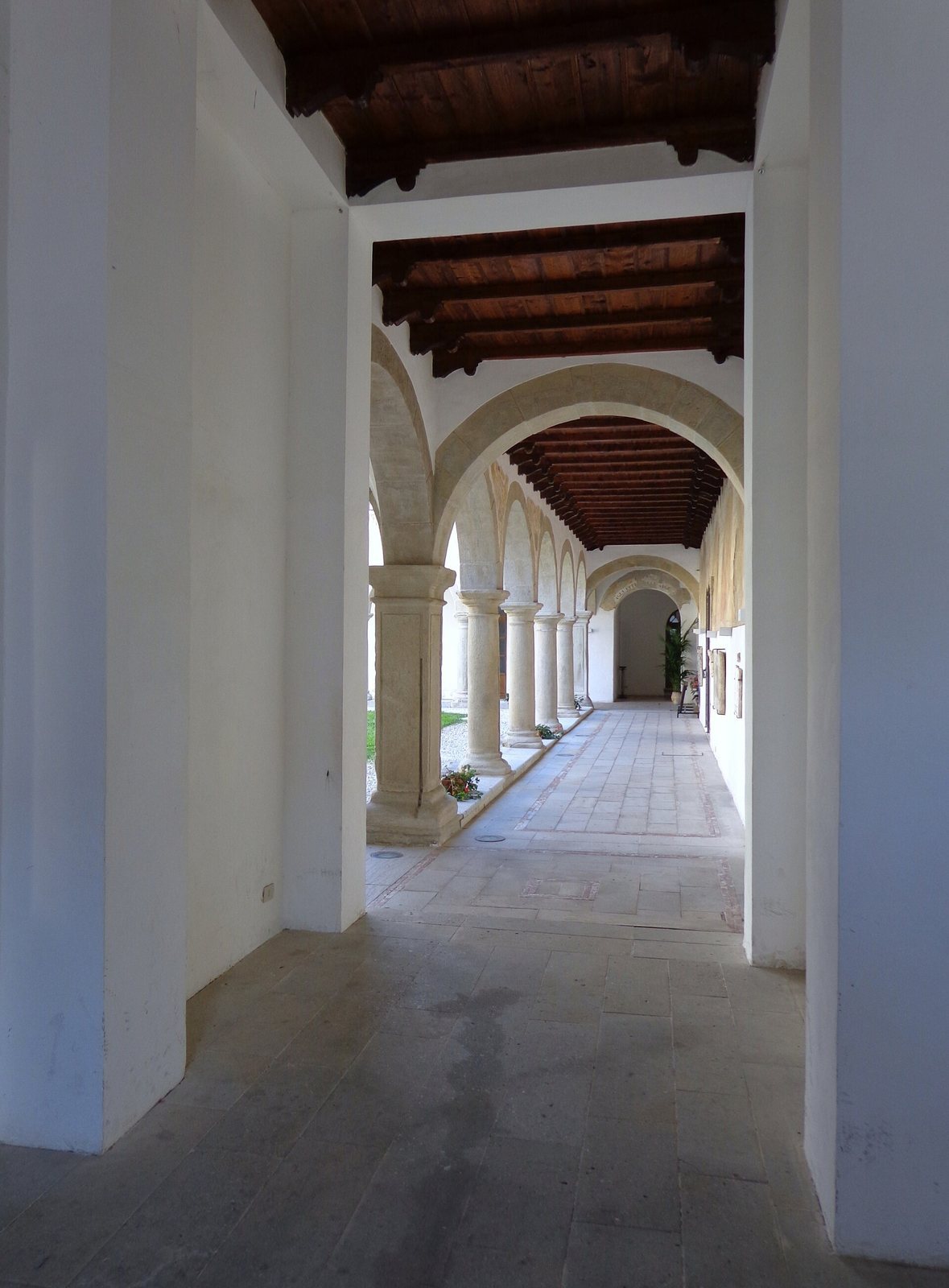
The convent’s square courtyard is reached from the south façade. Five arches supported by columns run along each side. Fragments of older frescoes, paintings made on plaster, survive on the east portico wall, which is shared with the church. The convent has been adapted several times.
Church
Entrance and vestibules
At the entrance, shallow wall supports and side arches frame the vestibule and hall. A small doorway on the right bears a marble relief of Saint Anthony of Padua, made by an unknown artist in 1633–35. A marble inscription reads PERAMABILIS S. ANTONINUS, meaning Most lovable Saint Antoninus. The southeast vestibule contains a 1733 fresco of Saints Joseph, Michael the Archangel, and Blaise, commissioned by the priest Francesco Saccano. On the northwest side, a fresco depicts the martyrs Saints Agatha, Lucy, and Apollonia; the priest Ottavio Saccano commissioned it.
Southeast side altars
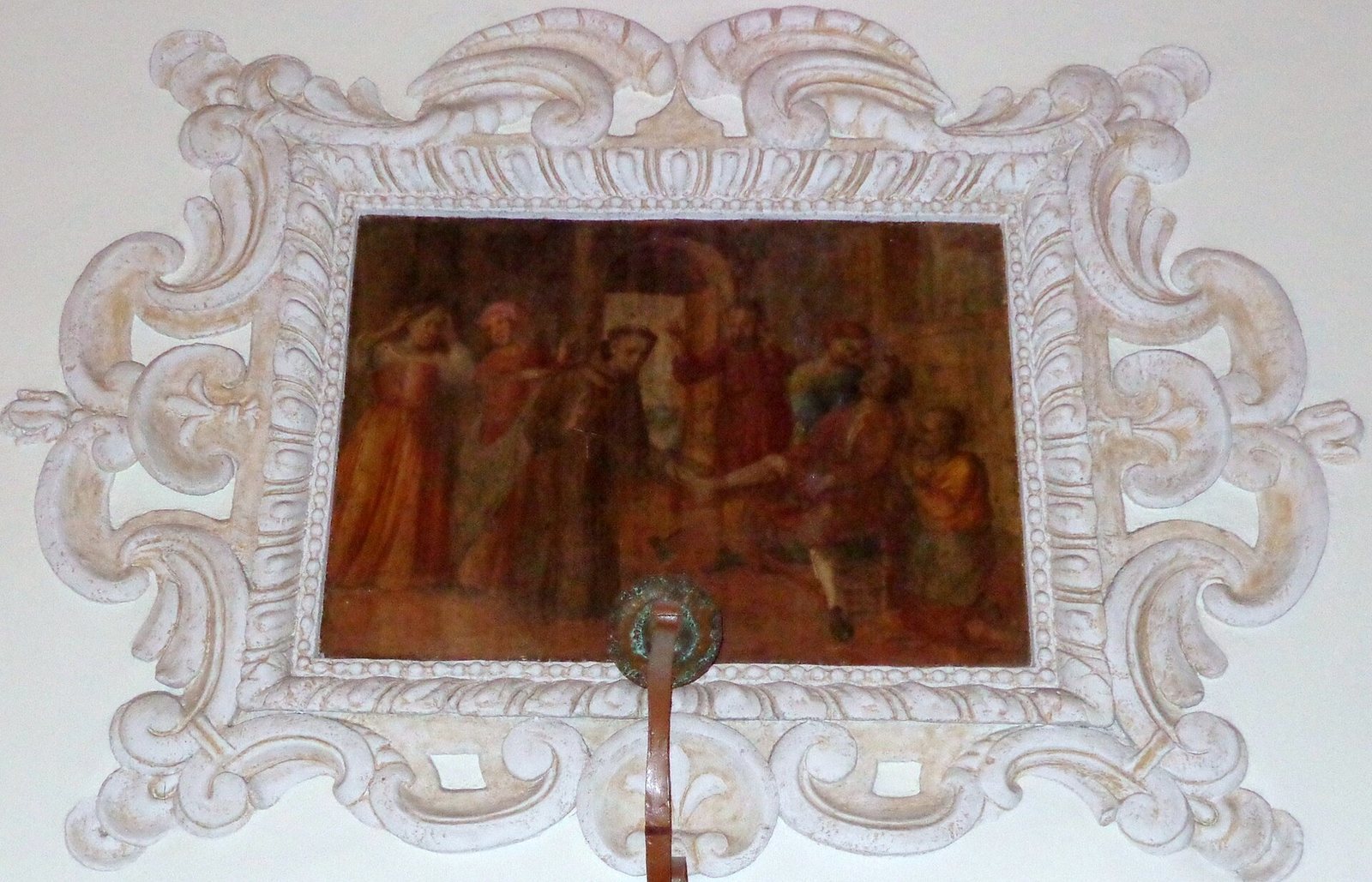
Three sections along the southeast wall contain altars and painted scenes. The first has a 1724 altar dedicated to the Sacred Cord of Saint Francis, a cord associated with Franciscan devotion and often worn as a belt, beside a 1714 fresco of the miracle of the amputated foot. In the second, an altar to the Hodegetria, an image of Mary pointing toward Christ as the way, includes Filippo Jannelli’s 1656 painting Our Lady of Hodegetria with Basilian Monks. Basilian monks belong to Christian monastic traditions shaped by the rule of Basil of Caesarea. A 1714 fresco there depicts the miracle of Bonvillo’s mule. The third section has an altar to Saint Joseph, with a niche holding a wooden statue of the saint from the nineteenth century. Its frescoes show the amputated-foot and mule miracles. Giuseppe Saccano is associated with the patronage of these miracle paintings.
Northwest side altars
The first section has an altar to Saint Didacus of Alcalá, a Spanish Franciscan friar and saint. Its oil painting was made by Pietro Cannata in 1650, and its richly carved frame depicts the saint and episodes from his life. Beneath the figure’s right foot, the inscription PETRO CANNATA PINGEBAT 1650 identifies the painter and date. A 1714 fresco of the sermon to the fish, commissioned by Giuseppe Saccano, is also in this section. The next altar is dedicated to the Crucifix. Restoration in 1985 revealed a seventeenth-century fresco of Our Lady of Sorrows and Saint John the Apostle beside the Cross on Mount Calvary. Another fresco, dated 1714, depicts a young man raised from the dead to clear his father of wrongdoing; it was commissioned by the Captain of Justice of Castroreale, a local judicial official. The third section contains an altar to the Immaculate Conception, the Catholic teaching that Mary was preserved from original sin from the moment of her conception. Its marble statue dates to 1719. Frescoes there depict the sermon to the fish and the young man raised from the dead.
Altar area and devotional works
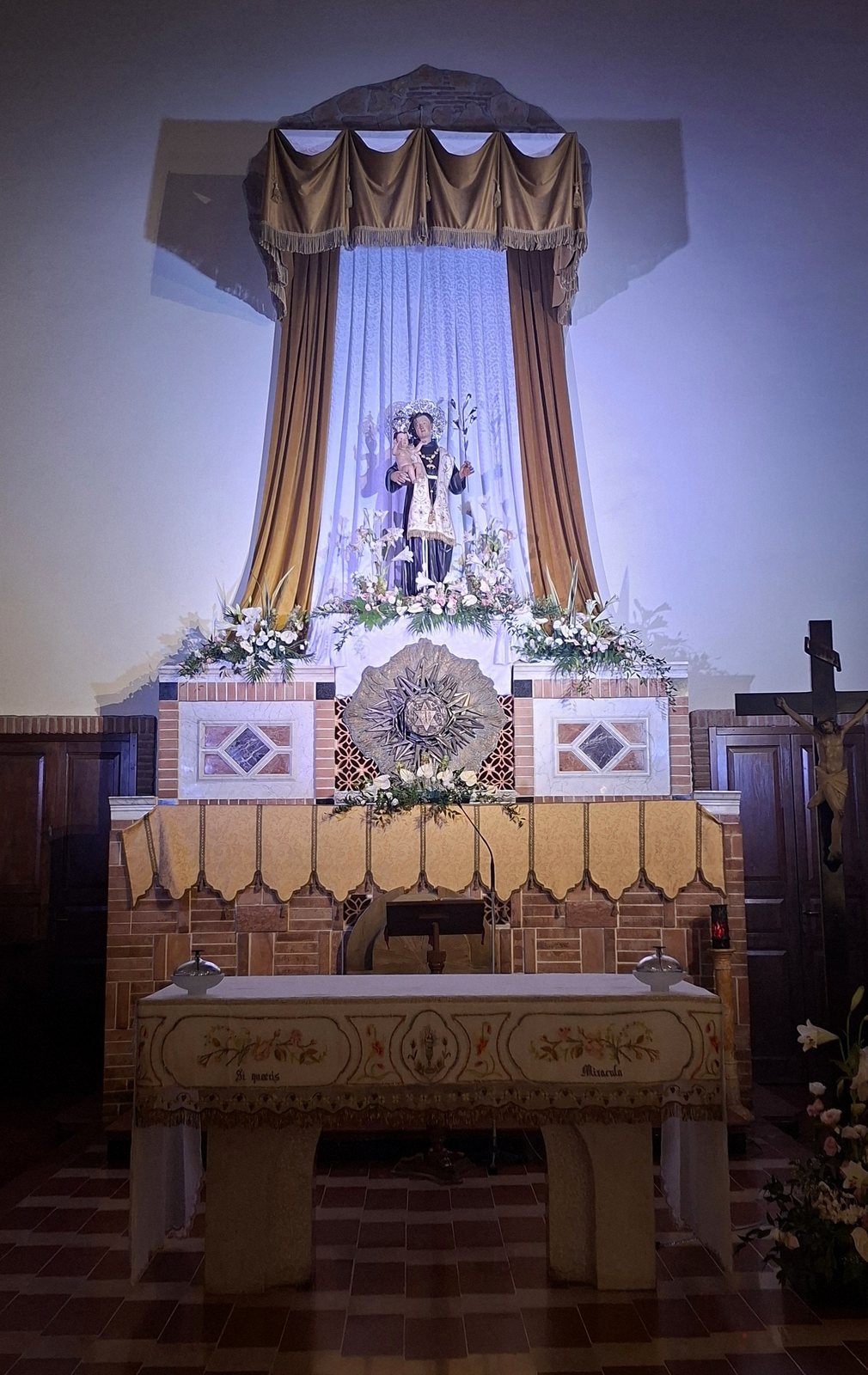
An oil painting of the Porziuncola, a chapel associated with Saint Francis of Assisi, dates to the seventeenth or eighteenth century. It shows the Virgin with an inscribed panel reading INDULGENZIA PLENARIA PPETUA, Christ, the Holy Spirit, winged child figures, Saint Francis, and Saint Anthony. The wording refers to a perpetual plenary indulgence, which in Catholic teaching concerns remission of temporal punishment due to sin. A second oil painting, from the late seventeenth century, depicts Saint Adiuto, venerated as an early Franciscan martyr, and his martyrdom in Morocco in 1220. The altar holds a fifteenth-century wooden Crucifix by Pietro della Comunella and a sculpture of Our Lady of Sorrows. Near the support of the arch separating the nave from the altar area stands a wooden statue of Saint Anthony, painted in multiple colors and dated to the eighteenth or nineteenth century. It stood on the high altar until 1930. Its present placement followed restoration work in 1985 and the creation of a gilded wooden structure for processions in 2007.
Choir gallery and stained glass
A large choir gallery overlooks the nave, and a large stained-glass window in the outer wall brings light into the church. Among the stained-glass windows made by Friar Alberto Farina in 1995 is one depicting the miracle of the miser’s heart.