Collegiate Church of St. Mary Magdalene Penitent in Atrani, Italy
Site at a Glance
- Popularity
- Medium
- Country
- Italy
- Primary era
- Medieval
- Eras represented
- Medieval, Early Modern
- Civilizations
- Kingdom of Naples, Kingdom of Sicily, Spanish
- Site type
- Religious
- Remains
- Church
On this page13 sections
History
The Collegiate Church of St. Mary Magdalene Penitent is a Roman Catholic church in Atrani, Italy, dedicated to Mary Magdalene. It follows the Roman rite, the principal liturgical tradition of the Roman Catholic Church, and belongs to the Archdiocese of Amalfi-Cava de’ Tirreni, a major territorial jurisdiction within the church. The church was built around 1274, following a tradition of devotion to Mary Magdalene that reaches back to the first half of the twelfth century.
Foundation and medieval devotion
Atrani’s residents built the church on the remains of a medieval fortification in gratitude to Mary Magdalene, whom they regarded as their patroness. Their foundation story recalls the settlement around 1100 of sailors from Alexandria, sent by Manfred the Norman, a medieval ruler, to punish Atrani for supporting the pope in the struggle between the papacy and the empire. This was a medieval contest over political and church authority.
Repairs, expansion, and collegiate status
By 1570 the church had deteriorated and become structurally precarious. Repairs were paid for through special taxes on imported wheat and exported manufactured goods. Further restoration followed in 1669, including work on the sacristy, a room for preparing worship and storing church furnishings.
On 14 April 1706, Pope Clement XI issued a formal decree making the church a collegiate church. Such a church is served by a chapter of canons and is distinct from a cathedral; the change responded to Atrani’s growing population. In 1753, private gifts and municipal support paid for an enlargement and embellishment. The medieval fortification was demolished to make room. The church was later modernized by an architect from Salerno.
Devotion and cultural memory
In 1722, Atrani residents commissioned Italian composer Leonardo Leo to write the three-act opera From Death to Life of Mary Magdalene in honor of their patroness. Its sole known manuscript, long thought lost, was later found at an antiquarian bookseller in Paris. It is now held by the Leonardo Leo Study and Documentation Center in San Vito dei Normanni. In July 2019, the opera was performed in Atrani for the first time in about three centuries by the Baroque Orchestra of the Confraternita De’ Musici, led by music scholar and conductor Cosimo Prontera. The Baroque was a European period in art and music.
Atrani also commemorates the Montagnella miracle, traditionally dated to 23 February 1723 and attributed to Mary Magdalene and St. Rosalia, a Christian saint especially associated with Sicily. Decrees by Archbishop Michele Bologna of Amalfi attesting to the event were recovered through archival research. The town has celebrated the miracle each year on 24 February. Mary Magdalene’s feast as Atrani’s patroness falls on 22 July.
In 2016, the parish celebrations committee reopened a cabinet inside the church that had been locked for many years. It contained relics, physical remains or objects revered for their association with a saint or sacred event, including bone remains attributed to Mary Magdalene and a fragment of the True Cross, traditionally identified with the cross of Jesus’s crucifixion. Research in the collegiate church’s archive later recovered old attestations and certificates of authenticity. Since 2016, the parish celebration has also been associated with the cabinet’s reopening. In July 2025, the parish received further relics of Mary Magdalene from the official responsible for relics of the Archdiocese of Salerno.
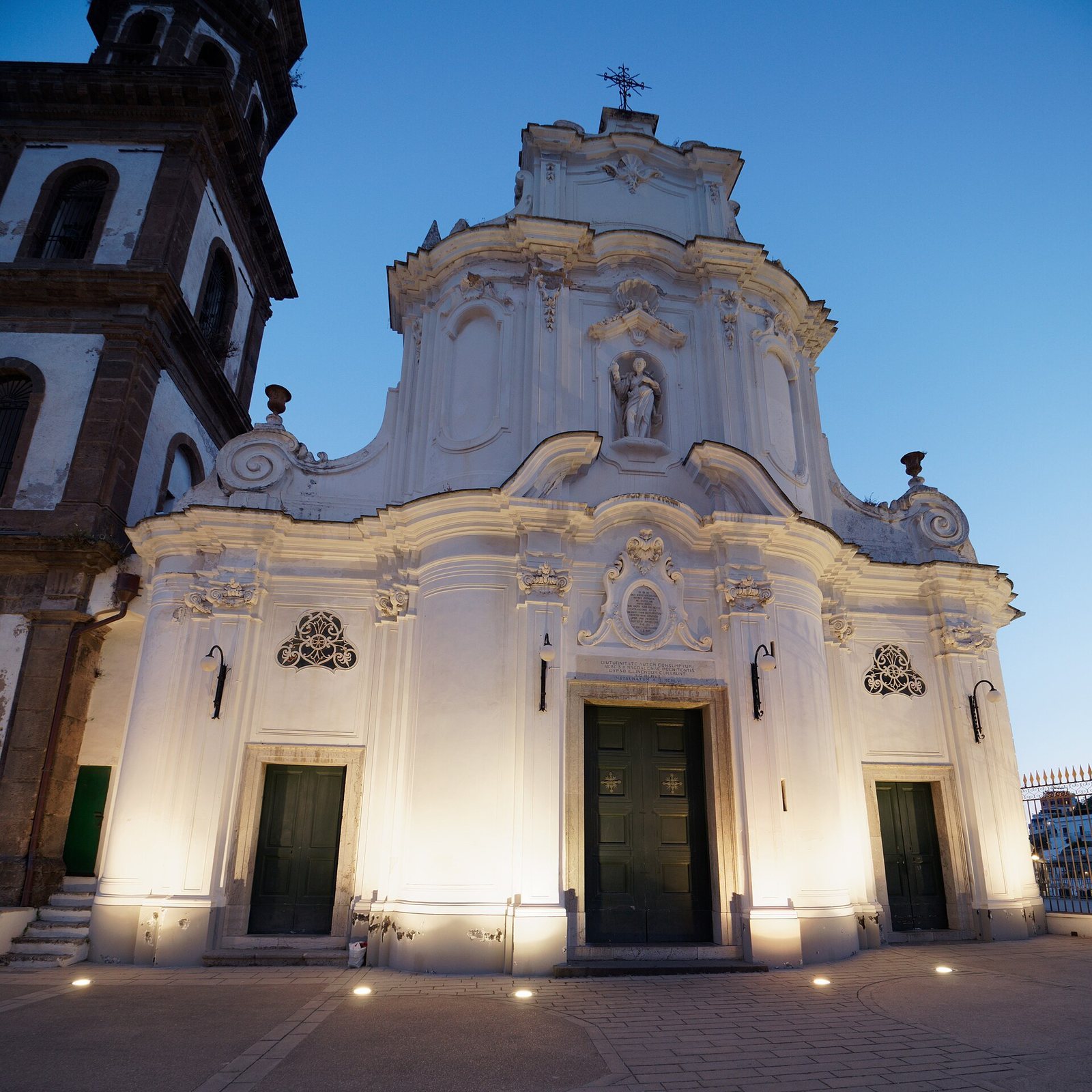
The church’s façade underwent repair and reconstruction over three years, with the work completed in June 2021.
Remains
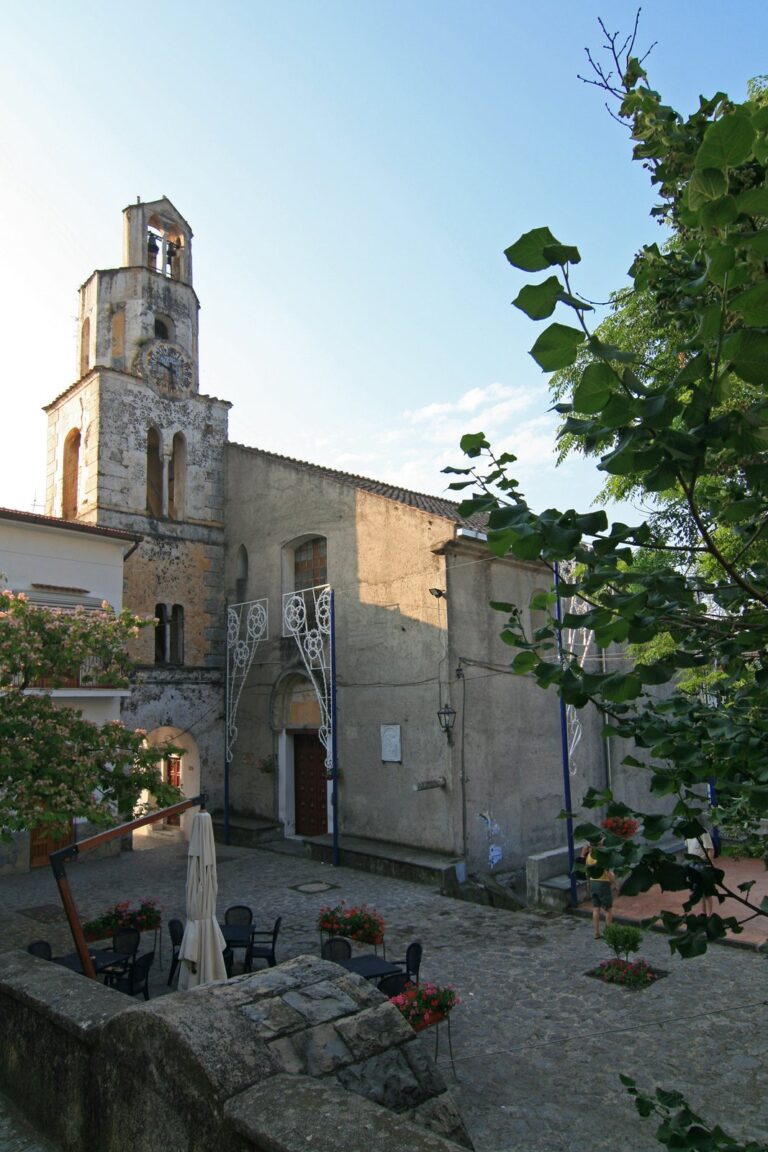
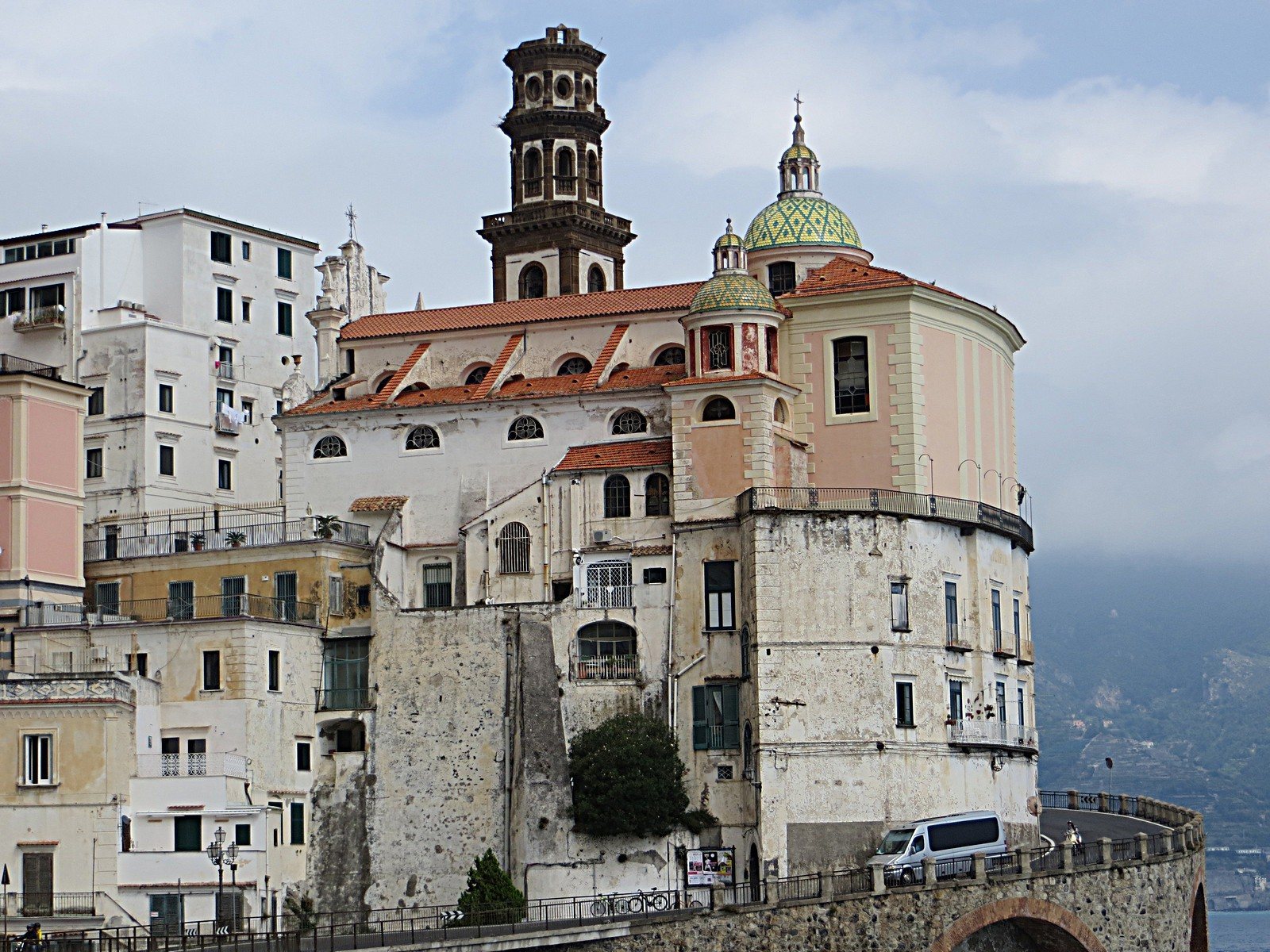
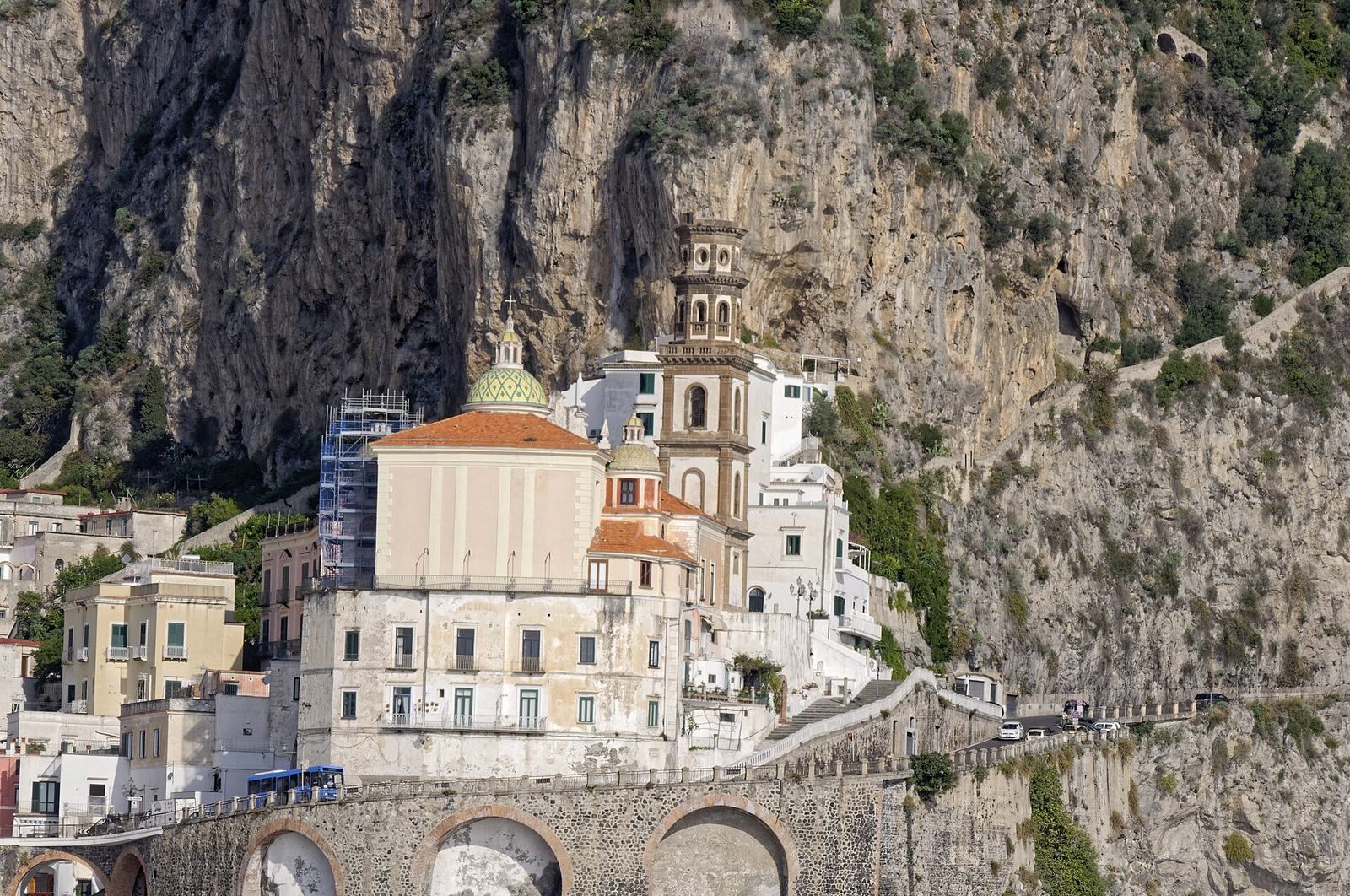
The church combines a Rococo façade, two transepts (crosswise parts of a church), a tall bell tower, and a sacristy. One transept is vaulted and covered externally with maiolica, a tin-glazed ceramic, while the other has a flat roof. The church’s interior also contains side chapels, statues, paintings, and relics.
Church and interior
Façade and transepts
The façade is in the Rococo style, an ornate decorative style that developed in eighteenth-century Europe. It has been described as the only example of this style on the Amalfi Coast. The two transepts differ in their roof forms: one has vaulting beneath an exterior covering of maiolica tiles, and the other is flat-roofed.
Side chapels and paintings
Side chapels contain numerous statues, and the church holds paintings from the seventeenth and eighteenth centuries. Among them is The Shepherdess Madonna, a sculpture dated 1789. Another work, The Incredulity of Saint Thomas, is by Andrea Sabatini, a sixteenth-century artist from Salerno.
Altar and panel painting
The main altar holds Giovanni Angelo D’Amato’s painting Mary Magdalene between Saints Sebastian and Andrew. It forms part of a polyptych, an artwork made up of multiple panels. Its upper section, The Resurrection between Saints Peter and Paul, is kept in the sacristy.
Relics
The remains attributed to Mary Magdalene and found in the church in 2016 are displayed beside an ancient statue. The additional relics received in 2025 consist of hair filaments, bones, and a phalanx, or finger bone, attributed to the saint.
Bell tower and sacristy
Bell tower
The tall tower is built of brown tuff and follows the Norman style, a medieval building tradition associated with Norman rule. It was probably constructed between 1570 and 1584. Around the middle of the eighteenth century, Atrani merchant Roberto Visicchio paid for its main bell to be cast with proceeds from his trade in oils and textiles.
Sacristy and terrace
An exterior buttress was added to the sacristy during the repairs of 1669. Its terrace overlooks the Gulf of Salerno.