Santa Maria Assunta: The Parish Church of Pozzo di Gotto, Italy
Site at a Glance
- Popularity
- Low
- Country
- Italy
- Primary era
- Early Modern
- Eras represented
- Early Modern
- Civilizations
- Kingdom of Sicily, Spanish
- Site type
- Religious
- Remains
- Church
On this page24 sections
History
Foundation and rebuilding
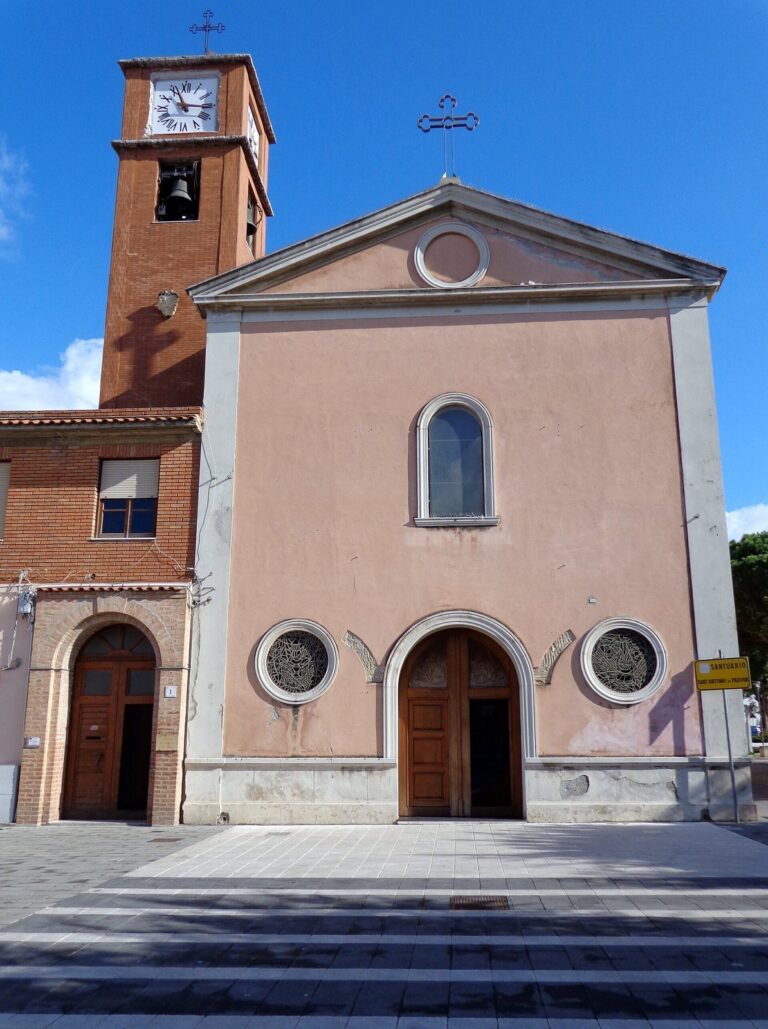
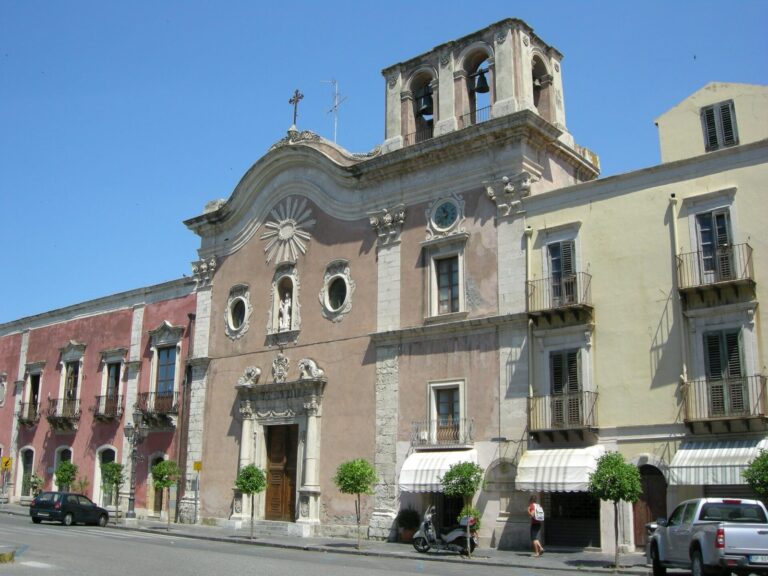
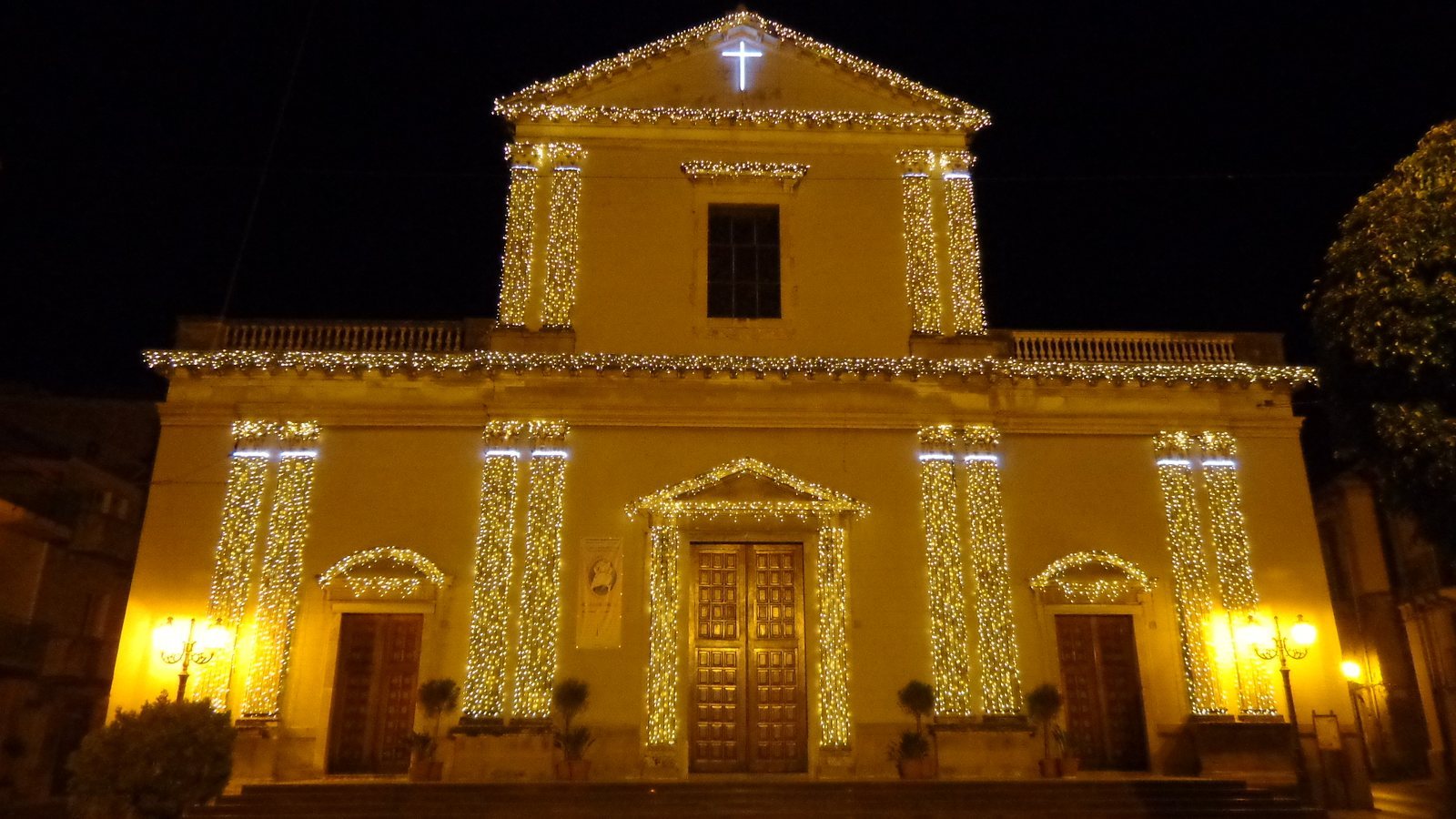
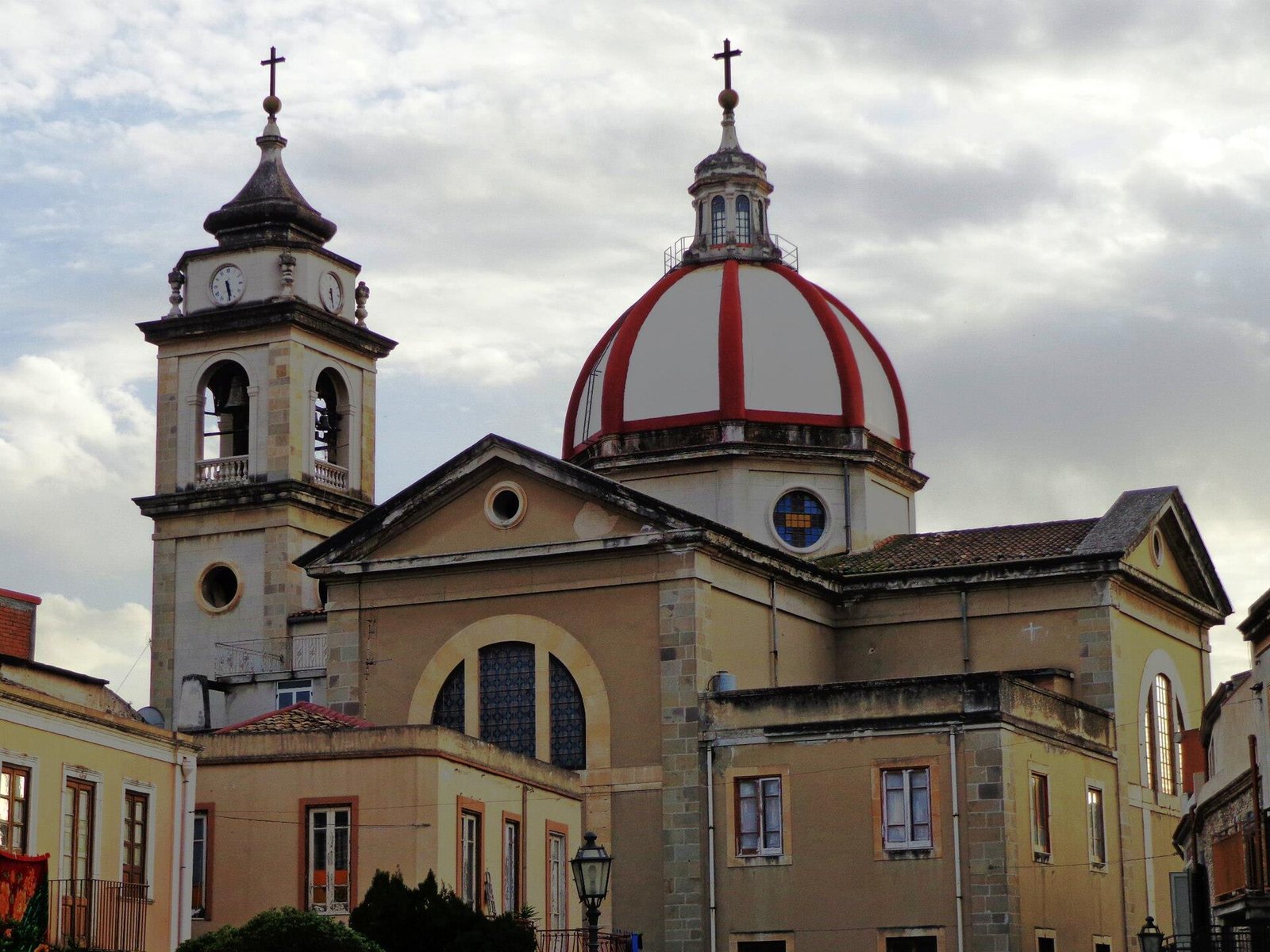
Santa Maria Assunta is a Roman Catholic church in Pozzo di Gotto, Italy, founded in 1620. Its present building, completed in 1938, has a contemporary Neoclassical design, a modern style inspired by classical forms. Construction of the original church continued until 1646, during Spanish rule in Sicily. Its dedication refers to the Assumption of Mary, the Catholic belief that Mary, the mother of Jesus, was taken into heaven.
The church was founded by Matteo Valveri, parish priest of Saint Vitus, under Archbishop Andrea Mastrillo. The 1783 earthquake in southern Calabria destroyed it. Rebuilding began in 1859 and was completed in 1863. That year, Santa Maria Assunta became the principal church of Pozzo di Gotto, taking the title from the nearby church of Saint Vitus.
Earthquake damage and the present church
The 1908 Messina earthquake badly damaged the building. It was demolished and reconstructed, and the present form was completed in 1938.
Parish life and devotional traditions
Santa Maria Assunta belongs to the Roman Catholic Archdiocese of Messina-Lipari-Santa Lucia del Mela and serves as the parish church of Santa Maria Assunta. It is part of the archpriesthood of Barcellona Pozzo di Gotto, an ecclesiastical district overseen by an archpriest and placed under the patronage of Saint Sebastian, a Christian martyr venerated as a saint. The church was also the seat of the Confraternity of Saint Philip of Agira, a religious association founded around 1620 and connected with a chapel dedicated to the saint.
During Lent, veils cover the altar and other religious symbols. At the Easter vigil, a large purple cloth hung below the arch of the altar area is lowered at the Gloria, revealing the presbytery and enacting the Resurrection of Christ. The practice was once widespread in Sicilian churches, but became uncommon before being deliberately revived. Its adoption in Sicily is attributed to missionaries of the Teutonic Order, a medieval Catholic religious order with a military role. They came to Palermo and Messina after the Norman reconquest, supported by Count Roger. The custom is traced to a German penitential practice of the ninth century.
The church serves as the starting and ending point for the archpriesthood’s Good Friday processions during Holy Week, the week before Easter. Groups from different churches gather in its forecourt before the rites. The annual observance of Saint Vitus on June 15 also begins at Santa Maria Assunta. Its ceremonies and procession end at the Oratory of the Souls in Purgatory, beside the former cathedral of Saint Vitus. The parish jurisdiction includes the churches of Jesus and Mary and Saint Francis of Assisi under the title of the Immaculate Conception, known as the Capuchins, as well as the Sanctuary of Our Lady of Mount Carmel and the Salesian Oratory of Saint Michael the Archangel.
Remains
Plan and structure
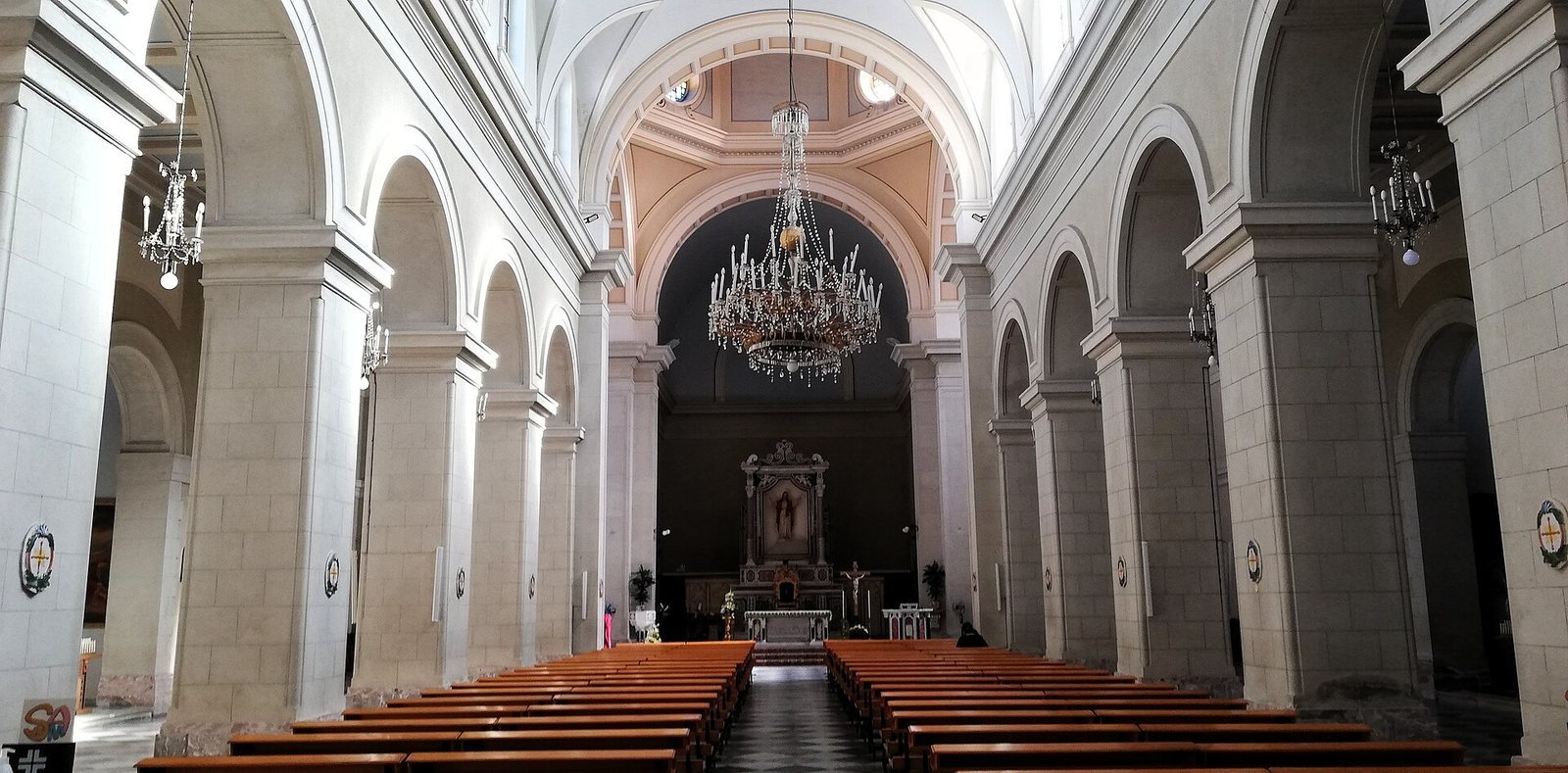
The church occupies the area of the earlier Santa Maria Assunta cathedral, in the heart of ancient Pozzo di Gotto. It has a cross-shaped plan, with a broad central nave, the main space of the church, and two side aisles. A barrel vault, a continuous arched ceiling, covers the nave. Large round arches rest on sturdy piers that divide the interior into three aisles. Each side aisle has five arches, and the building contains six minor altars and two side entrances.
Recovered architectural fragments
Six separate spaces run along the outer side of each aisle. They contain fragments of ornamental marble salvaged after destructive earthquakes, including friezes, spiral ornaments, capitals, inlaid brackets, sections of columns, and bases.
South aisle
Entrance wall and first bay
On the right side of the interior entrance wall is Saint Liberante, a canvas painting by Michele Panebianco dated 1861. The first bay contains The Holy Family with the Young Saint John the Baptist, an oil painting dated 1666 and attributed either to Domenico Guargena or to the friar Feliciano of Messina, known as the “Raphael of the Capuchins.” A seventeenth-century marble holy-water stoup stands beside the pier.
Second bay
A processional group depicting the Crucifixion was carved in cypress wood by Giuseppe Rossitto in 1870. Child figures at the foot of the cross hold the Instruments of the Passion. The group also includes Mary, Mary Magdalene, and the apostle John, to whom Jesus gives a final charge. The ensemble brings together works from different dates: Giuseppe Emma of San Cataldo added papier-mâché figures at the cross’s foot in 1978. Nino Bauro and Vito Arrico carried out an initial restoration in 2003. The group is carried in Holy Week penitential processions.
Third bay
The altar and its central statue are tentatively identified as dedicated to and depicting Saint Liberale. Nearby are a painting of Saint Leonard in chains and a reproduction of The Embrace of Jesus. On the left is The Baptism in the River Jordan by Salvatore Ferro, while the left wall displays a canvas of Saint Aloysius Gonzaga.
Fourth bay
The fourth bay contains the south entrance.
Fifth bay
An altar dedicated to the Assumption of Mary stands in the fifth bay. Its image of the Virgin originally came from the high altar. At the statue’s foot is an angel from The Symbols of the Passion, a sculptural group once carried on the only allegorical float in the Holy Week procession. Rather than depicting a particular Station of the Cross, the float evoked Golgotha and the Cross. The group represents the “Mystery of Life” and the Resurrection through instruments of martyrdom. The bay also contains two images of the Madonna in tin-glazed earthenware tiles, a glazed-terra-cotta relief on the left wall, a painting of female saints, and a reproduction of The Ascent to Calvary on the right wall.
Sixth bay
The sixth bay contains a confessional.
North aisle
Entrance wall and first bay
The left side of the interior entrance wall bears The Coronation of the Virgin, a canvas by Salvatore Ferro dated 1859. In the first bay, a bell that survived an earthquake rests on the floor. A painting on the wall shows Saint Lucy, a virgin and martyr, among figures that include a saint in episcopal dress, another martyr, and child figures holding symbols of martyrdom.
Second bay
The second bay has an altar dedicated to Saint Anthony of Padua, with a painting of the saint and a statue on a shelf. Pedestals set forward from the wall carry statues of Saints Peter and Paul. A painting on the right wall is tentatively identified as Saint Aloysius Gonzaga; the left wall displays The Ascent to Calvary.
Third bay
An altar dedicated to Saint Rita holds a statue of Saint Rita of Cascia on a shelf, alongside a sculptural group of a benefactor saint. The right wall displays The Fall on Calvary, and the left wall The Journey to Calvary.
Fourth bay
The fourth bay contains the north entrance.
Fifth bay
The altar dedicated to Saint Vitus has a marble statue of the martyr from the second half of the sixteenth century. The statue is attributed to the workshop of Rinaldo Bonanno, associated with the Mannerist school of Messina, a sixteenth-century artistic style, and came from the former cathedral of Saint Vitus. The bay also contains a painting of Saint Vitus. A painting of the Crucifixion hangs on the right wall and one of Saint Pio of Pietrelcina on the left.
Sixth bay
The sixth bay contains a confessional. On the right wall is a painting of the Sacred Heart of Jesus attributed to Michele Panebianco; on the left is a painting of the Sacred Heart of Mary.
Transept
Chapel of the Blessed Sacrament
The Chapel of the Blessed Sacrament occupies the left small apse, a rounded end of the church. Its altar has a seventeenth-century wooden ciborium, a liturgical furnishing associated with the Eucharist, gilded with pure gold. It came from the church of Saint Vitus.
Paintings
A painting of Saint Vitus by Salvatore Ferro hangs on the north wall, and a painting of Blessed Antonio Franco, the prelate of Santa Lucia del Mela, hangs on the south wall. Facing the left aisle is Our Lady of the Rosary by Placido Lucà Trombetta, dated 1869. The transept also contains a sixteenth-century painting of Christ Blessing and Souls in Purgatory, as well as a painting by Salvatore Ferro.