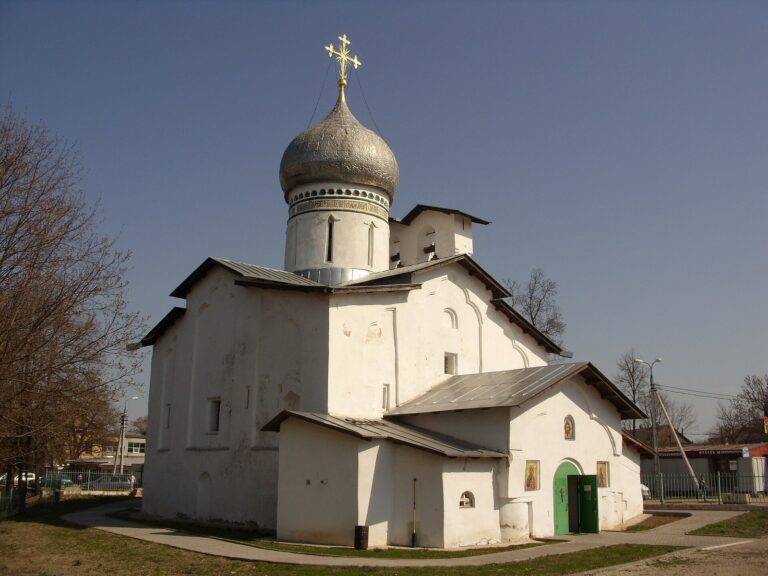
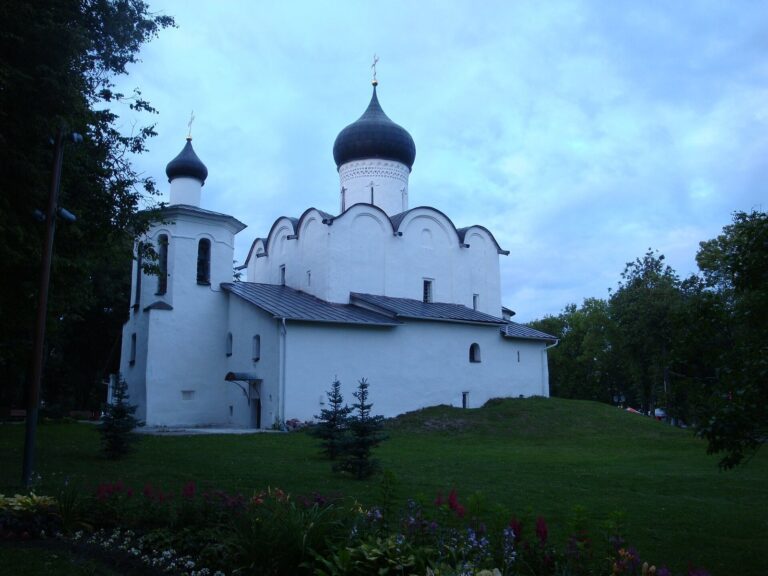
Church of the Dormition of the Theotokos at the Ferry, Pskov: An Orthodox Church at a Historic Ferry Crossing
Site at a Glance
- Popularity
- Medium
- Country
- Russia
- Primary era
- Early Modern
- Eras represented
- Early Modern, Modern
- Civilizations
- Unclassified
- Site type
- Religious
- Remains
- Church
On this page8 sections
History
The Church of the Dormition of the Theotokos at the Ferry, Pskov, is an Orthodox church in Russia, dedicated to the Dormition, the Eastern Orthodox commemoration of Mary’s death. It belongs to the Pskov Diocese, the church jurisdiction for the region, and was originally associated with a ferry crossing of the Velikaya River.
Medieval rebuilding
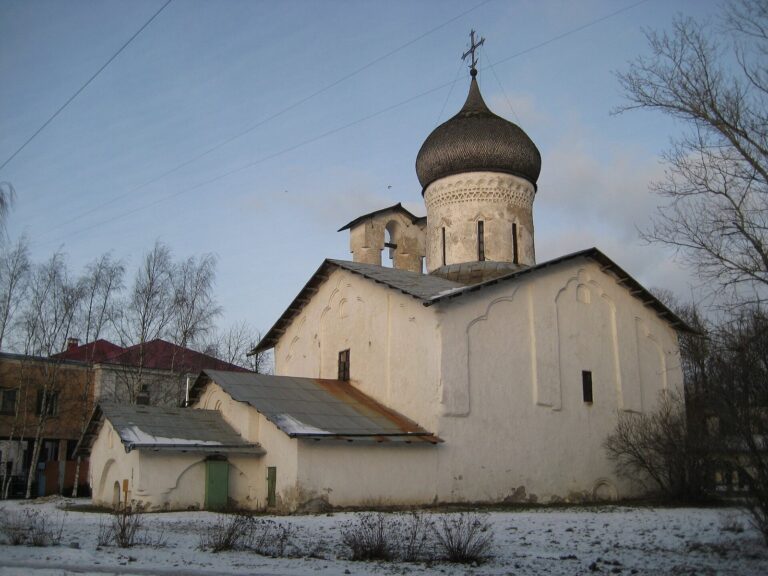
Chronicles first mention the church in 1444. A rebuilding in 1521 gave it the form it retains today, as an example of 16th-century Pskov architecture.
Closure and protection
On 2 September 1938, the church’s last parish priest was arrested, and the church closed soon afterward. Restoration to an architect’s design took place from 1948 to 1951. In 1960, the Council of Ministers of the Russian Soviet Federative Socialist Republic, then a constituent republic of the Soviet Union, placed the church under state protection as a monument of republican significance. It is now a federal-level cultural heritage monument.
In 2019, the church was included in the UNESCO World Heritage List as part of the Churches of the Pskov School of Architecture, the regional architectural tradition associated with Pskov. The listing was made under criterion (iv).
Return to church use
The building returned to the Russian Orthodox Church in 1994. Since 1997, it has been affiliated with the Pskov Directorate of Internal Affairs, a regional law-enforcement authority. Further renovation followed in 1998 and 1999.
On 24 April 2007, Metropolitan Eusebius, the senior Orthodox bishop of Pskov and Velikiye Luki, consecrated a new iconostasis, the screen of icons inside an Orthodox church. New bells were raised to the belfry on 25 August 2008 and consecrated on 7 November that year.
Remains
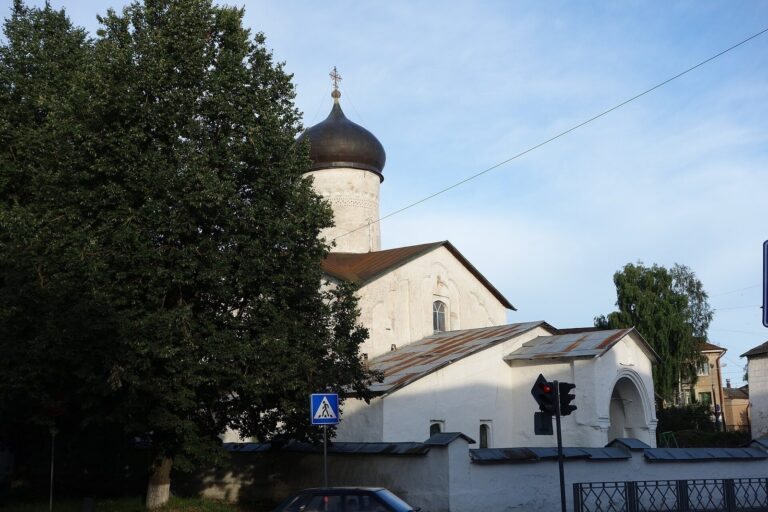
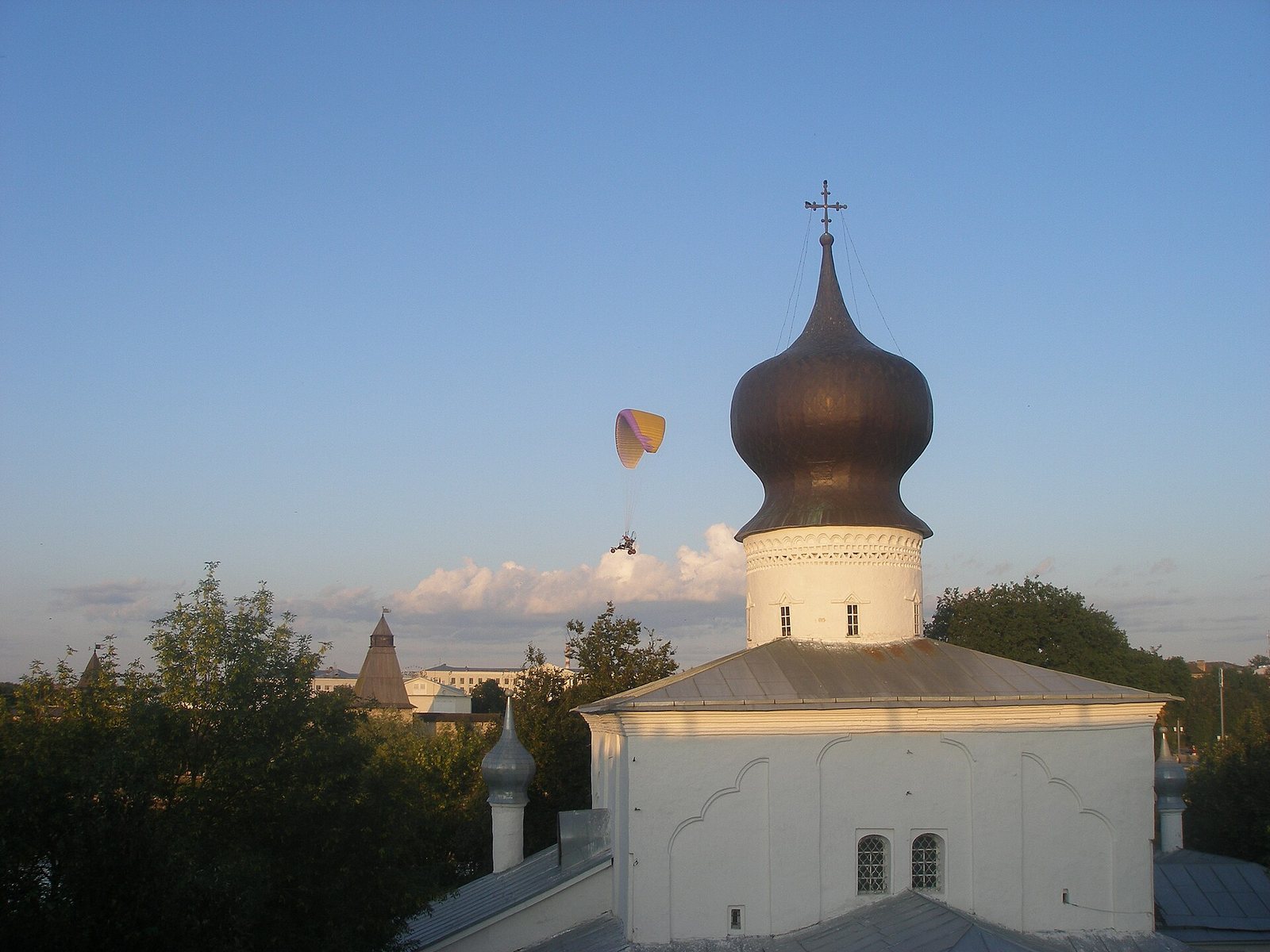
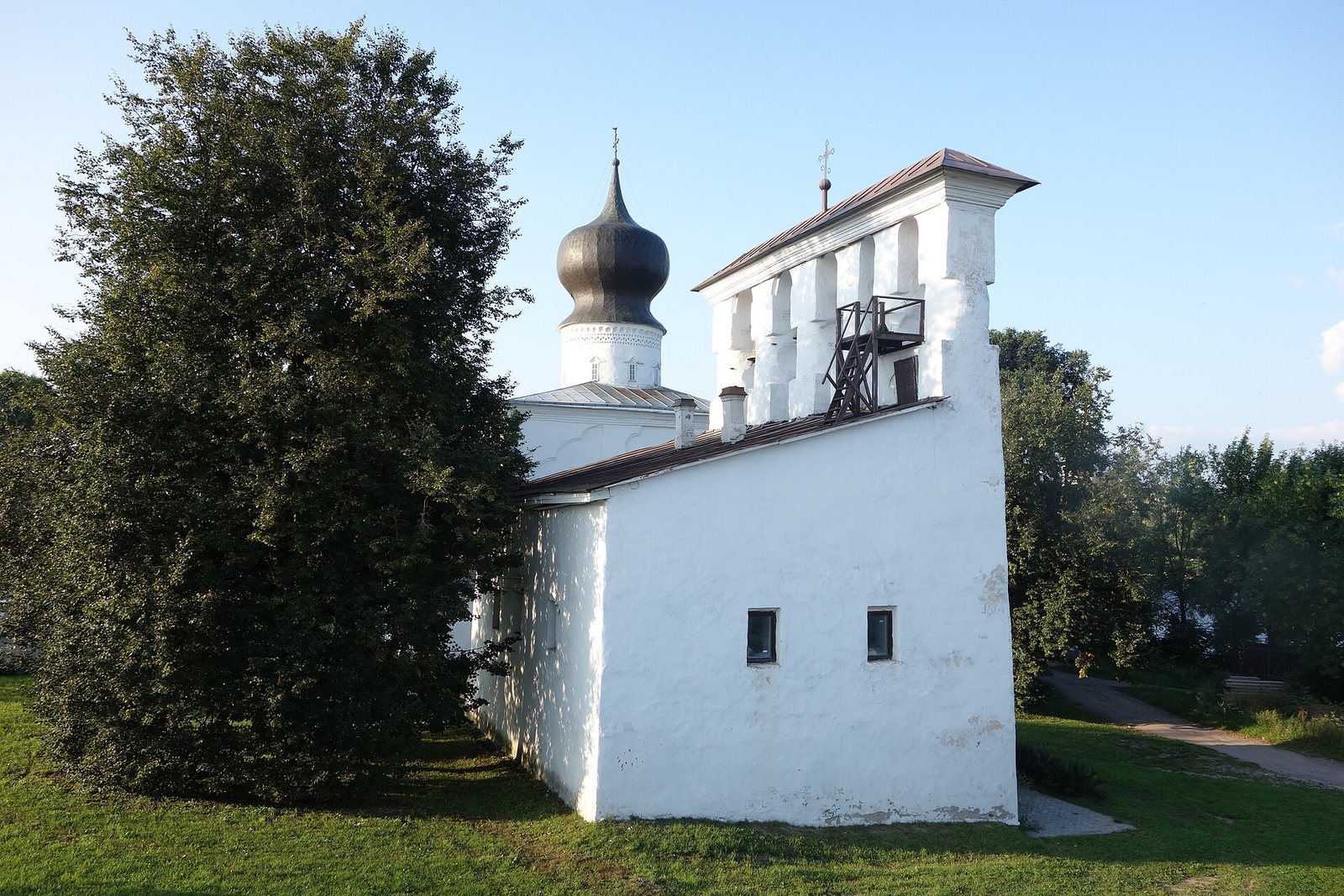
The ensemble follows the 16th-century Pskov architectural tradition and comprises a main church, three side chapels, and a detached belfry. It stands in Pskov’s Zavelichye district beside the Velikaya River, at the end of Olga Bridge and along Krasnoarmeyskaya Embankment. The buildings form a strongly articulated group that resembles a small village when viewed from a distance.
Architectural ensemble
Main church and chapels
The main block measures 16 metres wide, 20 metres long, and 15 metres high. Including the dome and the structure beneath it, the building reaches about 40 metres. Its three side chapels are dedicated to the Nativity of the Theotokos, St Nil Stolobensky, and the Synaxis of the Mother of God, an Orthodox feast honoring Mary. St Nil Stolobensky was a Russian Orthodox monk and saint who lived in the 15th and 16th centuries. The southern chapels honor the Nativity of the Theotokos and St Nil; the chapel of St Nil stands east of, and higher than, the Nativity chapel. The chapel to the north is dedicated to the Synaxis of the Mother of God.
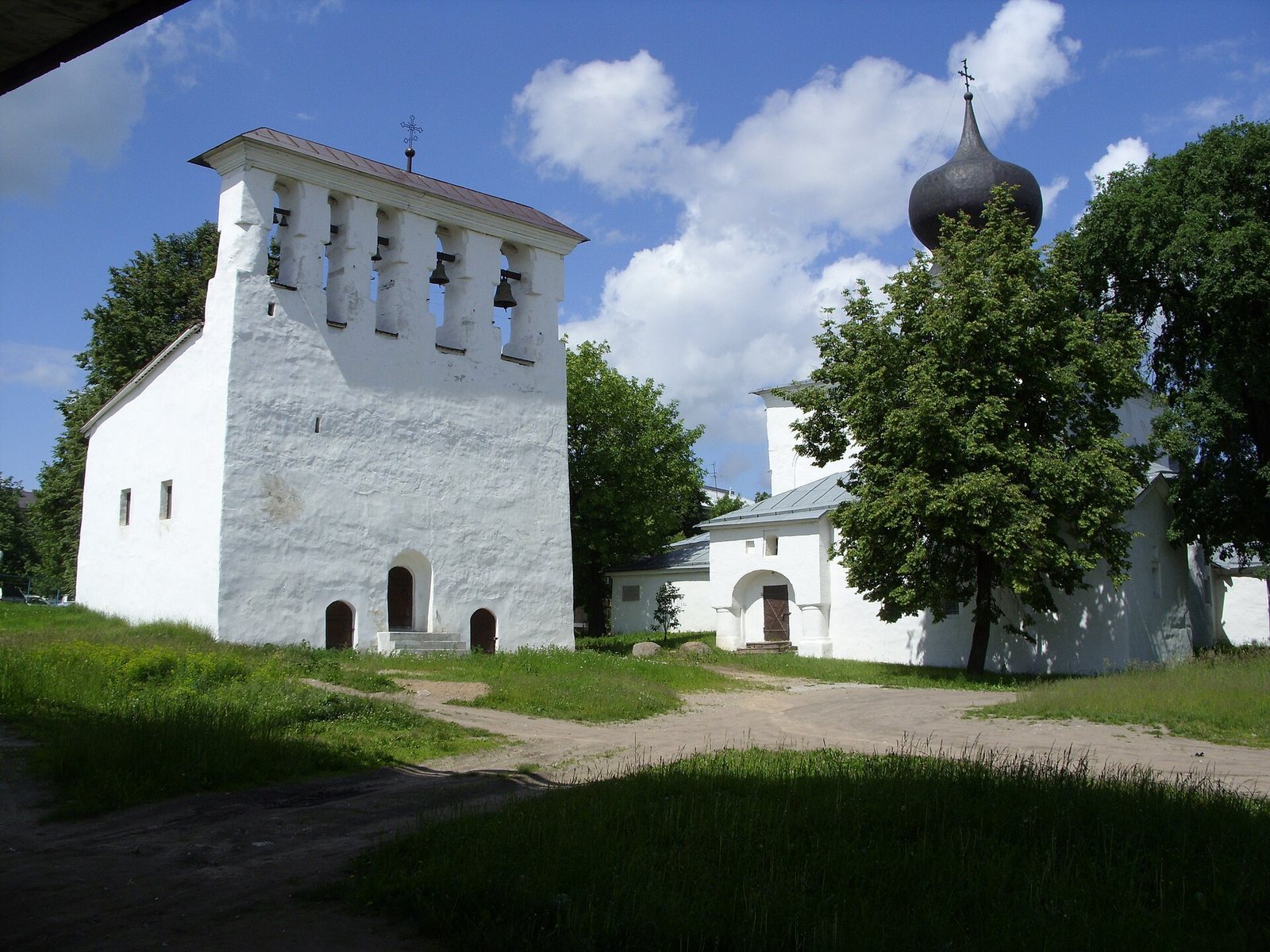
Detached belfry
The detached belfry is an open-arched bell tower, with bells hung in openings in its arcade. It measures 15 by 12 metres and stands about 15 metres high. Its facade faces the Pskov Krom, the city’s fortified central citadel. The complex is in satisfactory condition.