Basilica of St. Bellinus: A Baroque Parish Church in Italy
Site at a Glance
- Popularity
- Very Low
- Country
- Italy
- Primary era
- Early Modern
- Eras represented
- Medieval, Early Modern
- Civilizations
- Venetian
- Site type
- Religious
- Remains
- Basilica
On this page13 sections
History
The Basilica of St. Bellinus is a Baroque Roman Catholic parish church in Italy, built in the mid-17th century and dedicated to Bellino Bertaldi, Bishop of Padua and a martyr, someone who dies for the faith. It belongs to the Diocese of Adria-Rovigo and is associated with the veneration of Bellino, whose remains are kept in the church.
Bellino and the earlier churches
Bellino was murdered around 1147 by assassins sent by Tomaso Capodivacca-Capineri, a lord of Padua. A tradition places Bellino’s first burial in a church dedicated to San Giacomo di Lugarano. After a flood destroyed that church, his remains were recovered from its ruins and transferred about 30 years later to the Collegiate Church of San Martino di Variano. A collegiate church was served by a chapter, or community of clergy. The present basilica stands on the foundations of San Martino. Its bell tower, a surviving part of the earlier church, dates to the early 16th century.
Rededication and rebuilding
Around 1276, after Bellino’s canonization, the formal recognition of a deceased person for veneration as a saint, San Martino was rededicated in his memory. Bellino was already regarded as patron of the Diocese of Adria from time immemorial. The settlement, then called Maneggio, also took the name San Bellino.
The present church was built in the mid-17th century on the foundations of the earlier collegiate church.
Later history
In 1774, the church received the honorary title of minor basilica, a distinction that does not make it a cathedral. Bishop Emanuele Kaubeck consecrated it on 25 November 1874.
During the Second World War, three bells were taken from the tower on 27 February 1943. The largest remained, possibly because it was too large to pass through the paired openings of the bell chamber. The removed bells returned in 1947, during the 800th-anniversary commemoration of Bellino’s death. In early 1997, two 18th-century statues of St. Martin and St. Bellino were moved from façade niches to niches beside the high altar, at the direction of Verona’s Superintendency for Artistic and Cultural Heritage.
Remains
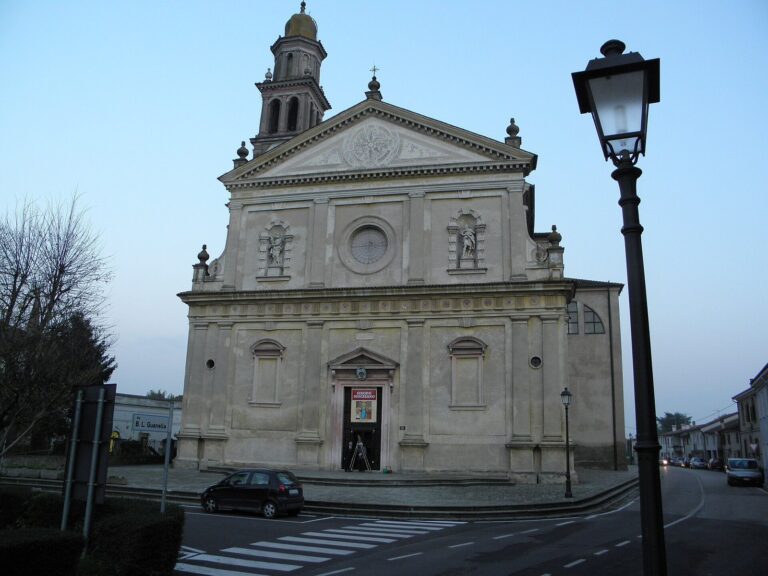
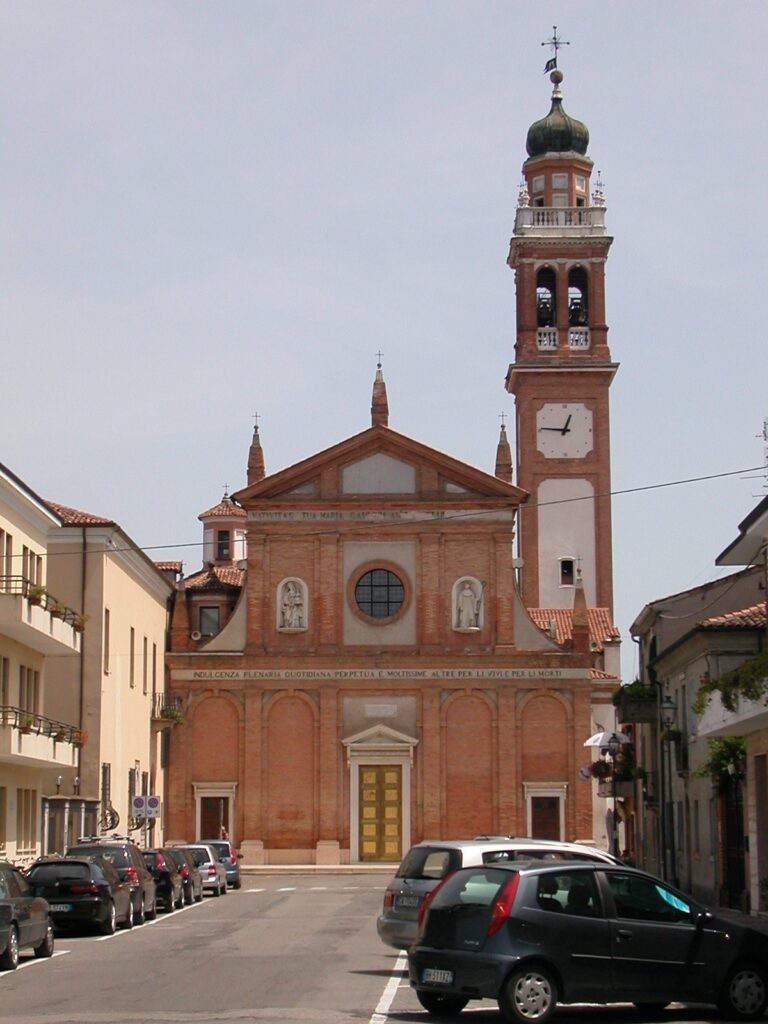
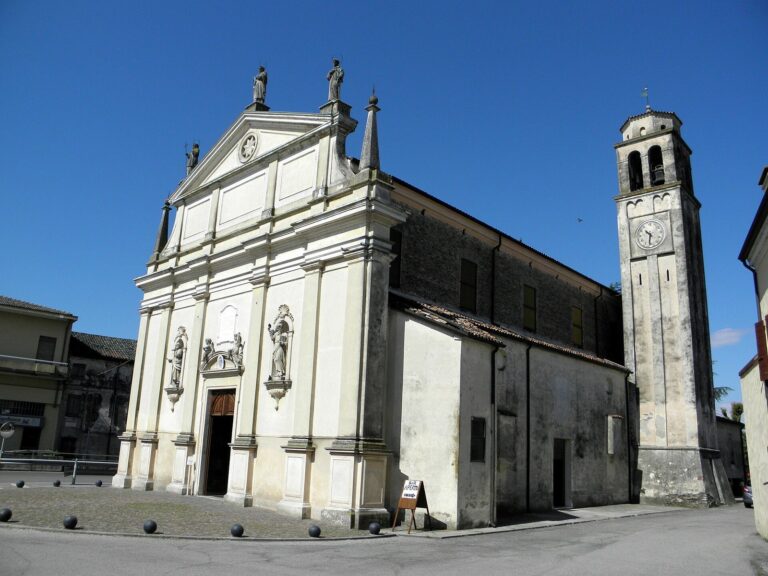
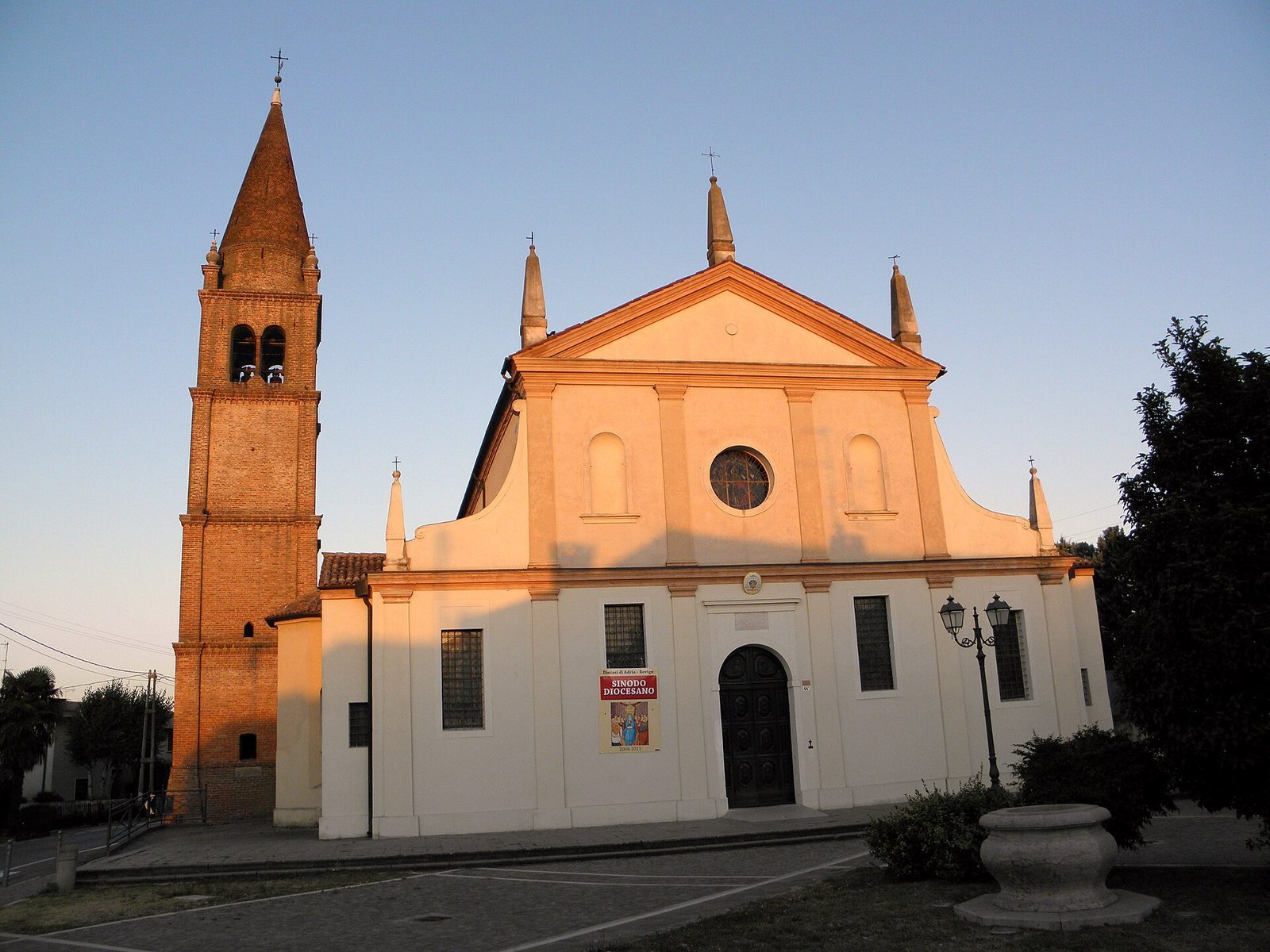
The church-and-tower complex stands at the village center, beside an adjoining square, with a large churchyard around the church. The church faces east and has a cruciform plan with three aisles. Its broad, curved façade contrasts with the tower’s exposed natural-stone construction.
The church
Façade
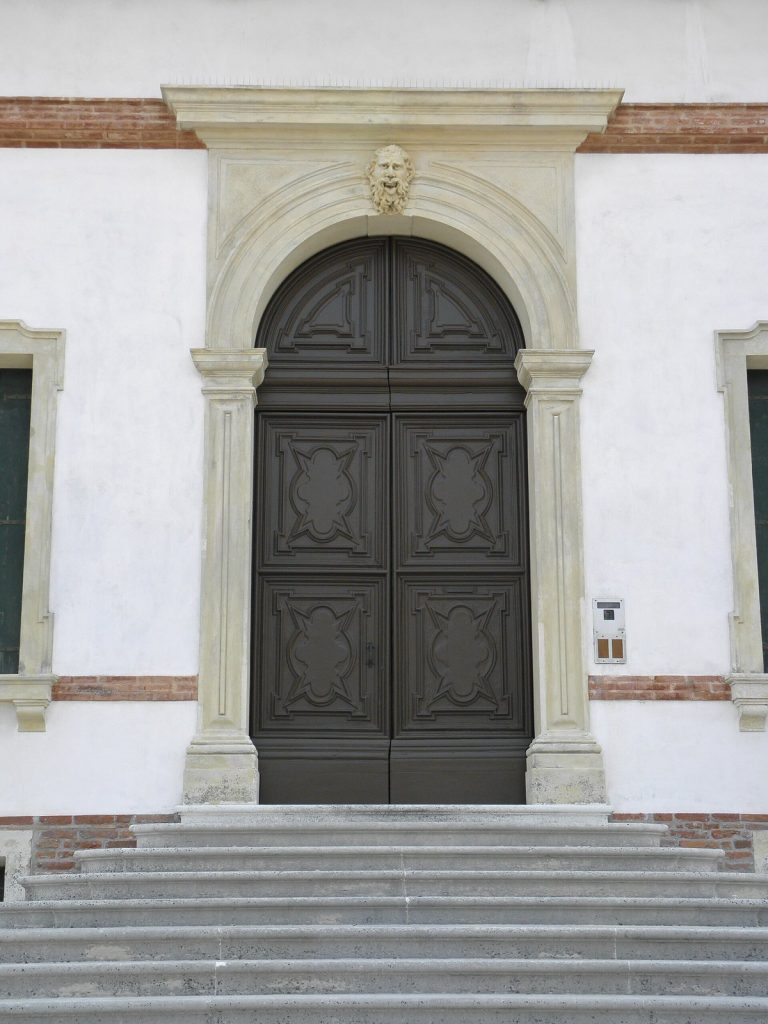
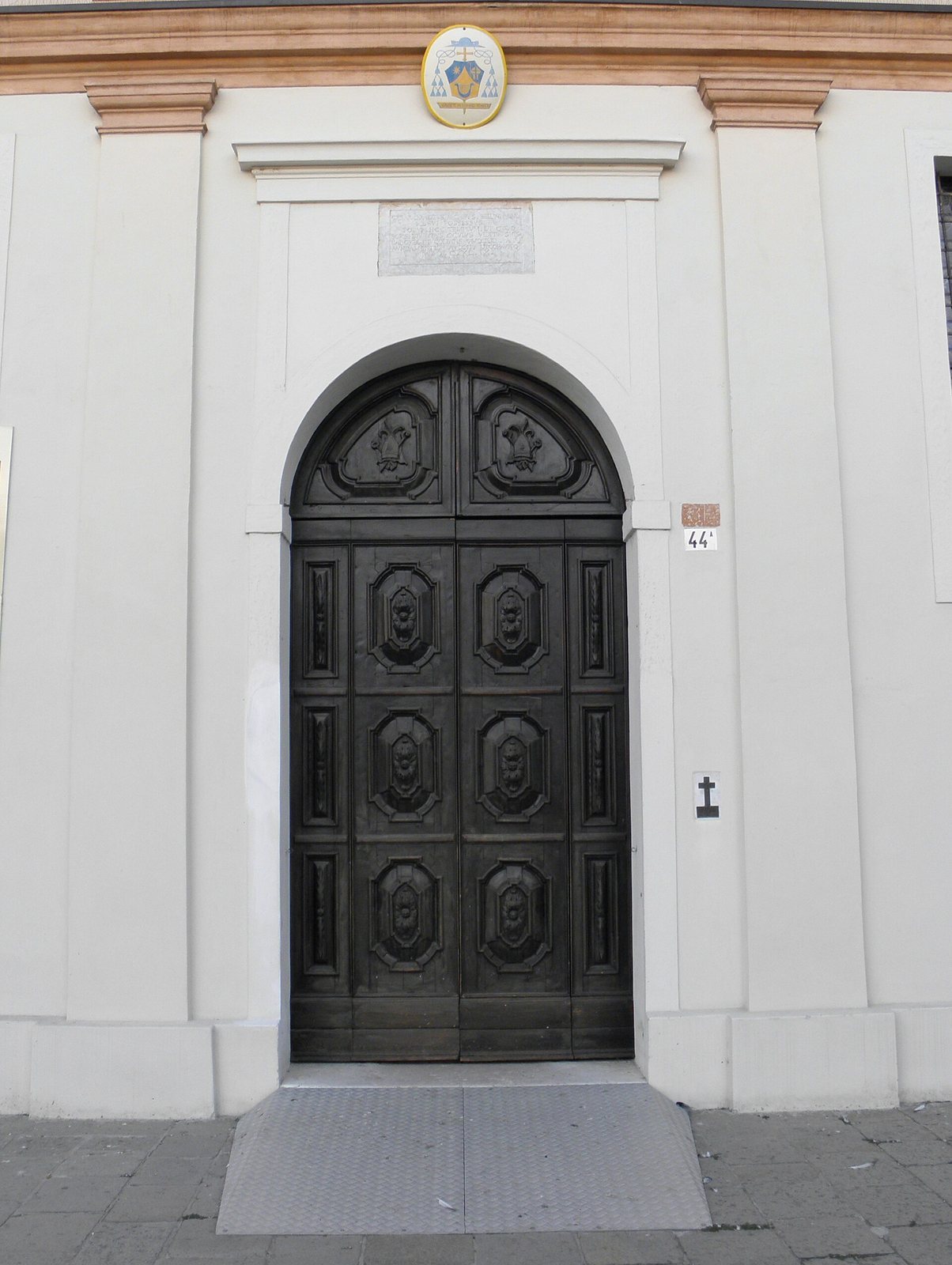
A projecting, profiled cornice divides the façade into two storeys. Six classical pilasters, four large windows and a round-arched entrance mark the lower level. Above, a similar decorative arrangement surrounds a round rose window in the Romanesque style, a medieval style characterized by rounded arches, flanked by two angel statues. Rectangular windows and niches occupy the sides, while pyramidal turrets on stone pillars mark the outer edges. Three pinnacles topped with crosses rise from the triangular pediment. The façade also includes Gothic references.
Interior
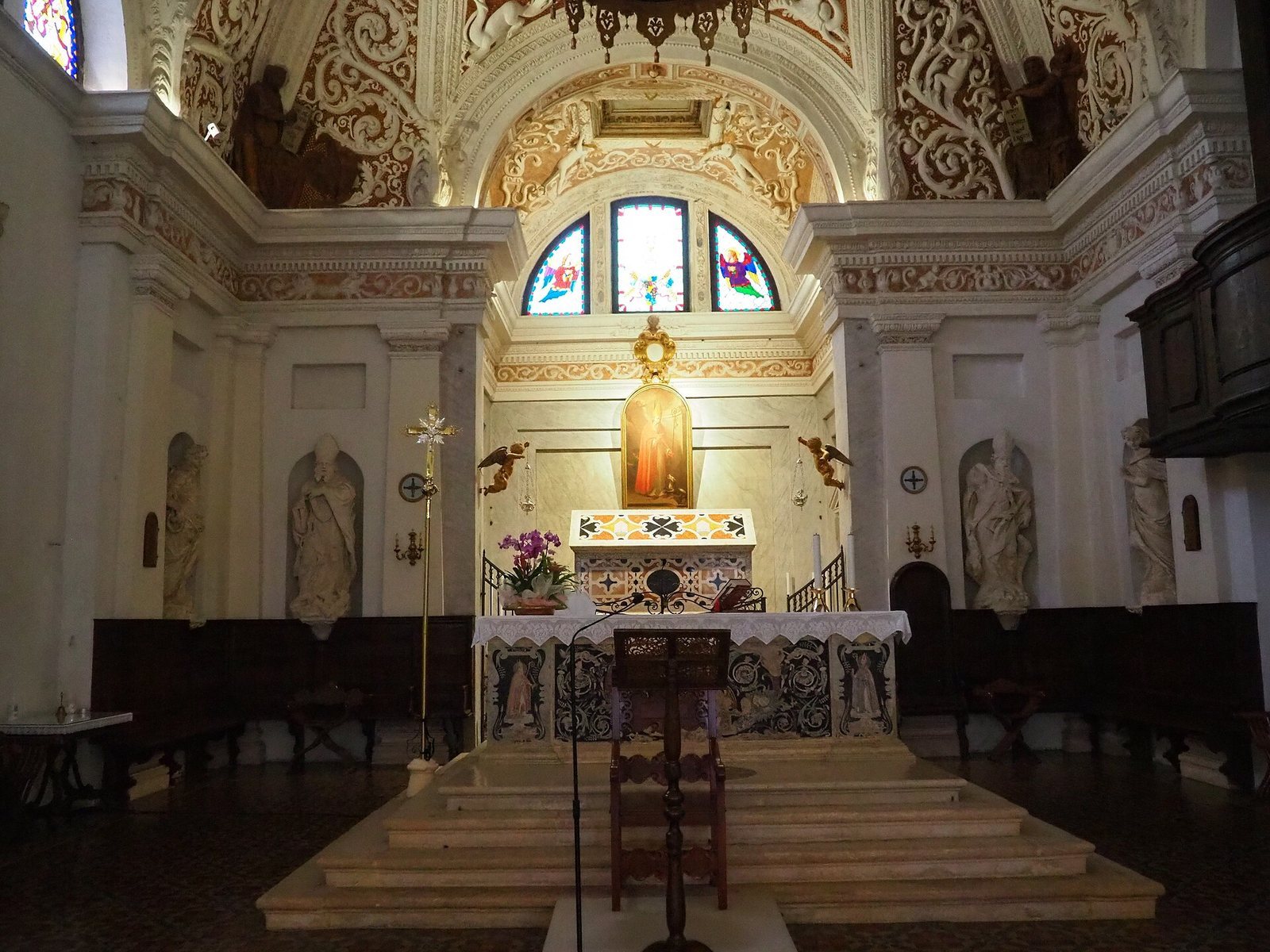
Six round arches on rectangular supports divide the aisles. A profiled, painted cornice runs along the nave toward the choir, and the vaulting, including the ceiling over the apse, is painted. The main nave has a mirror vault, with a flat central panel framed by curved sections; the side aisles have cross-shaped vaults divided into sections. A Venetian window, with a taller central opening flanked by two smaller ones, separates the choir from the nave. It stands on Doric columns, a classical column style, beneath a dome over the choir. A large semicircular window occupies the center of the rear choir. Three chapels for devotional offerings open onto the side aisles through round arches.
Altars and paintings
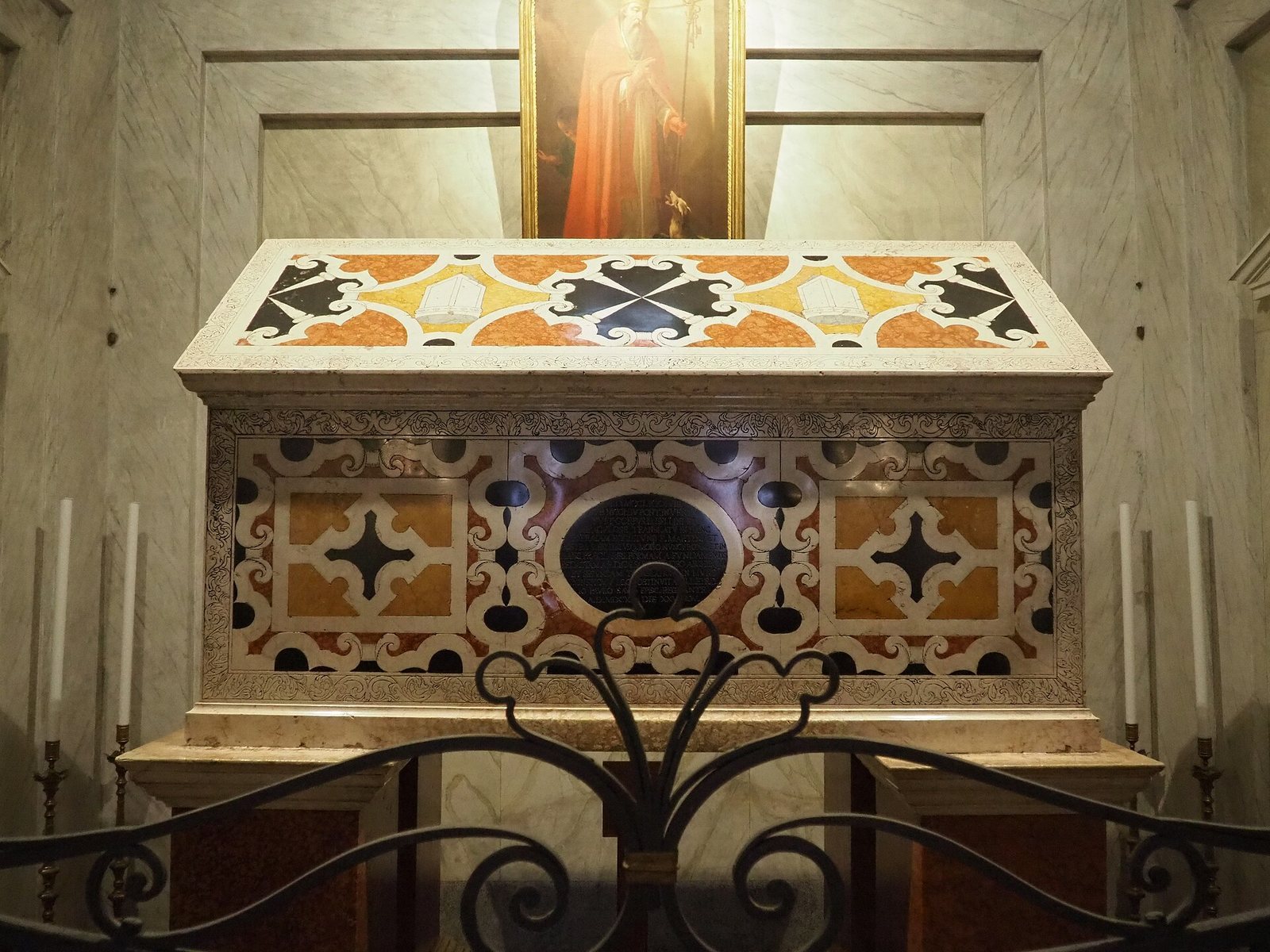
The altar depicts St. Martin and St. Bellino. Several 18th-century works by the Venetian painter Angelo Trevisani include a Nativity altarpiece in the right aisle and a Crucifixion altarpiece in the left. An altarpiece painted by Mattia Bortoloni in 1736 shows Bellino holding a bishop’s crozier, a hooked staff that signifies his office, and keys as he protects a boy from a rabid dog.
Bellino’s memorials
A marble funerary container in the apse area holds Bellino’s remains. The two 18th-century statues of St. Martin and St. Bellino now stand in niches beside the high altar.
Bell tower
Tower structure
The four-storey tower is a late-Romanesque structure built of exposed natural stone. Cornices divide its levels, and paired openings decorate the upper storey, which serves as the bell chamber.
Bells
The wooden bell frame carries four bells. The G3 bell was cast by Pietro Colbachini of Bassano del Grappa in 1843 and strikes the hours. Daciano Colbachini of Padua cast the A3 and B3 bells in 1947, as well as the small E4 bell, also in 1947. The B3 bell strikes the half-hours.