Christ the King Church in Dolice: A Roman Catholic Parish Church
Site at a Glance
- Popularity
- Very Low
- Country
- Poland
- Primary era
- Early Modern
- Eras represented
- Early Modern, Modern
- Civilizations
- Unclassified
- Site type
- Religious
- Remains
- Church
On this page9 sections
History
Christ the King Church in Dolice is a stone church in Poland, completed around 1596 and used for Protestant worship until 1945. Its conversion to Catholic use after the Second World War marked a major change in its religious history.
Wartime Damage and Postwar Reuse
During the Second World War, the tower and roof trusses suffered minor damage. The church was later partly devastated, and the Red Army, the armed force of the Soviet Union, used it as a cinema for soldiers and as a stable. After repairs, it was consecrated as a Catholic church on 27 October 1946.
Today it serves as a Roman Catholic parish church belonging to the Christ the King parish. The parish is part of the Choszczno deanery, a grouping of parishes, and the Szczecin-Kamień Archdiocese, a major Catholic jurisdiction headed by an archbishop. The church entered the register of historic monuments on 12 September 1958, under number A-1428.
Remains
Structure and Exterior
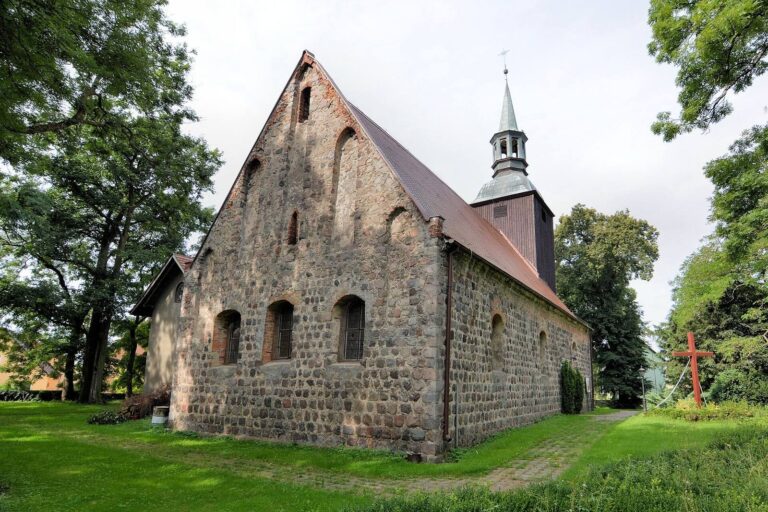
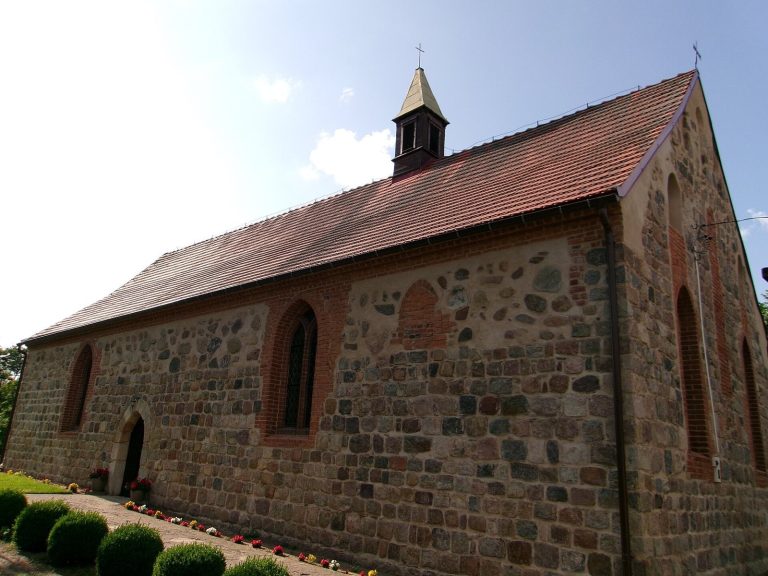
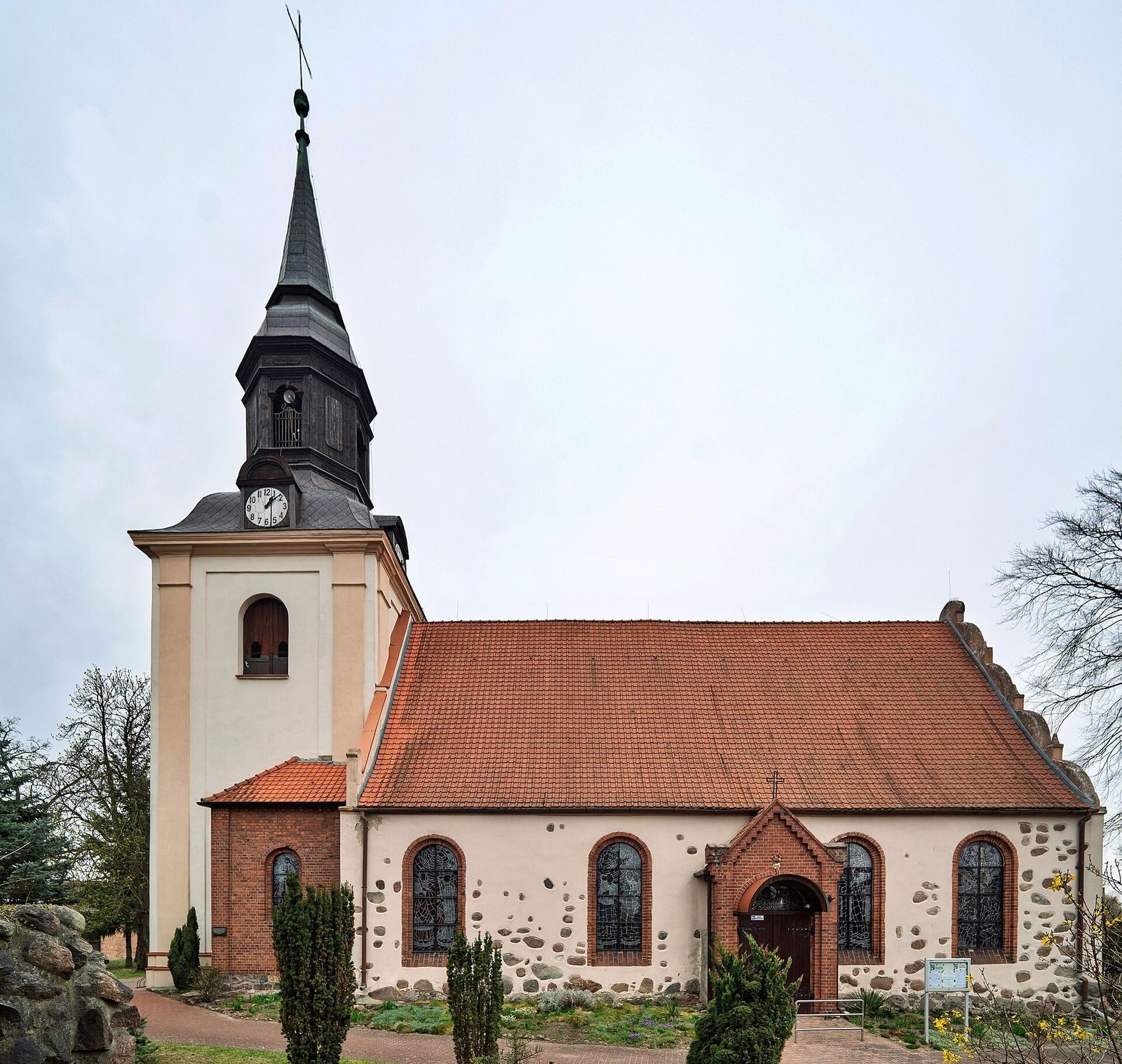
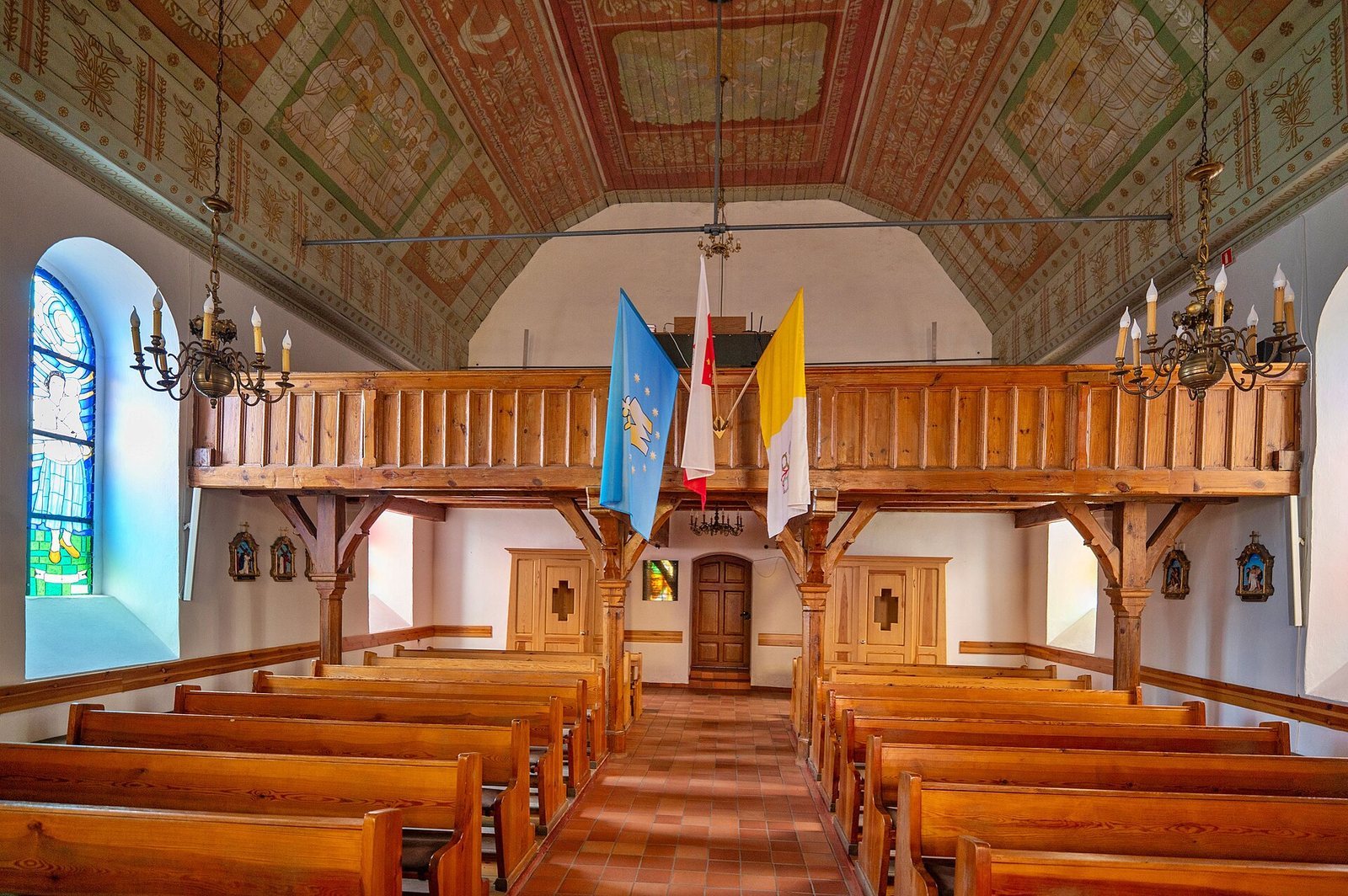
The church is built from glacial erratic stones and has a rectangular footprint with a single nave, the main body of the church, beneath a gabled roof. Its outside walls are plastered. The building shows traces of later Baroque remodeling, while the eastern gable retains Renaissance projecting moldings and scroll-shaped ornaments. A square tower was added at the west end in the second half of the 18th century. Its Baroque domed crown is topped by a lantern, a small raised structure on a roof. In the 19th century, stair enclosures were added on the tower’s north and south sides to reach the choir gallery, and a vestibule was built against the south facade. A faintly legible plaque dated 1831, commemorating Pastor Bluht’s wife, is set into the vestibule’s outer wall.
Interior
Main Altar
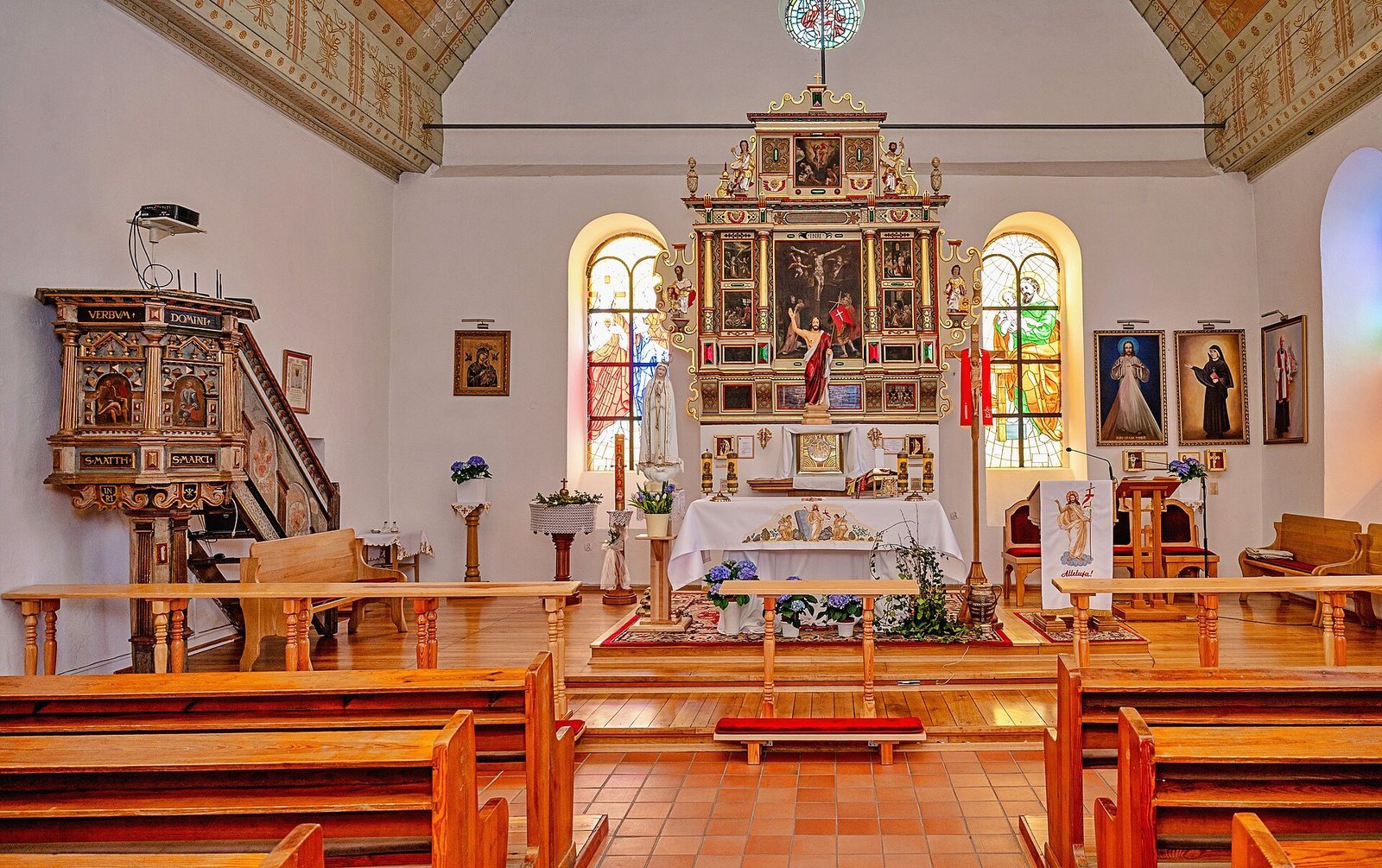
The wooden main altar, made around 1613, has been classified as Renaissance, Mannerist, or Baroque. Its lower section, the predella, shows the Last Supper in the central panel and the Wedel family coats of arms in the right panel. Above it, the central image depicts the Crucifixion. The left-hand scenes are the Annunciation and Nativity, while the right-hand scenes show the Circumcision and Adoration of the Magi. The uppermost section depicts the Resurrection, with reliefs of the four Evangelists, the writers associated with the Gospels, at either side. Its ornament includes interlaced strap-like patterns, diamond shapes, raised rounded bosses, projecting brackets, columns, horizontal decorative bands, and projecting moldings. The altar was brought after 1945 from a church in Morzyca.
Pulpit
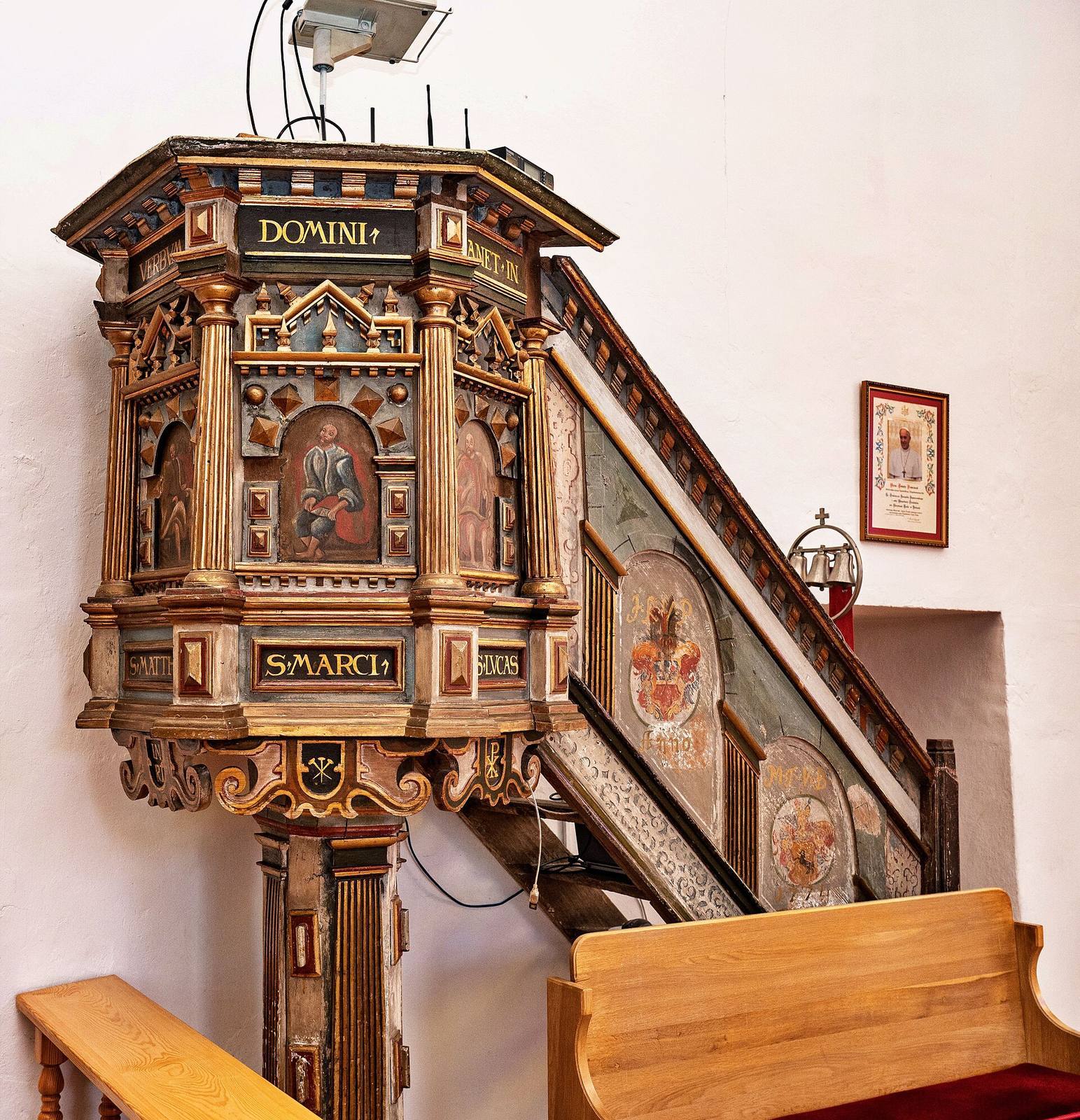
The wooden pulpit dates from the late 16th century and is in the late Renaissance style. Painted images of the Evangelists decorate its bowl, while coats of arms appear on the balustrade. Like the main altar, it came from a church in Morzyca.
Other Furnishings
The church has three altars. Its other furnishings include a wooden baptismal font from the second half of the 19th century, a gilded paten, a plate for the Eucharistic bread, 19 centimeters in diameter and probably made in 1909, and a pair of late 19th-century candlesticks in the Neo-Gothic style, a revival of Gothic design.
Ceiling and Wall Paintings
A wooden ceiling covers the interior. Wall paintings depict scenes from the New Testament; Joanna Spychalska made them in 1975.