Maria Santissima della Catena: A Marian Sanctuary on Lipari
Site at a Glance
- Popularity
- Low
- Country
- Italy
- Primary era
- Early Modern
- Eras represented
- Early Modern
- Civilizations
- Kingdom of Sicily, Spanish
- Site type
- Religious
- Remains
- Sanctuary
On this page8 sections
History
Maria Santissima della Catena is a Catholic Marian sanctuary at Chiesa Vecchia in Quattropani, on Lipari in Sicily, Italy. Built in 1588 and enlarged in 1646, it follows the Aeolian architectural tradition of the volcanic islands north of Sicily. Its September observances include pilgrimage and a procession honoring Mary.
Early Church and Construction
Before 1588, a Marian church in Quattropani was known as the Church of Our Lady of Oreto and the Church of the Nativity of the Blessed Virgin Mary. In 1588, a church dedicated to Our Lady of the Chain was built at the site. It was enlarged and further improved in 1646.
Burial and Sanctuary
The crypt served as Quattropani’s cemetery. The numerous children’s remains there reflect the high mortality that persisted in the second half of the nineteenth century.
Devotion and Later History
In 1905, Pope Pius X established a plenary indulgence at the request of Bishop Francesco Maria Raiti. In Catholic teaching, a plenary indulgence remits all temporal punishment for sins whose guilt has been forgiven. Pilgrims could receive it repeatedly by visiting the sanctuary on its feast day with faith and devotion.
On 8 December 1969, the church was elevated to sanctuary on the solemnity of the Immaculate Conception, the Catholic doctrine that Mary was preserved from original sin from the first moment of her conception. The Nativity of the Blessed Virgin Mary is celebrated here on 7 and 8 September with a novena, a devotional practice of prayer over nine days, pilgrimage, liturgical observances, and a procession honoring Maria Santissima della Catena, or Our Lady of the Chain. The church was restored in 2005.
Remains
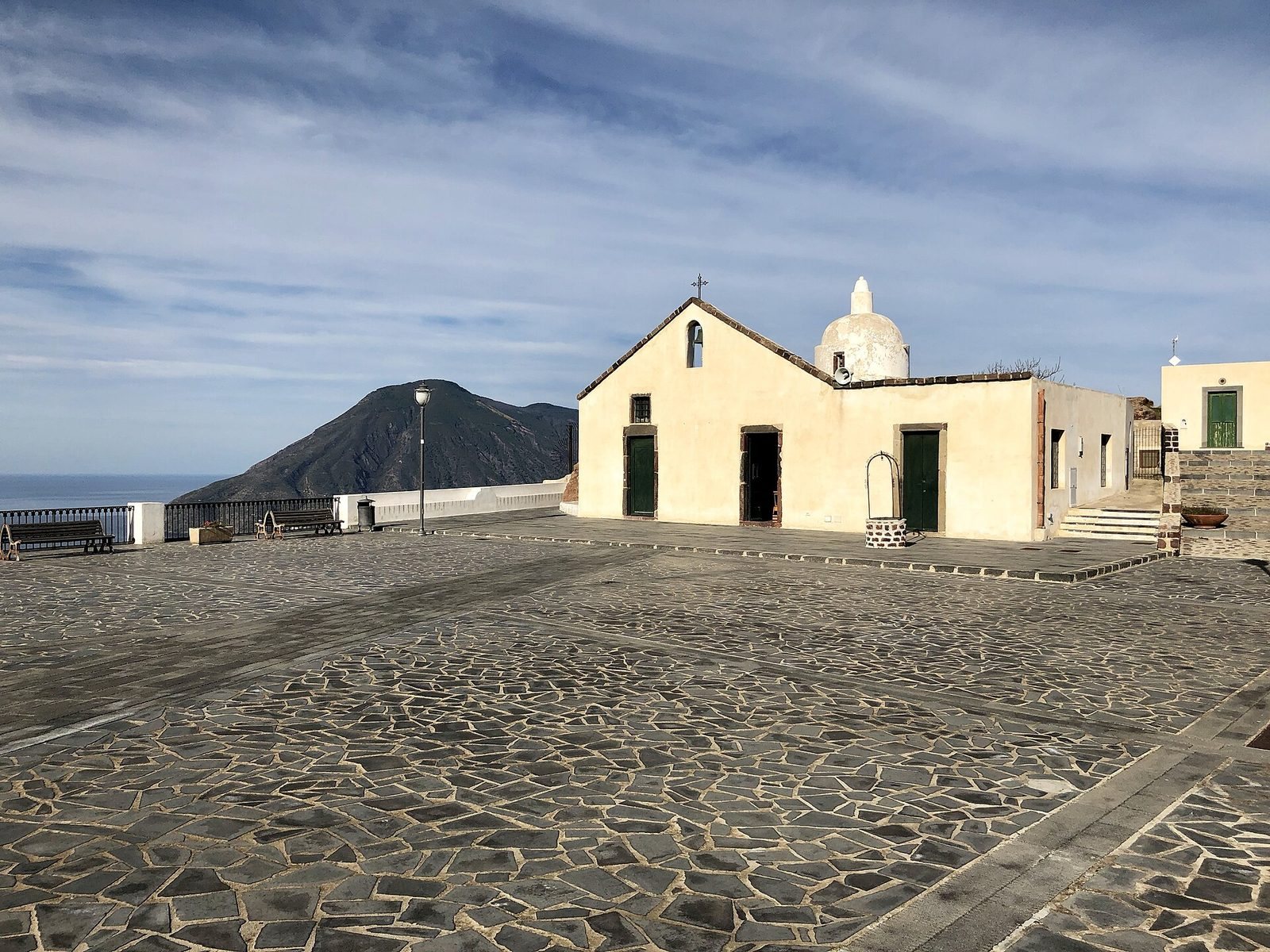
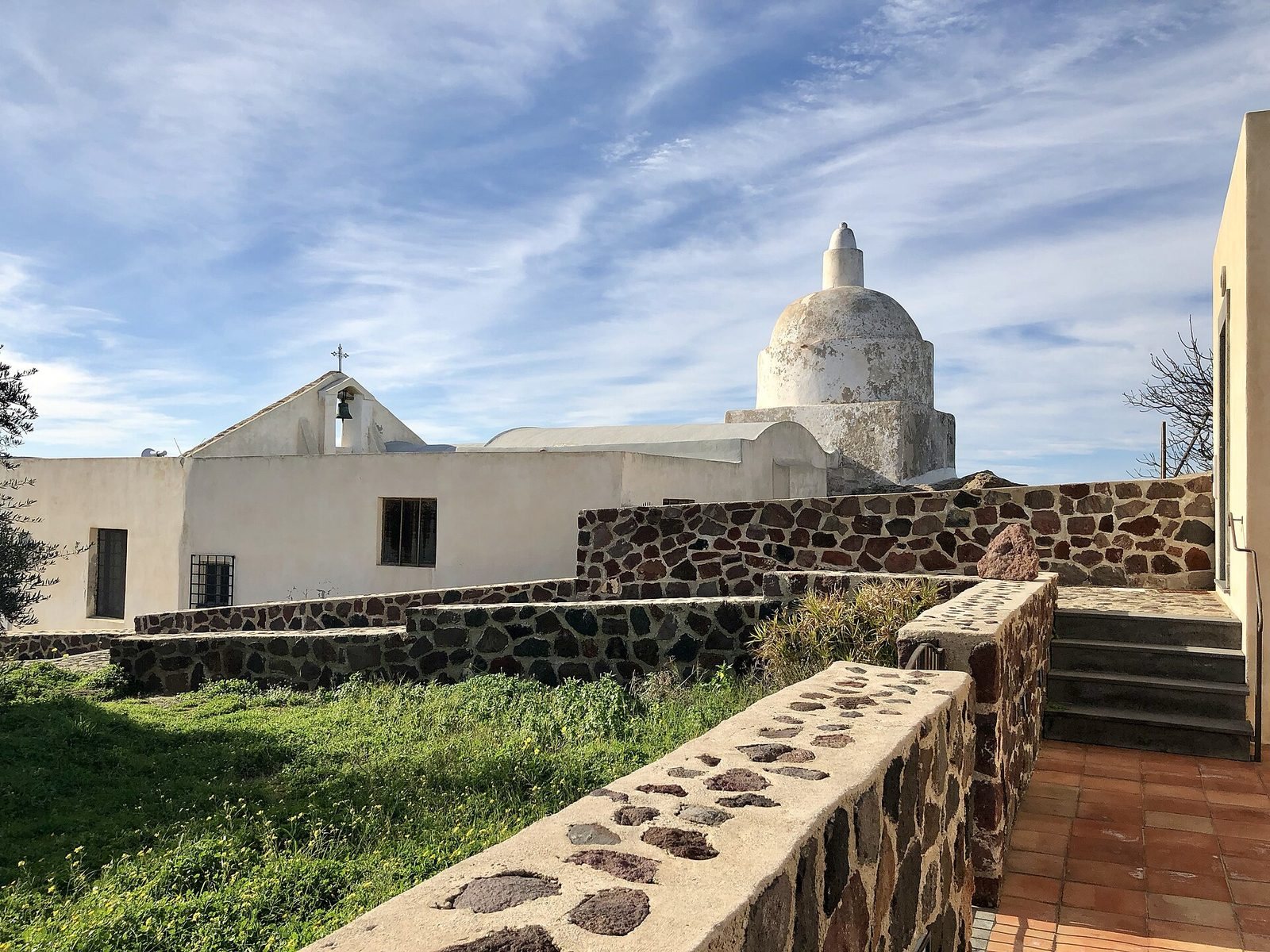
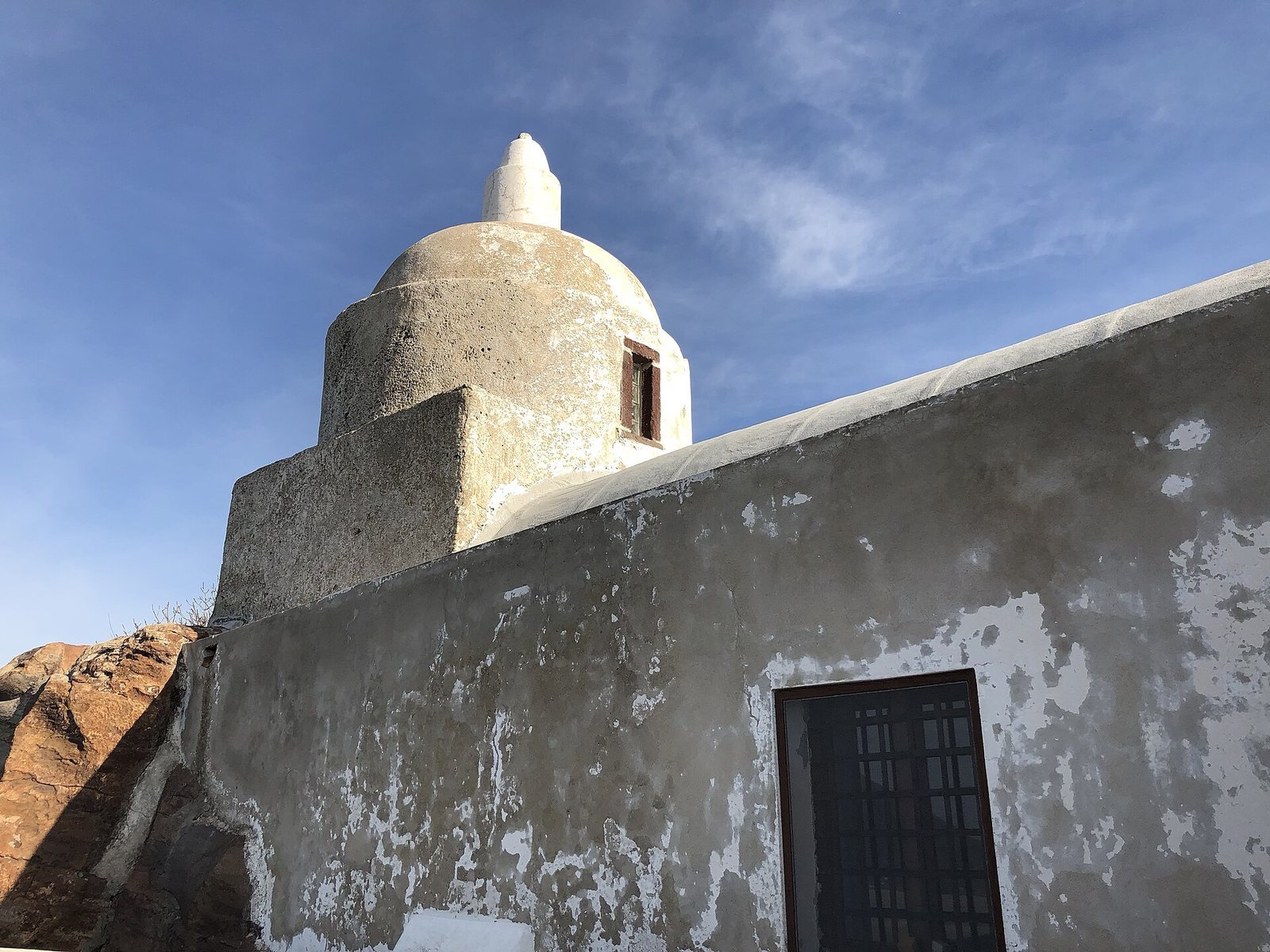
The sanctuary occupies a natural terrace on the western spurs of Mount Chirica, whose summit reaches 602 metres. Rock formations and Mediterranean scrub surround the church. Its connected building volumes follow the Aeolian architectural tradition, the local style of the volcanic islands north of Sicily.
Facade
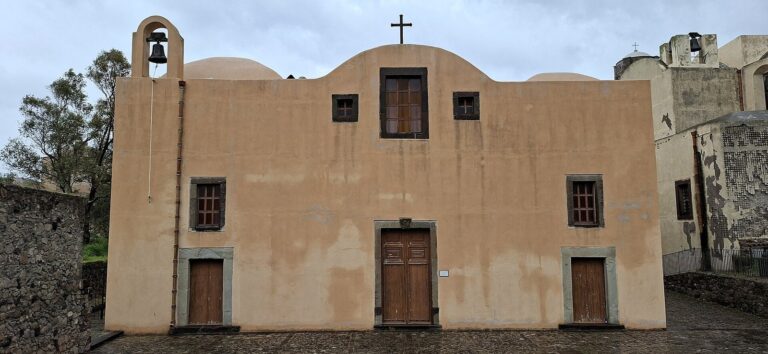
The south-facing facade has simple, stylized lines, outlined by local stone elements. Blocks of lava stone frame its three doorways, which are equal in size. A small window sits above the leftmost doorway, while an off-centre pediment, a feature crowning a facade, rises above the two openings on the left. An arched opening where the roof slopes meet houses a bell.
Interior and Furnishings
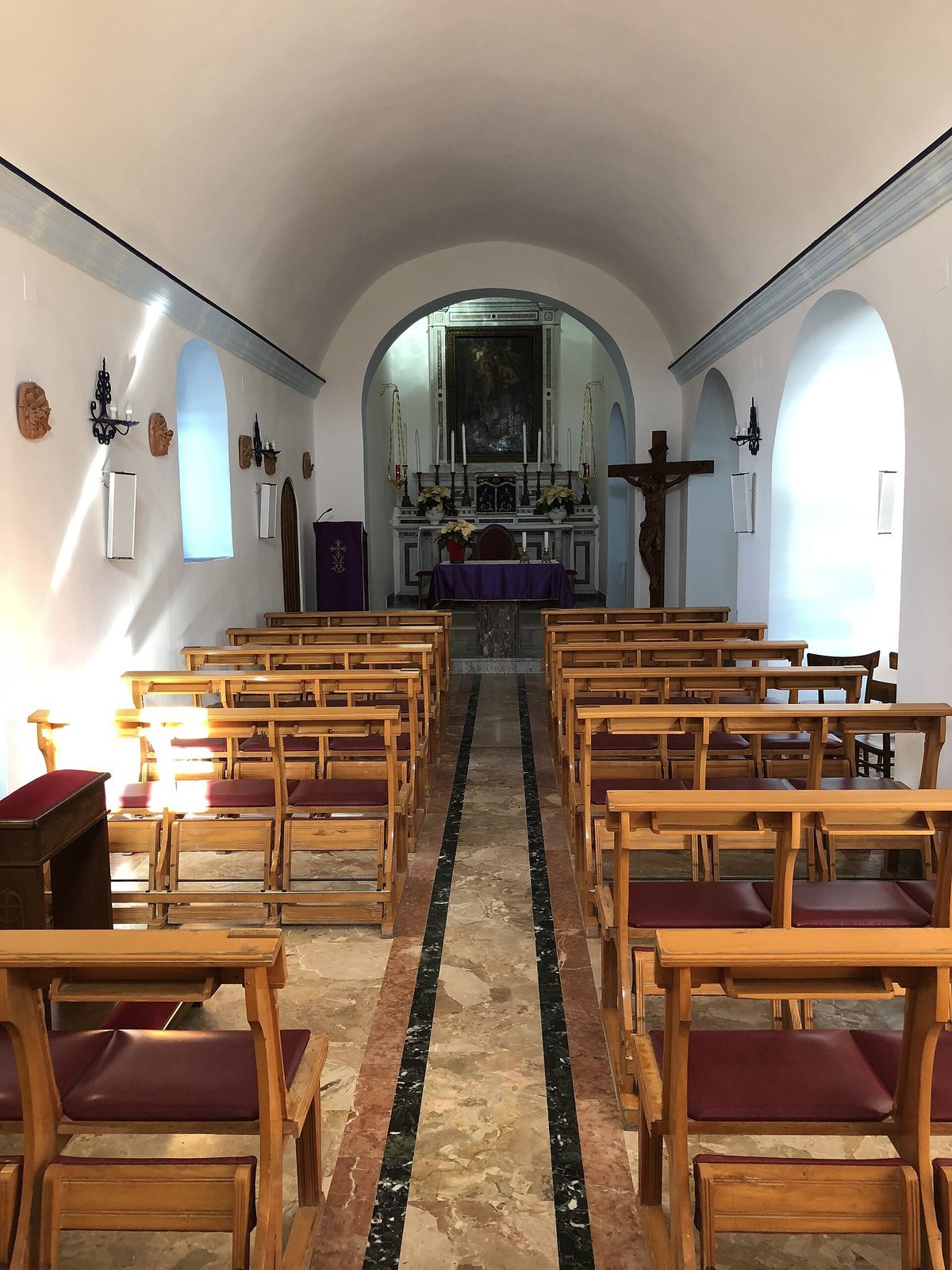
The connected volumes include a nave and a small dome above the presbytery, the area around the main altar. The dome rises from a cubic base and a circular drum, the structure supporting the dome, and incorporates Byzantine and Arab-inspired references. Plaster finishes on the roof coverings are characteristic of rainwater-collection systems used to supply water. The main altar holds an eighteenth-century oil painting of the Virgin and Child, and a niche contains an eighteenth-century wooden statue of Our Lady of the Chain.
Crypt
Beneath the church’s main worship space, the crypt contains the remains of numerous children.