Saint Francis Church: A Franciscan Church in Castelfiorentino, Italy
Site at a Glance
- Popularity
- Low
- Country
- Italy
- Primary era
- Medieval
- Eras represented
- Medieval, Early Modern, Modern
- Civilizations
- Grand Duchy of Tuscany, Republic of Florence
- Site type
- Religious
- Remains
- Church
On this page11 sections
History
Saint Francis Church is a Roman Catholic church in Castelfiorentino, Italy, dedicated to Francis of Assisi, the medieval religious leader whose followers formed the Franciscan order. Tradition connects the start of the Franciscan center in the Valdelsa with Francis’s presence there in 1217. The convent is first mentioned in a document dated 1278. The church is within the Archdiocese of Florence, a Catholic territorial jurisdiction led by an archbishop.
Following a multi-year restoration of the church complex, the Madonna and Child attributed to Taddeo Gaddi returned from the Museum of Santa Verdiana to the church, its original location.
Remains
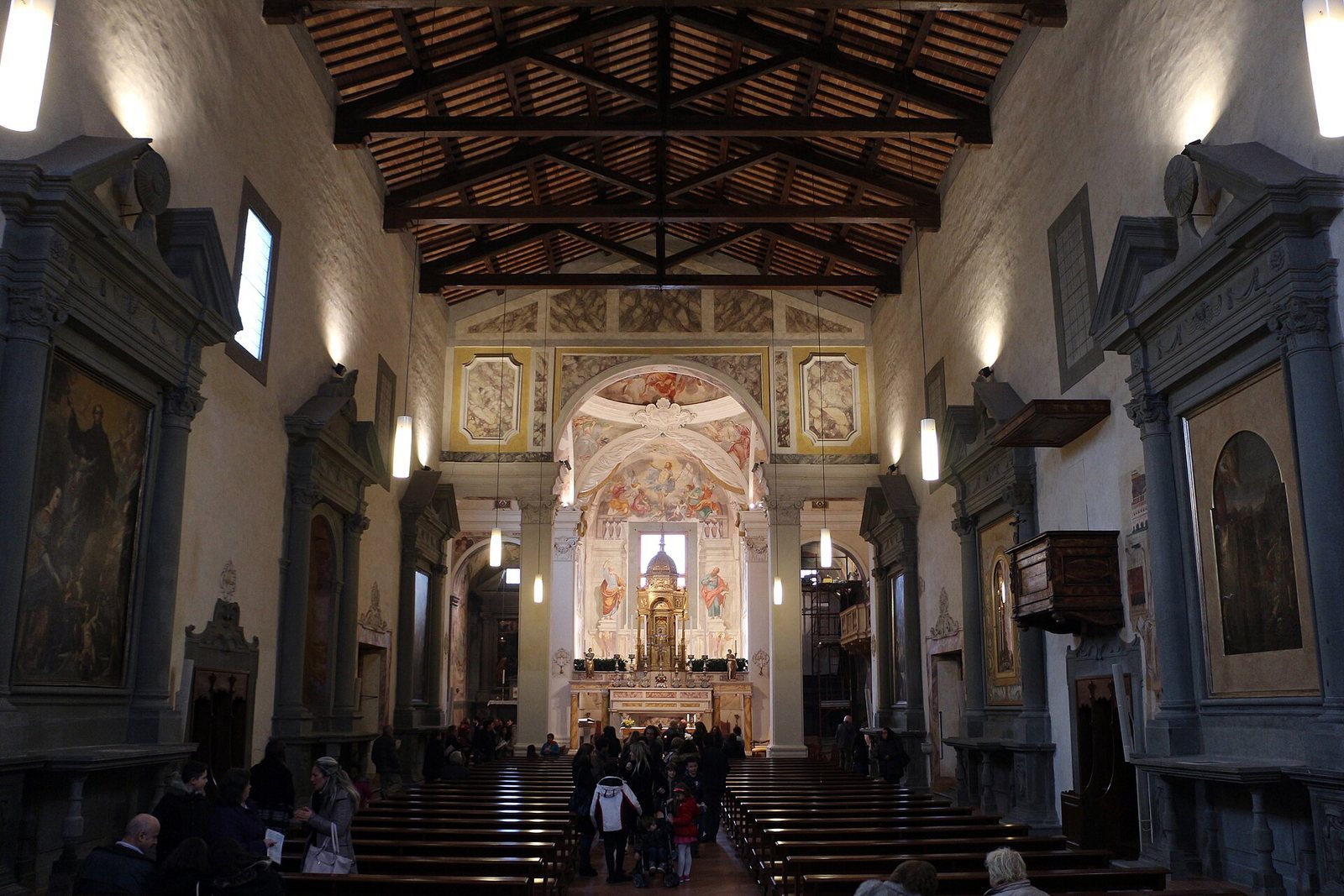
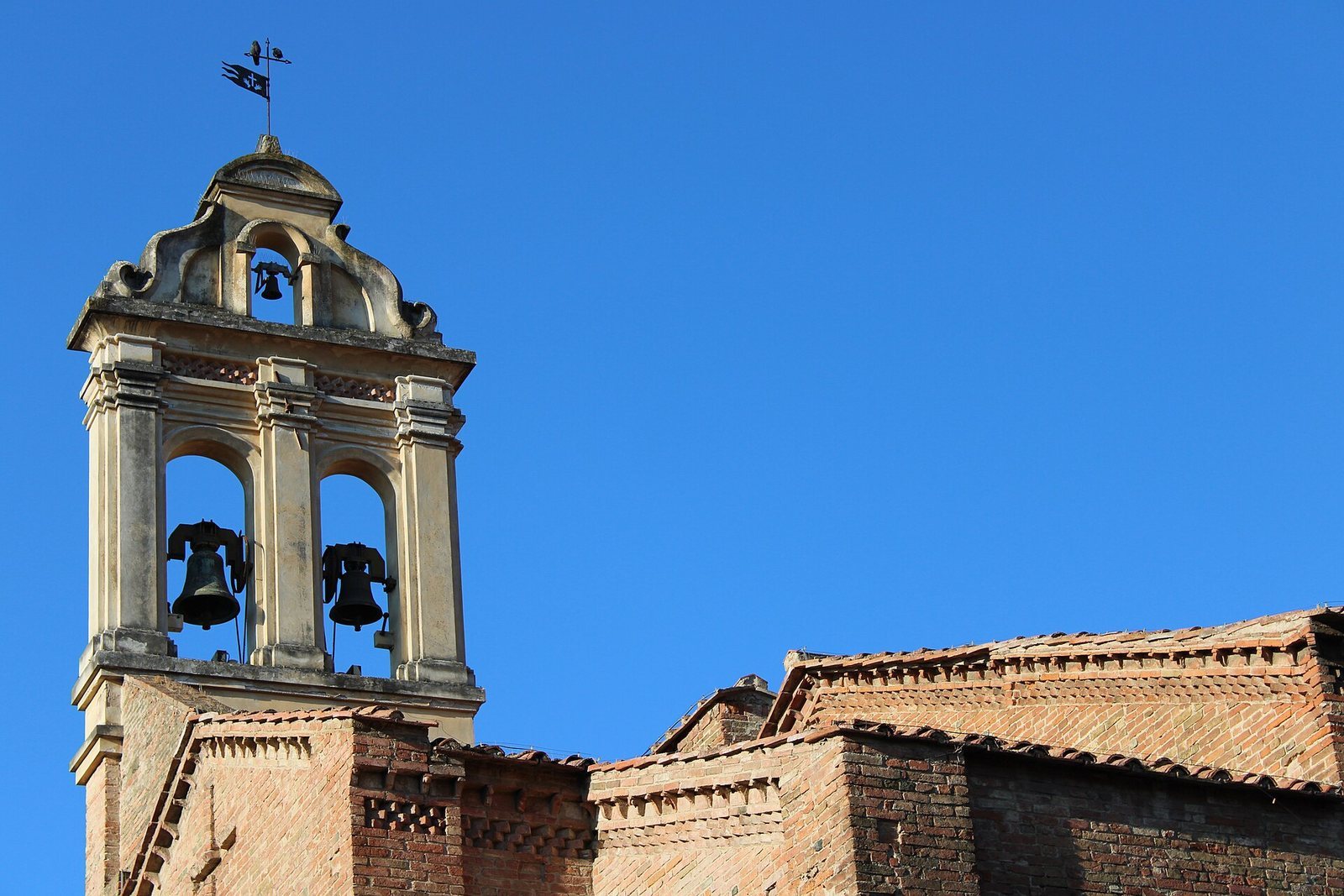
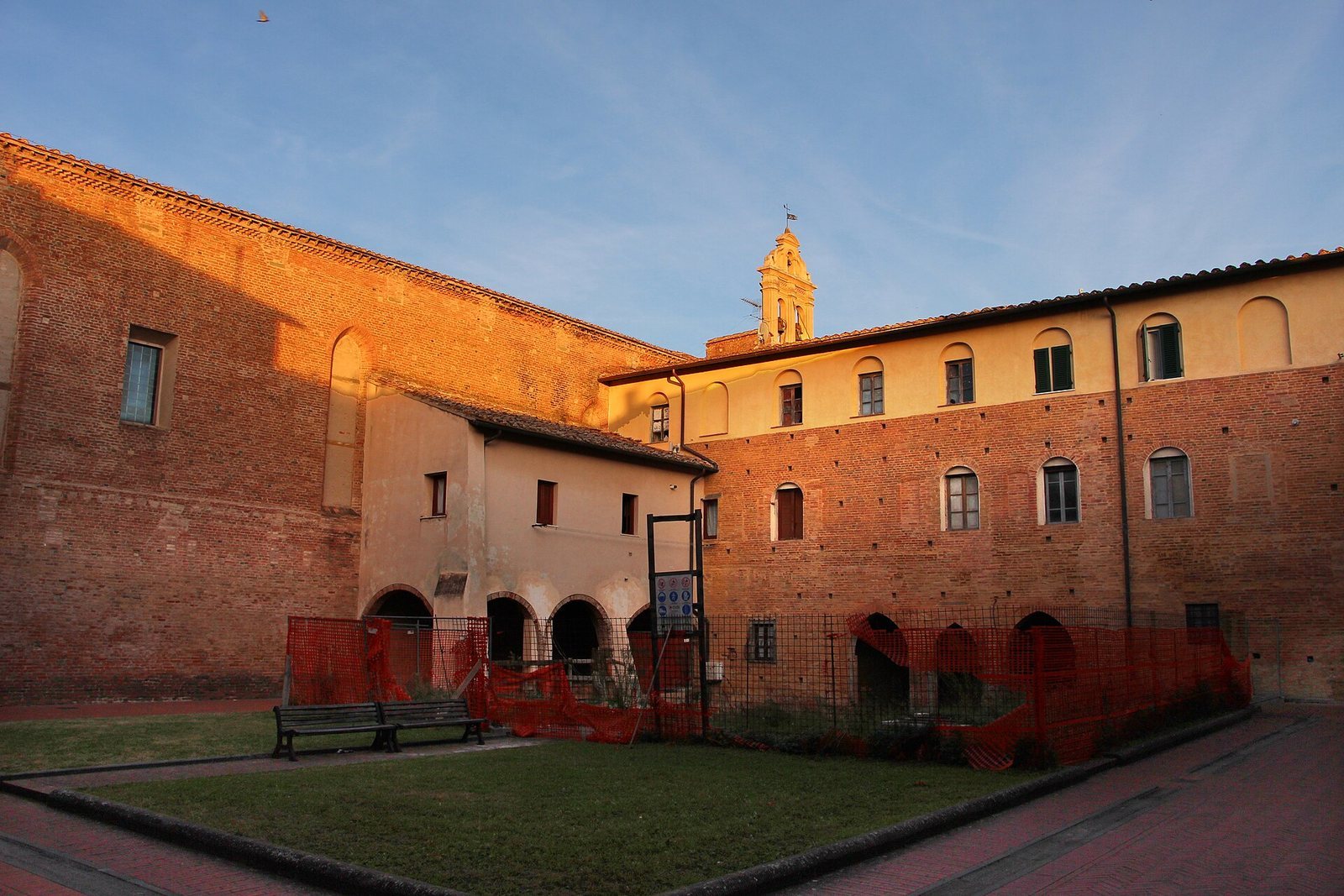
The church combines a Gothic spatial design with Romanesque features on the exterior and a Baroque interior. The surviving complex includes the church and bell tower, as well as remains of a cloister.
Plan and exterior
Nave and chapels
A broad nave widens at its far end to accommodate the choir. Two smaller chapels flank it symmetrically, each covered by a cross vault formed by intersecting vaulted sections.
Façade and apse
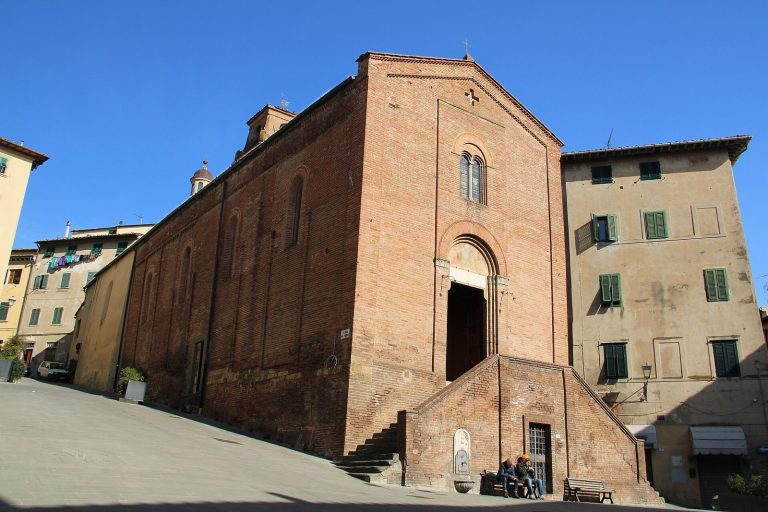
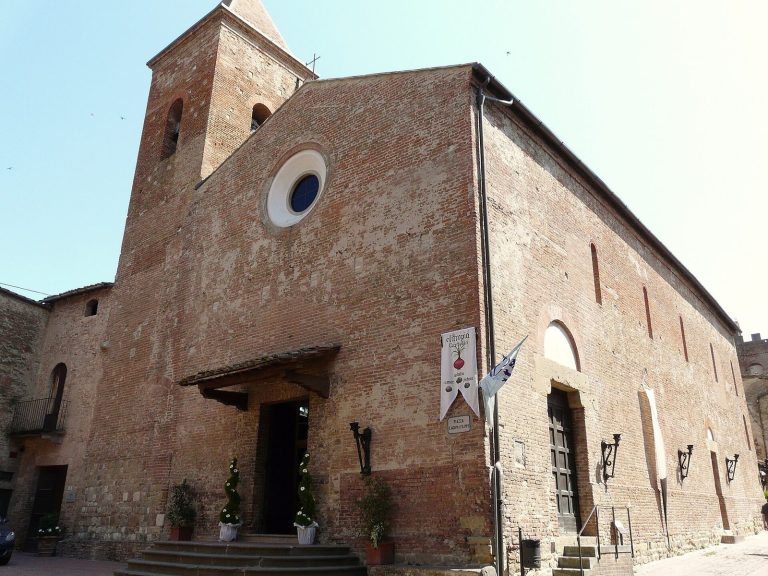
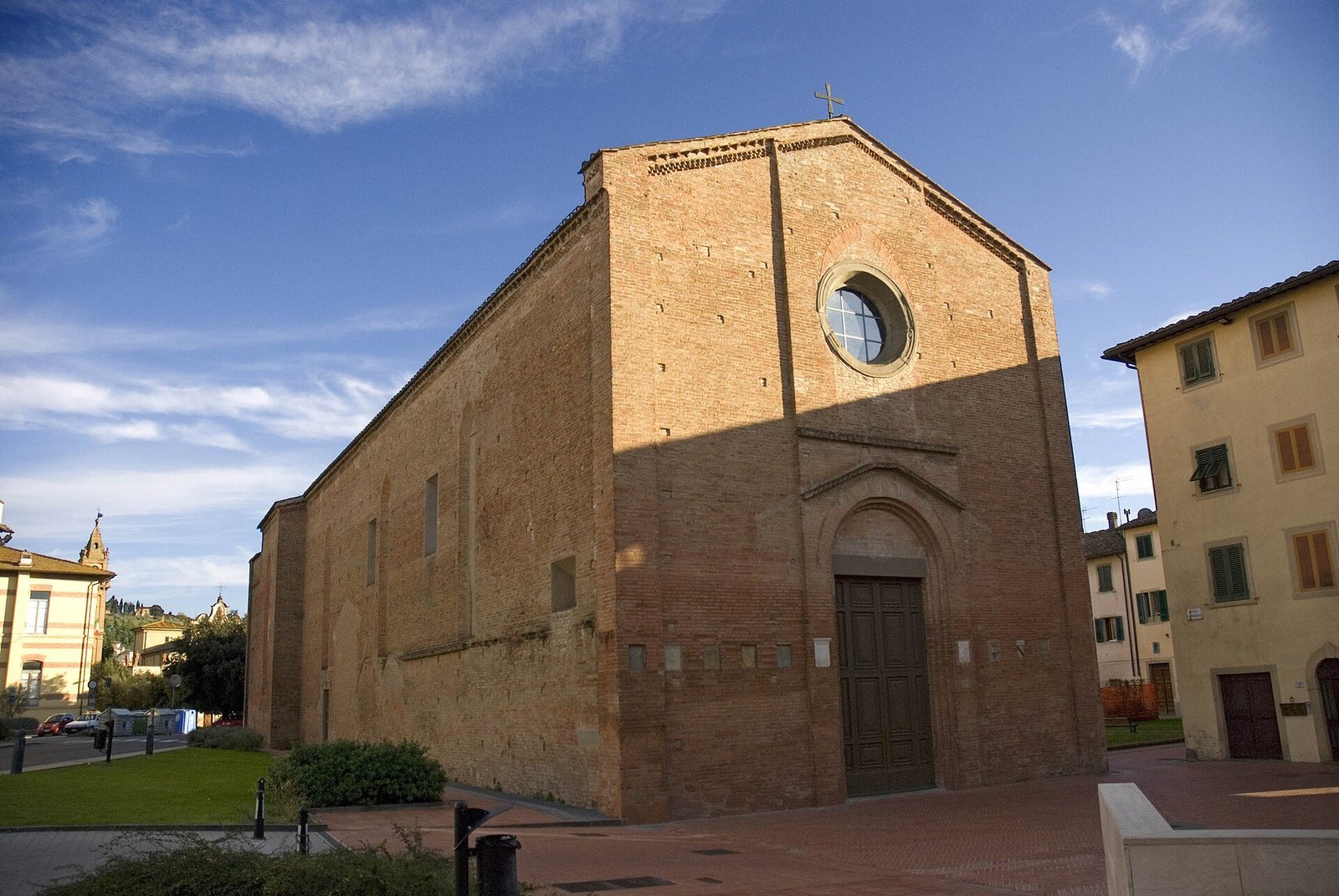
The brick façade combines Romanesque and Gothic elements, including a small cross-shaped window, a portal that projects from the wall, and decorative bands following the curves of arches. These forms reflect the influence of the Romanesque parish church of Saint John the Evangelist at Monterappoli, which shaped the work of thirteenth-century Valdelsan craftsmen and served as a model for other churches in the region. The apse exterior shows a stronger Gothic influence. Above the entrance, the present circular opening sits below the visible outline of a blocked pointed-arch window, a reminder of the façade’s earlier Gothic appearance.
The façade also bears coats of arms in glazed ceramic or pietra serena, a gray Tuscan stone. They belong to members of the Attavanti, Becci, Benvenuti, and Alberini families, whose members were buried inside the church.
Bell tower and cloister
The bell tower is part of the church complex, and remains of the cloister survive.
Artworks and furnishings
Frescoes
The church contains fifteenth-century frescoes associated with the Florentine school. Among them are Cenni di Francesco’s Saint Francis and the Virtues and Giovanni del Biondo’s Crucifixion of Saint Peter.
Paintings and altarpieces
A Madonna enthroned with Child is attributed to Taddeo Gaddi. An altarpiece by Gabriele Grassi shows Saint Anthony of Padua between Saints Elizabeth of Hungary and Verdiana; it was placed on its altar in 1644. Another painting, from the circle of Cosimo Daddi, depicts Saint Anne and the Virgin with Saints Raphael, Ursula, and Joseph.
Dome and choir vault
In the eighteenth century, Agostino Veracini and Pietro Anderlini decorated the dome and choir vault. Their work on the dome includes Coronation of the Virgin.
Pipe organ
Giosuè Agati built the pipe organ in 1821 as catalogue work number 121. It retains its original tonal characteristics and has 13 stops, each controlling pipes with a particular tone, and 601 pipes.