Lato: An Ancient Dorian City-State on Crete
Site at a Glance
- Popularity
- High
- Country
- Greece
- Primary era
- Classical
- Eras represented
- Iron Age, Classical
- Civilizations
- Ancient Greek
- Site type
- City
On this page7 sections
History
Lato was an important Dorian city-state near Kritsa on Crete, Greece. A city-state was an independent political community centered on a city and its territory; the Dorians were an ancient Greek-speaking people. Lato’s establishment as a Dorian city is associated with a proposed foundation in the seventh century BCE.
Origins and civic life
Settlement may have begun before the Dorians arrived. The city’s name may come from Leto, whose name was rendered as Lato in the Dorian dialect. A Linear B tablet from Knossos may refer to the city as RA-TO. Linear B was a script used for an early form of Greek, chiefly known from Bronze Age clay tablets. Nearchus, a naval commander serving Alexander the Great, king of Macedon, was born at Lato.
In the late third century BCE, Lato joined the League of Knossos, a political association of Cretan cities centered on Knossos, and shared its laws with other members. It also allied with Rhodes, Teos, and Eumenes I, ruler of Pergamon. Lato repeatedly disputed territorial boundaries with neighboring Olous.
Destruction and the harbor settlement
Lato was destroyed around 200 BCE and later abandoned. Its harbor settlement, Lato pros Kamara, near present-day Agios Nikolaos, continued in use during Roman rule. As people and political functions increasingly shifted to the harbor, the distinction between Kamara and Lato became confused. The late-antique geographical writer Stephanus of Byzantium, citing the Cretan historian Xenion, treated them as the same city; modern scholarship distinguishes the two.
Rediscovery and excavation
British investigators located the site around 1865 but identified its remains as those of nearby Olous. Arthur Evans carried out a small excavation in 1894–1896. Systematic work by the French School of Archaeology, led by Joseph Demargne, followed in 1899–1901. Excavations resumed in 1968 under Pierre Ducrey, Olivier Picard, and B. Chatzimichali, continuing into the 1970s.
Remains
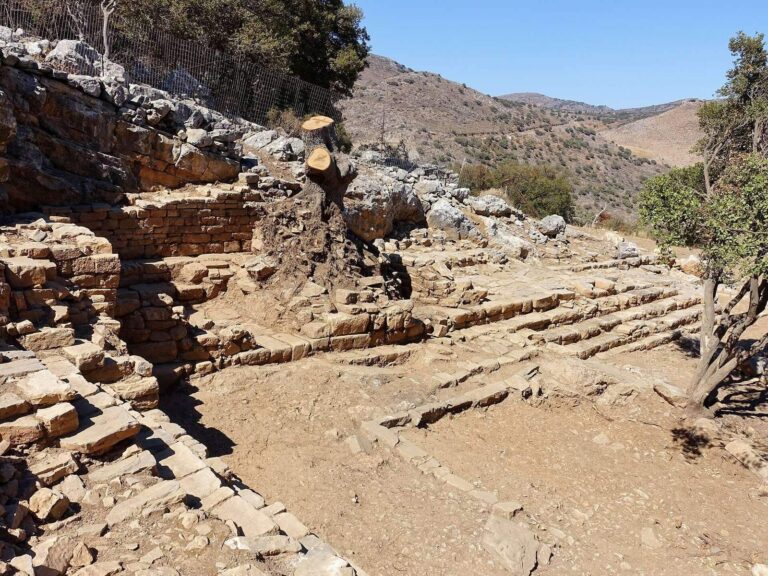
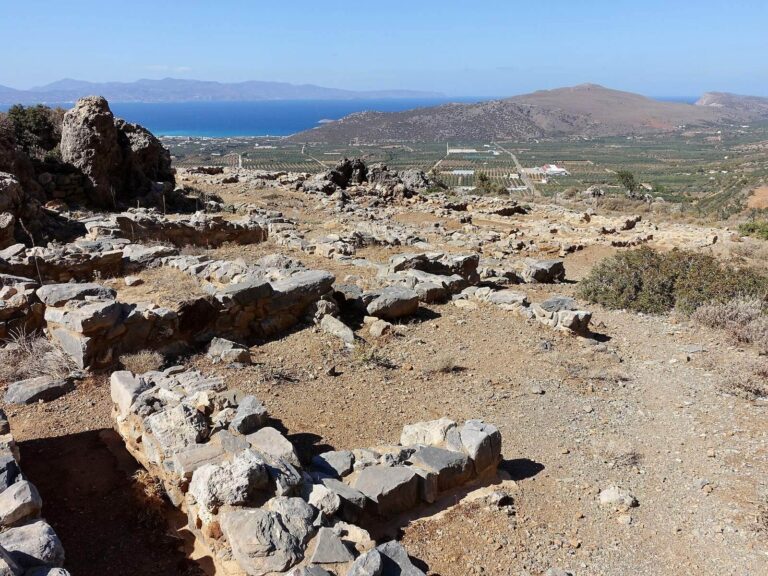
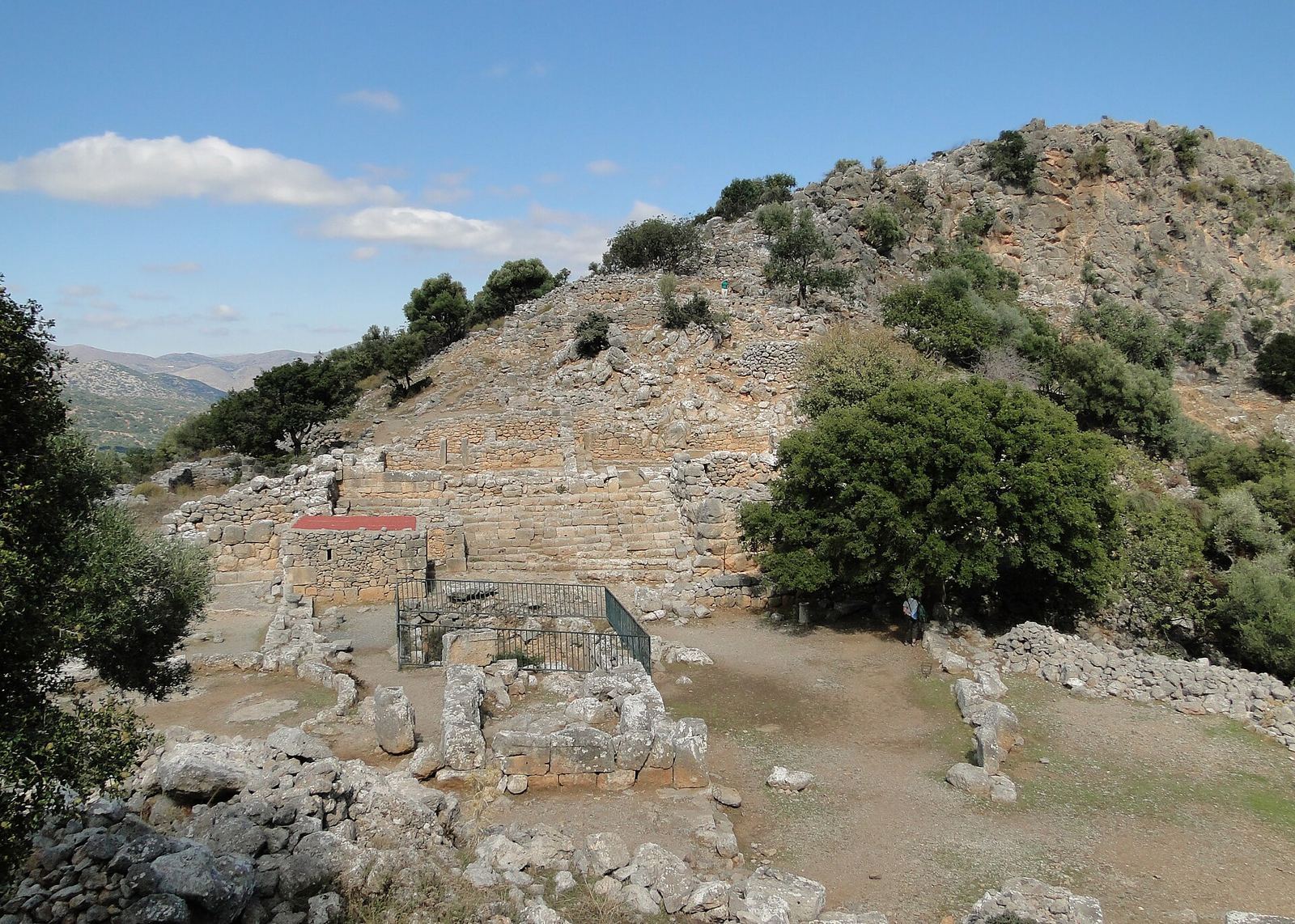
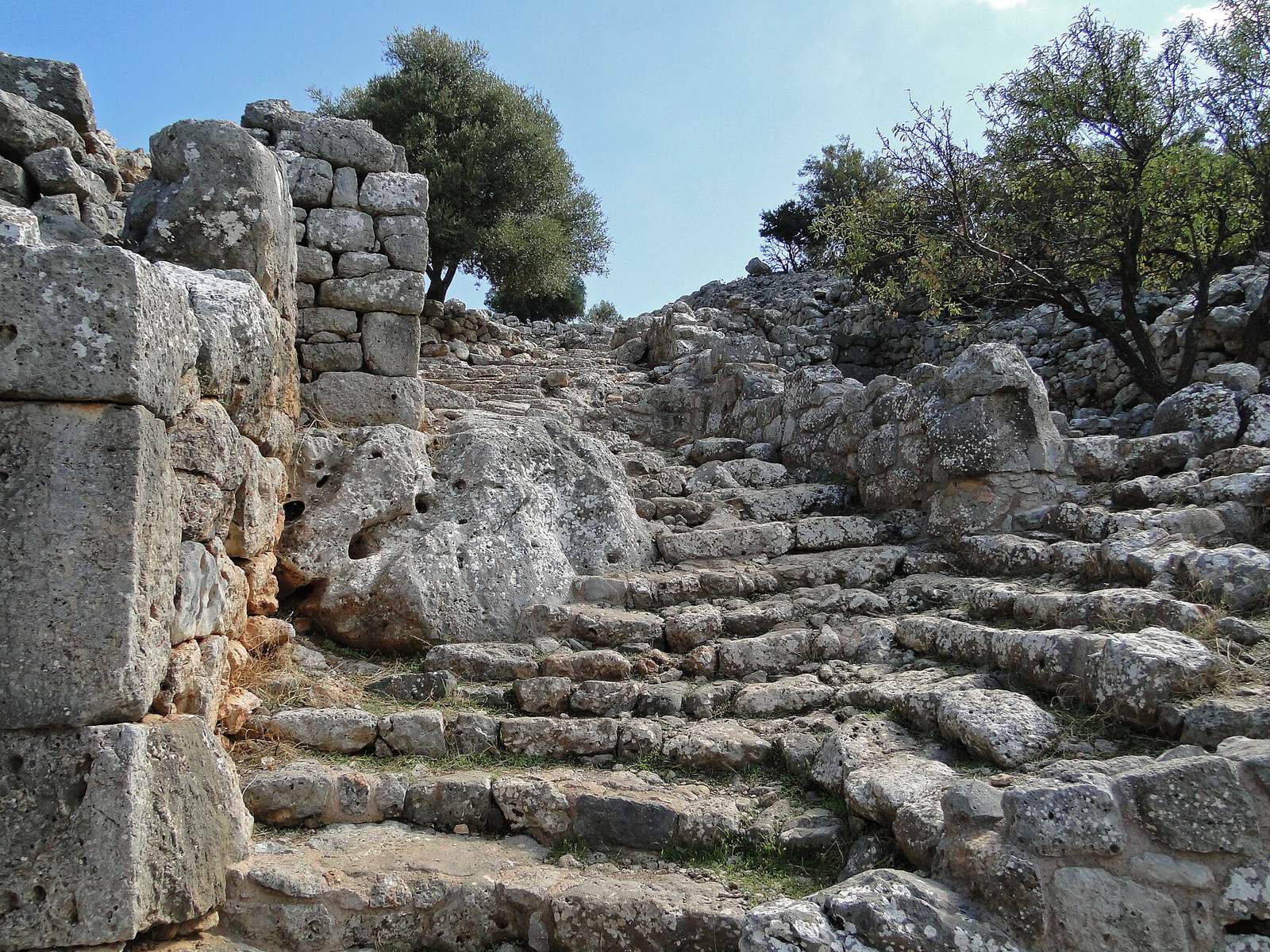
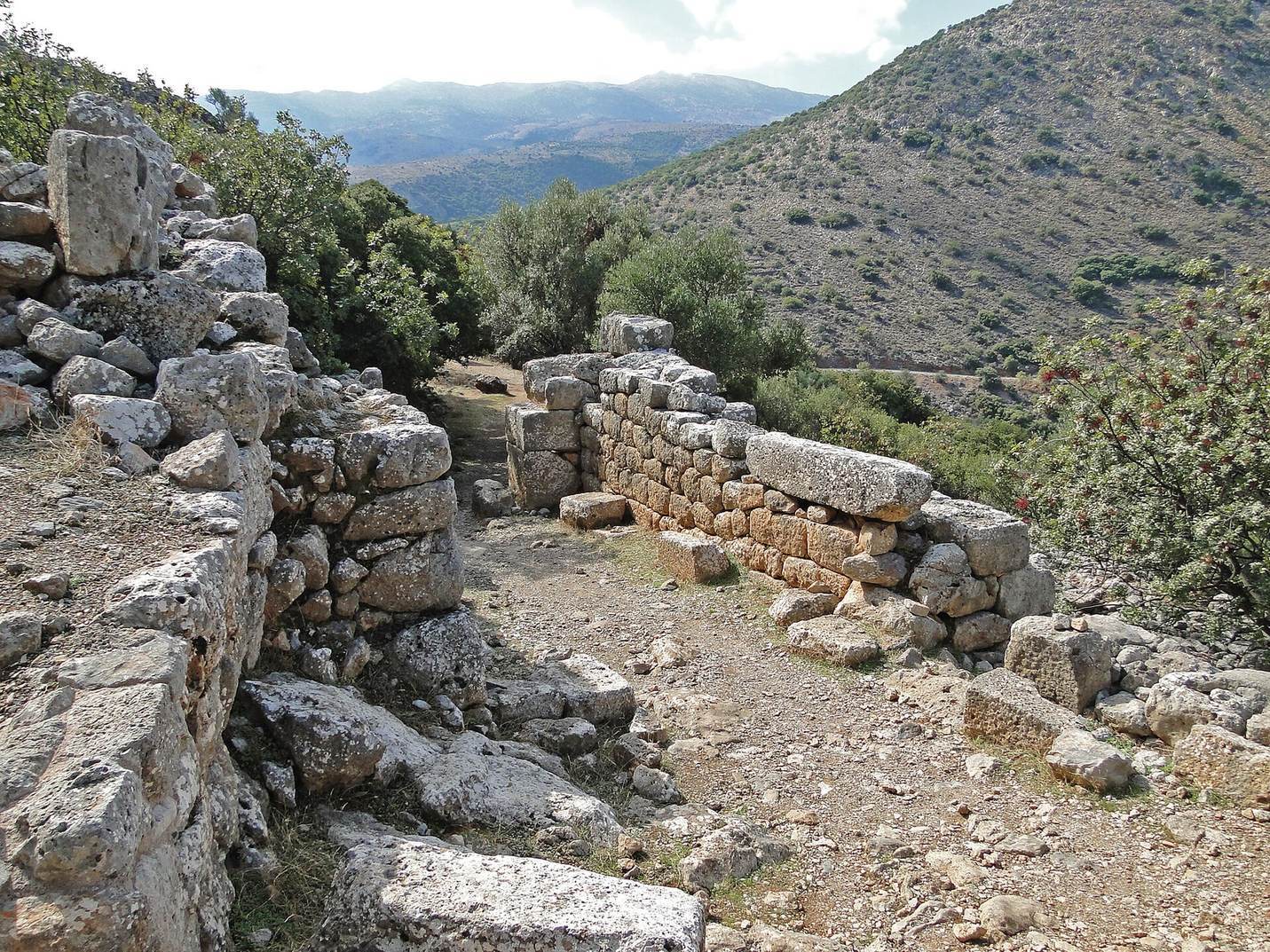
Lato’s remains occupy defensible high ground overlooking Mirabello Bay, between two peaks that served as the city’s acropolises, its elevated centers or citadels. The hilltop held the city center. Its main entrance was on the west, where a stepped path led toward the agora, the central public gathering place. Most surviving remains date to the fifth and fourth centuries BCE.
Civic and commercial buildings
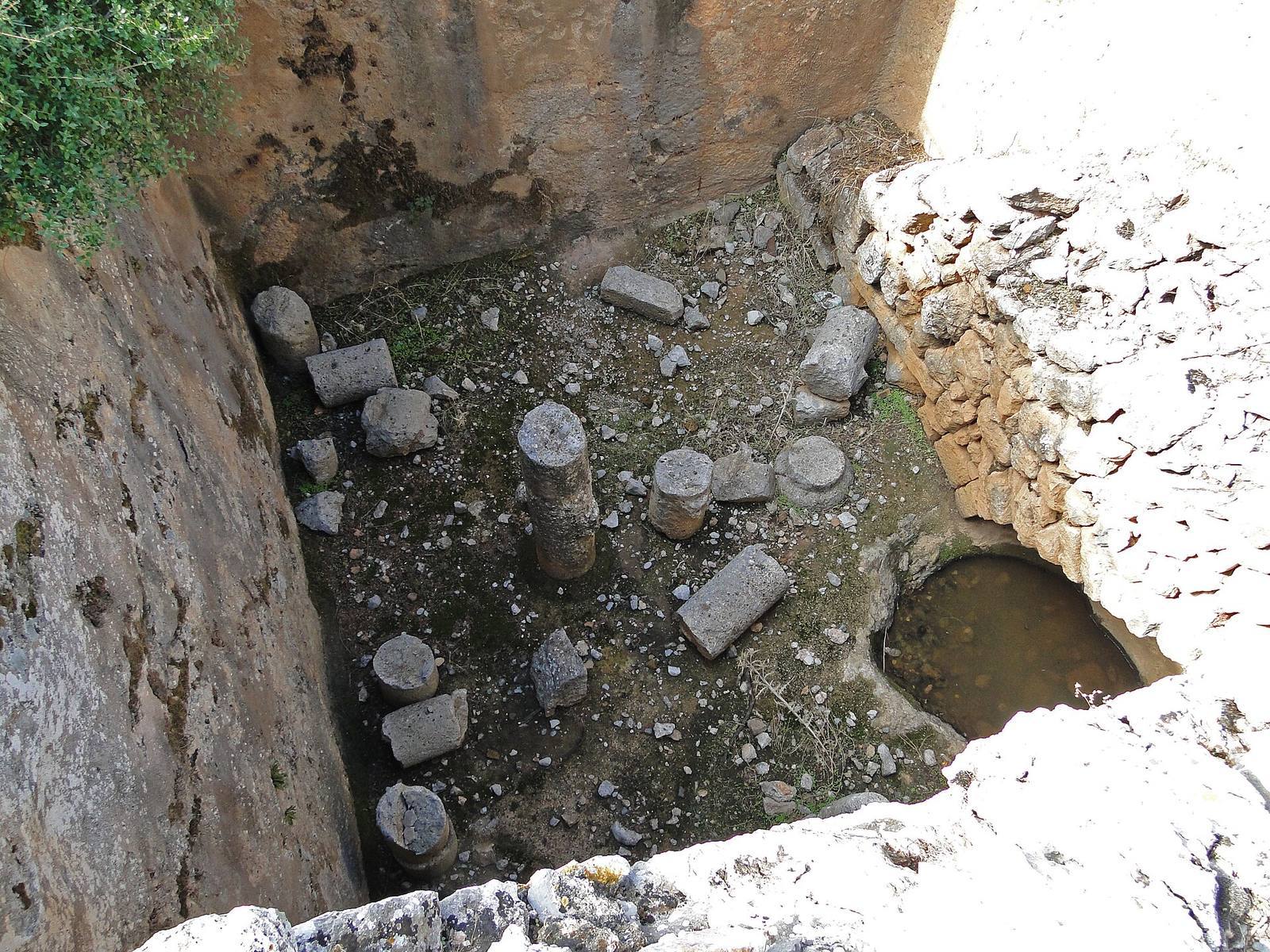
The site includes the agora, shops and workshops, a portico, a roofed colonnade, and an exedra, a recessed or open-sided space designed for seating or display. A central cistern is among the remains. The prytaneion, a civic building associated with public administration, stood with houses linked to it.
Sanctuaries and theater area
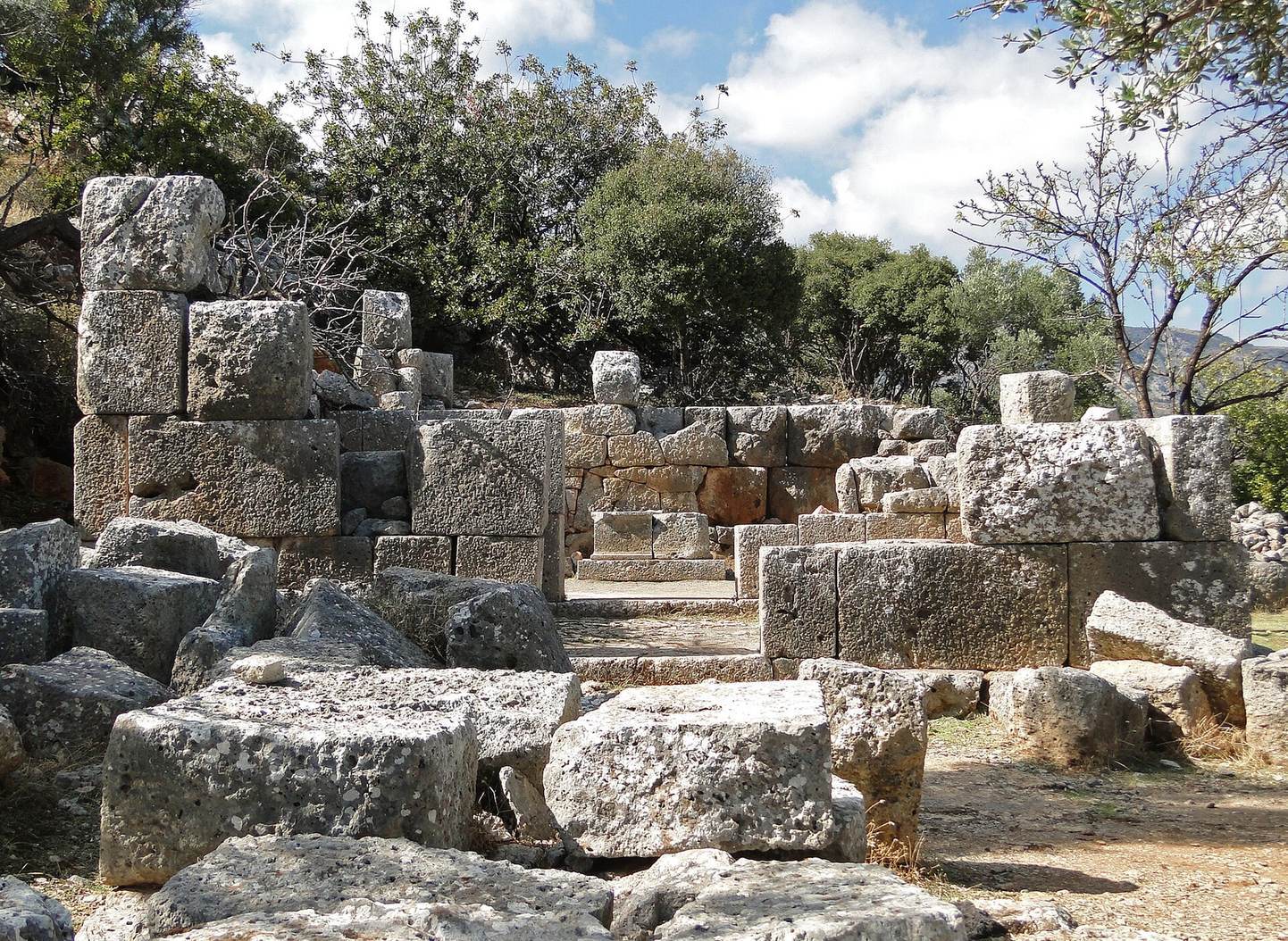
Lato’s remains include a sanctuary, a Great Temple, a temple house, and a temple identified with Apollo. Eileithyia, the Greek goddess associated with childbirth, was the city’s principal deity, and Lato’s coins depict her. A temple and the theater area lie southwest of the city center. The theater may have seated about 350 people. The site has been only partly excavated.