Santa Maria Maggiore: A Catholic Church in Milazzo
Site at a Glance
- Popularity
- Low
- Country
- Italy
- Primary era
- Early Modern
- Eras represented
- Early Modern, Modern
- Civilizations
- Italian, Kingdom of Sicily
- Site type
- Religious
- Remains
- Church
On this page13 sections
History
Santa Maria Maggiore is a Catholic church on the Garibaldi waterfront in Vaccarella, in the historic center of Milazzo, Italy. A tower was converted into the church between 1610 and 1621, giving it a Baroque structure, Rococo interior decoration, and a Neoclassical façade. The church became the seat of the Congregation of Jesus and Mary.
Earlier church and changing identity
Before 1581, a Byzantine-era church dedicated to Sant’Ermo stood on the promontory. It was demolished to make way for the Torrione di Sant’Ermo, a tower that later became the church.
The church acquired the name Santa Maria Maggiore in 1755. It is dedicated to the Madonna della Neve, or Our Lady of the Snows. Its dedication and religious images reflect devotion to this title, although no specific local cult is confirmed by written records or marble plaques. A wider, undocumented tradition connects the devotion with fourth-century Rome, during the time of Pope Liberius, bishop of Rome, and with the origins of the Roman basilica of Santa Maria Maggiore.
Religious life and observances
The parish belongs to the Archdiocese of Messina-Lipari-Santa Lucia del Mela and falls within both the Vicariate and Archpriesthood of Milazzo. It is under the patronage of Saint Francis of Paola, a fifteenth-century Italian religious figure who founded the Minim friars. Religious from the nearby convent dedicated to him administer the parish.
Traditional observances include a procession with the Child Jesus through Vaccarella on the morning of Epiphany, 6 January. The Madonna della Neve feast takes place on 5 August, with a procession through the neighborhood and another by boat on the adjoining sea, accompanied by fishing boats.
Nineteenth- and twentieth-century events
After his victory at the Battle of Milazzo on 20 July 1860, Giuseppe Garibaldi, a prominent military and political leader in the movement for Italian unification, rested in the church forecourt. The 1908 earthquake led to the partial demolition of the bell tower. Restoration work in 1974 brought the church’s ancient crypt to light.
Remains
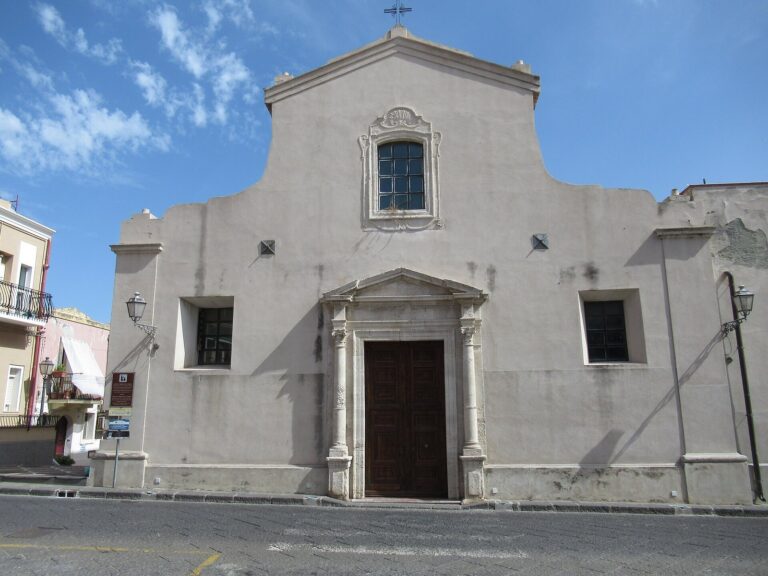
The church’s exterior is organized around a single-order façade and a raised semicircular forecourt, while the interior combines stucco decoration, painted ceilings, side altars, and a distinct sanctuary. Santa Maria Maggiore and the facing church of San Giacomo Apostolo form a monumental backdrop to the central stretch of Marina Garibaldi.
Setting and exterior
Forecourt and façade
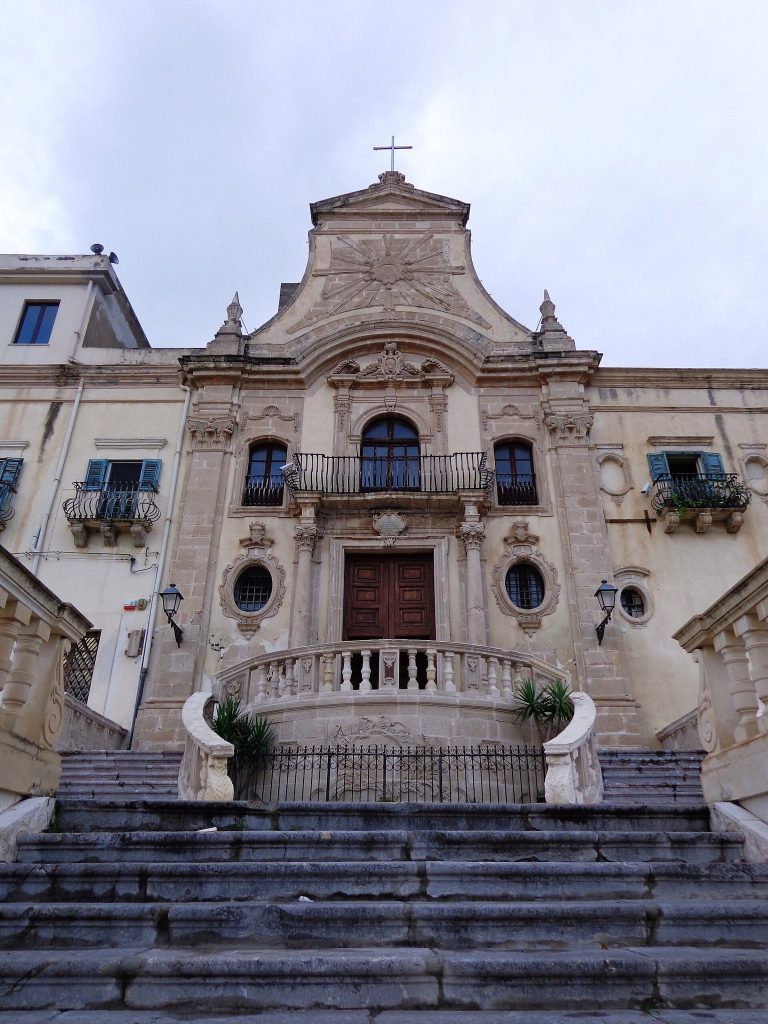
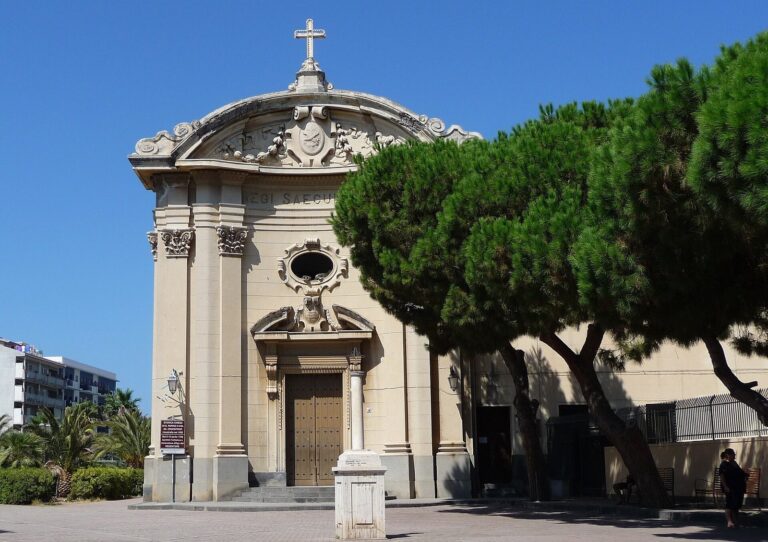
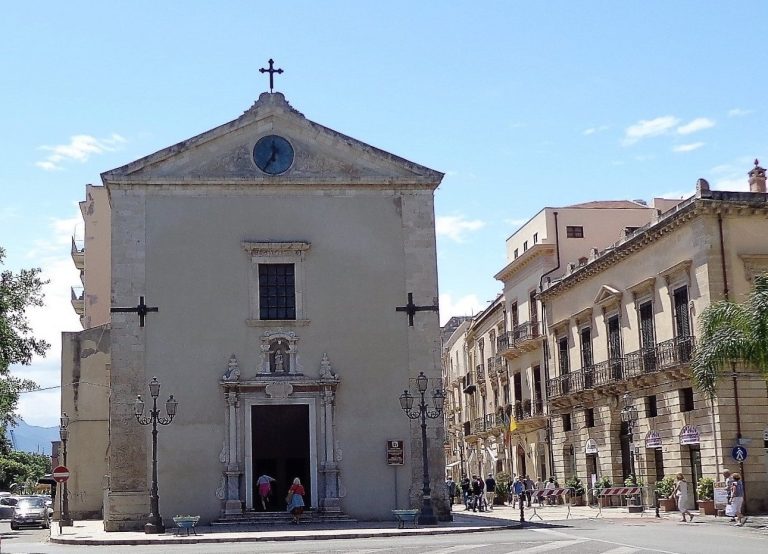
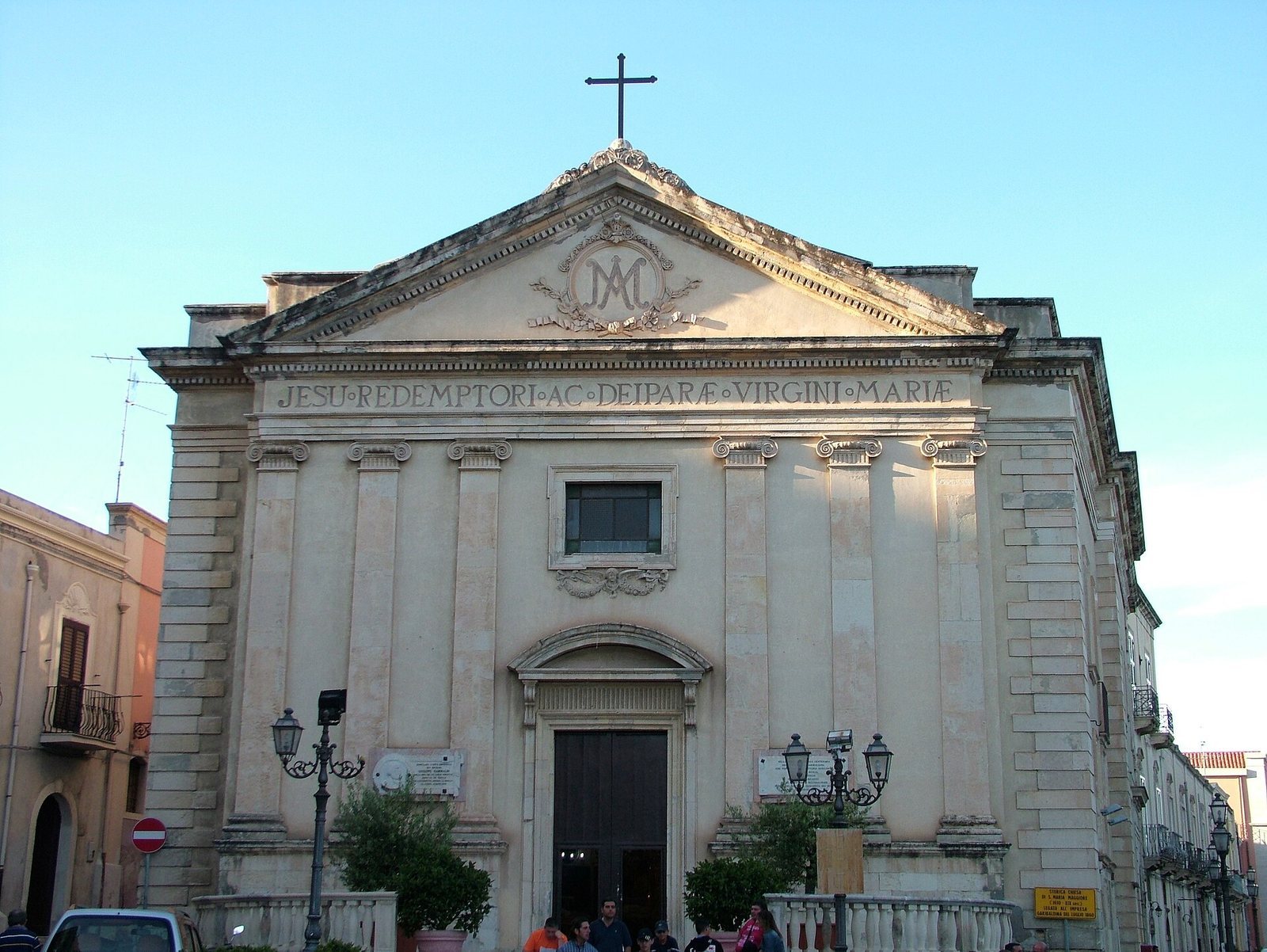
A ramp of six steps rises from street level to the semicircular forecourt, which is enclosed by a balustrade. The façade has three Ionic-style flat columns on each side, set on tall, plain bases. A broad horizontal cornice and a triangular top with a frieze bearing Marian insignia complete the composition, with a cross at its apex.
The central entrance has an arched top, with a framed and ornamented window above it. An inscription on the horizontal band reads, "To Jesus the Redeemer and the Virgin Mary, Mother of God." Two plaques on the façade commemorate Garibaldi’s rest in the forecourt after the Battle of Milazzo.
Bell tower
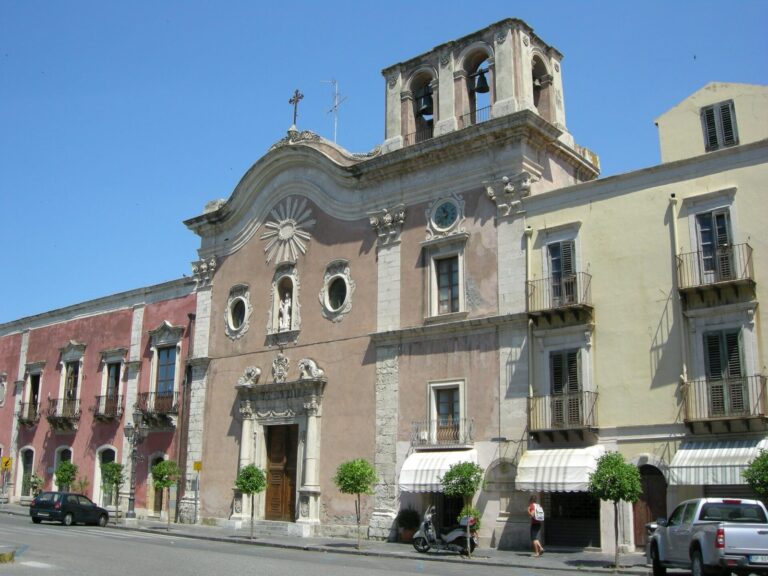
The bell tower survives in a partially demolished state following the damage associated with the 1908 earthquake.
Interior
Ceiling and architectural decoration
Stucco ornament and an elaborately moulded cornice separate the vaulted ceiling from the rest of the interior. Paintings by Scipione Manni, an eighteenth-century painter, date to 1762. They show the Presentation of Jesus in the Temple at the rounded end of the sanctuary and Jesus driving the merchants from the Temple on the nave ceiling. Three curved panels depict the Virgin overcoming evil and protecting the Church of Christ, the blindness of Abraham, and David.
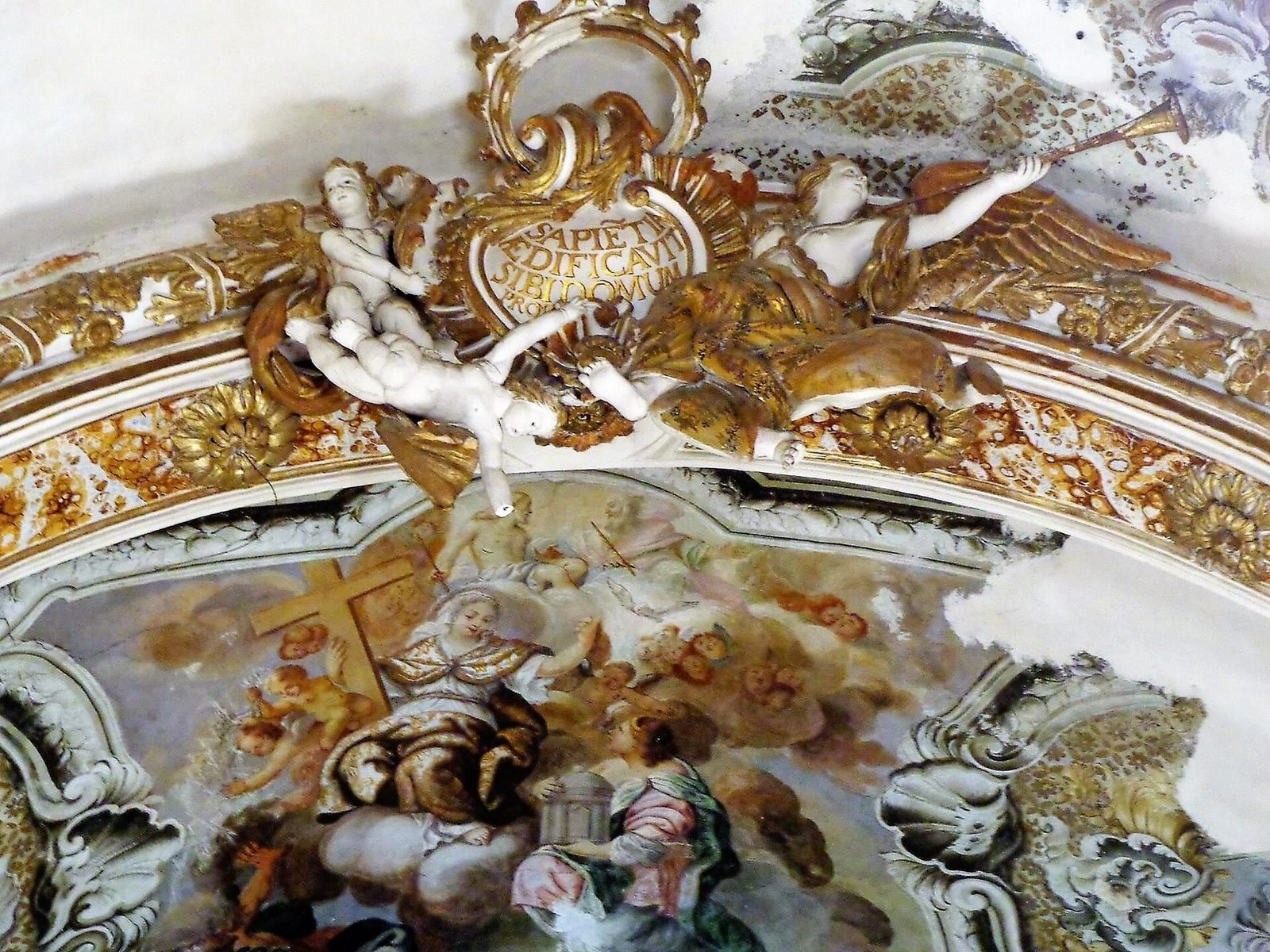
An arch between the nave and sanctuary carries a central stucco group of angels holding a coat of arms. Small child figures and garlands decorate the windows above the nave altars.
Right nave
A niche on the right-hand side contains an eighteenth-century image of Saint Expeditus. At the first altar, dedicated to the Holy Trinity, an altarpiece shows the Trinity with four female saints. The next altar is dedicated to the Immaculate Conception, with a painting of the Virgin accompanied by Saint Jerome and Saint Erasmus.
A pulpit dated 1758 stands near the second altar. A baptismal font was moved to this area sometime between the seventeenth and eighteenth centuries, probably from another place of worship. Doors, paintings, and confessionals also form part of the nave’s furnishings.
Left nave and memorials
A large fresco of Saint Andrew the Apostle occupies the left-hand side. Its first altar is dedicated to the Child Jesus and includes an eighteenth-century canvas of the Virgin with saints and blessed figures, as well as a display case containing the Child Jesus. A painting of Our Lady of the Rosary accompanies a side entrance. The second altar is dedicated to the Holy Crucifix; its eighteenth-century group includes the crucifix, Our Lady of Sorrows, Saint John the Evangelist, and Mary Magdalene.
The same side of the church contains the Calcagno family’s Neoclassical tomb, dated 1880, and the Greco Picciolo family tomb, dated 1869. Burials or commemorations associated with this area include Gaetano Siracusa; Giuseppe Mannello Cajetani (1783); the Cumbo family (1728); the priest Angelo Runca (1735); Pietro Cagnontento Sindoni (1768); Bartolomeo Aricò (1767); Antonino Maisano (1784); Domenico Vitali; Antonio Lucifero (1744); and the priest Francesco Alosi (1777).
High altar, choir, and crypt
The high altar, dated 1750, is made of polychrome marble and decorated with bas-reliefs in Carrara marble. Three paintings by Manni show the Madonna della Neve, the Nativity, and the Adoration of the Magi. The wooden choir dates to 1775. A contemporary wooden statue of the Madonna della Neve, made by artisans from Ortisei, takes its subject from an eighteenth-century painting.
The entrance to the ancient crypt lies between the high altar and the baptismal font.