Church of Our Lady of Sorrows: A Catholic Church in Lipari
Site at a Glance
- Popularity
- Very Low
- Country
- Italy
- Primary era
- Early Modern
- Eras represented
- Medieval, Early Modern, Modern
- Civilizations
- Kingdom of Sicily, Spanish
- Site type
- Religious
- Remains
- Church
On this page9 sections
History
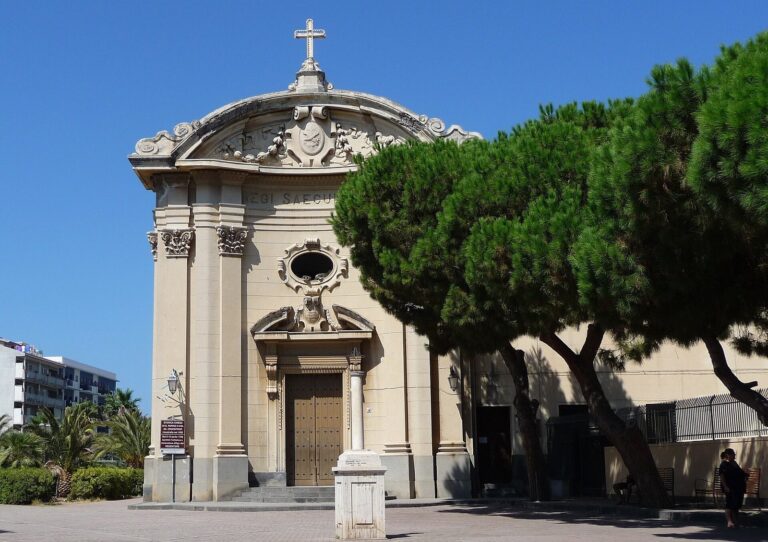
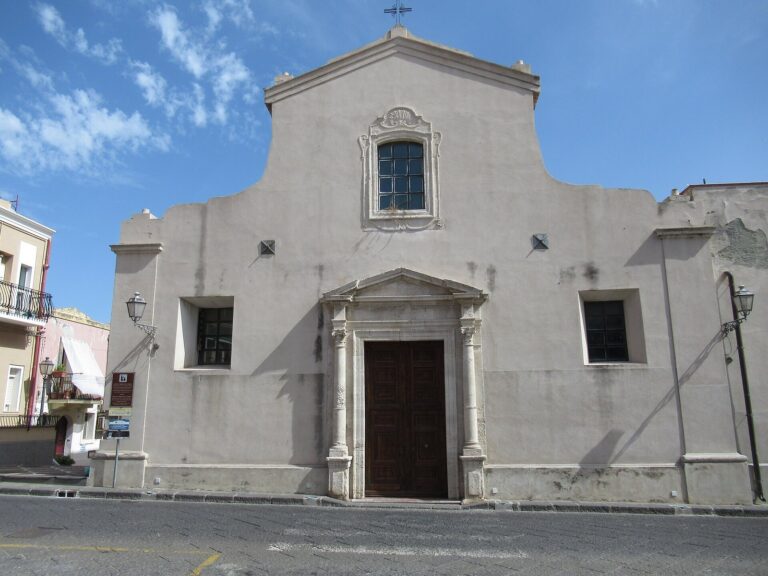
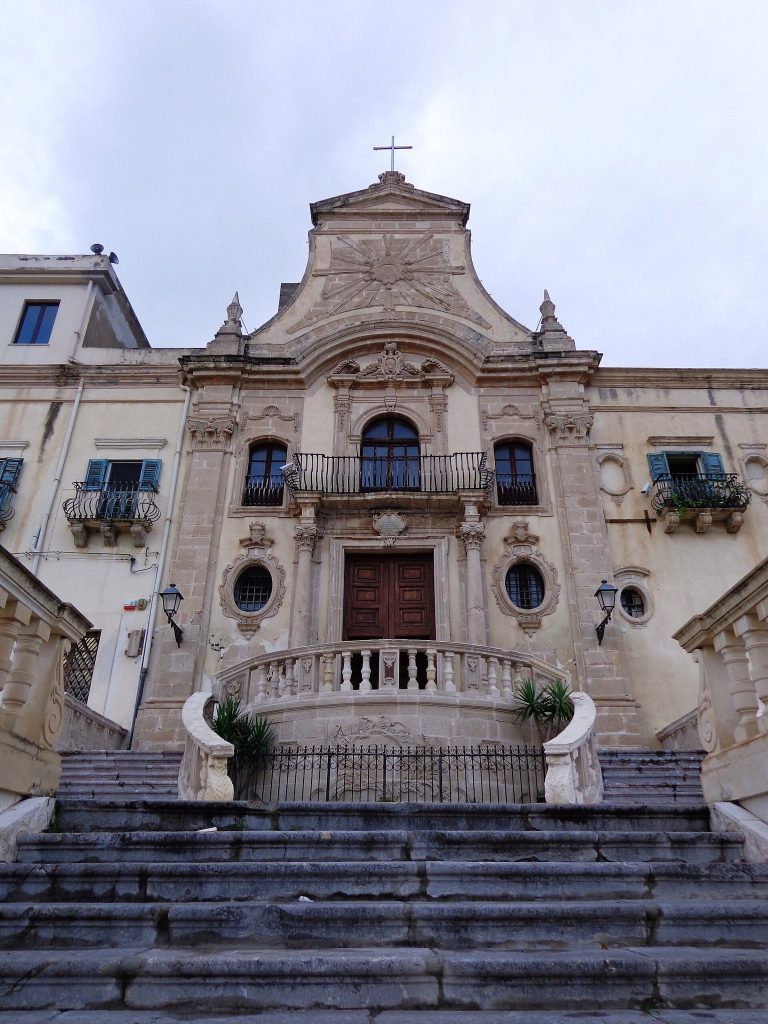
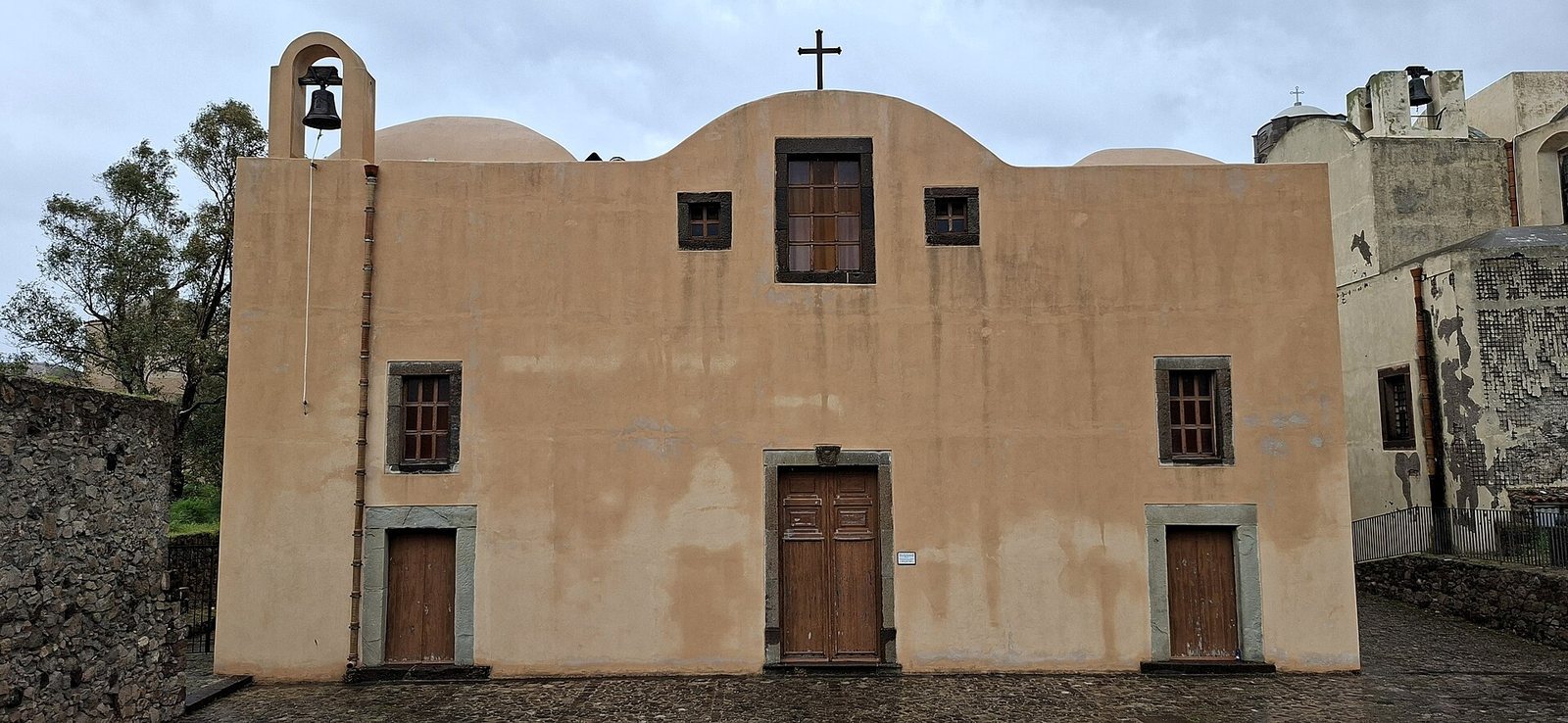
The Church of Our Lady of Sorrows, known locally as the Chiesa di Maria Santissima Addolorata, is a Catholic church on Lipari, Italy. Its development began with a fourteenth-century chapel, and three adjoining chapel sites were united as one church in 1699. Its history reflects the religious associations and jurisdictional disputes that shaped worship in Lipari.
Early chapels and rival places of worship
The earliest of the three chapels was the Chapel of the Seven Sorrows, built by Iberian Aragonese soldiers in the Sant’Andrea quarter. It was also associated with Holy Resurrection, Soledad, Pietà, and Addolorata devotions. Lay religious associations called confraternities, including Soledad groups made up of bourgeois gentlemen and Aragonese-Spanish soldiers, opposed the bishop of Lipari. He collected rents and agricultural tithes and did not recognize the Apostolic Legation, a privilege through which Sicilian rulers exercised certain ecclesiastical authority. The chapel consequently served as an independent place of worship in opposition to the cathedral.
Two other chapels stood beside it. A fifteenth-century Chapel of St Andrew was later dedicated to the Immaculate Conception, and its site was eventually occupied by the Church of Maria Santissima Immacolata. The fifteenth-century Chapel of St Anthony Abbot was later dedicated to Our Lady of Itria. During the Turkish sack of 1544, all three chapels were desecrated and burned, then promptly restored. The Soledad chapel underwent further restoration in 1563 and remained a church for Lipari’s military and nobles through the later sixteenth and seventeenth centuries, amid continuing opposition to the bishop’s fiscal policies.
Confraternities and the union of the chapels
The confraternity dedicated to Our Lady of Sorrows, also known as Soledad or Pietà, is first recorded in 1613. It was established under Spanish auspices and consisted exclusively of men, including nobles from the citadel and local aristocrats. Its aims included promoting devotion to Mary and holding its own liturgical celebrations, in competition with the two neighboring chapels and the cathedral. Its model drew on a parent congregation in Seville and a confraternity founded in Palermo in 1590. The Spanish founders retained the privilege of appointing its chaplain through the Viceroy of Sicily, the monarch’s governor in the territory, until Spanish rule ended. A confraternity of St Mary of Itria is also recorded in 1613.
In 1686 the Soledad church came under royal jurisdiction, with chaplains appointed only by the Viceroy of Sicily. In 1699 Bishop Girolamo Ventimiglia joined the three chapels into one place of worship and named it the Church of the Addolorata. The union was an unsuccessful attempt to restore episcopal authority over the church.
Nineteenth-century changes and religious observances
The confraternity of Our Lady of Sorrows was dissolved during the French Revolution, a period of political upheaval in France, and Bishop Giovanni Maria Visconte Proto restored it between 1839 and 1844. Proto also secured the church’s return to episcopal jurisdiction from Ferdinand II, king of the Two Sicilies, through royal decrees issued in 1852 and 1855.
The church’s processional images continue to take part in Lipari’s Holy Week rites alongside the island’s confraternities and pious associations. On Easter Sunday, a traditional encounter brings the sorrowing Madonna face to face with the risen Christ. Her black mantle is removed, and doves are released.
Remains
Layout and furnishings
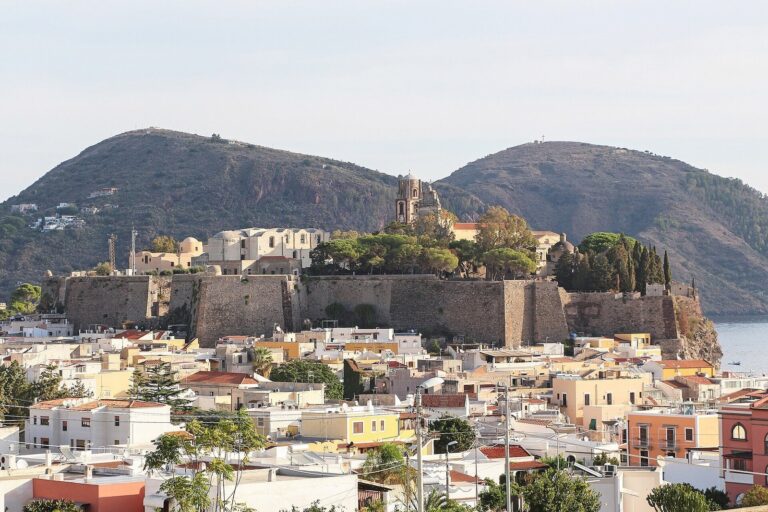
The church stands on the Rocca del Castello in Lipari’s former Sant’Andrea quarter, beside the main street of the acropolis, the elevated or fortified central area of an ancient settlement. This street is the principal decumanus, a main road in a Roman-style urban plan. The church lies between St Catherine of Alexandria to the northwest and Maria Santissima Immacolata to the southwest. Its interior incorporates the former chapel sites, with the Soledad chapel on the left, St Andrew’s former chapel in the center, and St Anthony Abbot’s former chapel on the right.
Interior decoration and music
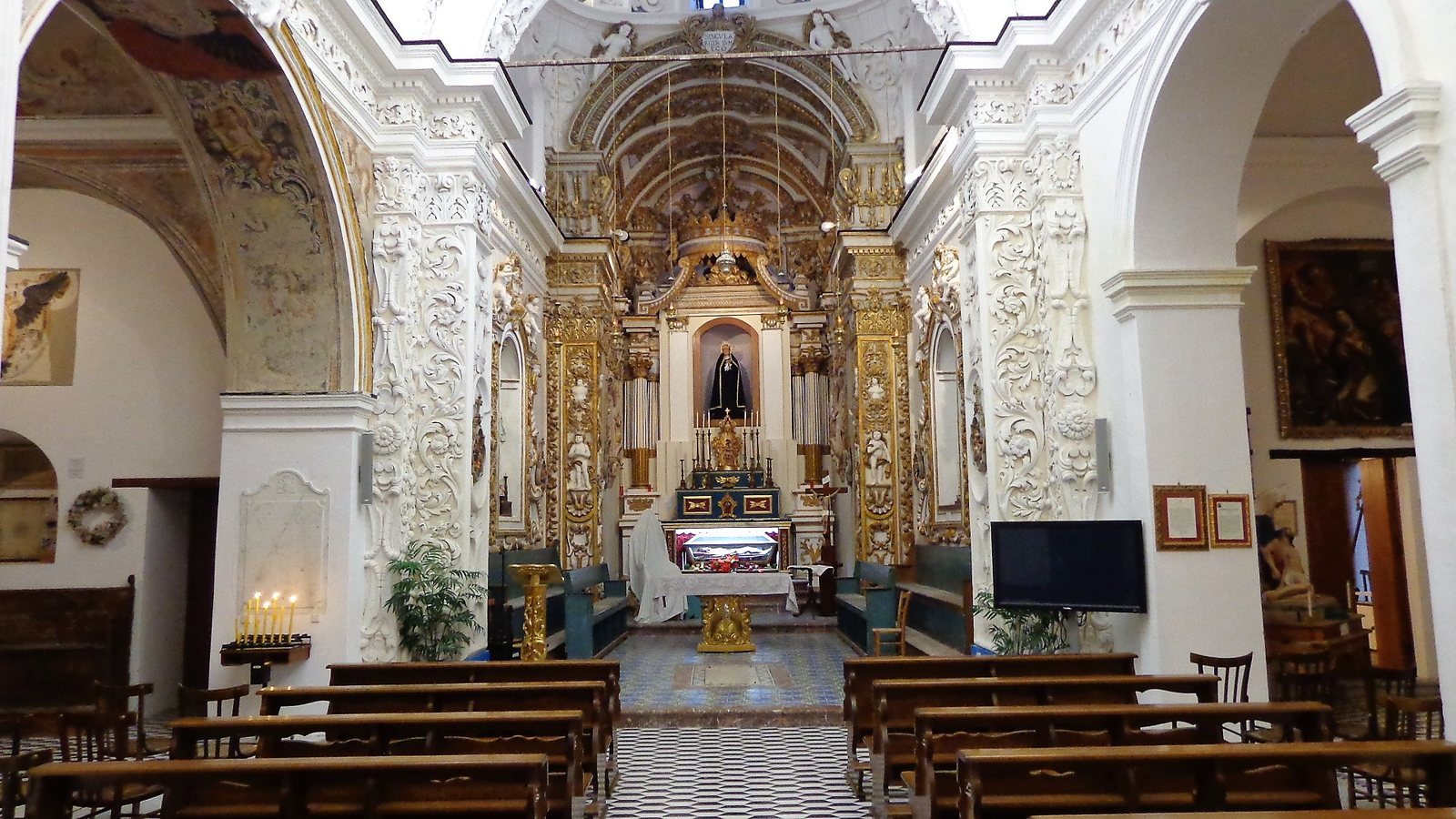
Stucco decoration inside the church dates from the seventeenth to nineteenth centuries. The area between the triumphal arch and the apse is surmounted by a dome and has especially elaborate stucco work, with numerous reliefs highlighted in gold. Ventimiglia’s 1699 alterations covered earlier frescoes with plaster and stucco. Later restoration brought fragments of those frescoes to light and removed ornamental additions and stucco commissioned by the bishop. A wooden choir loft and a mid-eighteenth-century organ occupy the inner face of the entrance wall. The organ is attributed to Emanuele Bongiorno of Lipari.
Altars and devotional images
The raised main altar has groups of three Doric columns, one classical architectural style, topped by Corinthian capitals, another classical style. Above them is a baldachin, a canopy over an altar, decorated with many putti, figures of small children. The altar niche holds a wooden statue of Our Lady of Sorrows, dressed in Spanish style and wearing a golden halo patterned with stars. An urn containing the Dead Christ is kept beneath the altar table. Decorated niches in the side walls hold statues of the Immaculate Conception on the left and the Assumption on the right.
A possible side altar in the Chapel of the Crucifix has a carved, gilded wooden frame dating to the late seventeenth century, surrounding Federico Barocci’s painting of the Lamentation of the Magdalene. Another possible side altar is also made of carved, gilded wood and dates to the late seventeenth century. A further possible side altar, the Chapel of the Ecce Homo, has a niche containing an image of the Ecce Homo, Christ shown after his scourging and before his execution.
Paintings and processional images
The Presentation altar holds Girolamo Alibrandi’s painting of Jesus being presented at the Temple, with Simeon the Elder and the prophetess Anna. The painting originally belonged to the Church of the Purification, called the Church of the Bianchi (the Whites), whose site is now occupied by St Catherine of Alexandria. Alibrandi’s work was inspired by a comparable painting by Giorgio Vasari, commissioned for the Church of Sant’Anna dei Lombardi and dated 1545. Other paintings include Giovanni Barbera’s St Onuphrius, with an inscription recording its creation in 1743, and a painting of St Teresa of Ávila.
The church’s processional images portray figures and episodes from the Way of the Cross, a devotional sequence recalling Christ’s path to crucifixion. They include Veronica, Simon of Cyrene, the Fall, Christ as the Ecce Homo at the column, the Crucifixion, the urn of the Dead Christ, and Our Lady of Sorrows.