Kathisma Church: A Byzantine Marian Shrine between Jerusalem and Bethlehem
Site at a Glance
- Popularity
- High
- Country
- Israel
- Primary era
- Classical
- Eras represented
- Classical, Medieval
- Civilizations
- Byzantine, Roman, Umayyad
- Site type
- Religious
- Remains
- Church
On this page11 sections
History
Before the Byzantine church
During the Second Temple period, the era of Jewish history that ended with the Temple’s destruction in AD 70, a Jewish settlement occupied the hill. After the destruction, the Roman Tenth Legion established a camp there with residential buildings and a bathhouse. Excavations also point to a possible small shrine on the site in the first half of the fifth century.
Foundation and Marian traditions
Kathisma Church is a Byzantine Marian shrine between Jerusalem and Bethlehem in Israel, built around 456 in an unusually large octagonal plan. A wealthy widow named Ikelia established the church and an adjoining monastery under the direction of Juvenal, bishop of Jerusalem. Dedicated to Mary as Theotokos, meaning “God-bearer,” it was among the earliest churches in the Byzantine Empire dedicated to her, and the earliest strictly Marian church in Jerusalem and its surroundings.
The church followed the First Council of Ephesus in 431, which affirmed the title Theotokos for Mary. Juvenal had taken part in that council. Five years before the church was built, the Council of Chalcedon reaffirmed the decisions of Ephesus and gave Jerusalem ecclesiastical independence on a footing equal to Rome, Constantinople, Alexandria, and Antioch.
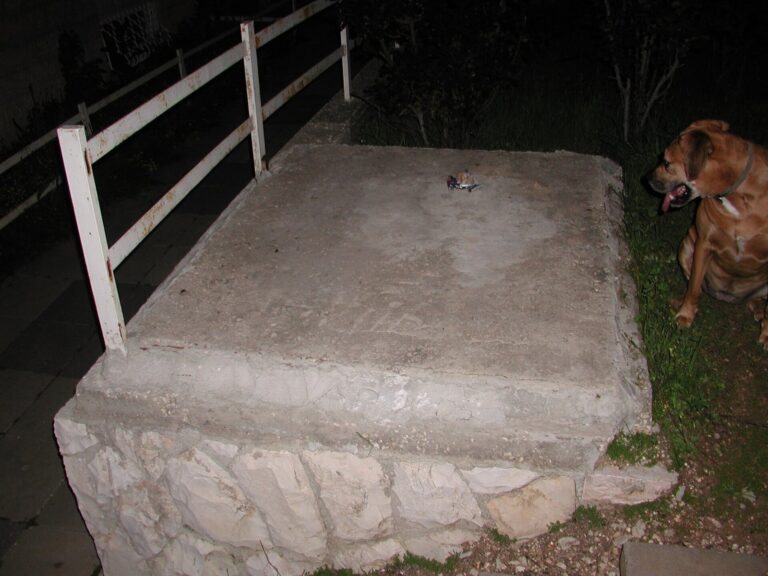
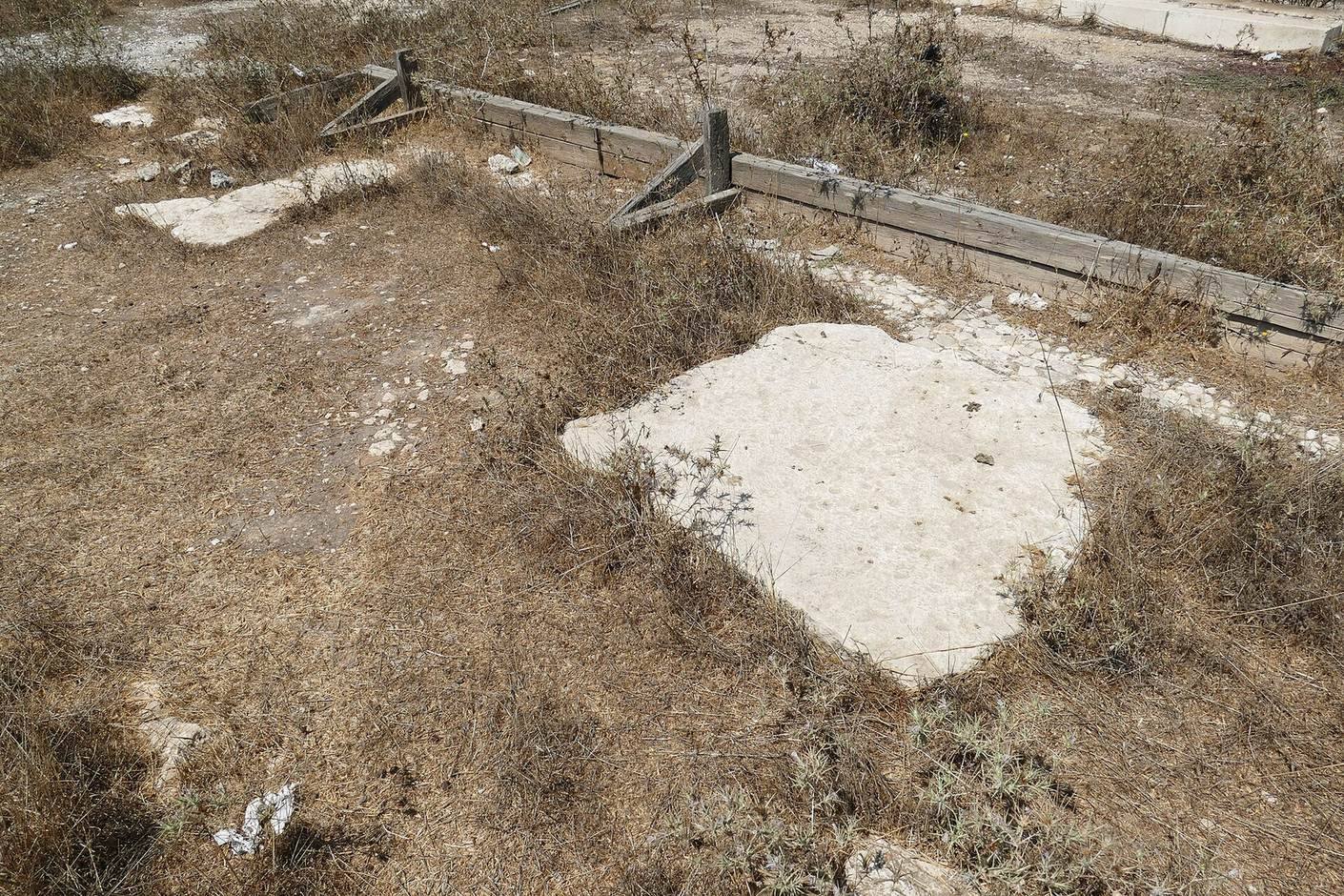
Christian tradition identifies the natural rock at the church’s centre as the place where Mary rested while travelling with Joseph from Nazareth to Bethlehem. They were going to register in Joseph’s ancestral town in the census ordered by Augustus, Rome’s first emperor. The second-century Proto-Gospel of James, an early Christian text outside the New Testament, describes Mary, pregnant and in labor, asking Joseph to stop so she could rest.
Later Byzantine tradition expanded the story. Mary is said to have sat on a rock beneath a palm tree; the tree bent so Joseph could pick its fruit, and a spring appeared to refresh her. She then saw two figures, one grieving and one rejoicing, before the family continued to Bethlehem, where Jesus was born in a cave. Some understood the figures as anticipating both sorrow and joy in Mary’s life because of her son. Others read the episode as foretelling the defeat of Judaism and the triumph of Christianity.
The church helped encourage pilgrimage between Jerusalem and Bethlehem as church leaders gave religious meaning to places along the route. Traditions associated with Judas Iscariot, the disciple who betrayed Jesus, Elijah, an Israelite prophet, and Saint George, a Christian martyr, also formed part of this wider network of holy sites. Juvenal is associated with introducing a feast celebrating Mary as Theotokos at Kathisma. Initially observed on 15 August, it was moved to 13 August to make room for the Feast of the Assumption, which commemorates Mary’s taking into heaven.
Ikelia also introduced a candle procession commemorating Mary’s purification at the Temple in Jerusalem, forty days after Jesus’s birth. The custom spread through much of the Eastern Church and later to the Western Church, where it became known as Candlemas.
Restoration, shared use, and decline
Sixth-century writings describe the church and monastery. In his Life of Theodosius, Cyril of Scythopolis says that Ikelia built them during Juvenal’s episcopate, and relates that Theodosius lived at the monastery as a young monk. The Christian pilgrim Antoninus of Piacenza also gave a substantial description of the church. A sixth-century text, De Situ Terrae Sanctae, relates that the Byzantine official Urbicius had the central rock cut into a rectangular, altar-like form and intended to take it to Constantinople. When it could not be moved beyond Jerusalem’s St Stephen’s Gate, the rock was placed in the Church of the Resurrection, also known as the Church of the Holy Sepulchre, behind Jesus’s tomb and used in the Eucharist.
A substantial restoration took place between 531 and 538. In the first half of the eighth century, the building began to serve both Christian and Muslim worshippers. Its southern entrance was adapted for Muslim prayer, while the rest of the church is thought to have remained in Christian use, perhaps in separate spaces. The mosque continued operating until the eleventh century.
The church is thought to have been abandoned in the tenth century, after which its buildings were gradually dismantled for their materials. It probably fell into ruin in the late twelfth century, possibly in connection with Saladin’s conquest of the region in 1187. Pilgrim and clerical writings continued to mention the church, but its location was eventually forgotten. The nearby open reservoir called Bir Qadisimo retained its name and served as a refreshment stop and Christian pilgrimage site until the late nineteenth century. Once the church’s location was lost, people came to believe that the reservoir’s name derived from the Arabic word for “holy.”
Rediscovery and conservation
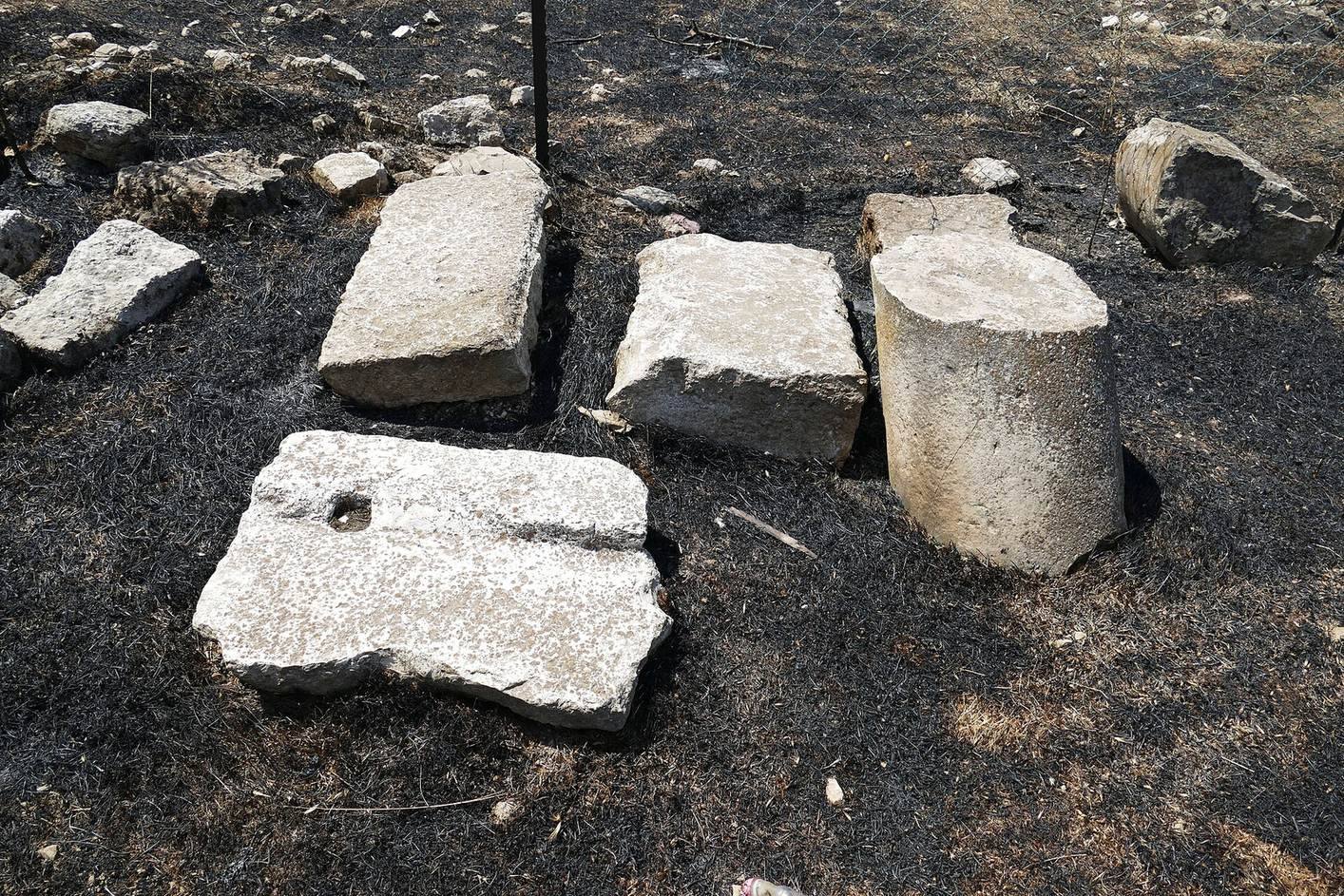
The ruins came to light by chance in 1992 during construction and widening work on Highway 60. The road was rerouted to avoid damaging them. Archaeologist Rina Avner led excavation seasons in 1993 and 1997 in collaboration with the University of Athens. Later conservation included limited rebuilding of walls to clarify the church’s plan, treatment of plaster, and stabilization of the remains.
Remains
The church plan
Central shrine and ambulatory
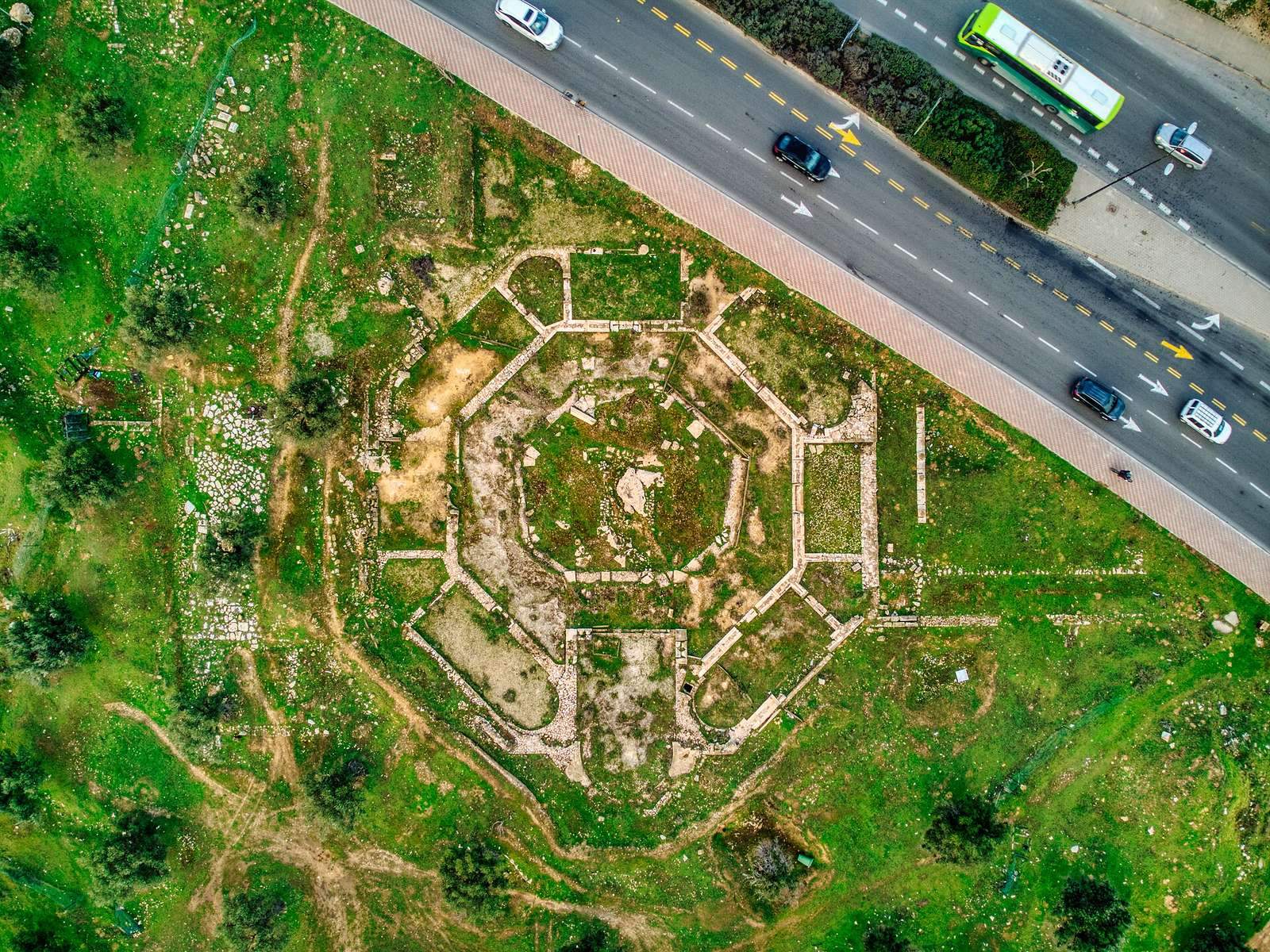
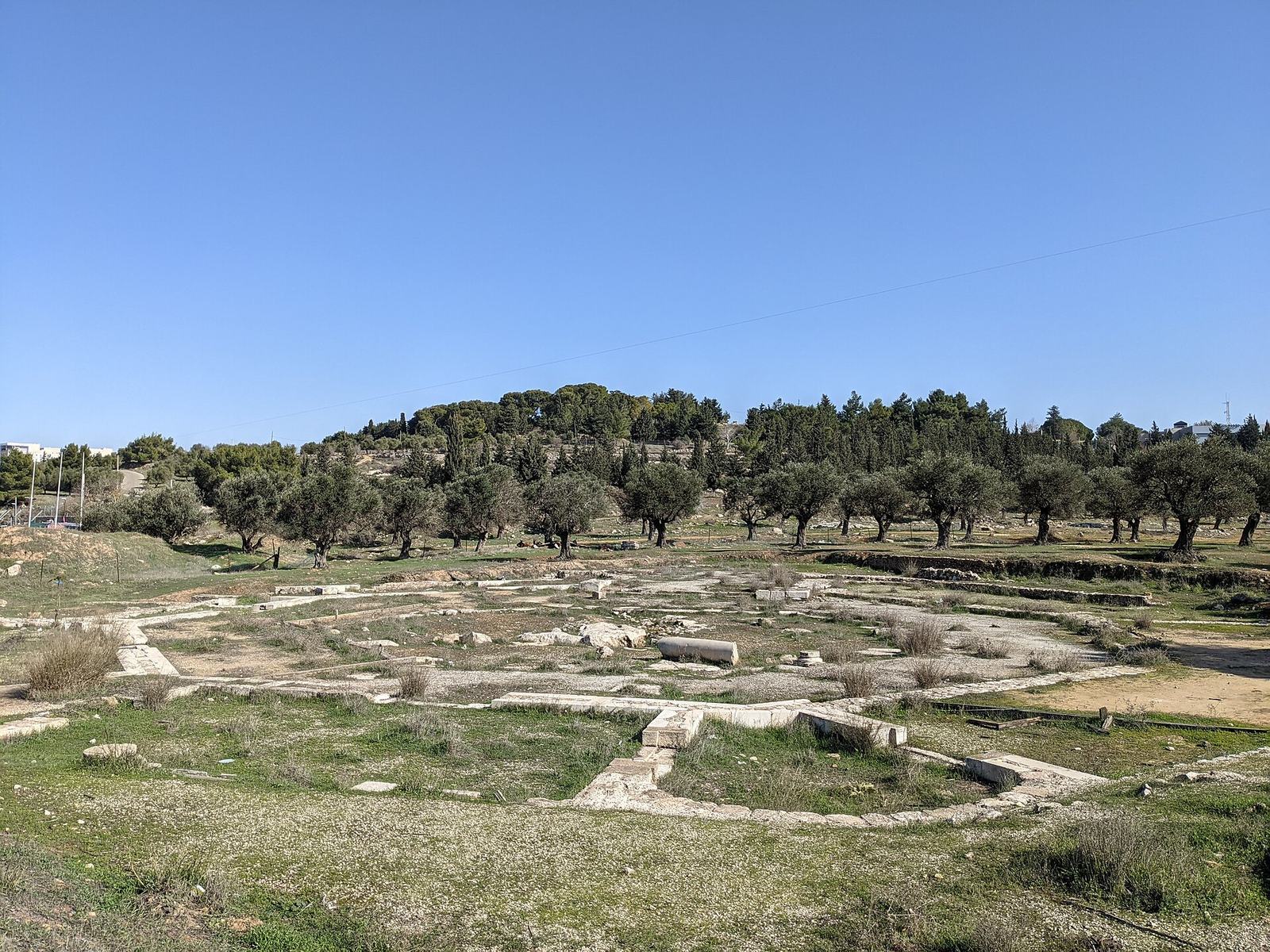
The church measures 43 by 52 metres and is considered the largest church of its type discovered in Israel. Its octagonal design is that of a martyrium, a church or shrine associated with a sacred person, place, or relic. Three nested spaces were arranged around an irregular natural rock at the centre. The innermost space was first defined by square piers and later by columns. Around it, a ring-shaped ambulatory, or passage around a central space, allowed people to circle the rock while the supports left it visible along the way.
Outer rooms and eastern apse
The outer octagon held a mixture of square rooms and rectangular halls, some ending in apses, projecting spaces that served here as prayer chapels. Small trapezoidal rooms occupied the corners. The principal apse faced east, beginning in the inner octagon, crossing the middle ring, and projecting beyond the building’s outer perimeter. The church’s octagonal form may have influenced fifth-century churches on Mount Gerizim and at Capernaum, and possibly the late seventh-century Dome of the Rock.
Floors and later alterations
Marble and mosaics decorated the church’s floors. Colourful mosaics with floral and geometric patterns covered many rooms; some were added in the eighth century, and some areas survived intact. Red, yellow, and green designs often formed medallions framed by braided patterns. One mosaic depicts a large palm beside two smaller palms, interpreted as recalling the tree beneath which Mary rested and the importance of Jesus in relation to his parents. In the southern chapel, four cornucopias, or horns of plenty, are ornamented with acanthus leaves and clusters of grapes. During the period of Muslim use, the southern entrance became a prayer niche oriented toward Mecca, the eastern apse was blocked, and the floor mosaics were remodelled. The mosaics were later stabilized and covered for protection.
Monastery and surrounding remains
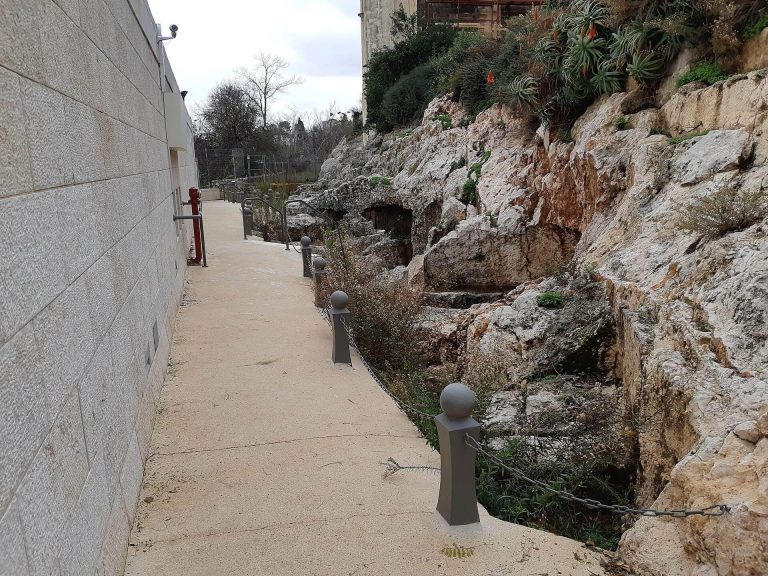
The archaeological area lies on bedrock in an olive grove beside Hebron Road, near Mar Elias Monastery, and covers about 1.5 dunams, or 1,500 square metres. It includes the church and remains of its Byzantine monastery. A rescue excavation south of the church in 2000 exposed two Byzantine walls marking its southern limit. The open reservoir Bir Qadisimo lies in the southern part of the grove.