Sikachi-Alyan Petroglyphs: Ancient Rock Carvings on the Amur
Site at a Glance
- Popularity
- High
- Country
- Russia
- Primary era
- Stone Age
- Eras represented
- Stone Age, Bronze Age, Iron Age, Classical
- Civilizations
- Unclassified
- Site type
- Civic
- Remains
- Rock Art
On this page9 sections
History
The Sikachi-Alyan petroglyphs are ancient carvings on basalt boulders along the right bank of the Amur River in Russia, with images dating from the Neolithic period through the first centuries AD. The site has served as a place of worship associated with shamanism, religious practices in which shamans act as ritual specialists, and is an ethnic symbol of the Nanai people, an Indigenous people of the Amur region.
Local knowledge and early research
Local people have known the carvings for centuries. Naturalist Richard Maack carried out the first scientific study in 1859. V. A. Alftan described them in 1894, while L. Ya. Shternberg and V. K. Arsenyev also contributed to their study. The site became more widely known after archaeologist Alexey Okladnikov investigated it in 1935.
Heritage and care
An open-air museum at the site presents types of Neolithic petroglyphs found in the Lower Amur region. The ethnographic museum in Sikachi-Alyan is a branch of the Khabarovsk Regional Museum. In 2003, the petroglyphs were added to UNESCO’s Tentative List for World Heritage inscription, and they are designated a cultural heritage site of federal significance in Russia. The boulders had no owner and lacked adequate care; in June 2018, the Khabarovsk Krai prosecutor’s office filed a court claim seeking to have the Russian Federation recognized as their owner.
Remains
Riverbank distribution and preservation
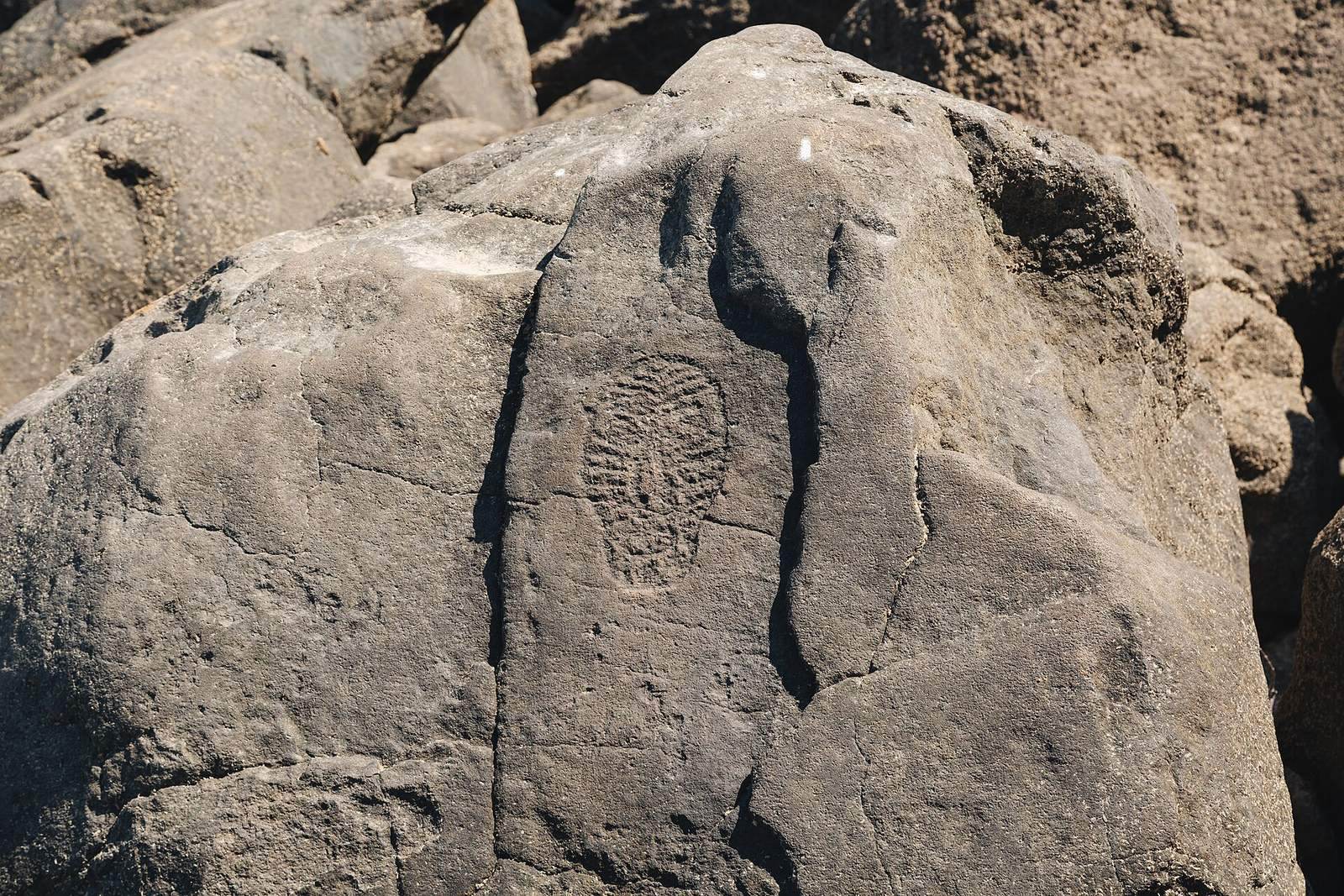
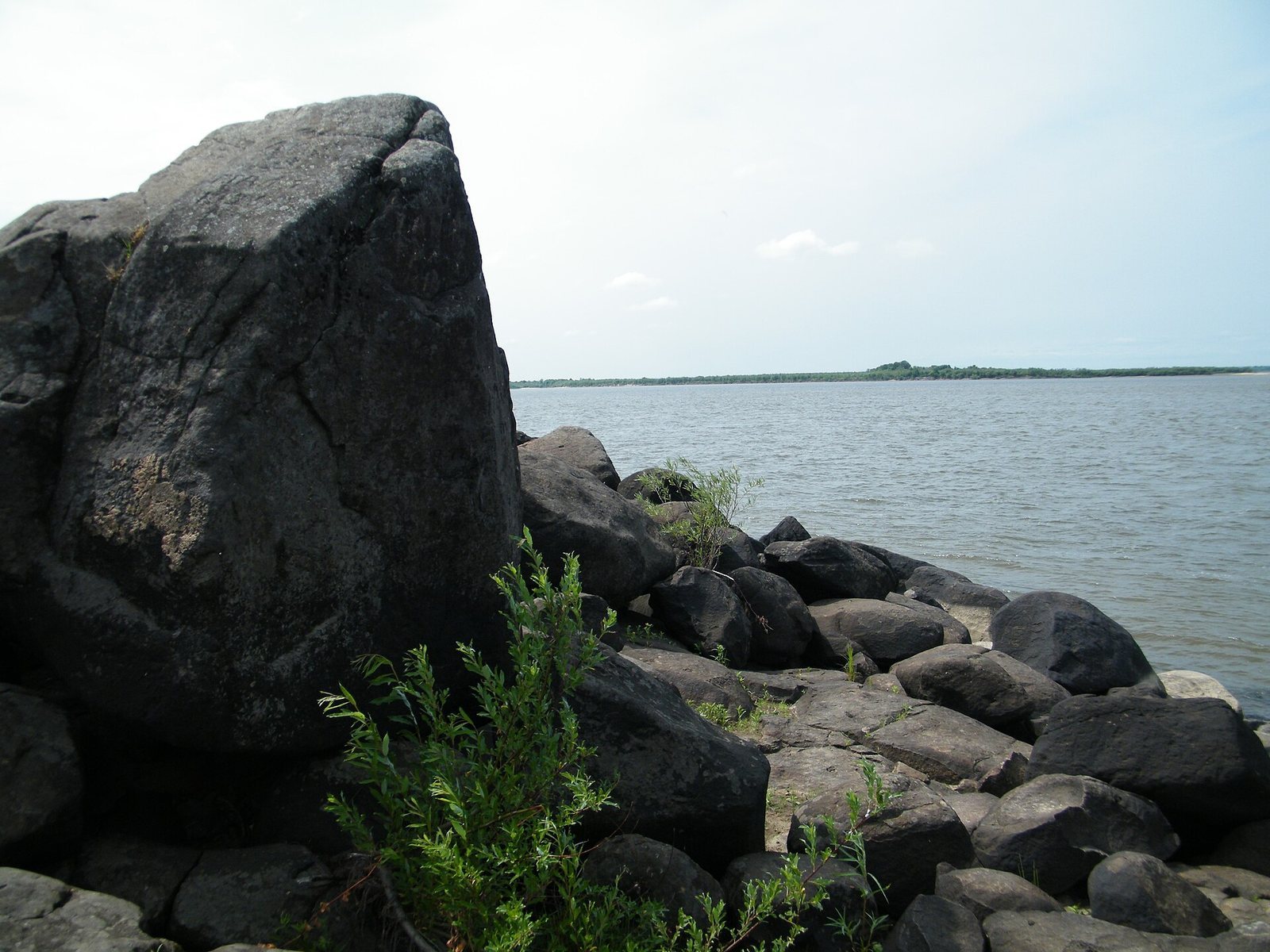
The carvings are cut mainly into basalt boulders scattered along about six kilometres of the Amur’s right bank, near a rocky outcrop and the villages of Sikachi-Alyan and Malyshevo. The stones lie close to the water in a seasonally flooded area, where they can be submerged or hidden, and spring ice can damage them. The boulders form upstream and downstream groups around Sikachi-Alyan; a river bay separates the upper group from the village. By the beginning of the 20th century, about 200 images remained, while spring ice had carried others into the riverbed.
Neolithic carvings
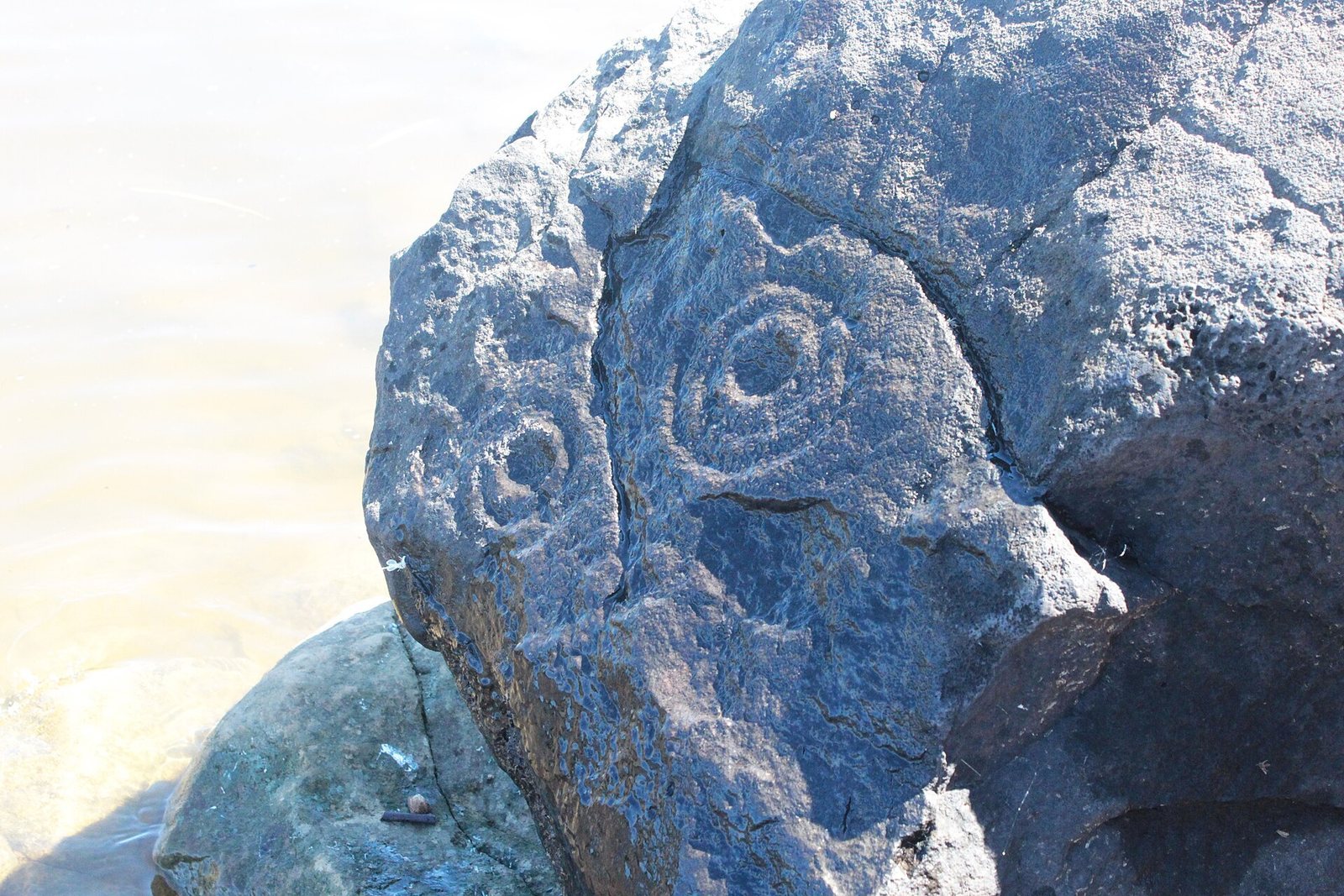
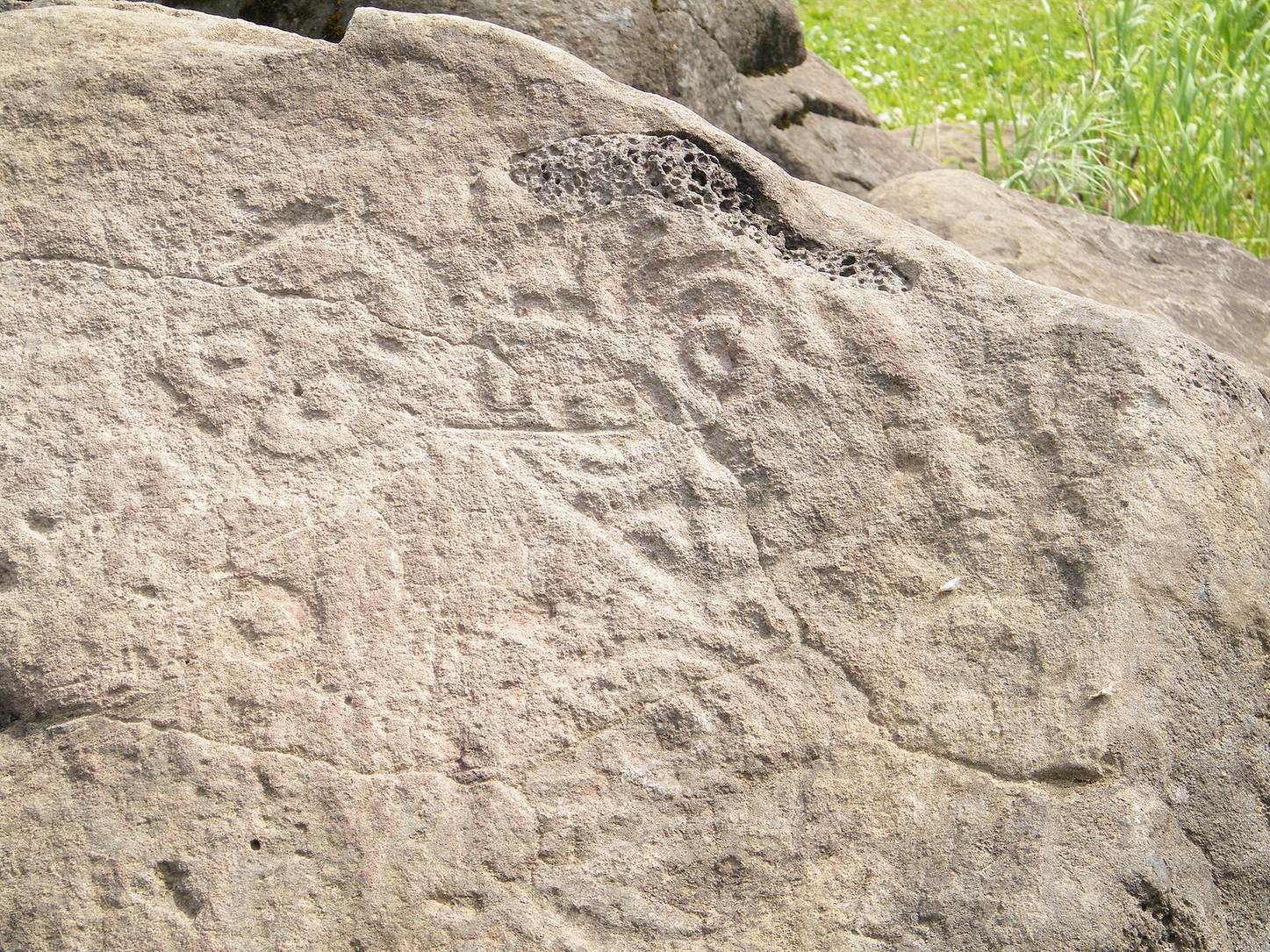
The oldest carvings are attributed to the Osipovskaya culture, a culture of the Lower Amur region associated with the Neolithic, a prehistoric period characterized by stone-tool technologies. They date to the 12th–9th millennia BC and were made with stone tools. Their subjects include schematic horses, moose, forest birds, and simple human-like masks, often drawn with broad outline grooves. The wild horses depicted are thought to have lived in the Amur region only during the glacial period. Masks with geometric designs date to the 4th–3rd millennia BC. They include oval, heart-shaped, and trapezoidal forms, from small group compositions about 10–15 centimetres across to individual images as large as 60 centimetres, sometimes covering a whole boulder. Their patterns feature angles, triangles, arcs, and, in some cases, radiating lines. The designs may reflect traditions of body painting or tattooing.
Later carving traditions
A decorative style featuring spirals and concentric circles developed in the 2nd to early 1st millennium BC, particularly in images of moose. Carvings assigned to the first centuries AD were made with iron tools. Carving was the principal technique during the first half of the 1st millennium AD.
Figural and symbolic images
The carved subjects include animals, hunting scenes, human figures, people seated in boats, and human-like shamanic masks. A group of basalt boulders bears more than 100 face images. One composition has been interpreted as combining fire, a serpent, the sun, and people wearing shamanic masks. A mammoth image may represent an animal hunted by ancient people.
Stele and casts
A stele, an upright stone slab bearing an image, carries a petroglyph on the Amur bank below Sikachi-Alyan. Precise concrete casts were made of some well-known carved boulders. Replicas are displayed at the Khabarovsk Museum of Archaeology and in an open area in front of the museum.