Temple of Apollo Pythios Soter: Ambracia’s Principal Sanctuary
Site at a Glance
- Popularity
- Low
- Country
- Greece
- Primary era
- Classical
- Eras represented
- Classical
- Civilizations
- Ancient Greek
- Site type
- Religious
- Remains
- Temple
On this page7 sections
History
Ambracia and its sanctuary
The Temple of Apollo Pythios Soter is an ancient Greek sanctuary in Arta, Greece, built around 500 BC in the Doric style, a form of ancient Greek temple architecture. It stood in the northwestern part of Ambracia and served as the city’s principal sanctuary. Apollo was its patron, and the temple occupied a public area where religious and civic life came together. The epithets in its name connect Apollo with Delphi as Pythios and describe him as Soter, or “Savior.”
Ambracia was established in 625 BC by Gorgos, an illegitimate son of Cypselus, ruler of Corinth. It was a Corinthian colony, meaning a settlement founded by Corinth. The city’s name had local roots, with traditions linking it either to Ambracus, son of Thesprotus, or to Ambracia, daughter of Melaneus. Worship in the city included Olympian and eastern deities as well as heroes of Epirus’s Aeacid ruling line. Some religious practices reflected Ambracia’s ties to Corinth, while others related to the policies of Pyrrhus, a Hellenistic king of Epirus.
Corinthians worshipped Apollo by the seventh century BC, and this practice reached Ambracia during the Archaic period, an early era of Greek history dated approximately 800–480 BC. Apollo was worshipped there by at least the sixth century BC, before the temple was built. The god was also associated with roads and the protection of colonists.
Stories of Apollo, Artemis and Heracles
Antoninus Liberalis, a writer who collected myths and lived in the second or third century AD, preserved a story attributed to Athanadas, an Ambracian historian of the fourth century BC. It describes a contest among Apollo, Heracles and Artemis over which deity should possess Ambracia. Apollo connected the city’s name with Ambracia, daughter of Melaneus, whom the story identifies as Apollo’s son. He also claimed that, under his guidance, the Corinthians had aided the city in its war against the Epirotes. The story credited Apollo with inspiring a revolt against the ruler Phalaecus and restoring order, equality and justice. Afterwards, the people honored Apollo as Soter with festivals and feasts.
In the same tale, Artemis recalled sending a lion cub ahead of Phalaecus while he hunted. When he picked it up, its mother attacked and killed him, ending his rule. The Ambracians were said to have made a bronze statue of Artemis and honored her as a guide for colonists or as a goddess of the wild. Heracles, meanwhile, claimed descent from the Corinthians who founded the city and asserted authority over Epirus, citing victories over the Celts, Chaonians and Thesprotians. Kragaleus, chosen to judge the contest, awarded Ambracia to Heracles. Apollo then touched Kragaleus, turning him to stone. This part of the myth may relate to the sacred stone associated with Apollo. Though the story recognized Heracles’ claim, the Ambracians continued to honor and sacrifice to Apollo Soter.
The temple also held public records and documents. The sacred stone associated with Apollo appeared on Ambracian coins and public seals. On the coins, the front showed the veiled head of Dione, while the reverse placed a double ring around the stone.
Reuse and rediscovery
From the early Christian period, temple stones were reused in other buildings, and much of the sanctuary disappeared. Archaeologist Ioulía Vokotopoúlou identified the ruins in 1964. Excavations followed in 1966–1968 and 1975–1977. The temple became a protected monument in 1965.
Remains
Plan and surviving fabric
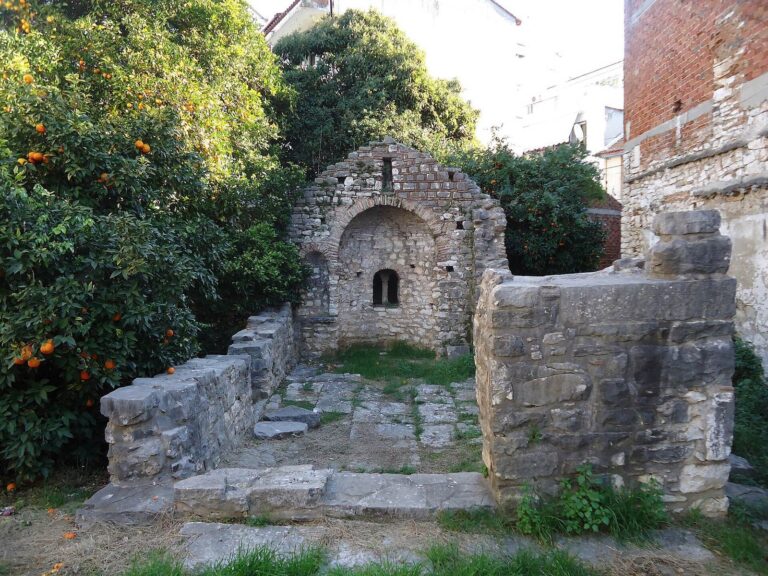
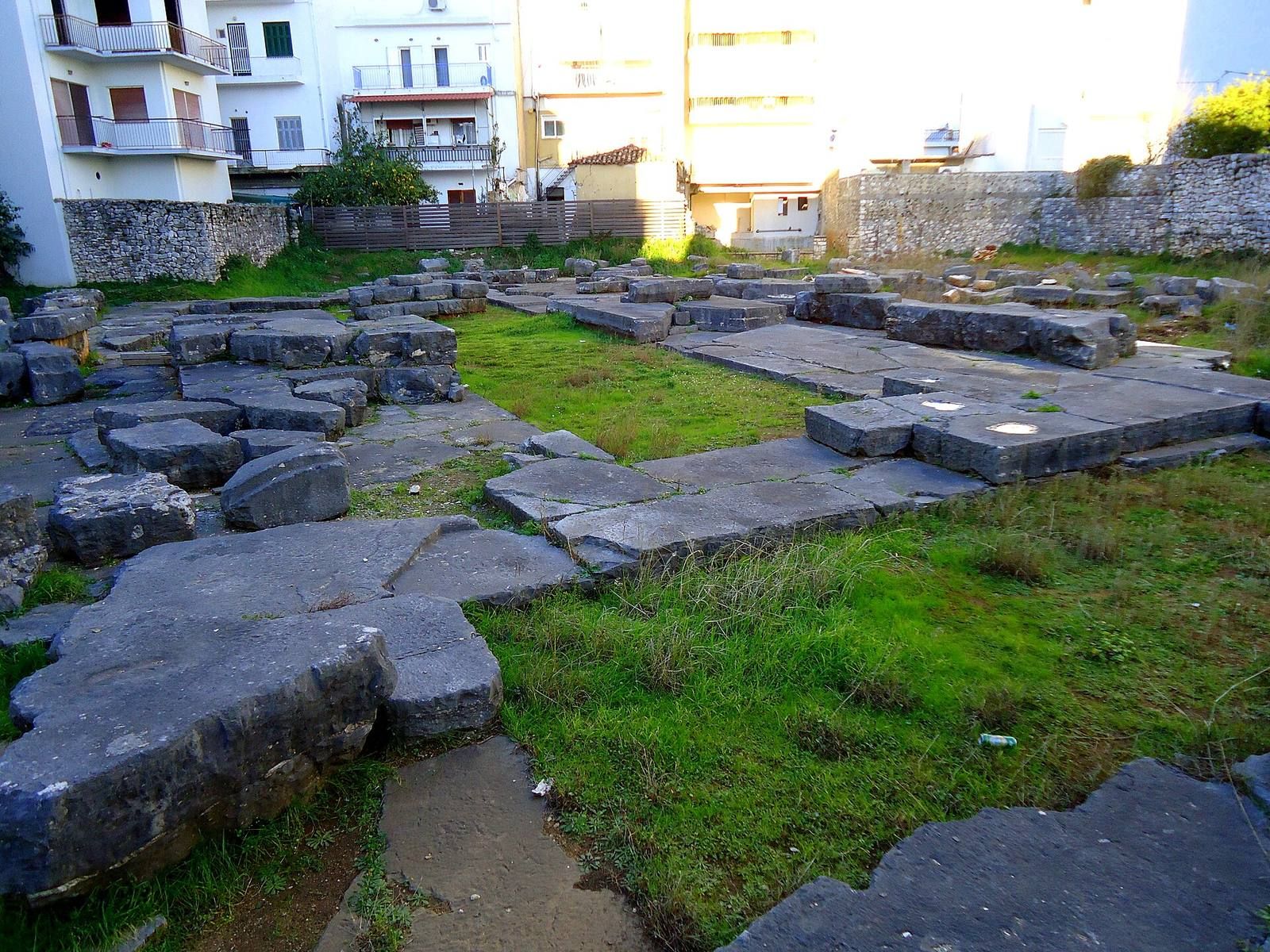
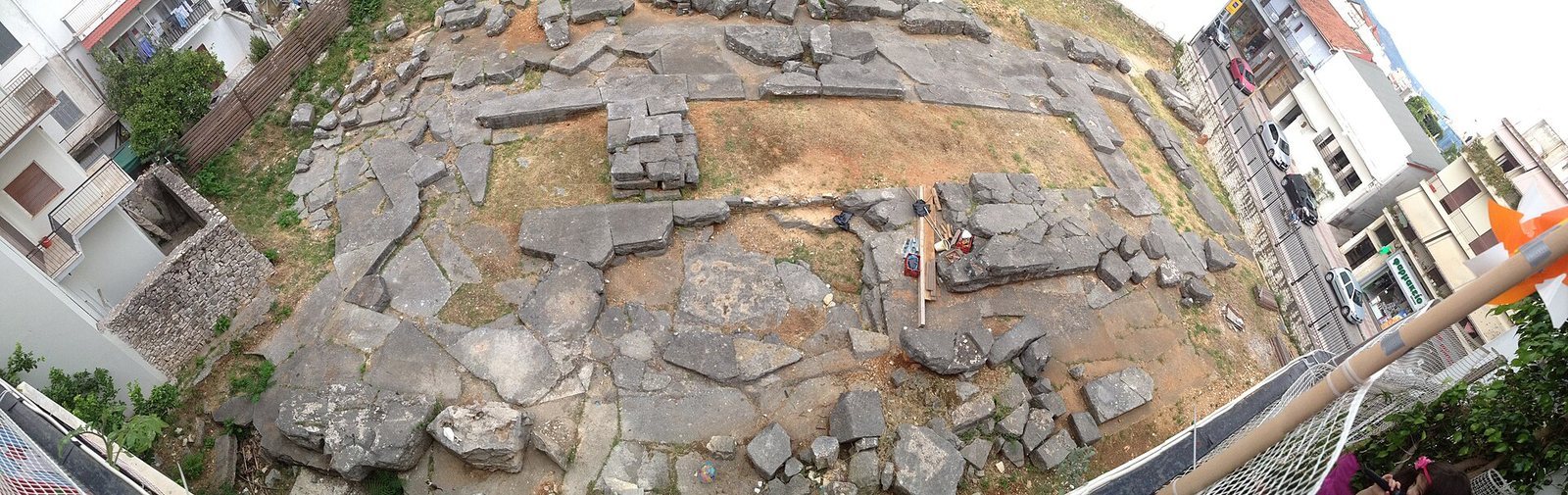
The remains lie in central Arta, near Kilkís Square and the meeting of Pýrrou and Nikoláou Plastíra streets. The church of Agia Theodora and the Little Theatre of Ambracia are also nearby. The Doric temple extended about 44 metres by 20.75 metres, with its length running east to west. Its plan included a front porch and a long main chamber, but no rear porch or chamber. The surviving remains include the stepped platform and its upper leveling course, along with one carved column top. At the rear of the main chamber are foundations for the base of Apollo’s cult statue.
Inscription and burials
An upright inscribed stone slab found at the site, dating to the first century BC, preserves a boundary agreement between Ambracia and Kharadros. The text includes an oath to the gods to keep the agreement and invokes Apollo as Soter. The slab is now held at the Archaeological Museum of Arta. Graves dating to the Christian period have also been found within the temple site.