The Great Sephardic Synagogue in Yemin Moshe: A Jerusalem House of Worship
Site at a Glance
- Popularity
- Very Low
- Country
- Israel
- Primary era
- Modern
- Eras represented
- Modern
- Civilizations
- Ottoman
- Site type
- Religious
- Remains
- Synagogue
On this page9 sections
History
Settlement and construction
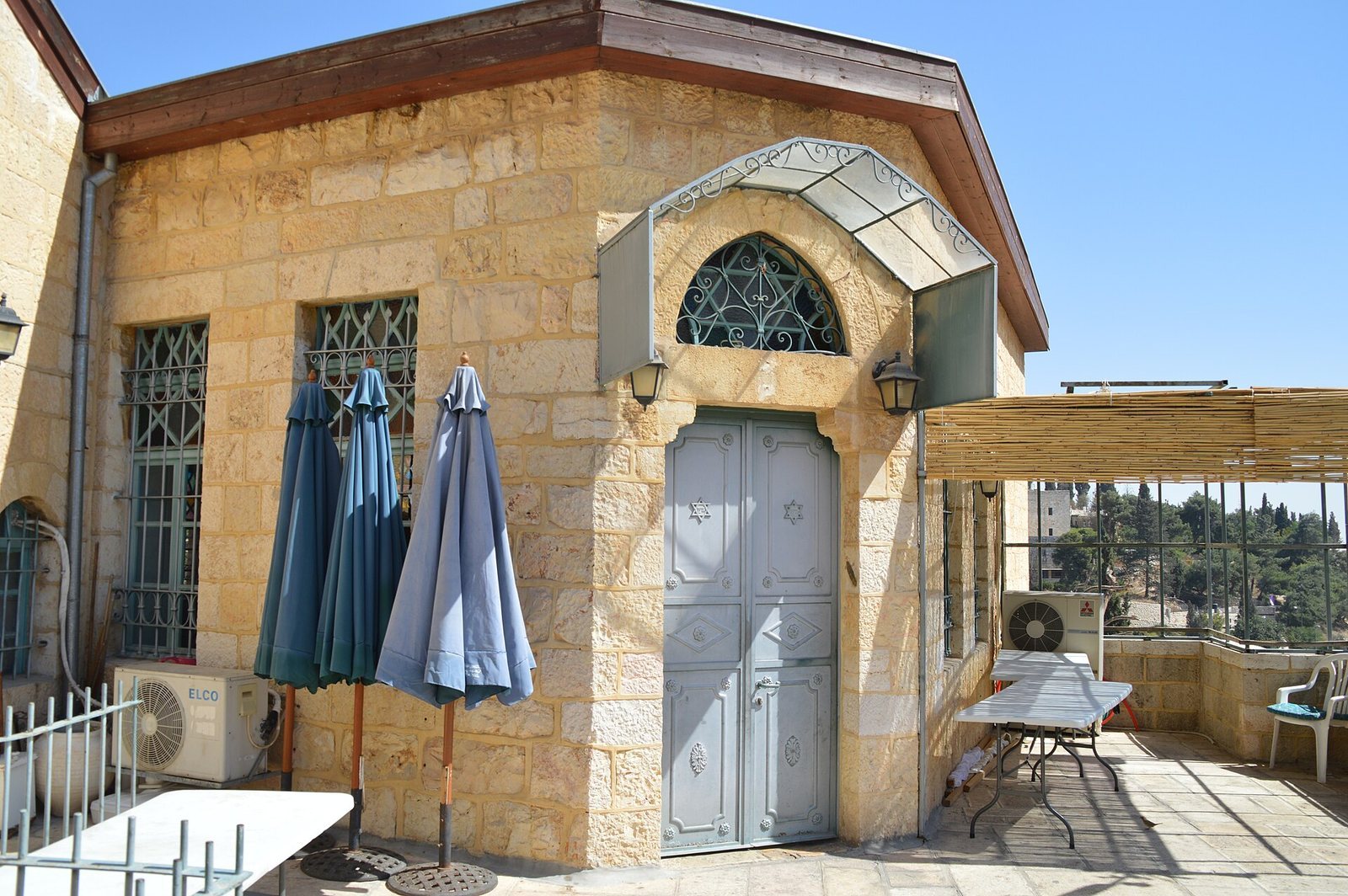
The Great Sephardic Synagogue in Yemin Moshe is a Jewish place of worship in Jerusalem, Israel, built by the neighborhood’s Sephardic community in 1896–1897 and inaugurated in 1897. Sephardic refers to Jewish communities historically connected with Spain and Portugal, as well as traditions developed among their descendants and other communities.
In the mid-nineteenth century, poor conditions in Jerusalem’s Old City encouraged Jewish settlement beyond its walls. Mishkenot Sha’ananim, established in 1860, was the first such neighborhood. Yemin Moshe followed nearby in 1892, founded by a fund commemorating Moses Montefiore, a British Jewish philanthropist. Its northern area was Ashkenazi and its southern area Sephardic, with a synagogue for each community.
Families who helped found Yemin Moshe, mostly Sephardic members of Jerusalem’s established Jewish population, shaped the new synagogue. While it was being built, worshippers met in an unused flour mill. Homeowners contributed to the project, alongside support from the neighborhood committee and donations organized by Jerusalem rabbis and community leaders.
Religious and communal life
The synagogue provided a setting for prayer, Torah study, and religious teaching. One founding member became its first warden and cantor, while another warden served for roughly half a century. Classes in cantorial singing and liturgical poetry, meaning poetry written for worship, trained local young people to take part in weekday and holiday services. During Tikkun Chatzot, a late-night Jewish prayer observance, learned Sephardic rabbis prayed at home while neighborhood householders gathered at the synagogue. An attendant also announced the Sabbath’s arrival and when women should light their Sabbath lamps.
A Jerusalem rabbi and scholar who lived from 1859 to 1942 made his home in a small apartment beneath the building. He collected and studied manuscripts, along with Talmudic and biblical books, including works from the thirteenth century.
Conflict and displacement
During the Arab Revolt of 1936–1939, a Palestinian Arab uprising against British rule in Mandatory Palestine, attacks on Yemin Moshe damaged the synagogue. The Haganah, the principal Jewish defense organization in pre-state Palestine, hid weapons in caches around the neighborhood, including one inside the Torah ark, the cabinet for Torah scrolls.
In the 1948 Arab-Israeli War, which accompanied the end of the British Mandate and Israel’s establishment, attackers tried to break into Yemin Moshe. At the request of Jewish community institutions, residents left, and the synagogue became a military position. One resident fired a Bren gun from a rooftop and drove the attackers back. British soldiers on the roof of the King David Hotel shot and killed him.
Postwar congregation and redevelopment
After the war, the Jewish Agency, which represented the Jewish community in Palestine and organized immigration and settlement, directed new immigrants to Yemin Moshe, most of them from Turkey. They raised money to repair the abandoned synagogue, restoring its reading platform and rebuilding the Torah ark. The newcomers brought Torah scrolls and other sacred objects, and the congregation adopted the prayer rite of Jews from Turkey.
From 1948 to 1967, the neighborhood and synagogue lay on Jerusalem’s municipal boundary, with gunfire continuing across it. Insecurity, inadequate infrastructure, and poverty weighed on residents until the Six-Day War of June 1967, fought between Israel and neighboring Arab states. Yemin Moshe’s location then made it a target for redevelopment. Residents who could not afford the required infrastructure work were pressed to leave, and in 1968 a decision by the ministerial committee for Jerusalem led to the expropriation of their land. The plan envisaged rehousing residents, repairing the neighborhood’s alleys and infrastructure, and bringing in people able to invest in redevelopment. The East Jerusalem Development Corporation, established in 1966, was assigned the work and became a leading government and municipal development agency from 1967, with tourism projects a major focus.
The synagogue continues to host prayer and celebrations for worshippers and their descendants. Displaced former residents still come from elsewhere in Jerusalem for Sabbath and holiday prayers and lessons in the Turkish-Jewish rite and melodies. They regard this continuing use as a protest against their removal.
Remains
Interior layout
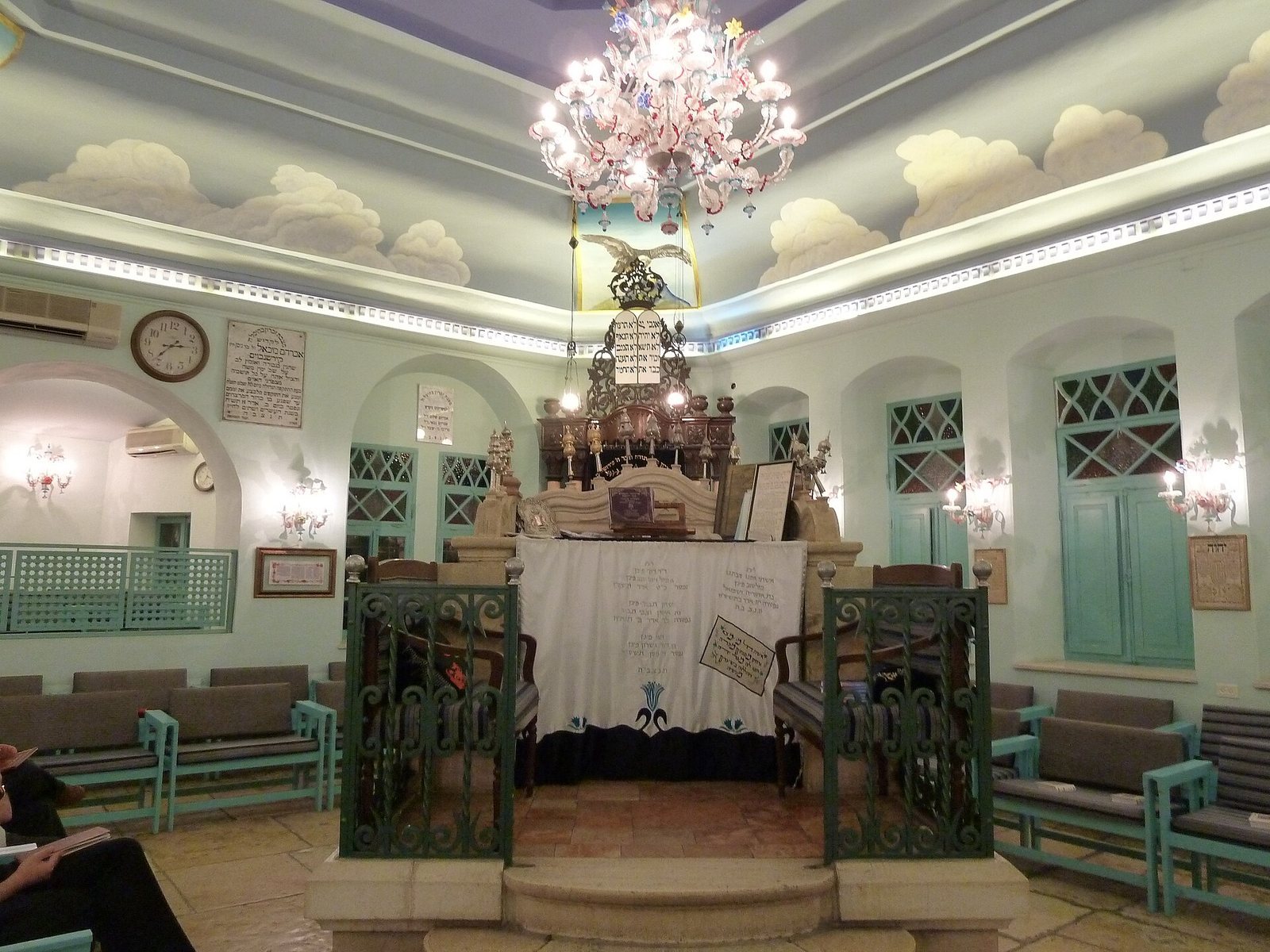
The synagogue stands at the southern end of Yemin Moshe, near Mishkenot Sha’ananim, and has seating for 60. Inside the hall, the Torah ark occupies the northeastern corner. The central reading platform stands diagonally opposite it, arranged so that worshippers face toward the Western Wall. The platform is made from marble-like stone quarried in Bethlehem.
Painted ceiling and outlook
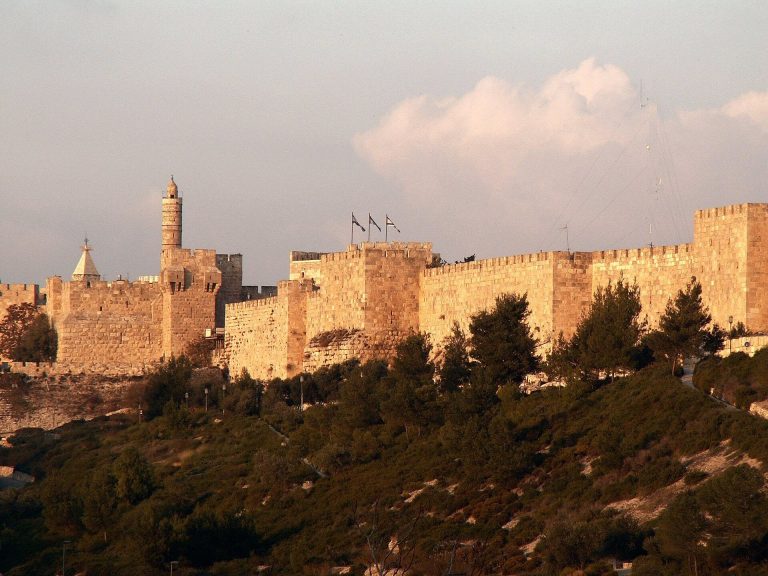
Paintings of animals decorate the vaulted ceiling. They illustrate a teaching from the Mishnah, an early compilation of Jewish oral law, which urges people to imitate a leopard’s courage, an eagle’s lightness, a deer’s speed, and a lion’s strength in serving God. Views from the windows extend toward Jerusalem’s walls and Mount Zion; from the cantor’s platform, the outlook is toward the walls and the Hinnom Valley.
War damage and memorial
Bullet and shrapnel scars remain on the building. A separate impact mark from later gunfire can be seen on the eastern side of the reading platform, near the windows. A plaque on the synagogue’s northern side commemorates the Yemin Moshe resident killed while defending the neighborhood in 1948.