Annunciation Church: A Summer Parish Church in Yaroslavl, Russia
Site at a Glance
- Popularity
- Low
- Country
- Russia
- Primary era
- Early Modern
- Eras represented
- Early Modern
- Civilizations
- Russian
- Site type
- Religious
- Remains
- Church
On this page8 sections
History
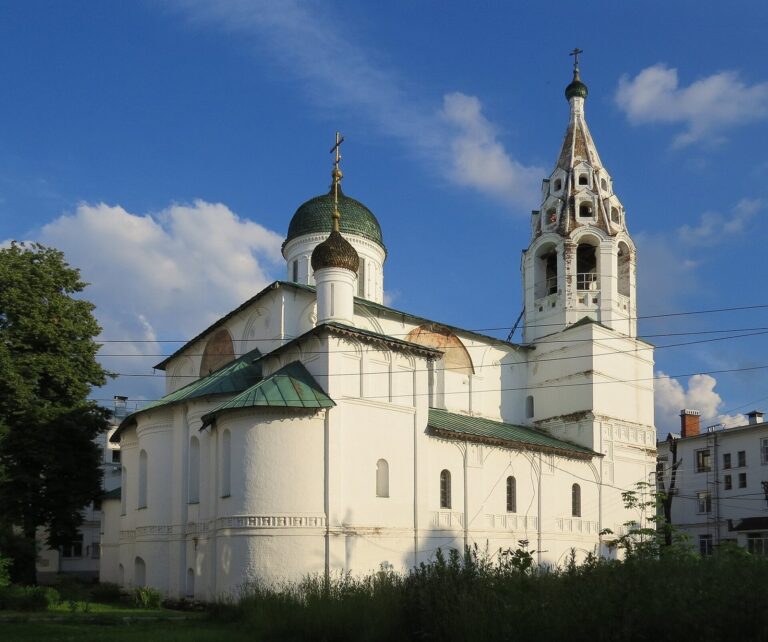
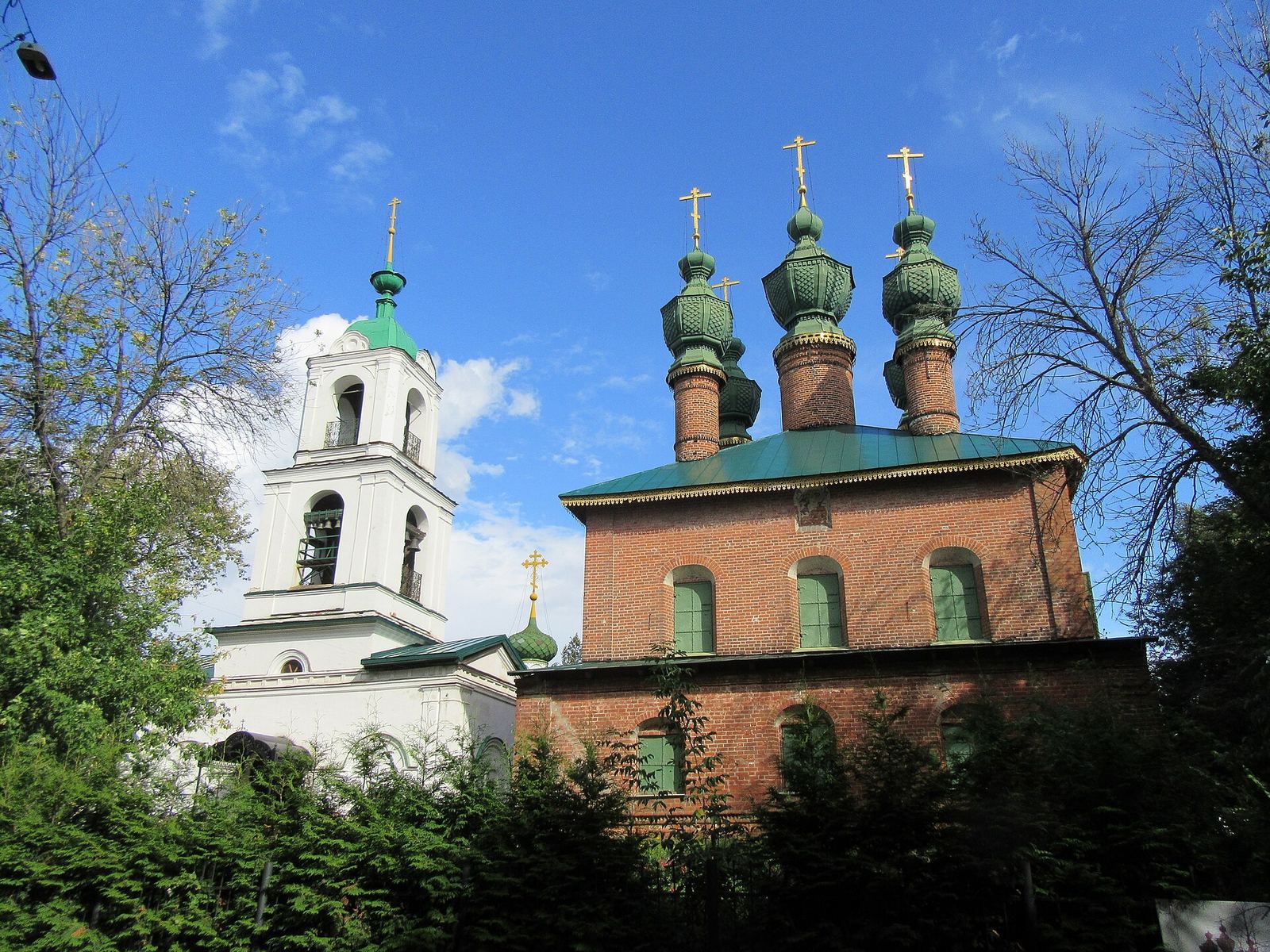
The Annunciation Church is a Russian Orthodox church in Yaroslavl, Russia, built in brick between 1688 and 1702 in a simplified Yaroslavl style. As the parish’s unheated summer church, it complemented the heated Ascension Church, used in autumn and winter. In the eighteenth century, its design served as a model for other Orthodox churches in Yaroslavl.
Wooden predecessor and stone rebuilding
An inventory from 1630 lists a wooden Annunciation church in the Lovetskaya settlement on the Volga’s bank. On June 20, 1658, a fire that began at the church spread through Yaroslavl and destroyed almost the entire city. The church was rebuilt, but another fire consumed it in 1670. The present stone building rose on the same site.
Parish development and worship
The Annunciation Church formed part of a parish with the neighboring Ascension Church, built in 1745 as its heated counterpart. In the Ascension Church’s refectory, a chapel dedicated to the Great Martyr Artemius was discontinued after 1818. A chapel honoring Saint Mitrophan of Voronezh was established there in the second half of the nineteenth century.
The parish particularly revered three crosses. One silver cross, decorated with dark inlay, held relics associated with Spyridon of Trimythous, an early Christian bishop, and Theodosius of Totma, a Russian monk. Another, used in blessing water, contained relics of Anthony and Theodosius, monks connected with the foundation of the Kyiv Pechersk Lavra. A third silver cross held a stone fragment from the Holy Sepulchre and 136 fragments of relics associated with saints. The Annunciation feast, commemorating the announcement to Mary that she would bear Jesus, is observed on April 7.
Twentieth-century changes
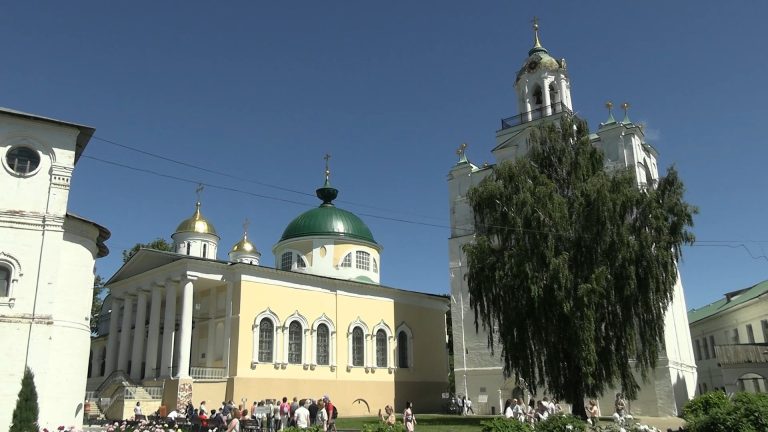
The Annunciation Church’s bell tower was demolished in 1929, and the church closed the following year. It was later used as a museum, a role that helped preserve its eighteenth-century frescoes. Orthodox worship resumed there in 2008. The Ascension Church also closed during the Soviet period, but returned to the Russian Orthodox Church in the early 1990s and resumed services after repairs. The Annunciation Church is a federal cultural heritage site, while the Annunciation–Ascension Parish has regional cultural heritage status.
Remains
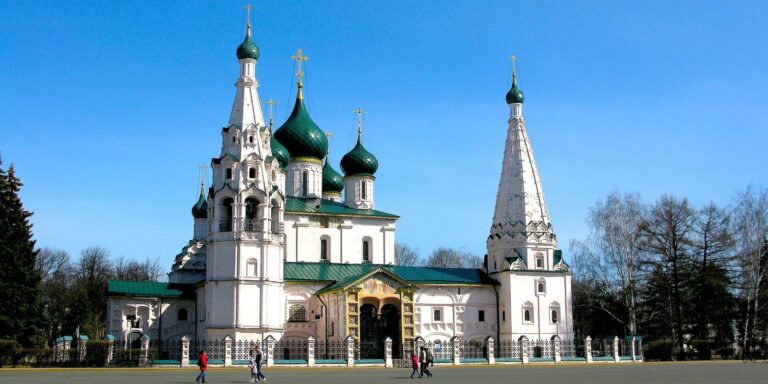
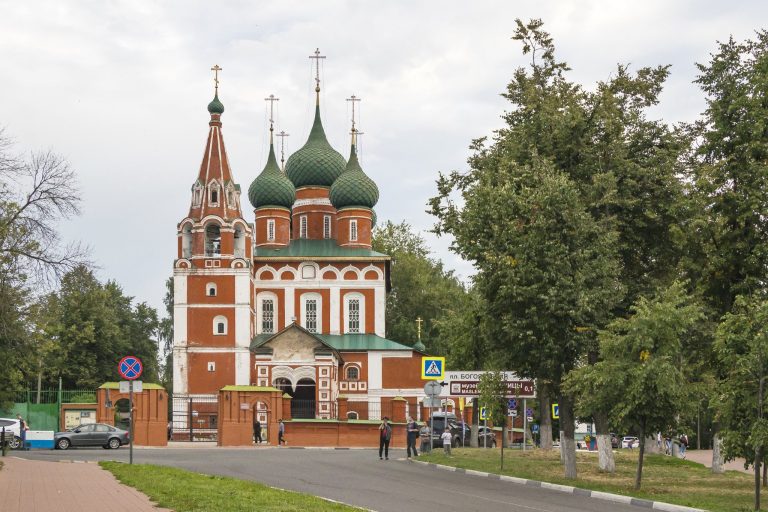
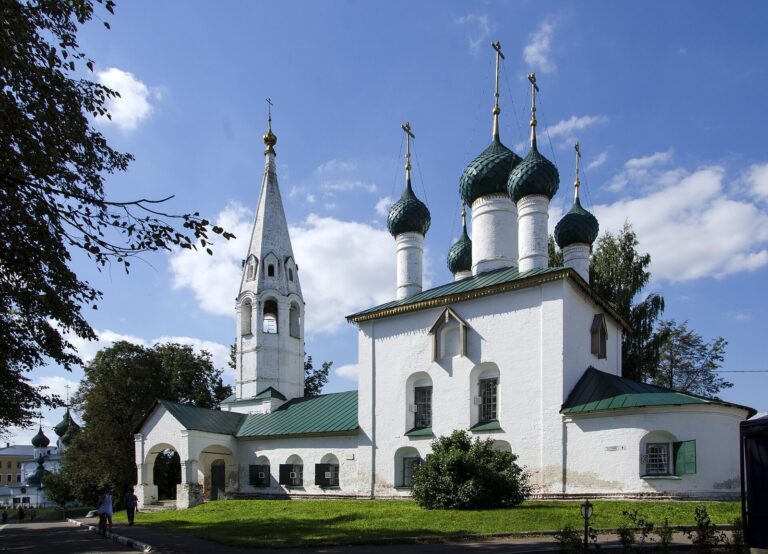
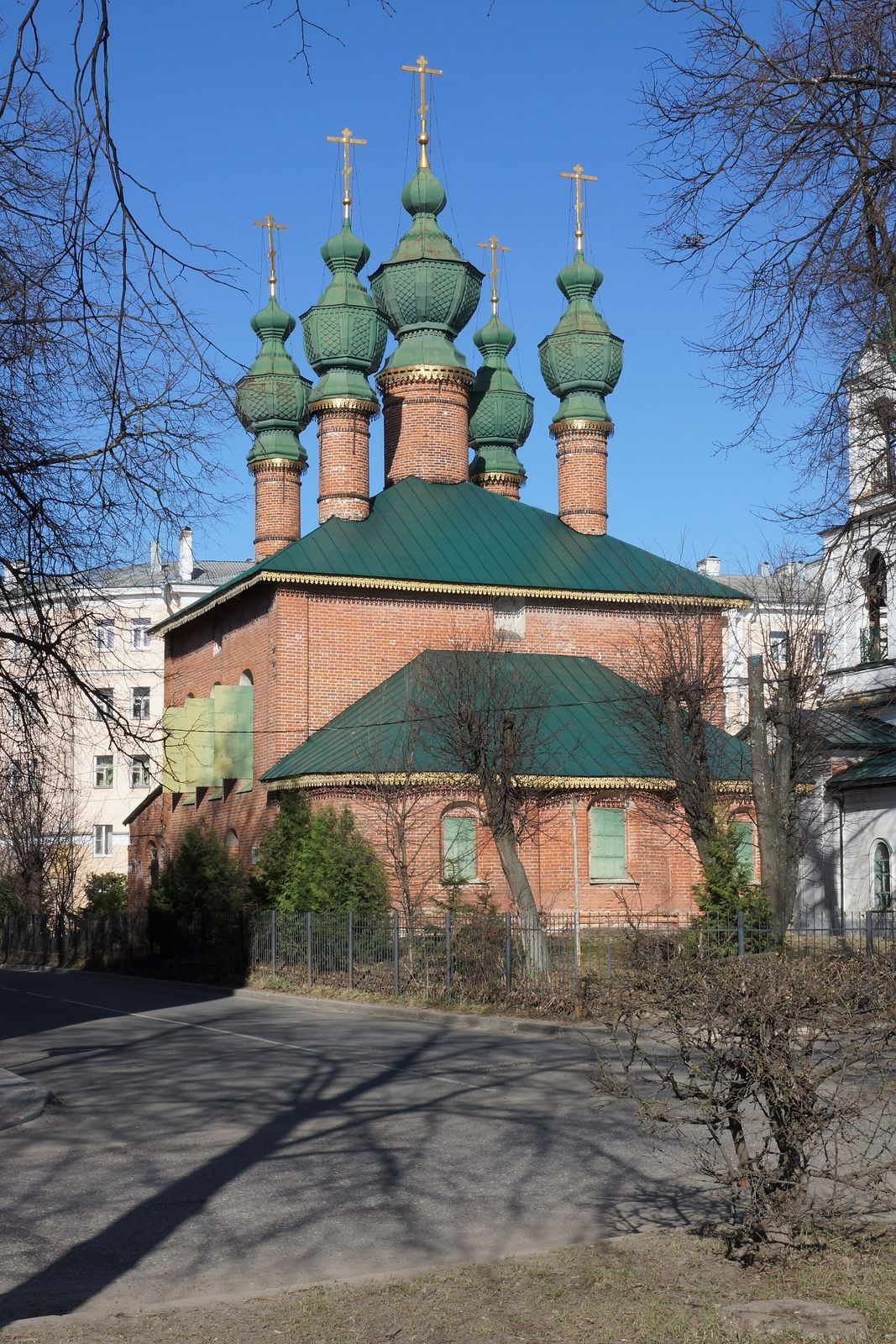
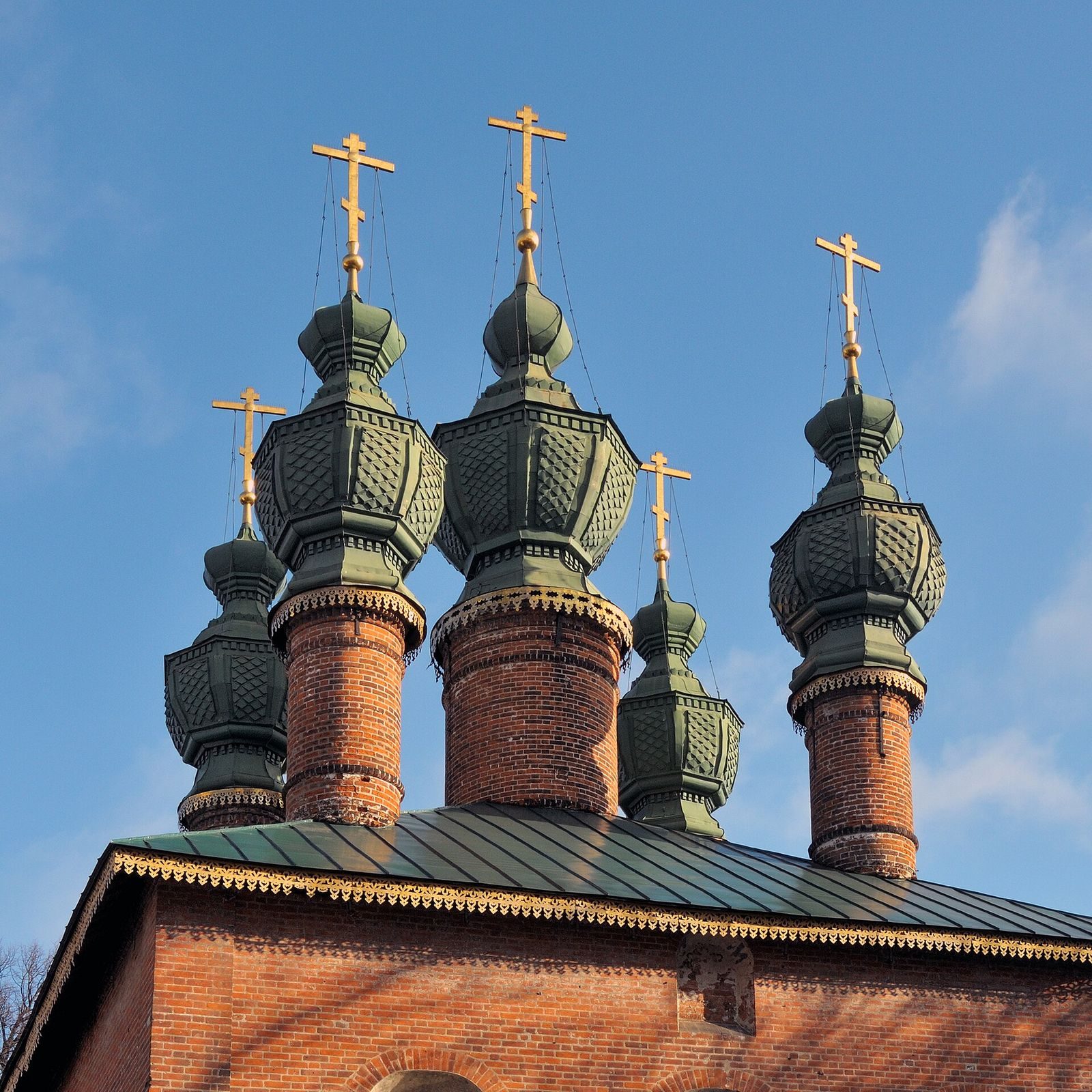
The Annunciation Church is a four-sided brick building with a hipped roof and five domes. Its western side includes a single gallery wing and a spacious vestibule.
Exterior details
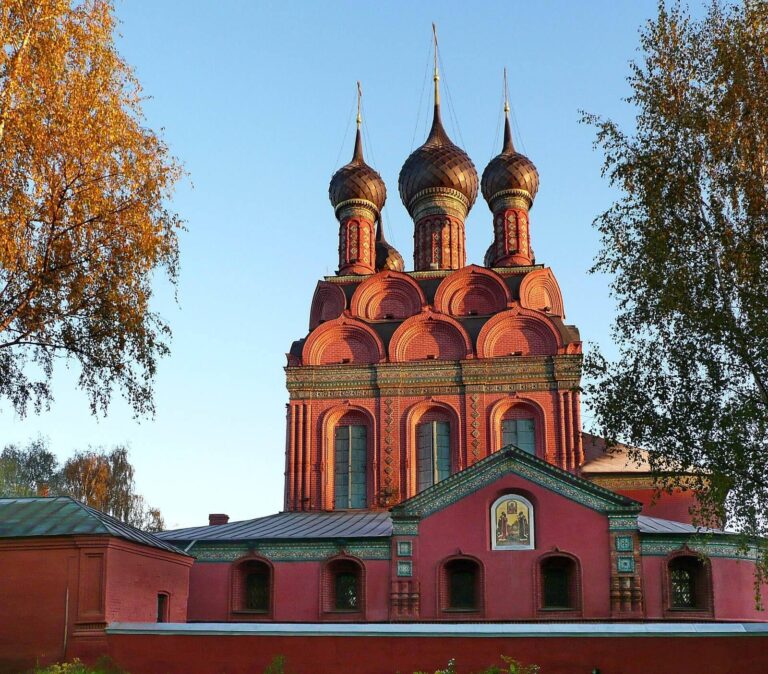
A modest decorative band runs around the bases of the domes, while simple surrounds frame the windows. The bulbous domes received more elaborate exterior treatment in the second half of the eighteenth century. A three-tier bell tower originally stood above the western vestibule.
Interior and wall paintings
The church has an iconostasis, a screen of icons separating the sanctuary from the main worship space, and a side chapel dedicated to Tsarevich Dmitry Ivanovich, a son of Ivan IV venerated as a saint in Russian Orthodoxy. An organized association of Yaroslavl painters, led by Fiodor Ignatiev and Fiodor Fiodorov, painted the walls in 1708–1709. On the ceiling vault, formed by curved surfaces meeting at a central point, they arranged the painted subjects around a central focus rather than treating its four sections as separate compositions.
Ascension Church
The Ascension Church’s refectory was rebuilt in 1867. Its chapel to Artemius was followed by one dedicated to Mitrophan of Voronezh, established in the second half of the nineteenth century with support from a collegiate assessor, a rank in the imperial Russian civil service. A new iconostasis was made for the church in 1804. In 1867, a second bell tower for the parish was built to the design of architect Andrei Mikhailovich Dostoevsky. The church interior was painted in 1873 and refreshed in 1894, and a benefactor supplied rich liturgical furnishings in 1885.