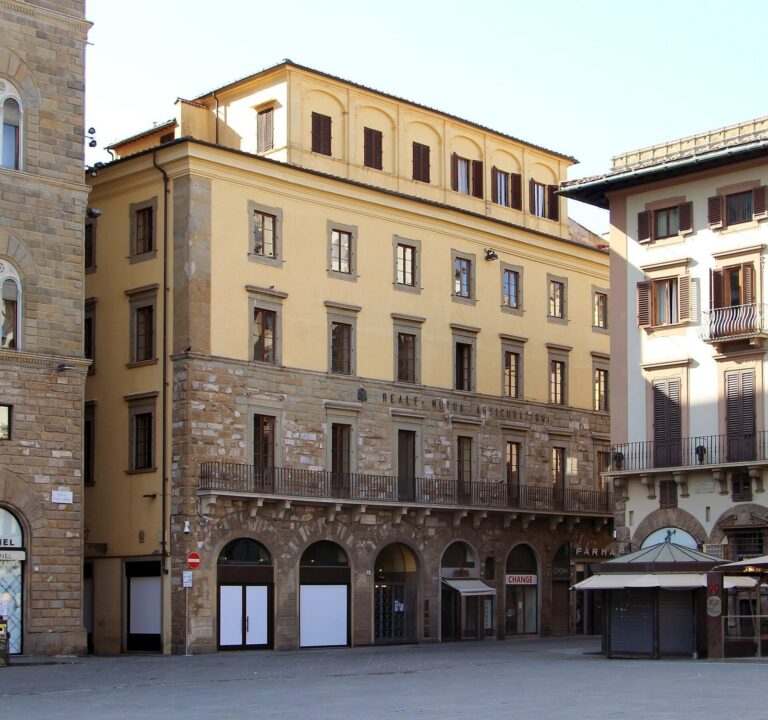
Palazzo dell’Arte della Seta: Florence’s Silk Guild Palace
Site at a Glance
- Popularity
- Low
- Country
- Italy
- Primary era
- Medieval
- Eras represented
- Medieval
- Civilizations
- Republic of Florence
- Site type
- Civic
- Remains
- Palace
On this page10 sections
History
The Palazzo dell’Arte della Seta is a Renaissance palace built in stages as the residence of the Silk Guild in Florence, Italy. It took substantially its present form during the fifteenth century and is one of the few surviving buildings that served as headquarters for the city’s medieval craft guilds, organized associations of people in a trade.
The guild and its palace
In 1336, the guild acquired a house belonging to the Giandonati family, beginning the building’s first phase. Its workshops were concentrated mainly between Via Por Santa Maria and Via Porta Rossa, and the guild was also known as the Guild of Por Santa Maria. The following year, it bought land on Via di Capaccio for a Palace of the Audience.
In 1423, the guild purchased more land for a new Palace of the Audience, needed after the construction of the Palagio di Parte Guelfa. The new building was erected at the junction of Via della Seta and Via del Capaccio, and the palace assumed much of the form it has today during the fifteenth century.
Archive and later changes
In 1557, Cosimo I de’ Medici changed the palace’s function and placed the archive of the Monte Comune there. Florence’s public-debt institution, the Monte Comune had been established in 1343 in connection with the war against Lucca. The change took place during Giorgio Vasari’s renovation of the neighboring Palagio di Parte Guelfa, associated with a Florentine political body whose Guelf supporters generally aligned with the papacy in medieval Italian conflicts. The two palaces thereafter largely shared their history.
In the nineteenth century, the suppression of older institutions and the parish of Santa Maria Sopra Porta preceded the complex’s conversion into a fire brigade arsenal. That use seriously altered its structures. Extensive restoration followed in the early twentieth century, with further work in 1921–23.
Remains
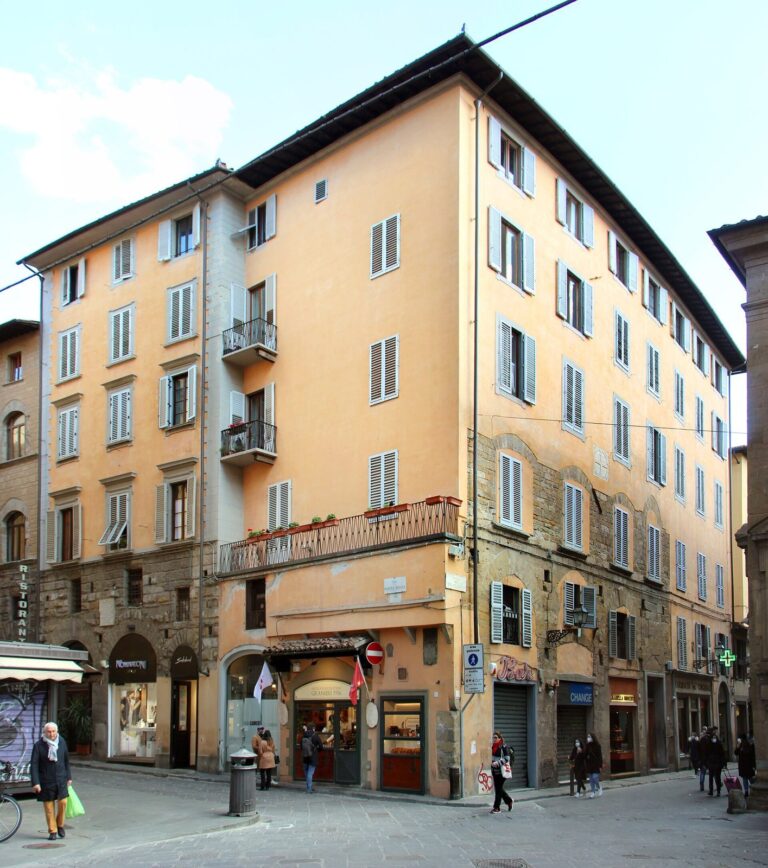
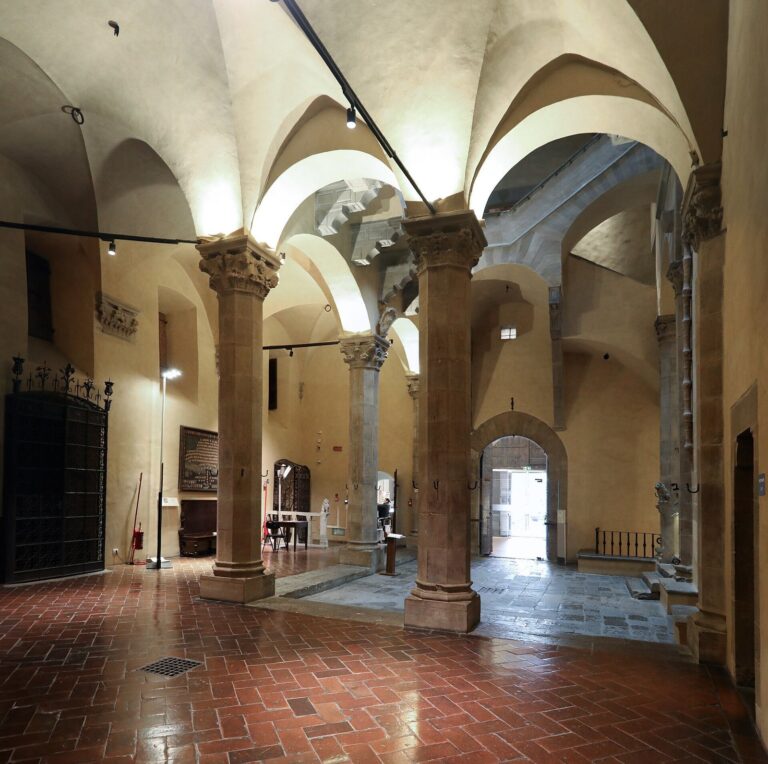
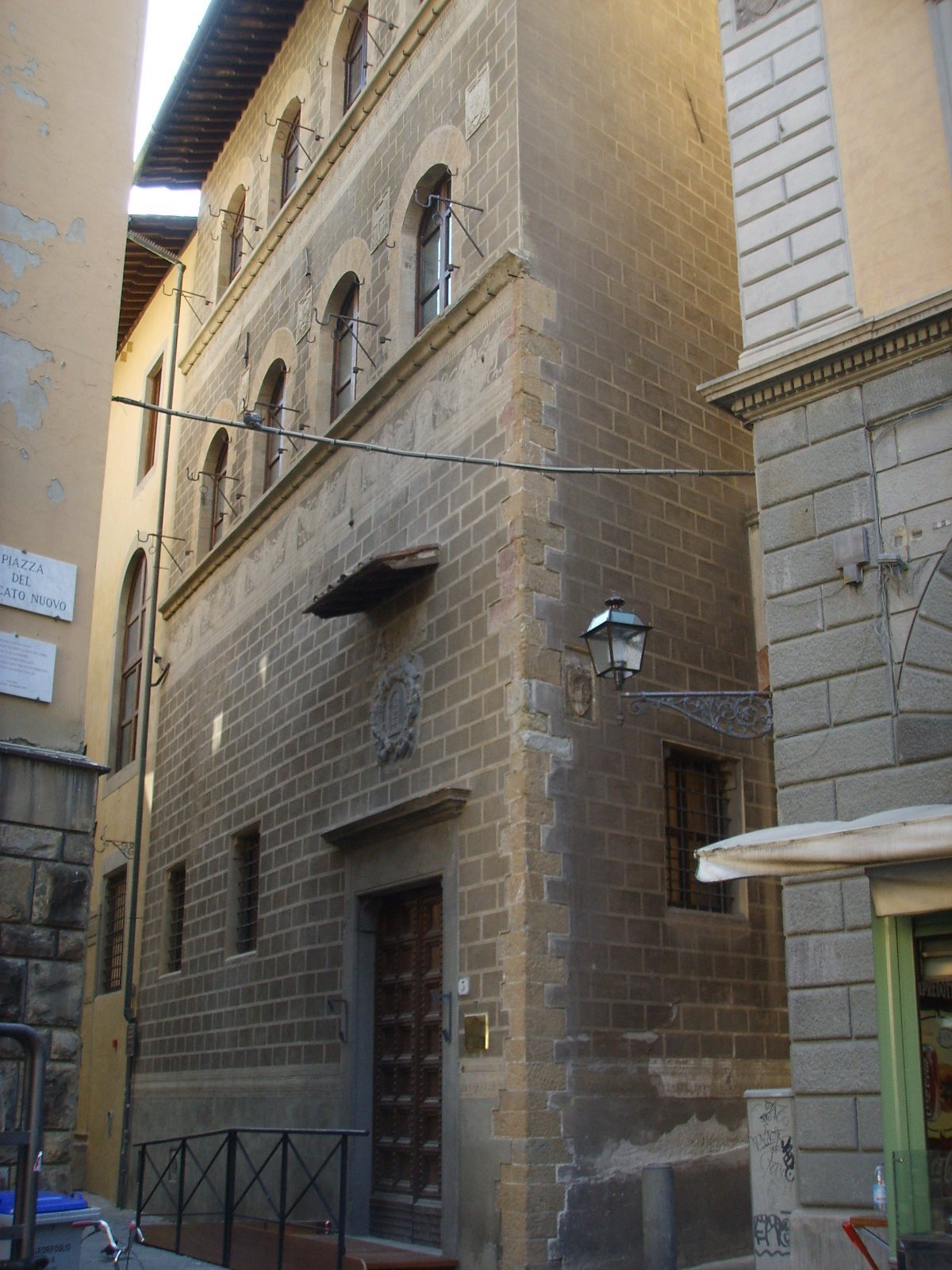
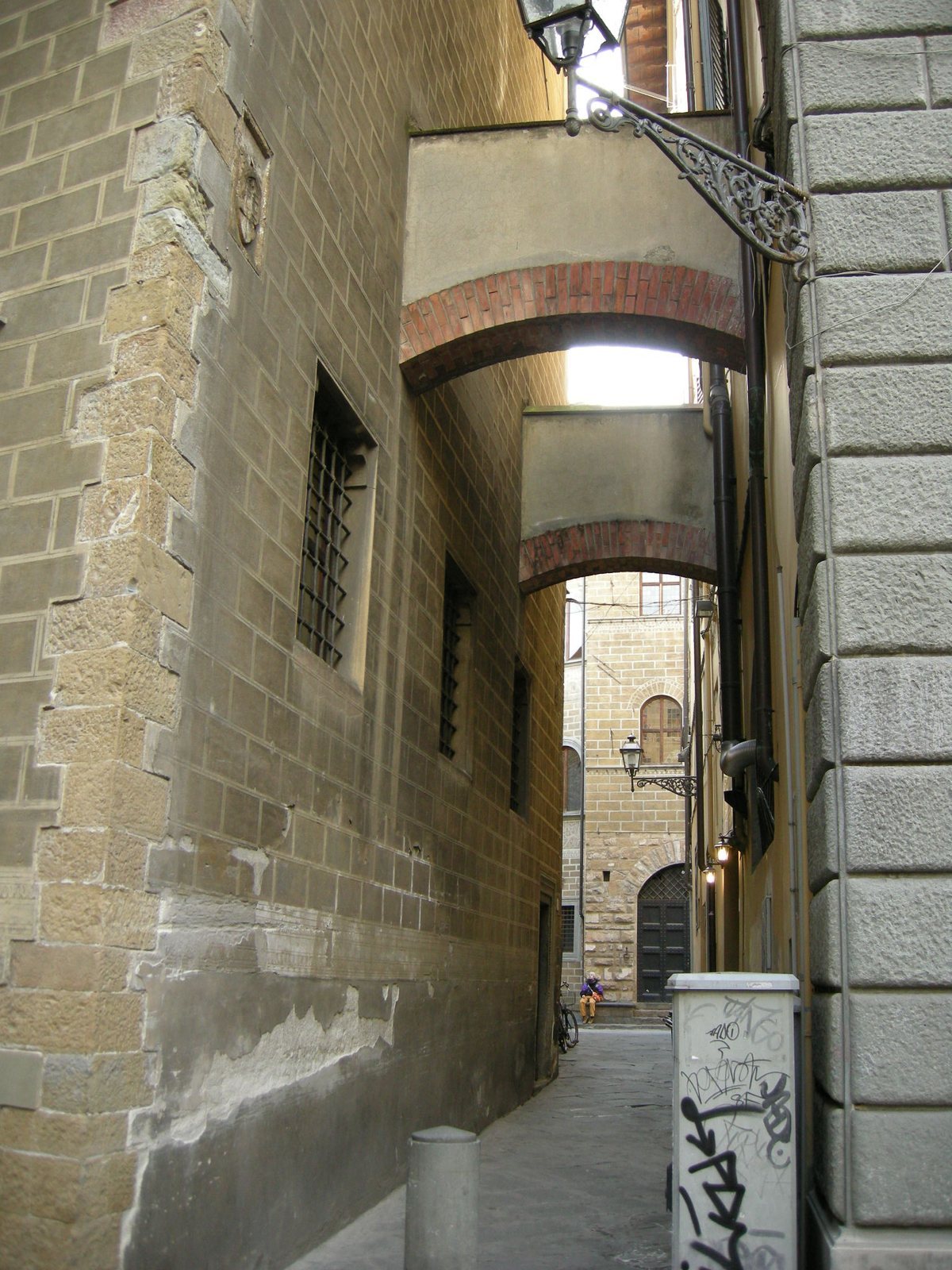
The palace stands at the corner of Via di Capaccio and Vicolo della Seta. Its interior connects at ground level to the former church of Santa Maria Sopra Porta, now a library for the Palagio di Parte Guelfa, and on the upper floors to the Palagio itself. Together, the buildings extend across the block to Piazza di Parte Guelfa, Vicolo San Biagio, and Via delle Terme.
Exterior
Facade and decoration
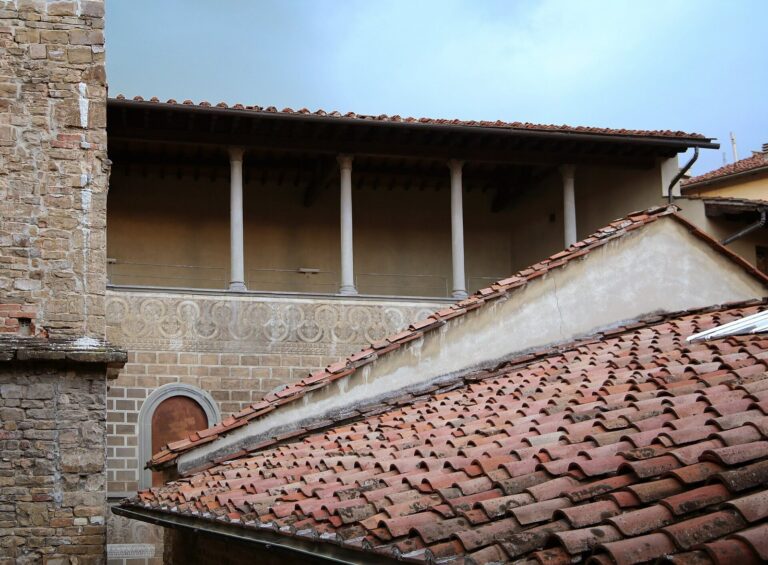
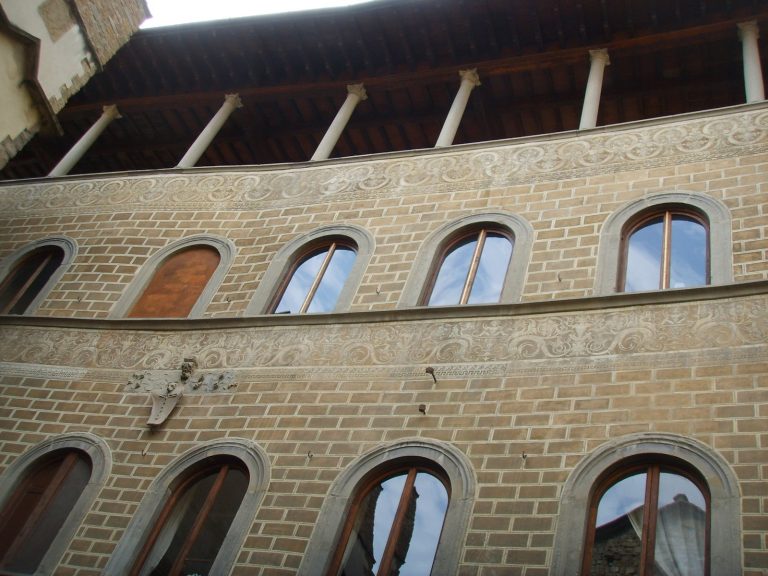
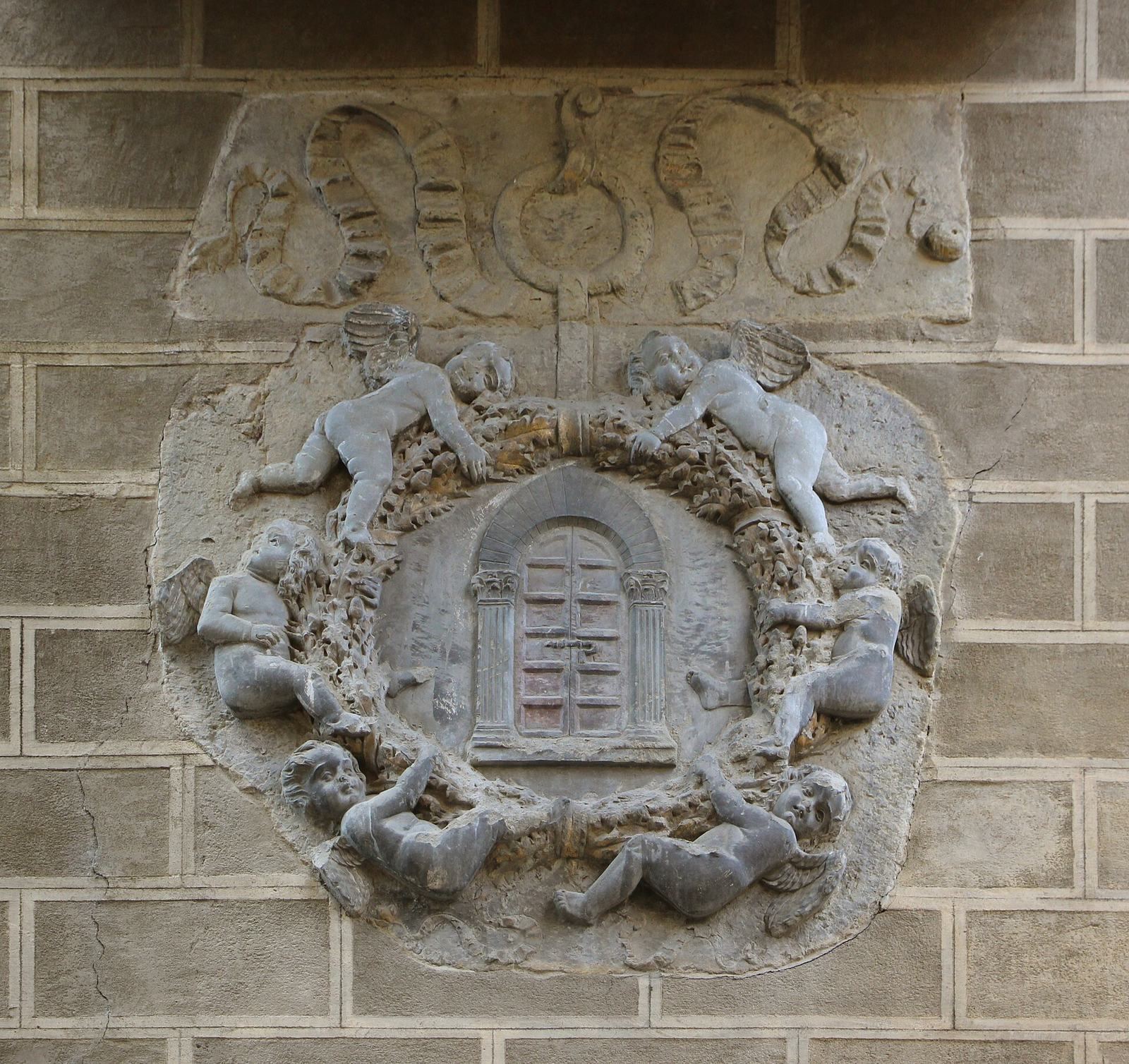
The Renaissance facade has three stories and four vertical window divisions. Arched windows align above horizontal bands at sill level. The lower corner has projecting stonework, while much of the exterior is covered in sgraffito, a decoration made by scratching through a surface layer to reveal a contrasting one beneath, here patterned to resemble stone blocks. Below the second band, a wide ornamental strip repeats the Guild of Por Santa Maria’s emblem five times, among fruit garlands, winged child figures, and ribbons. The emblem depicts the old Porta Santa Maria, though it has also been identified as Porta Rossa. Higher between the windows are emblems of Florence’s civic government, the Cross of the People, representing the city’s organized popular body, and the Silk Guild. A further scratched decoration shows a winged child figure.
Portals
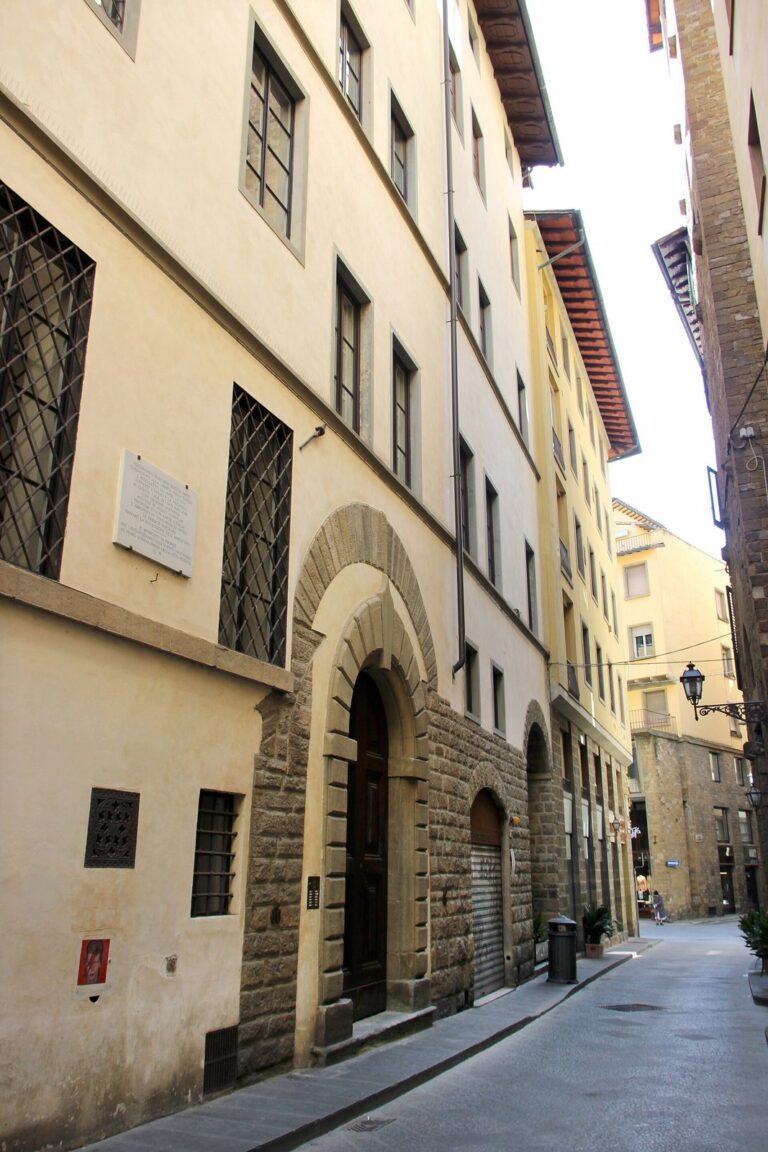
The main stone-framed entrance is topped by a guild emblem among winged child figures carved in shallow relief, with the figures projecting only slightly from the surface. The carving was first linked to Donatello’s circle and later associated more closely with models by Bernardo Rossellino. A second entrance opens onto Vicolo della Seta.
Interior
Hall of the Consuls
The former Sala dei Consoli, or Hall of the Consuls, now serves as a newspaper library. Its fresco, a painting made on wet plaster, shows the enthroned Virgin and Child surrounded by six saints. Discovered beneath whitewash, it is attributed to Niccolò di Pietro Gerini and dated to 1395–1400.
Painted ceiling
The interior ceiling came from the audience hall of the destroyed headquarters of the Guild of Physicians and Apothecaries. Its fourteenth-century painted image includes the coats of arms of Florentine guilds and quarters, the lily of the Guelf Commune, and the Cross of the People. A similar image appears in the Palazzo dell’Arte dei Giudici e Notai.