Church of San Rocco: A Baroque Parish Church in Sesta Inferiore
Site at a Glance
- Popularity
- Very Low
- Country
- Italy
- Primary era
- Early Modern
- Eras represented
- Early Modern, Modern
- Civilizations
- Duchy of Parma and Piacenza, Italian, Papal States
- Site type
- Religious
- Remains
- Church
On this page11 sections
History
Foundation and parish status
The Church of San Rocco is a Roman Catholic church in Sesta Inferiore, a hamlet of Corniglio in the province of Parma, Italy. Dedicated to Saint Roch, a medieval Christian saint venerated in Catholic tradition, it is a Baroque church, in a style that developed in Europe from the late sixteenth century. The Faggi family began building it in 1529 as an oratory, or small place of prayer, dependent on the parish church of Mossale. Construction was completed in 1656.
On 9 December 1656, Bishop Carlo Nembrini of Parma, the senior cleric overseeing the diocese, made the church an independent parish, a local church community and its area of responsibility. Priest Giacomo Faggi relinquished the family’s ownership, and Sesta’s inhabitants took on the cost of maintaining the building. The church was probably altered and enlarged around this time.
Later changes and conservation
The interior floor was replaced in 1941. Between 1960 and 1970, workers renewed the exterior plaster and changed the façade, adding a balcony beneath the bell-gable, reached by a fixed ladder. In 1963, parts of the interior walls and ceilings were altered and decorated with frescoes by Walter Madoi. Exterior work in 2010–2011 removed plaster and additions considered out of keeping, which had been made about fifty years earlier. Restoration of deteriorated frescoes proceeded in stages, with the south wall treated in 2016–2018 and the north wall and nave ceiling in 2019–2020.
The parish belongs to the Diocese of Parma, a church district overseen by a bishop, and the Montagna pastoral zone, a grouping of parishes for pastoral organization.
Remains
Layout and exterior
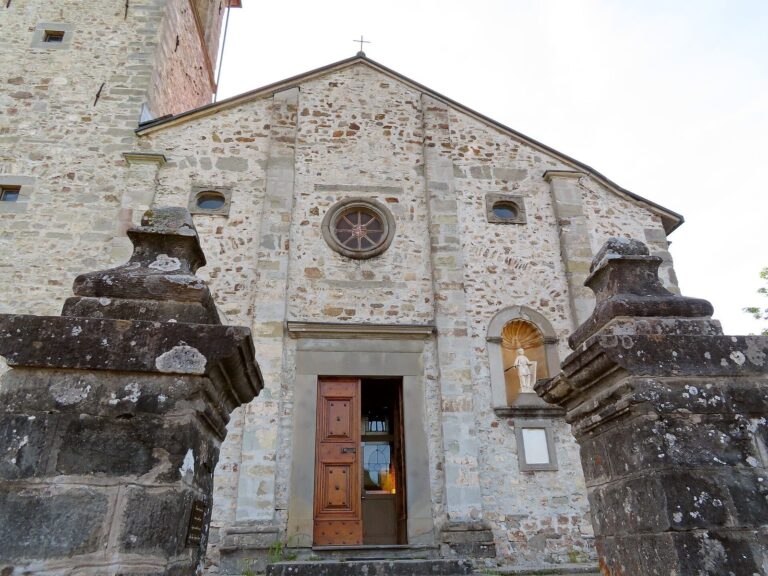
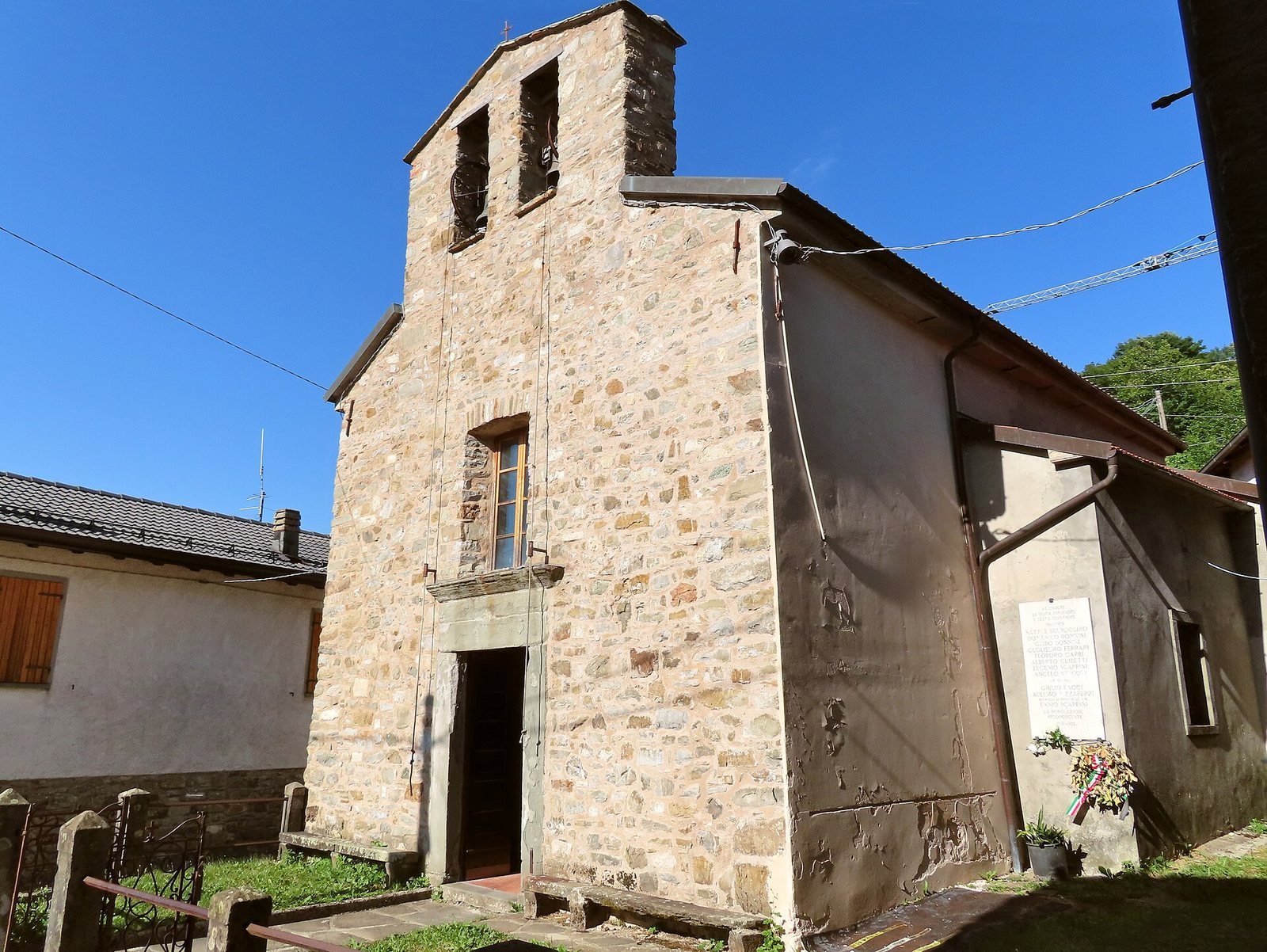
The church has a single nave, or main worship space, extending from the entrance at the west end to the presbytery, the area around the main altar, at the east. A chapel opens off the nave’s left side. The symmetrical, gabled façade has a plastered surface, a broad central doorway with a framed surround and projecting horizontal cap, and a window with a shallow arch above it. Its large central bell-gable, a wall structure with openings for bells rather than a separate tower, contains two openings with small bells. Along the sides, projecting ledges and low annexes with small, irregularly placed windows complete the exterior.
Interior spaces
Nave and side chapel
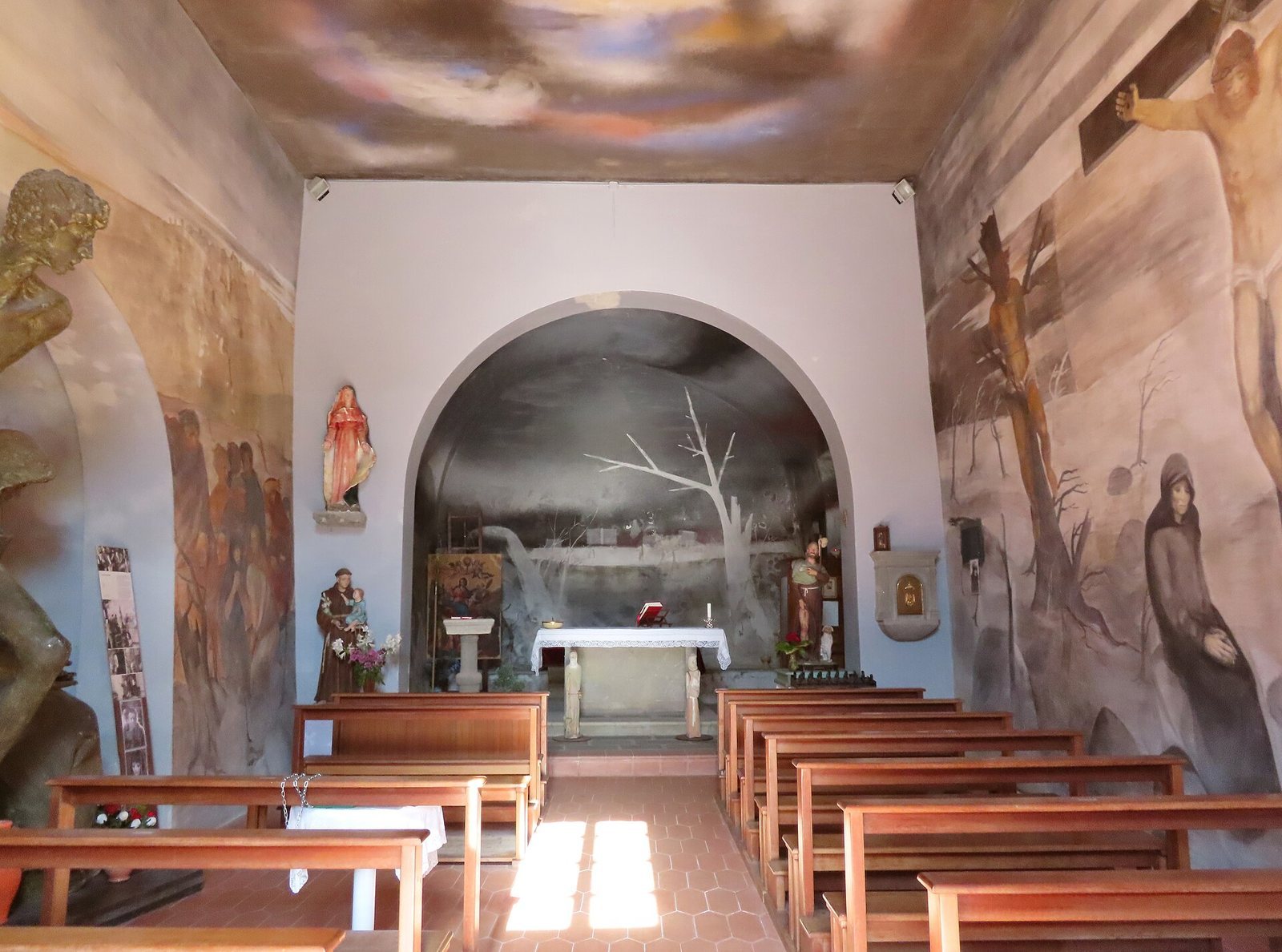
The nave has a flat ceiling made of brick and concrete, which conceals older wooden roof trusses. A broad rounded arch opens on the left into the side chapel, which has a barrel vault, or curved ceiling. The chapel contains Madoi’s large plaster statue Suffering, made around 1975.
Presbytery
A slightly raised presbytery lies beyond a triumphal arch, which marks the transition into the area around the main altar. The presbytery has a barrel vault with lunettes, curved sections of the vault, and windows on both sides. A plaster statue of the Madonna, a devotional title for Mary, stands on a shelf to the arch’s left. The central table altar, made of sandstone, was added around 1980.
Fresco cycle
Nave walls and ceiling
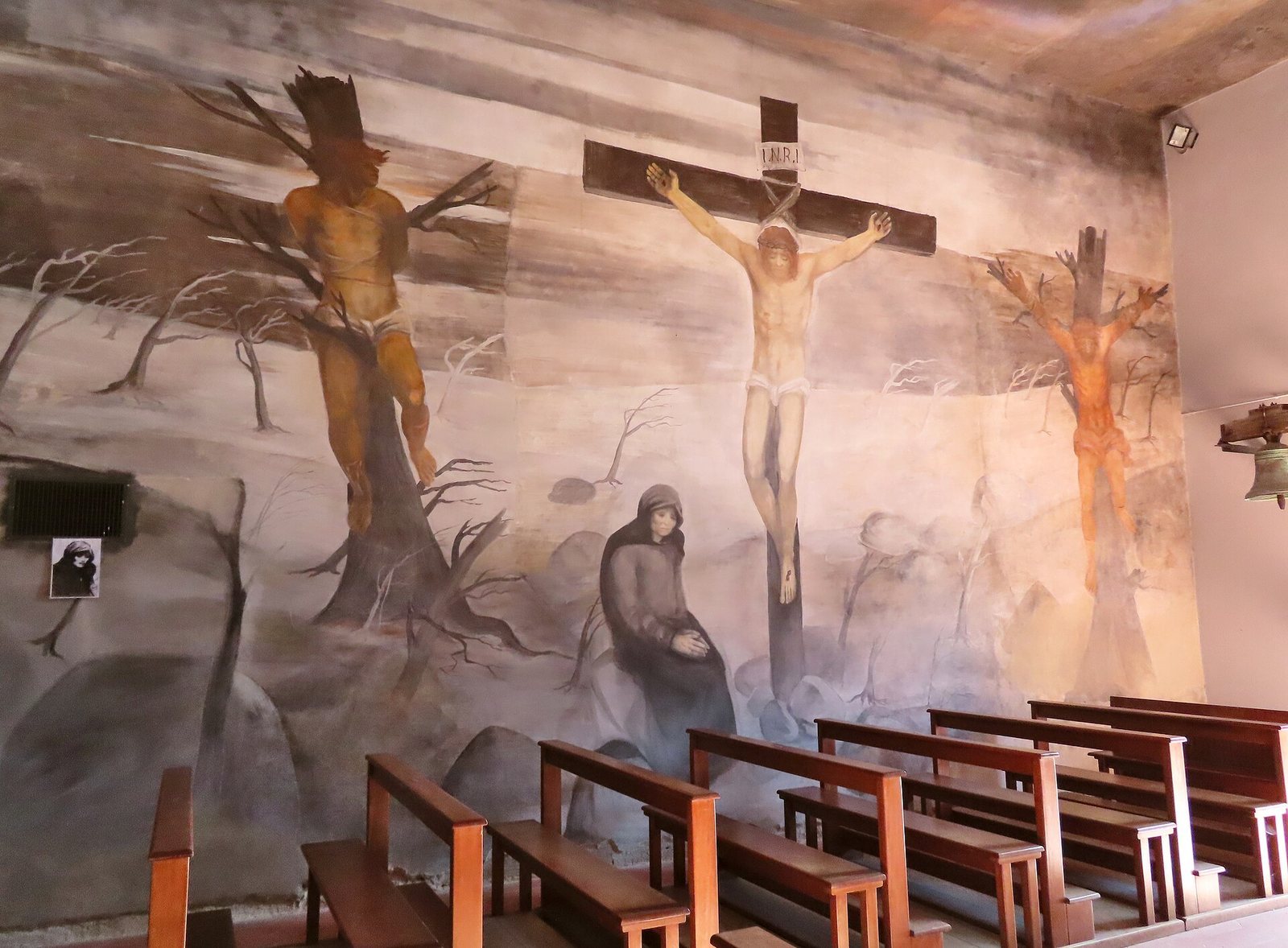
Madoi’s fresco cycle, covering about 350 square metres, fills the presbytery, both side walls of the nave and its flat ceiling. On the nave’s right wall, the Crucifixion unfolds in a bleak winter landscape. Jesus hangs at the centre, with his sorrowing mother seated below. The two thieves are shown crucified on trees on either side, one appearing hopeful and the other dismayed.
On the opposite wall, a shocked crowd looks toward the Crucifixion. Madoi based the figures’ facial features on people from Sesta. Behind them stretches a barren autumn landscape, while the gloomy sky painted across the ceiling links the two scenes.
Presbytery paintings
Frescoes cover the presbytery’s upright walls and its vaulted ceiling, including the curved sections beside the vault. They depict a dark, mournful landscape, with a light at the centre of the back wall representing the Resurrection. On the side walls, Bishop Evasio Colli of Parma appears on the right, while Madoi included a self-portrait on the left.