Church of the Holy Guardian Angel: A Baroque Church and Women’s Institution in Alcamo
Site at a Glance
- Popularity
- Very Low
- Country
- Italy
- Primary era
- Early Modern
- Eras represented
- Early Modern
- Civilizations
- Kingdom of Sicily, Spanish
- Site type
- Religious
- Remains
- Church
On this page6 sections
History
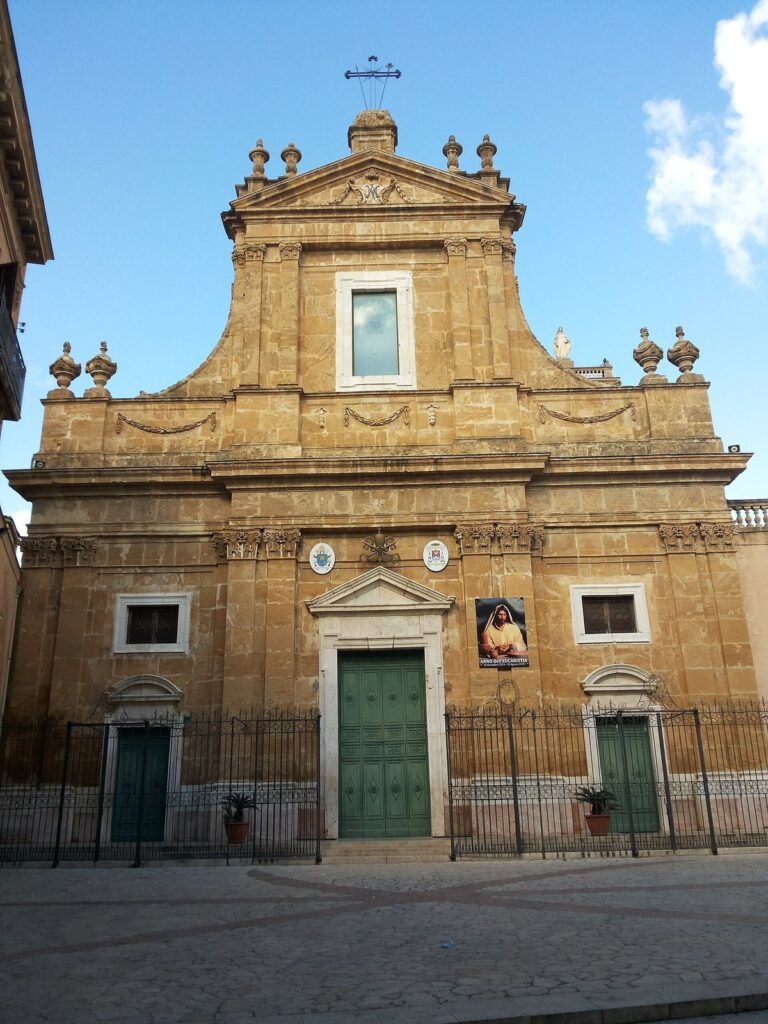
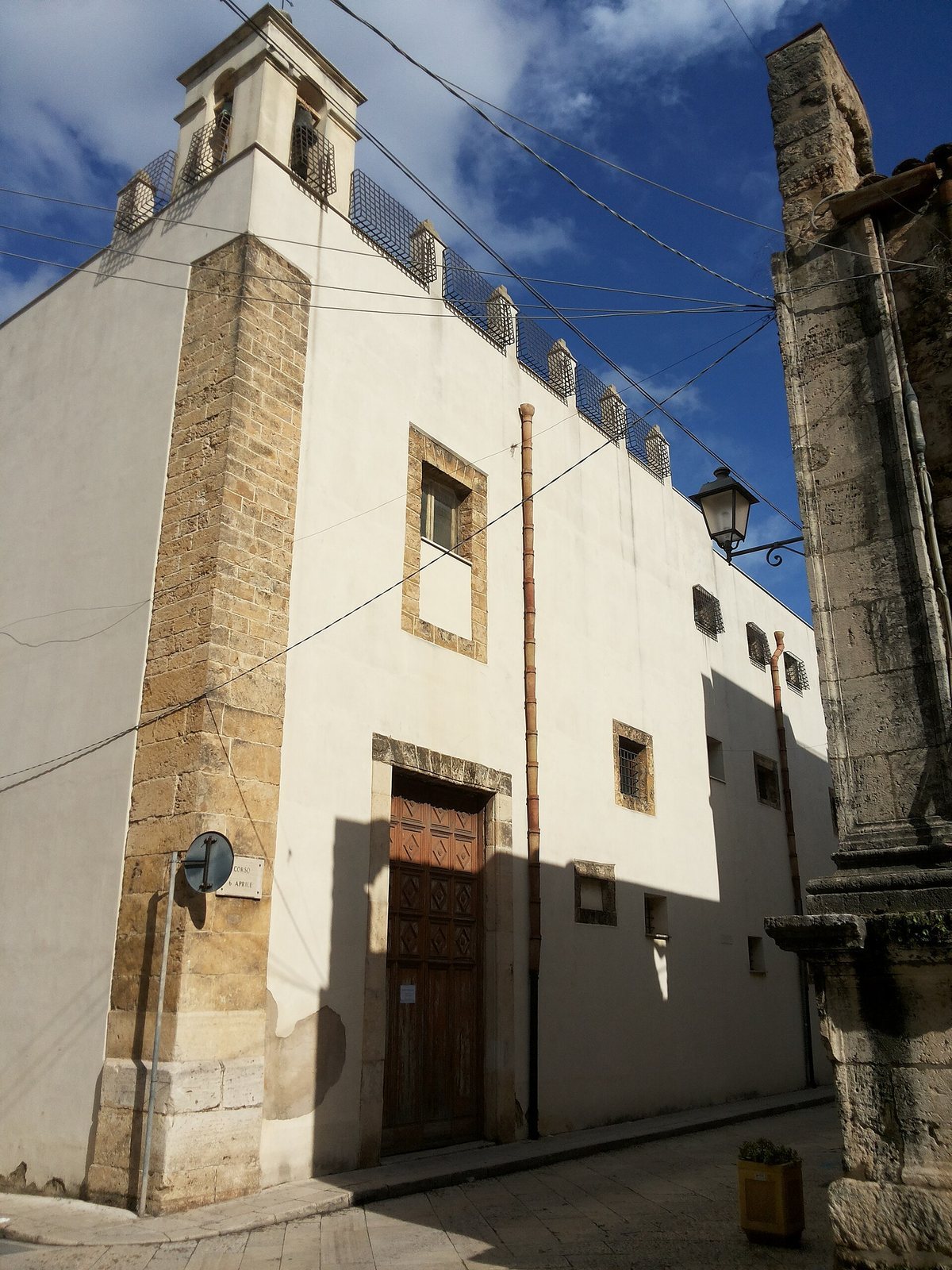
The Church of the Holy Guardian Angel is a Baroque Catholic church, built in 1659 in Alcamo, Sicily, Italy, in connection with a religious institution for women. Baroque is a European style known for dramatic forms and elaborate decoration. The church is also called the Church of the Riparate, after the women’s institution formerly housed in its adjoining monastery. Its dedication refers to a guardian angel, understood in Catholic belief as an angel who watches over and protects an individual. The church is associated with the Diocese of Trapani, the Catholic territory overseen by a bishop, and the Oblate Benedictine Sisters, a women’s community in the Benedictine tradition.
Foundation and endowment
On 24 April 1647, Alcamo’s four municipal administrators, Francesco Triolo, Carlo Rinaldi Romano, Michele Lazio, and Bernardo Tornamira, established a House for Repentant or Sheltered Women, also called the House of the Sisters of Penance. It was intended to help women turn away from sin and temptation. Residents were to live on alms and follow regulations set by the bishop of Mazara del Vallo or his vicar forane, a priest overseeing a district. The administrators reserved the right to appoint four deputies each year, two priests and two laypeople. Their election was to take place on 8 September, the feast of the Nativity of the Blessed Virgin Mary and Our Lady of Stellario. The house may never have opened, or may have operated only briefly, as famine and limited public alms could have made its upkeep difficult.
In 1659, the priest Francesco Lazio left property for a church dedicated to the Holy Guardian Angel and an adjoining residence for the women. The church was built that year, while the residential institution for the Riparate dates to 1684. The women were instructed to follow the Rule of Saint Frances of Rome, an Italian religious figure. They continued to live in rented accommodation until after Lazio’s death in 1688, when the church and house were assigned to them.
On 7 March 1689, the women requested cultivable land on Mount Bonifato from the representative of the Count of Modica and Lord of Alcamo, so they could grow sumac for their support. The town administrators granted the plot several months later. In 1691, Lazio’s niece donated a building beside the church for use as a residence and to help maintain the institution. Gifts and bequests from prosperous donors also supported its work.
Community life and later changes
In the eighteenth century, Giovan Biagio Amico enlarged and embellished the church. In 1774, ten women lived at the institution, coming from the provinces of Trapani, Palermo, and Messina; the community later settled at fifteen. Their life included penitential practices and severe corporal punishments.
Regulations introduced in 1820 limited admission to Benedictine religious women and orphans. The institution’s recognition as a legal entity in 1880 protected its property from state confiscation. The church was restored in the nineteenth century and later received structural improvements to adapt it to modern needs.
Remains
Church interior
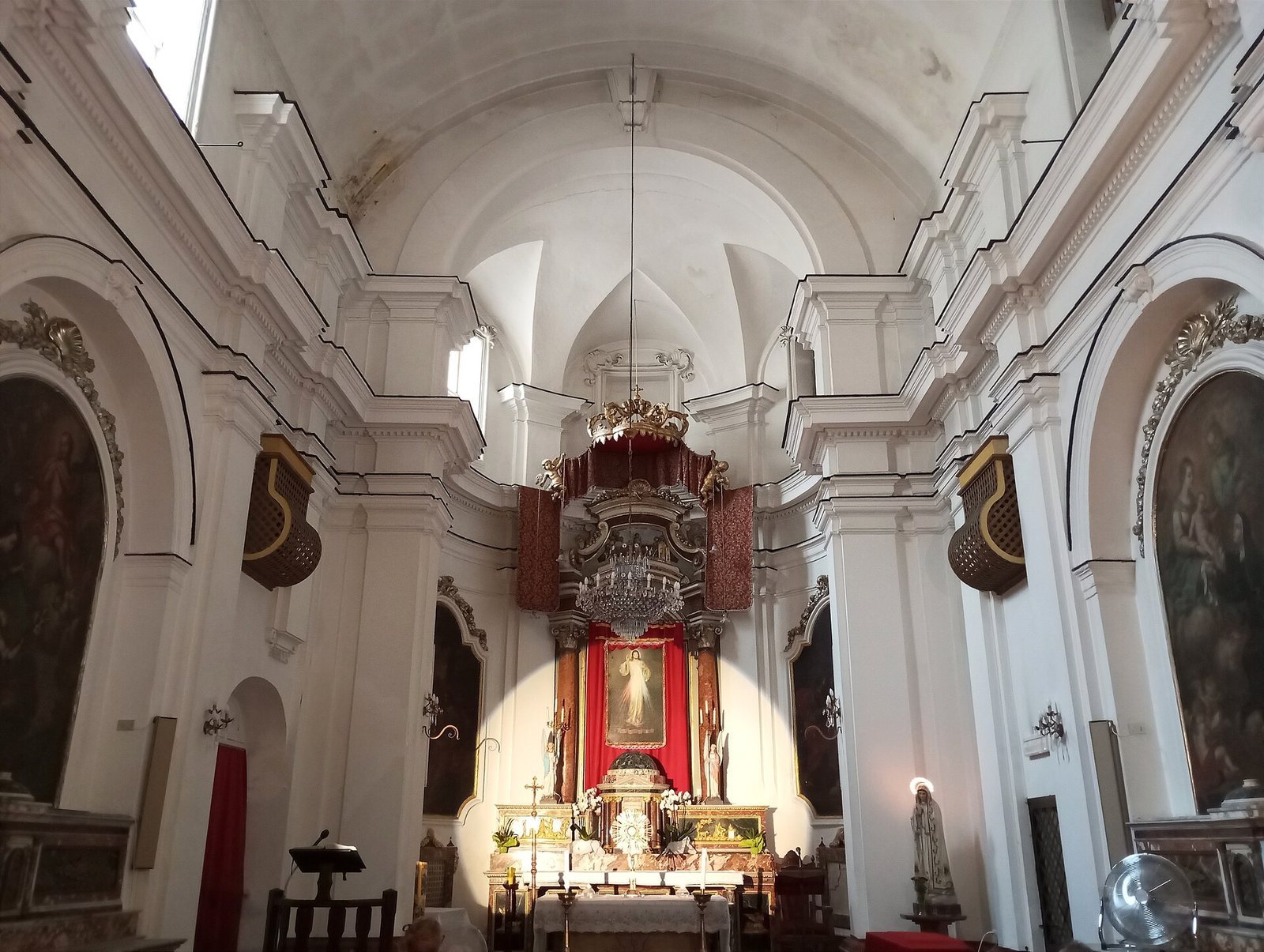
The church is Baroque in style, with a single nave, or main hall, and an apse, the sanctuary end. Its high altar has an eighteenth-century wooden crown, a crucifix, and plaster decoration. Two 1738 canvases, one of the Guardian Angel and one of Saint Frances of Rome, are by Domenico La Bruna. Beneath the choir, a painting of Jesus appearing to Mary Magdalene is on the right and one of Saint Margaret of Cortona is on the left; both are by unknown artists. In the apse, paintings of Jesus with the Samaritan woman and Jesus with the adulteress occupy the left and right sides, respectively, and are also by unknown artists. Other works include an unknown artist’s canvas of the Sacred Heart of Jesus dated 1789 and a painting of the Madonna of Libera by G. Mistretta from the second half of the nineteenth century. Statues of Saint Benedict and Saint Scholastica, made in 1980 by the Santifaller school, are also in the church.
Monastery paintings
The monastery contains an old canvas of the Guardian Angel and paintings of Saint Athanasius, Christ, and the Virgin Mary by unknown artists, as well as works depicting Saint Joseph, Saint Benedict, Behold the Man, and Our Lady of Sorrows. An unknown artist’s painting of Our Lady of Miracles dates to 1784; a separate version of the same subject, painted on sheet metal, is attributed to Giuseppe Renda. Works by the priest Francesco Alesi include canvases of Saint Benedict and Saint Scholastica and a panel showing the two saints in conversation. A panel depicting Saint Cecilia was probably also made by Alesi.