Šostýn: A Medieval Gothic Castle Ruin in Czechia

Site at a Glance
- Rating
- 4.3
- Popularity
- Low
- Country
- Czechia
- Primary era
- Medieval
- External website
- Open
- Eras represented
- Medieval
- Civilizations
- Holy Roman Empire
- Site type
- Military
- Remains
- Castle
On this page8 sections
History
Šostýn is a medieval Gothic castle ruin near Kopřivnice in Czechia, probably founded in the late thirteenth century. Its establishment is associated with the Hückeswagen family and Henry of Hückeswagen, the count of Příbor. The castle served from the end of the thirteenth century until the first half of the fifteenth century.
Foundation and episcopal lordship
The foundation date is uncertain, with proposed dates ranging from 1280–1290 to about 1293. The castle appears under several forms of its name, including Schauenstein, Schawenstein, Schornstein, Scheibstein, and Schowenstayn. Šostýn and Hukvaldy were first recorded together in 1347, when both belonged to Jan VII Volek, bishop of Olomouc and an illegitimate son of Wenceslaus II. Shortly before 1354, Bishop Jan Očko of Vlašim granted Šostýn as a fief, meaning property held from a superior lord in return for service, to Alšík of Fulštejn.
By 1369 the castle belonged to Vítek of Vikštejn, and by 1382 his brothers Václav and Bernard were also connected with its ownership. After Bernard died, the inheritance passed to his younger brother Záviš, who was still a minor. The estate consequently returned to the ownership of Mikuláš of Rýzmburk, bishop of Olomouc. In 1396 Mikuláš pledged Šostýn to Jošt of Volfsberg, transferring temporary control in return for a political or financial obligation, and assigned him responsibility for defending Šostýn and Hukvaldy during the conflict between the Moravian margrave brothers Jošt and Prokop of Luxembourg.
War, disputed possession, and destruction
In 1400 Bishop Jan XI, known as Mráz, pledged Šostýn to Sigismund of Luxembourg. Sigismund re-pledged it in the same year to Jurko of Messenpek, castellan of Orava, while protection of the castle was placed under Captain Jakub Ščeněta of Bělín. Around 1402, after Prokop’s defeat, a robber group established itself at Šostýn.
The Polish chronicler Jan Długosz wrote that the Polish nobles George of Słupcza and Jan Rogala fled to Moravia in 1403 and used a castle called Schowsten as a base for raiding and capturing Polish nobles. King Władysław II Jagiełło complained to Jošt, after which Polish troops burned the castle and expelled the two men. The identification of Długosz’s Schowsten with Šostýn remains uncertain.
Záviš of Vikštejn began proceedings to recover the castle in 1405, and Bishop Konrad of Vechta restored it to him in 1408. Záviš first held it with his brother Václav, who died between 1408 and 1412. He then brought in their uncle Vaněk, also called Václav, of Lamberk and Březník. Vaněk took control around 1413, although a settlement briefly returned Šostýn to Záviš in 1418. Záviš was later forced to surrender it to Vaněk’s nephew, Mikuláš Sokol of Lamberk.
Vaněk’s retinue captured Šostýn around 1419 or 1420. Záviš repeatedly argued that the estate was being held by force, and the episcopal court ordered the Lamberk family to return it. When they refused, the forces of Bishop Jan XII Železný captured and damaged the castle around 1420 while it was held by Mikuláš Sokol. Záviš died soon afterward without a final legal settlement. In 1422 the bishop was assigned administration of the Frenštát estate until the dispute was resolved, while the declining use of the term “Šostýn estate” reflected the growing importance of Frenštát and the castle’s decline.
Abandonment and later reuse
During the Hussite Wars, the fifteenth-century religious and political conflicts that followed the preaching and death of Jan Hus, Šostýn and Hukvaldy were pledged by Sigismund of Luxembourg to Bolko of Opole in or shortly before 1426. Šostýn was probably definitively abandoned during these wars. In 1434 Jan Tovačovský of Cimburk sold the two estates to Mikuláš Sokol of Lamberk, who had meanwhile joined Sigismund’s side. From 1437 or 1438, Šostýn was temporarily attached to Hukvaldy under the Hussite captain Jan Čapek of Sány. After Čapek’s death, both estates passed to his son-in-law Jan Talafús of Ostrov.
The territory became the property of George of Poděbrady, king of Bohemia, in 1465. He transferred it to Tas of Boskovice, bishop of Olomouc, in 1466. In 1467, Tas described the castle as derelict and not worth repairing. Beginning in 1814, the Kopřivnice entrepreneur Ignác Raška reused its stone for a pottery works. Over approximately three decades, the ruin was largely dismantled, and parts of its foundations were also removed. The surviving remains are protected as a cultural monument.
Remains
Castle hill and defensive setting
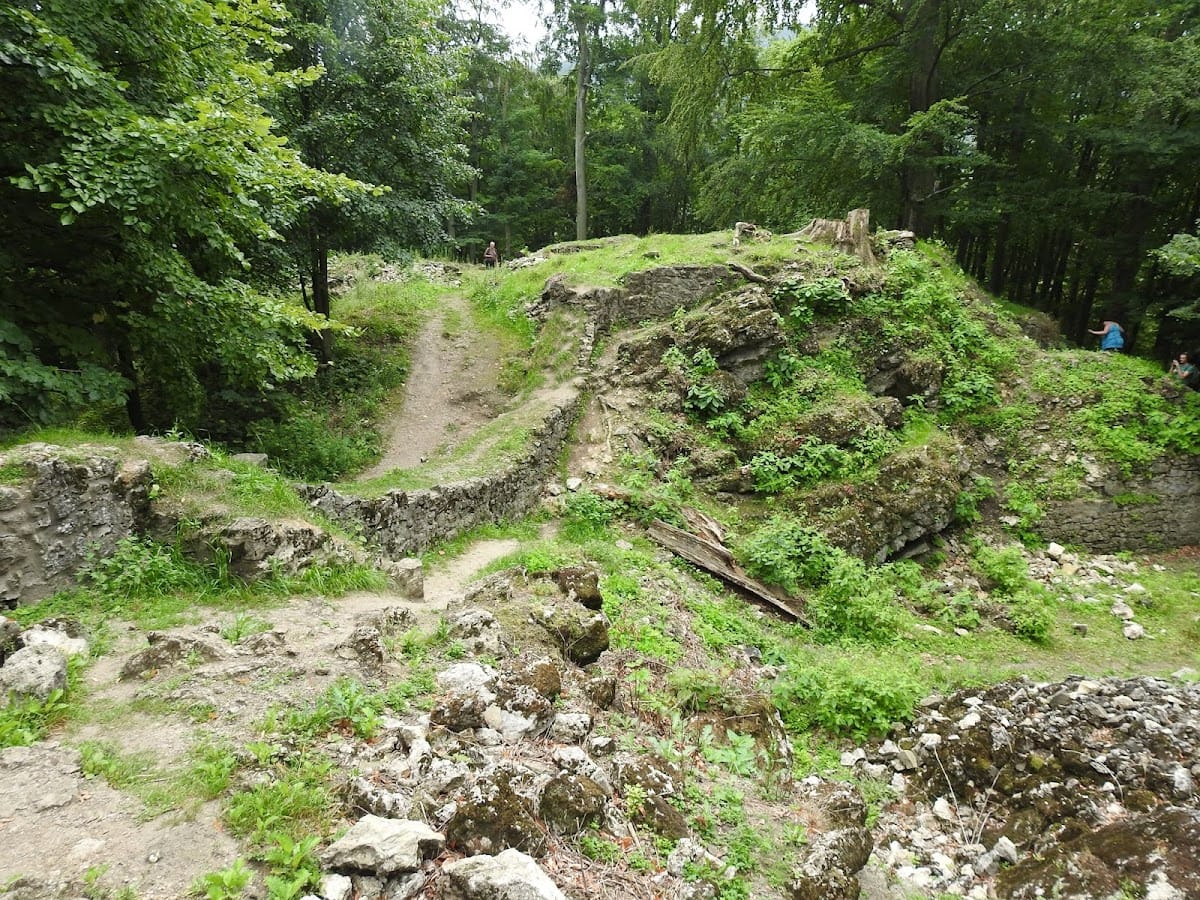
Šostýn stands at approximately 445 metres above sea level on the western slope of Piaskownia Mountain, whose summit reaches 584 metres. The southwest side of the castle hill is very steep. To the north, a gentler slope crosses a rampart and continues toward a plateau with a pond. This terrain preserves evidence of the castle’s defensive setting alongside modifications made in the rock and soil.
Buildings and surviving masonry
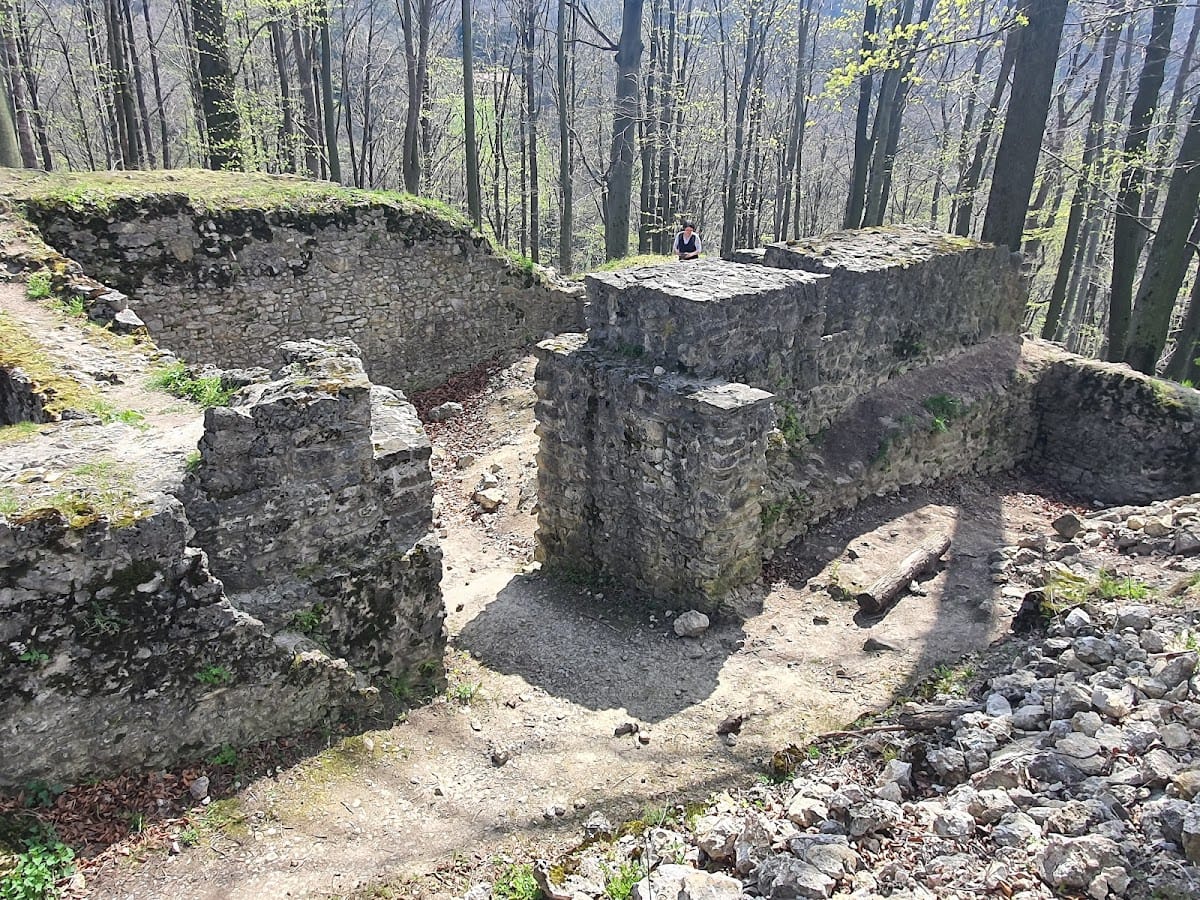
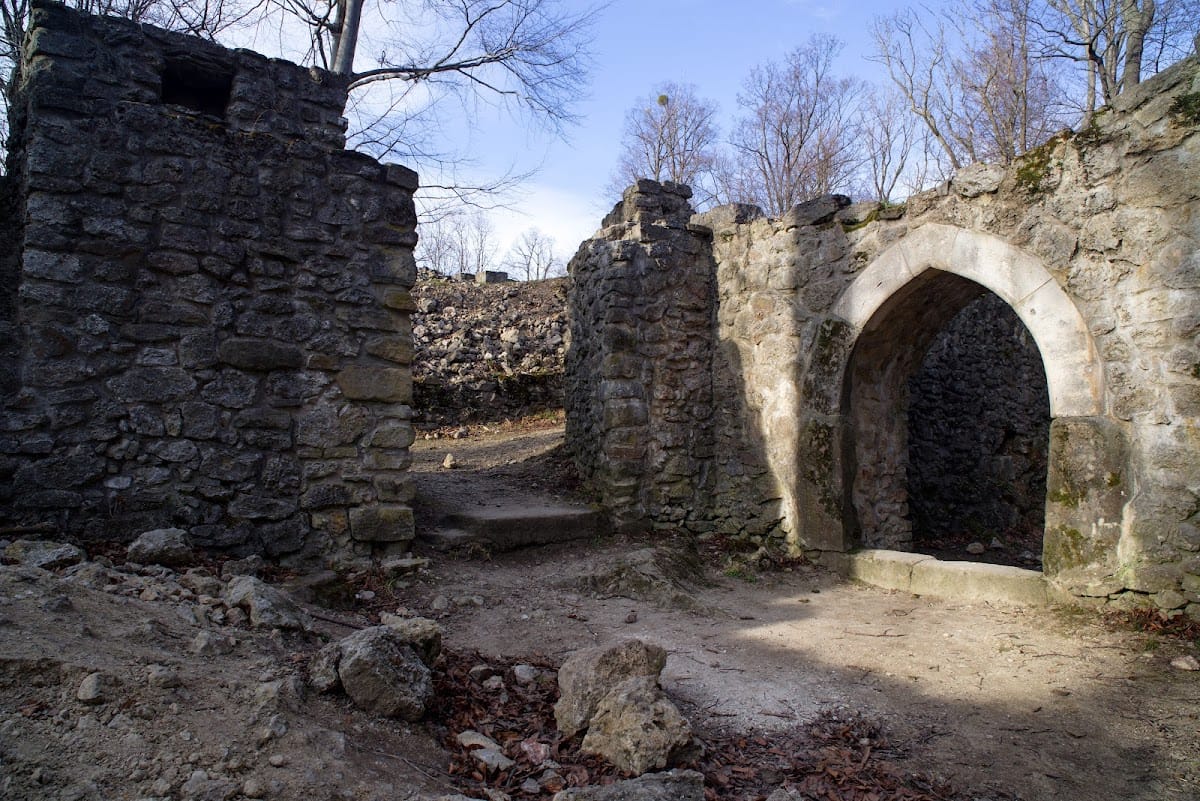
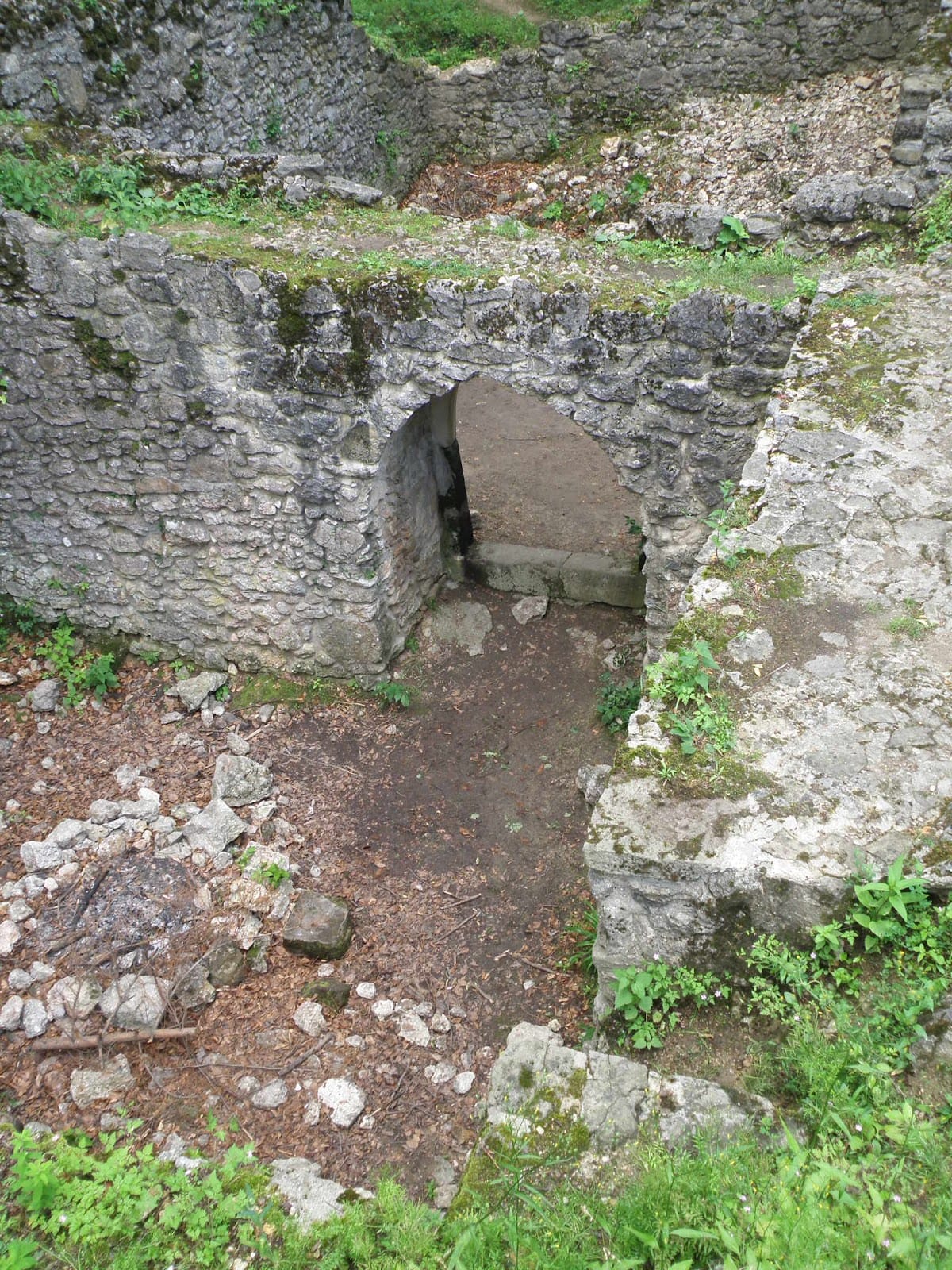
The ruin includes the exposed foundation of the bergfried, the principal defensive tower of a medieval Central European castle. Partially reconstructed basement spaces survive from the palace, together with remnants of the entrance buildings, traces of other structures, and scattered masonry. A Gothic portal has been reconstructed among the surviving remains.
Venus of Šostýn
The castle’s most significant archaeological find is a small ivory statuette known as the Venus of Šostýn.