Borgia Castle: Norman Fortress and Medieval Stronghold in Squillace, Italy


Site at a Glance
- Rating
- 4.4
- Popularity
- Medium
- Country
- Italy
- Primary era
- Medieval
- Eras represented
- Medieval, Early Modern
- Civilizations
- Kingdom of Naples, Kingdom of Sicily, Norman
- Site type
- Military
- Remains
- Castle
On this page14 sections
History
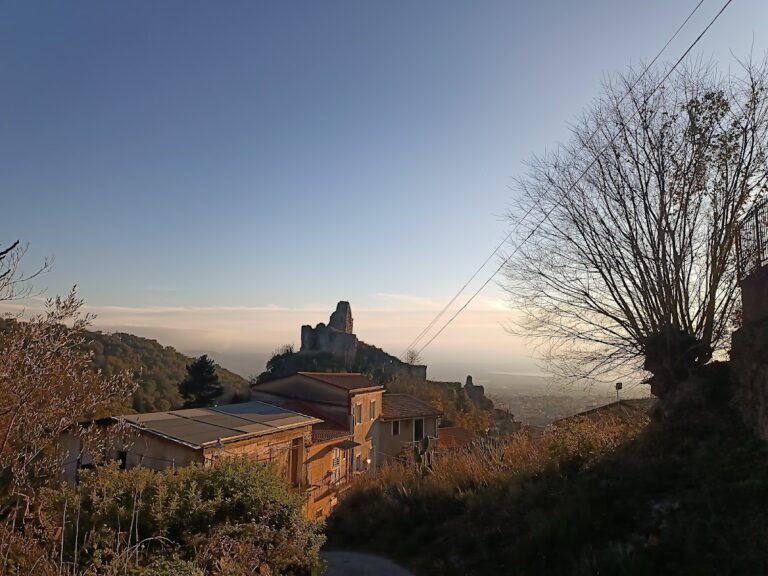
Borgia Castle is a ruined medieval fortress in Squillace, Italy, built by the Normans in 1044 during their conquest of Calabria. It occupies the site of a sixth-century monastic fortress established by Cassiodorus, a Roman statesman and scholar who created a monastic centre in southern Italy. During Byzantine rule, the complex became a kastron, a fortified settlement or stronghold adapted from an earlier defended site.
Norman Foundation and Medieval Lords
The Norman construction followed more than five centuries of Byzantine control in the region. The new fortress became an important outpost on the Tyrrhenian route and helped protect nearby Mileto. Unlike some other Calabrian castles, it was built directly in stone rather than beginning as a wooden tower.
The castle was first granted as a fief in the early thirteenth century. Between 1256 and 1485, it passed successively to the Lancia, Monfort, Del Balzo, and Marzano families. It later came under Frederick I of Naples and then the Borgia family.
Frederick II and Angevin Alterations
During a period of serious political problems, Frederick II, the Hohenstaufen emperor and king of Sicily in the thirteenth century, reinforced the principal tower and enlarged the castle’s perimeter. A second fortified enclosure followed the line of the earlier wall and incorporated a polygonal tower.
Later changes were associated with the Angevin dynasty, the French-origin ruling house that governed the Kingdom of Naples during part of the thirteenth and fourteenth centuries. These alterations included a circular tower intended to defend the entrance. A rectangular hall known as Il Palazzo was also built with baths supplied by hot and cold water, while a new rainwater cistern was placed between the tower and the palace.
Borgia Rule and Later History
After 1494, the entrance portal received a marble coat of arms belonging to the Borgia family. Its installation followed the marriage of Jofré Borgia and Sancha of Aragon, which sealed an alliance between Pope Alexander VI Borgia and King Alfonso II of Aragon. Pope Alexander VI ruled from 1492 to 1503, while Alfonso II was king of Aragon and Naples in the late fifteenth century.
The Borgias commissioned the final major alterations, including a large palace built over the remains of Frederick II’s palace. Borgia rule ended in 1729. In 1755, King Charles III of Spain granted the castle to Leopoldo de Gregorio, Marquis of Esquilache, after which it passed to the De Gregorio family. The Calabrian earthquake of 14 February 1783 damaged the fortress.
Excavation and Interpretation
Excavations by the École française de Rome in the early 1990s uncovered two skeletons dating from the thirteenth or fourteenth century. Their discovery led to sustained attention from archaeologists and historians, but their identities remain uncertain. Proposed interpretations have included a man and woman who were probably killed violently, siblings connected with the bishop of Squillace who died during conflicts between Church and secular rulers, and a Swabian and an Angevin warrior killed in dynastic fighting.
Further excavation in 2008 revealed a necropolis containing 22 graves. The date of this burial area is uncertain. Objects from the graves included gold earrings and ivory combs, while remains of a funerary banquet pointed to a practice later prohibited because it was considered too close to Greek and Roman religious rites.
Remains
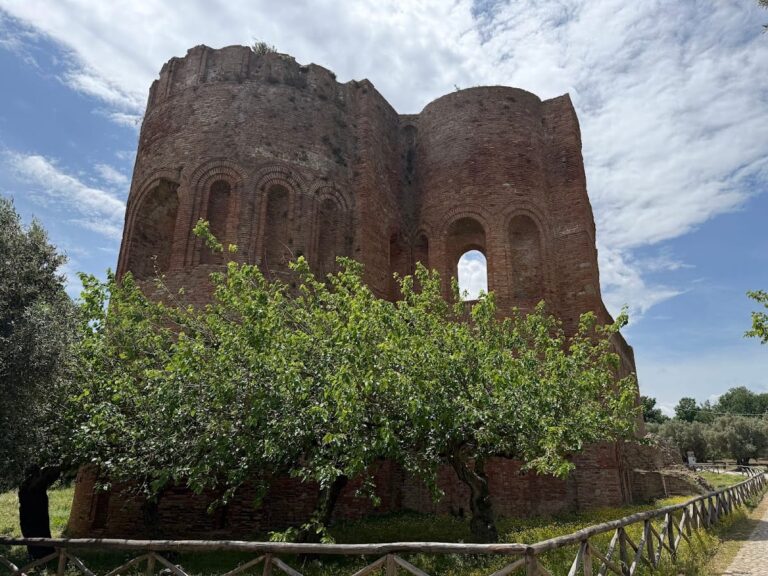
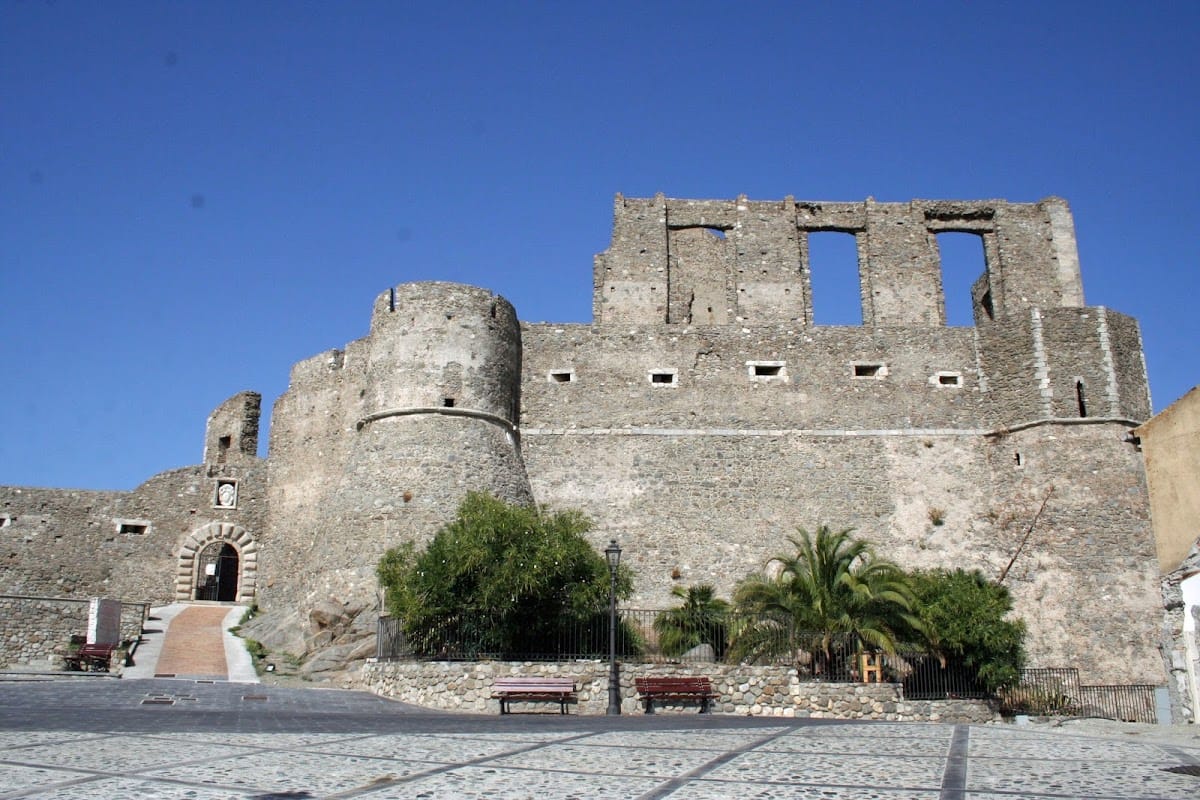
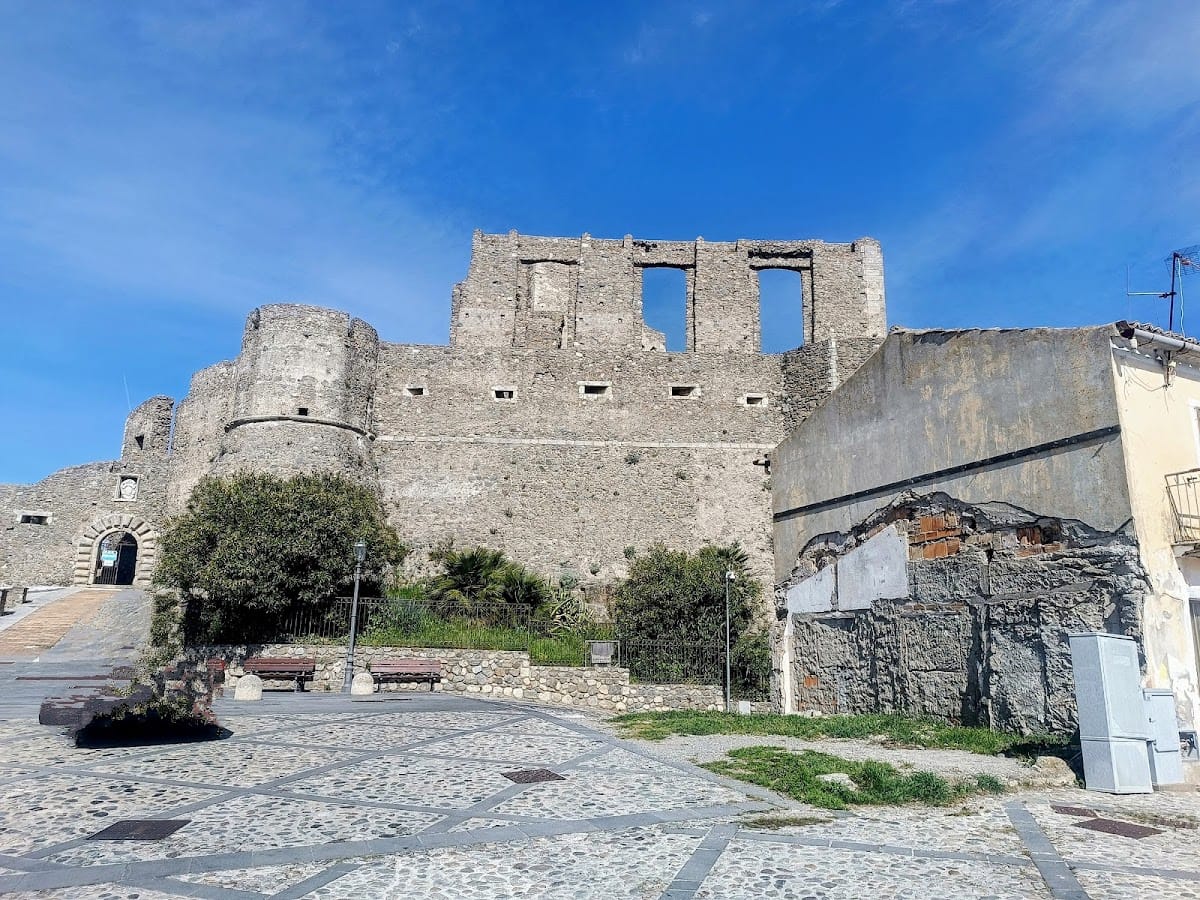
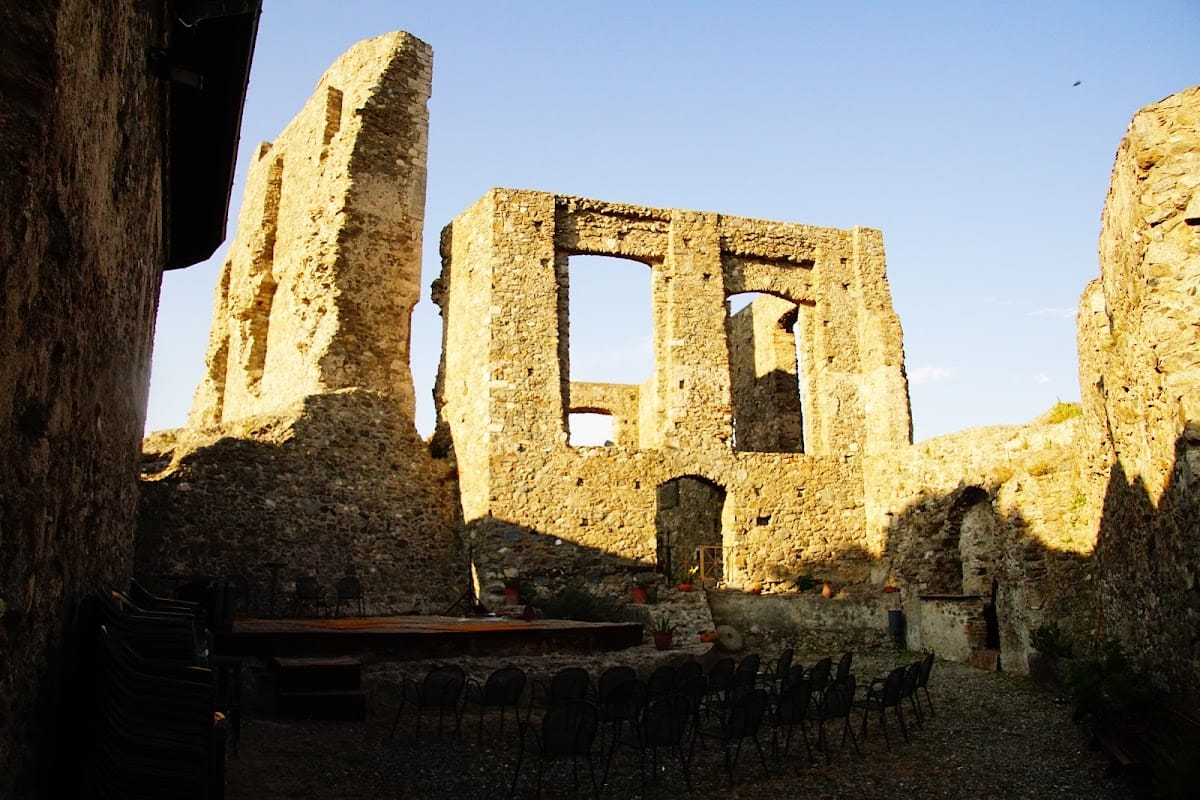
The castle occupies a hilltop and is constructed chiefly from locally available granite and other stone. Repeated rebuilding and alteration have produced a complex with no single architectural style. Its surviving arrangement combines the early fortified tower, successive enclosing walls, defensive towers, palace buildings, water installations, and areas connected with medieval burials.
Fortifications and Residential Buildings
The Donjon
The oldest core is a rectangular donjon, or principal fortified tower, measuring 10 by 11.5 metres. Its ground floor functioned as a cistern. The first floor contained the main entrance and provided space for receiving guests and holding assemblies, while the second floor contained the rulers’ private rooms. A terrace occupied the top of the tower.
Enclosing Walls and Towers
A defensive wall was added in the twelfth century to protect the donjon. An open corridor ran beside it and included a chicane, a deliberately zigzagging passage designed to slow attackers. Frederick II later added a second enclosure along the earlier wall, incorporating a polygonal tower. The Angevin phase added a circular tower to defend the entrance.
Palaces and Water Installations
The rectangular building called Il Palazzo contained baths supplied with hot and cold water. A rainwater cistern was constructed between this hall and the tower. The Borgias later built a large palace over the remains of Frederick II’s palace, creating another layer in the castle’s residential history.
Entrance Portal
The entrance has a rusticated stone portal, whose blocks are emphasized by recessed joints or roughened surfaces. Above it is the Borgia coat of arms carved in marble, a surviving feature associated with the family’s control of the castle after the late fifteenth century.
Burials and Excavated Evidence
The Two Medieval Skeletons
The two skeletons excavated in the early 1990s were found with their skulls turned toward one another and their hands intertwined. Study identified one individual as a man approximately 1.70 metres tall and the other as a woman approximately 1.68 metres tall. Their origins and identities remain uncertain, and the proposed explanations range from violent deaths involving a local family to casualties of dynastic conflict.
The Necropolis
The necropolis uncovered in 2008 contained 22 graves. Gold earrings and ivory combs were recovered from the burial area, together with remains of a funerary feast. These finds provide physical evidence for burial customs that were later prohibited because of their perceived closeness to Greek and Roman religious rites.